You need the correct Camry windshield by year and trim—OEM for exact fit and ADAS/HUD support, certified OEE for older or non-ADAS trims, and FMVSS‑205‑certified aftermarket only if optical tolerances and substrate thickness match sensors. Check VIN, sensor cutouts, flange dimensions, adhesive specs and whether post‑install ADAS calibration is required. Installation skill affects noise, leaks and structural integrity. Keep looking to learn how to verify compatibility, source parts and manage calibration.
Which Windshields Fit Your Toyota Camry by Year and Trim
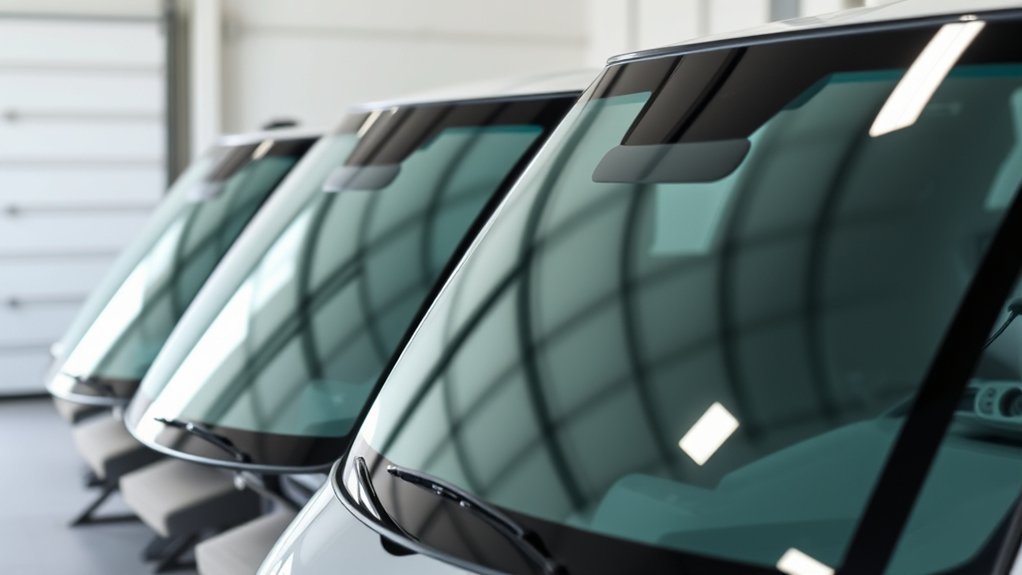
Because windshield fit depends on year and trim, you should verify the exact Camry model and VIN before ordering: you’ll then determine windshield compatibility with features like ADAS, HUD, or sensor clusters. For 2018 and later models, ADAS integration is common; you must choose OEM glass or certified OEE that matches camera mounts, heater grids, and sensor calibrations. Older Camrys may accept aftermarket panels, but check that sensor apertures and glass curvature align. Use installation tips: confirm mounting flange dimensions, adhesive cure specifications, and camera recalibration requirements prior to replacement. When liberation matters, prioritize systems that preserve full functionality without proprietary lock-in—select parts that restore original capability rather than degrade it. OEE often balances cost and performance for many trims, while OEM guarantees exact fit. Avoid unverified aftermarket options on ADAS-equipped trims; a wrong choice can force additional calibration or compromise safety systems, limiting your freedom on the road.
OEM, OEE, and Aftermarket Camry Windshield Options Compared
When choosing a windshield, you’ll prioritize OEM for exact fit, optical clarity, and guaranteed ADAS compatibility on Camry models. OEE offers comparable safety standards and better pricing, while aftermarket glass cuts cost but can vary in fit and ADAS performance. Compare tolerance specs, sensor mounting accuracy, and coating consistency when weighing aftermarket versus OEE.
OEM Fit And Features
Pick the windshield type based on fit, ADAS compatibility, and long-term reliability: OEM glass, made by the original supplier, guarantees exact fit, optical clarity, and factory sensor/surface specifications (typically $400–$700+); OEE glass meets FMVSS 205 and closely matches OEM tolerances at a lower cost ($285–$550); aftermarket glass is cheapest ($200–$400) but can vary in cut accuracy and optical quality, risking ADAS misalignment and degraded safety. You’ll favor OEM features when you demand uncompromised ADAS performance, factory optical standards, and predictable sealing. Installation considerations include calibrated sensor mounts, precise frit placement, and adhesive cure times to preserve crash and sensor behavior. Choose based on mission: safety, fidelity, and long-term autonomy.
- precise sensor mount geometry
- factory optical homogeneity
- exact frit and edge treatment
- controlled adhesive spec
- calibrated ADAS alignment
Aftermarket Vs OEE
Start by weighing cost against conformity: OEE glass delivers certified FMVSS 205 compliance and close dimensional and optical parity with OEM at a midrange price, while aftermarket panels trade lower cost for variable cut accuracy and optical homogeneity that can jeopardize ADAS sensor alignment and long‑term sealing. You’ll choose OEE Benefits when you need predictable performance, documented certification, and a fit that supports recalibration of cameras and sensors without compromising sightlines. You might opt for Aftermarket Quality to save upfront, but you must accept variability in edge tolerances, glass curvature, and coating consistency that raise the risk of leaks, distorted optics, and repeated service. Prioritize installation precision regardless of glass origin to secure safety and autonomy.
Critical Features: ADAS Cameras, Rain Sensors, and HUD Compatibility
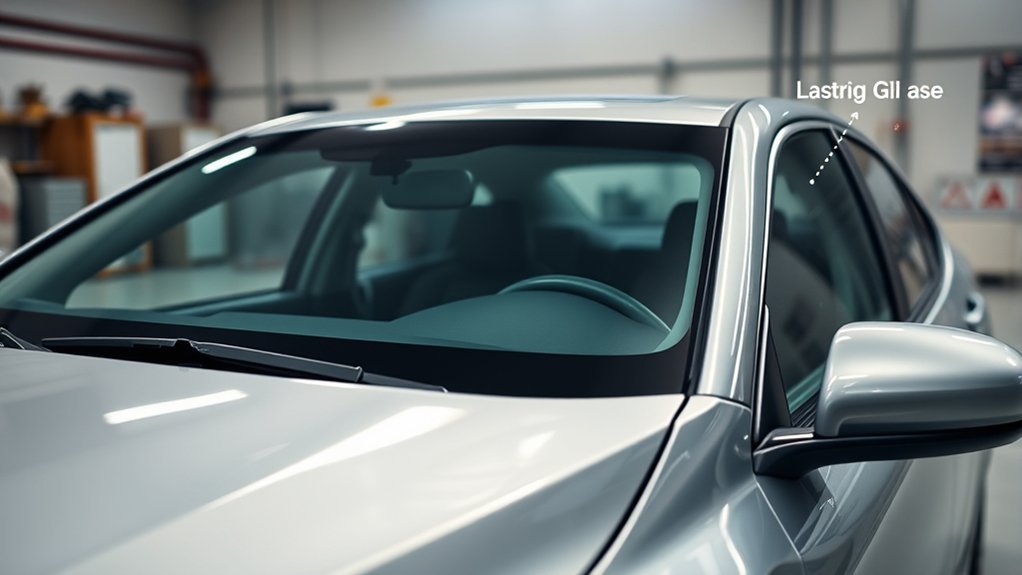
Because modern Camry safety systems depend on optics and sensors integrated with the windshield, you must guarantee replacement glass includes the correct camera cutouts, rain-sensor surfaces, and HUD-compatible interlayers to preserve functionality. You need ADAS integration and Sensor functionality to remain exact: forward-facing cameras sit in tight tolerances, curvature and mounting points must match OEM specs, and mistaken geometry degrades lane-keeping and collision warnings. Rain-sensor areas require specific surface finishes and positioning so moisture detection triggers wipers reliably. HUD-compatible glass uses dedicated interlayers to project crisp symbology; incompatible laminates scatter light and obscure readouts. When you replace the windshield, insist on parts specified for your model and verify optical zones align before installation. Preserve your autonomy by choosing correct components and technicians who measure and confirm sensor interfaces. Below are concrete images of what to expect:
Ensure replacement Camry windshields match OEM camera cutouts, rain‑sensor zones, HUD interlayers, and precise optical geometry.
- precise camera cutout aligned with mirror mount
- matte rain-sensor zone on interior glass
- HUD projection interlayer band
- OEM curvature and mounting pads
- clean optical bonding surface
Camry Windshield Cost, Labor Time, and ADAS Recalibration Needs
One clear consideration is cost: windshield replacement for a Toyota Camry typically runs $250–$1,000 depending on model year and whether ADAS recalibration is required. You’ll plan around labor of 1–2 hours for removal and installation, plus adhesive curing of 1–3 hours before driving. If your Camry has ADAS, expect calibration fees of $150–$300; OEM glass reduces calibration risk, aftermarket parts save money but can introduce sensor misalignment.
Check windshield insurance and policy specifics first—many plans cover replacement with low or no deductible, which empowers you to choose OEM when needed. Schedule replacement timing to allow adhesive cure and any post-installation system checks; don’t rush back on the road. You’ll want a certified technician using proper fixtures and documented calibration procedures to restore camera, rain sensor, and HUD performance. This approach secures safety systems and your autonomy on the road.
Fit and Optical Clarity: Common Installation Problems to Avoid
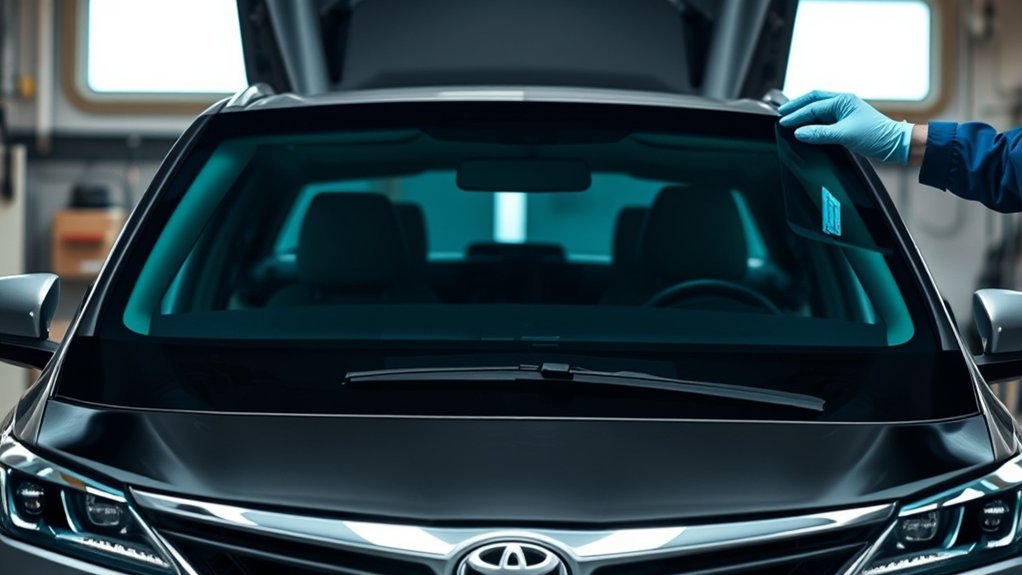
When installing a replacement windshield on a Toyota Camry, verify exact fitment, sealing, and optical quality—small errors in curvature, mounting alignment, or adhesive application can cause wind noise, leaks, compromised structural support, and visual distortion that impairs driver perception. You must guard against fitment issues and optical distortion by checking curvature, mounting datum points, and adhesive bead profile before curing. Confirm FMVSS 205 compliance to guarantee glass flatness and strength. Use manufacturer-specified urethane, maintain recommended primer coverage, and observe curing times to prevent seal failure and noise. Inspect for residual waviness, birefringence, or refraction artifacts under polarized light to validate optical clarity. Pressure-test the seal and perform a water-check to detect leaks. Reassess camera and sensor sightlines post-install to avoid calibration drift.
Ensure exact windshield fitment, sealing, and optical clarity—check curvature, adhesive, FMVSS 205 compliance, and sensor sightlines.
- Visualize a misaligned curve producing a whistling wind tone.
- Imagine a thin adhesive gap leaking at highway speeds.
- Picture waviness bending lane lines.
- Envision stressed glass at mounting points.
- Feel the freedom of a perfect, clear pane.
How to Choose the Right Camry Windshield: A Decision Checklist
If your Camry has ADAS or you want guaranteed fit and optical performance, start by confirming the model year and sensor package so you can match glass type and calibration requirements; then compare OEM, OEE, and aftermarket options for fit, certification (FMVSS 205), and stated optical tolerances, and get full quotes that include parts, labor, and any ADAS recalibration fees. Next, verify whether your year requires factory glass—2018+ models often do—because calibration-sensitive sensors need precise substrate thickness and optical homogeneity. Choose OEM when you prioritize exact fit, ADAS compatibility, and maximum windshield durability. Select OEE for older or non-ADAS cars as a standards-compliant, cost-effective compromise. Treat aftermarket glass as acceptable only if manufacturers supply FMVSS 205 certification and documented optical tolerances. Check supplier calibration capability and explicit line-item pricing to avoid surprises. Finally, confirm any glass tinting specifications won’t interfere with sensors or certification, and insist on written warranty terms for durability and optical performance.
Where to Buy a Camry Windshield and What to Ask Suppliers
You can source Camry windshields from local auto glass shops or your dealer parts department—each offers different balances of cost, parts origin, and service. Ask suppliers whether the glass is OEM, OEE, or aftermarket, confirm FMVSS 205 compliance, and request an itemized quote listing glass, labor, and hardware. If your Camry has ADAS, insist they include ADAS calibration in the estimate and explain warranty coverage for leaks and defects.
Local Auto Glass Shops
Anyone needing a quick, hands-on windshield replacement will find local auto glass shops practical for Camry repairs, since they typically offer faster turnaround and in-person inspection. You’ll appreciate local shop benefits and certification importance: confirm ASE or AGRSS credentials, probe ADAS recalibration capability, and demand transparent quotes. Ask whether glass is OEM, OEE, or aftermarket and how that affects sensor alignment and acoustic properties. Verify technician training, warranty terms, and calibration tools before committing. You’re reclaiming control over safety and cost — don’t accept vague answers.
- Technician performing hands-on inspection with calibration rig
- New OEM glass staged for fit-check
- Diagnostic tool connected to ADAS module
- Itemized quote showing labor, glass, calibration
- Certification plaques visible in the shop
Dealer Parts Departments
After checking local shops, consider dealer parts departments for exact-fit Camry windshields—especially when ADAS sensors or trim-specific glass are involved. You’ll leverage dealer expertise to confirm model year and trim, ensuring glass compatibility with sensor mounts and camera zones. Ask explicitly for OEM glass to guarantee FMVSS 205 compliance and ideal optical clarity; request OEE options if you need a cost-effective alternative for older vehicles. Verify parts availability and lead times before ordering so repairs aren’t delayed. Don’t skip warranty verification: get terms covering glass defects and installation leaks in writing. Finally, request written documentation of any recommended recalibration services post-installation so you can secure proper safety restoration without ambiguity.
Ask About Calibration
Why confirm calibration requirements before buying a Camry windshield? You need clarity on calibration importance and installation timing to protect ADAS performance and your autonomy. Ask suppliers if the glass is OEM, OEE, or aftermarket and whether cutouts and sensor interfaces match your model. Confirm post-install calibration steps, fees, and whether installers hold NWRA or equivalent certifications. Demand itemized quotes covering glass, labor, and calibration so you can reject hidden charges and unsafe shortcuts.
- A certified technician aligning the camera and radar
- Exact sensor cutouts matching factory specifications
- A calibrated vehicle test drive validating ADAS functions
- An invoice listing calibration, parts, and labor separately
- A timestamped appointment confirming installation timing
Frequently Asked Questions
What Is the Difference Between AS1 and AS3 Glass?
AS1 is for windshields with superior windshield safety and glass durability, meeting stricter federal specs; AS3’s for side/rear windows, offering less clarity, UV/IR protection, and lower structural requirements—so you’ll choose AS1 for safety.
Conclusion
You’ve got the roadmap to pick the exact Camry windshield that won’t turn your dash into an optical funhouse. Choose OEM or high‑quality OEE if you want factory‑level ADAS, HUD and rain‑sensor alignment; use aftermarket only when tolerances and sensor mounts match. Get certified installers, factor recalibration time and costs, and verify glass curvature, coating, and clamp points. Do that, and your Camry’s sightlines and safety will behave like precision instruments—no drama, just engineering.