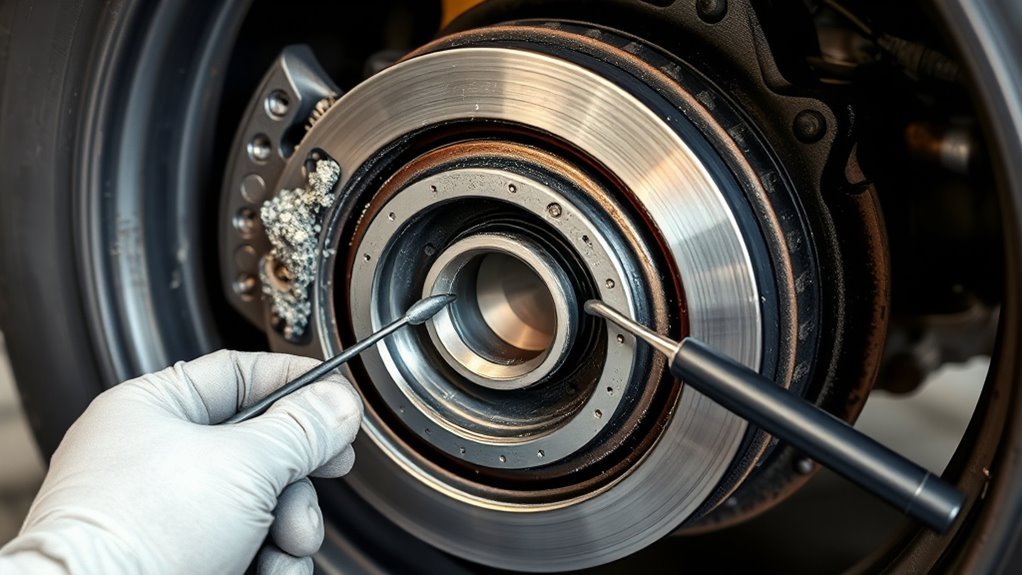
Your Camry’s wheel bearings usually last about 75,000–150,000 miles, but rough roads, salt, heavy loads or poor installation can shorten that. You’ll hear humming, grinding or growling, feel vibration or pull in the steering, notice uneven or cupped tire wear, and might trigger the ABS light. You can check play by lifting the wheel and spinning it, but worn bearings risk wheel loss and costly collateral damage. Keep reading for tests, causes, and repair guidance.
Camry Wheel Bearing Lifespan
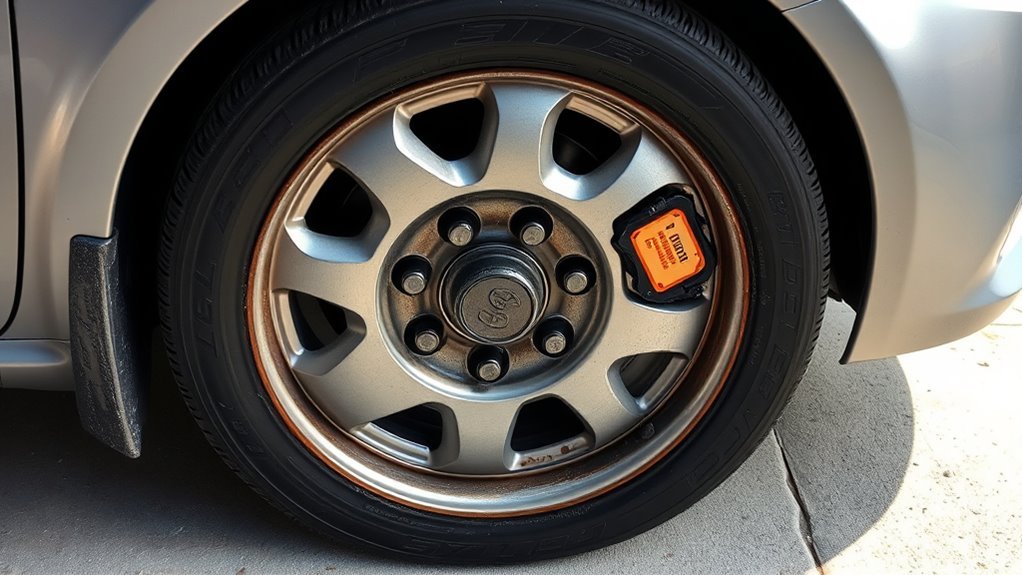
While many Camry owners see wheel bearings last between 75,000 and 150,000 miles, actual lifespan depends on driving conditions, weather exposure, and vehicle load. You’ll treat lifespan as a variable you can influence: harsh roads, salted winters, and heavy loads accelerate wear. You’re responsible for wheel bearing maintenance—periodic inspections, torque checks, and lubrication where applicable—to detect deterioration before it compromises safety.
Adopt a pragmatic schedule tied to use: inspect bearings more often if you drive gravel, flood-prone routes, or tow. Measure for play, noise, and uneven tire wear as part of routine service intervals. Don’t wait for failure indicators to act; timely replacement is cheaper and safer than emergency repairs. This approach gives you control over risk and cost, freeing you from avoidable breakdowns. Maintain records of inspections and replacements so you can predict future needs and keep your Camry moving reliably.
9 Signs a Camry Wheel Bearing Is Failing
You’ll usually hear unusual wheel noises—grinding, humming, or growling—during turns or acceleration when a Camry bearing is failing. You may also feel steering wheel vibration or a subtle pull to one side as the bearing’s play increases. Check for uneven tire wear, especially accelerated wear on one tire, which often accompanies bearing-related alignment issues.
Unusual Wheel Noises
How can you tell a Camry’s wheel bearing is failing from sound? You’ll hear humming sounds that shift with speed and grow louder on acceleration or turns. Ignore them at your own risk; they signal progressive wear.
- Consistent humming or growling that increases with speed — early bearing fatigue.
- Pitch-changing whirr or howling, like a turbo prop — confirms bearing distress.
- Grinding noises when turning — metal-on-metal contact as seals fail.
- Clicking or popping during accel/decel — advanced failure, act immediately.
- Sounds that worsen on specific turns — localized hub deterioration.
You want freedom from breakdowns; act decisively. Use these acoustic cues to demand inspection and replace bearings before containment becomes costly or unsafe.
Steering Wheel Vibration
If you feel a steady vibration through the steering wheel, especially at higher speeds or when turning, it can indicate a failing wheel bearing that’s starting to affect hub alignment and tire wear. You’ll notice vibration causes tied to bearing degradation: radial play, uneven rotation, and increased friction transmit through the hub into steering feedback. As the bearing worsens, steering can feel loose or unresponsive, reducing your control and making deliberate maneuvers riskier. Inspect bearings and suspension mounts promptly; catch wear early to prevent collateral damage and higher repair costs. Don’t ignore persistent steering feedback or escalating vibration causes—addressing them restores confident handling, preserves your autonomy on the road, and keeps safety from being compromised.
Uneven Tire Wear
Uneven tire wear on a Camry often signals a failing wheel bearing causing misalignment and unequal load distribution across the tire tread. You should inspect tread wear patterns regularly; bearing deterioration shifts wheel alignment and creates faster wear on one side. Scalloped or cupped wear patterns point to compromised hub stability, and a pull to one side while driving confirms asymmetric loading. Address this promptly to reclaim control and extend tire life.
- Check tire alignment after noticing irregular wear
- Compare wear patterns across all four tires
- Note any scalloping or cupping on the tread
- Test for lateral pull during a controlled drive
- Replace bearings before wheel assembly damage escalates
Act decisively to restore safety and vehicle freedom.
Quick Checklist: Do You Need a Replacement Now?
Want to know whether your Camry needs a wheel bearing replacement now? Run this quick checklist: check odometer—wheel bearing maintenance history and replacement frequency matter; if you’re between 75,000–150,000 miles and haven’t serviced bearings, plan replacement. Listen for grinding or humming that worsens during turns or acceleration; that’s a primary failure sign. Note steering feel: persistent vibrations or a subtle pull to one side indicate compromised bearings affecting control. Inspect tires for uneven wear or scalloped tread—this signals bearing-induced alignment stress. Watch the dash: an illuminated ABS warning light can point to bearing or sensor issues. If you answer yes to two or more items, arrange replacement without delay. If only one mild symptom appears, limit driving and schedule a professional inspection promptly. Prioritize safety and freedom on the road—don’t let deferred maintenance trap you in avoidable breakdowns.
Test a Camry Bearing at Home (And What Pros Check)
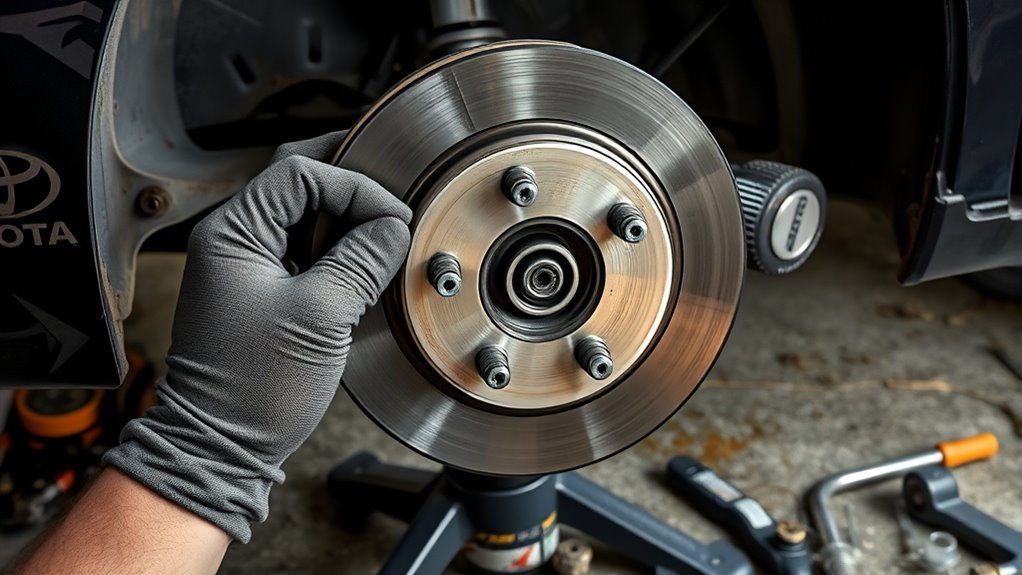
First, lift and securely support the Camry so the wheel can rotate freely without load. Then check wheel play by rocking the tire and measure any lateral movement at the rim—noticeable play usually points to a worn bearing. Finally, spin the wheel by hand and listen closely for grinding or roughness that pros would confirm with a stethoscope and road-vibration assessment.
Lift And Secure Vehicle
1 safe setup is critical before you test a Camry wheel bearing at home: jack the car at the manufacturer’s lift points, secure it on rated jack stands, and confirm the vehicle can’t rock or shift before you get under or spin the wheel by hand. You’ll prioritize wheel stability and use proven lifting techniques to free yourself from risk and depend on clear inspection. Check rotation and listen for grinding; resistive spin often signals bearing wear. Before probing brakes or checking play, verify the car’s immobile.
- Use flat, level ground.
- Chock opposing wheels.
- Use the factory lift points.
- Place stands on solid surfaces.
- Tug the chassis to verify stability.
This setup lets you inspect safely and act with confidence.
Check Wheel Play
Before you spin the wheel, secure the Camry as described and then grasp the tire at the 12 and 6 o’clock positions to rock it while watching for play; any movement noticeably greater than about 1/4″ usually indicates bearing wear and needs further inspection. You’ll feel whether the hub shifts axially or radially — slight slack is normal, but excess means action. For DIY checks, compare both sides and note mileage; aim for bearing inspection around 70,000 miles. Pros quantify play with a dial indicator, measuring micro-movement while rocking the wheel. If you detect over-tolerance, plan wheel maintenance: replace the bearing or consult a shop. This test frees you from guesswork and protects your control over the vehicle.
Listen For Noise
How do you tell a bad Camry wheel bearing by sound? Listen deliberately during a controlled test drive: bearings announce failure before collapse. A humming noise that rises with speed is the primary clue; note when it intensifies. A grinding sound or growl, especially while turning, signals advanced wear and needs immediate attention.
- Use steady speeds to isolate constant humming noise and detect trend with acceleration.
- Turn left and right; if noise changes side-to-side, you can localize the bad bearing.
- Watch for clicking or popping during acceleration/deceleration — an escalation indicator.
- Feel steering wheel vibrations; match them to audible cues.
- If you identify grinding sound or excessive play, stop and inspect or replace the hub assembly.
What Happens If You Keep Driving on a Bad Bearing
If you keep driving on a failing wheel bearing, you’ll quickly move from a noisy nuisance to a serious safety hazard: the bearing’s heat and friction can destroy the hub and brake components, cause uneven tire wear, and ultimately let the wheel detach while you’re moving. You’ll face immediate safety risks—loss of steering control, brake degradation, and the potential for wheel separation at speed. Mechanical damage escalates: excessive heat from a worn bearing scores the hub, ruins seals, and warps rotors, forcing broader suspension and brake repairs. That cascade multiplies repair costs; what could be a bearing replacement becomes hub, brake, and alignment work plus new tires. You’ll also feel reduced fuel economy and worsening noises that make the car harder to manage, compromising your independence on the road. Stop driving and address the bearing promptly to reclaim control, minimize parts replacement, and avoid the high financial and personal cost of a preventable failure.
Why Camry Wheel Bearings Fail Early
You’ve already seen how a failing bearing can quickly ruin surrounding components and put you at risk; now look at why some Camry bearings wear out far sooner than expected. You need clear causes so you can act and reclaim control.
- Contaminants (dirt, water) breach seals, causing abrasive wear and rapid breakdown.
- Overloading past recommended load capacity limitations forces excess stress and shortens life.
- Improper installation (misalignment, incorrect torque) introduces uneven loads and early failure.
- Neglected bearing maintenance tips—skipping lubrication and inspections—leads to overheating and accelerated deterioration.
- Manufacturing variances in certain Camry models have produced bearings that fail near 45,000 miles.
Each point pinpoints a preventable failure vector: protect seals, respect weight limits, demand correct installation, follow scheduled lubrication checks, and watch model-specific advisories. You’ll extend service life by treating bearings as critical safety components, not disposable parts, and by applying pragmatic, disciplined maintenance.
OEM vs Aftermarket Camry Bearings: Which to Choose
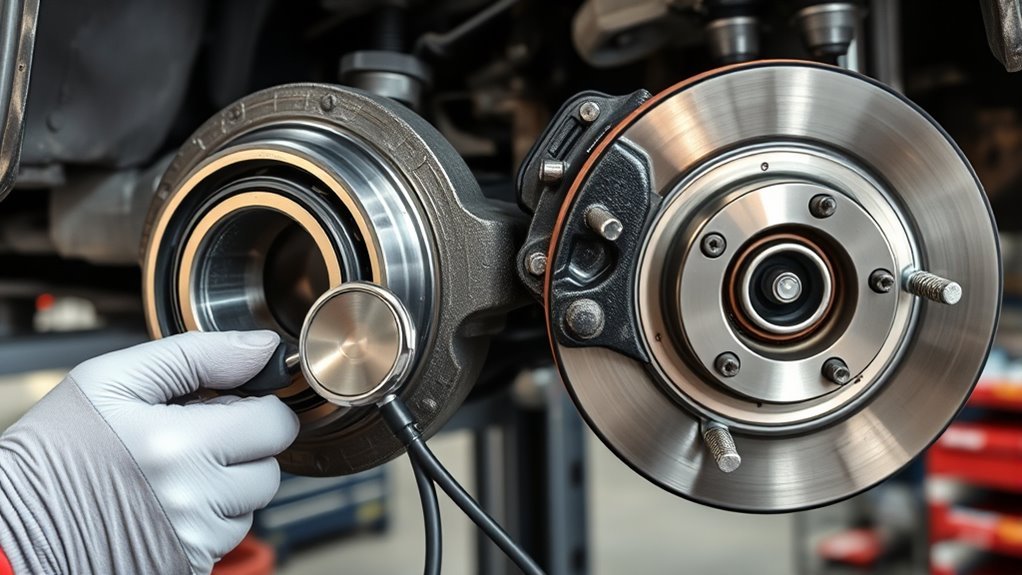
Wondering whether to stick with Toyota parts or go aftermarket for your Camry’s wheel bearings? You’ll find OEM Benefits clear: engineered to Camry specs, consistent Performance Impact, and predictable Longevity (often 100k–150k miles). That engineering reduces variables that can compromise handling or safety.
Weigh Cost Analysis pragmatically. OEM costs more upfront but can lower total ownership expense by avoiding premature replacements. Aftermarket Risks include variable materials, looser tolerances, and shorter service life; some options might save money now but cost more later.
Consider Warranty Comparison: OEM parts commonly include stronger coverage for defects, giving you recourse if a bearing fails early. Installation Differences matter too — OEM bearings fit without modification, reducing labor time and alignment issues; some aftermarket units require adapters or extra calibration, increasing error potential.
OEM bearings usually carry stronger warranties and install without modification, reducing labor, alignment headaches, and defect risk.
If you want freedom from repeated repairs and predictable performance, OEM is the pragmatic choice; choose aftermarket only with vetted brands and clear specs.
Camry Bearing Replacement: Typical Cost, Time & Prevention Tips
Because wheel bearings sit at the hub and carry both rotational and lateral loads, replacing a Camry bearing typically costs $350–$700 and takes about 2–4 hours per corner depending on year and labor rates. You’ll choose replacement options that balance cost, durability, and parts provenance; OEM or reputable aftermarket parts extend service life and reduce repeat repairs. A straightforward job involves hub disassembly, bearing press or hub swap, torque to spec, and road-test.
- Inspect for grinding, humming, steering vibration, and uneven tire wear before replacing.
- Follow maintenance schedules in the owner’s manual or check near 70,000 miles.
- Use quality grease and seals; contamination kills bearings fast.
- Budget labor and parts separately; complexity climbs on AWD or sealed hubs.
- After installation, verify alignment and torque to factory specs.
You deserve reliable mobility; proactive checks and informed replacement options keep you free from avoidable breakdowns.
Frequently Asked Questions
What Are the Signs That a Wheel Bearing Is Failing?
You’ll hear wheel noise like grinding or humming that changes with speed, feel vibration issues or steering pull, notice uneven tire wear, ABS/traction lights, or wheel wobble when rocked—address these signs promptly to stay free and safe.
At What Mileage Do Wheel Bearings Fail?
Wheel bearings typically fail between 75,000 and 150,000 miles; you’ll schedule wheel bearing maintenance earlier if you hear noise or feel vibration. Consider replacement costs when planning repairs to stay safe and preserve driving freedom.
Conclusion
You’re responsible for catching wheel bearing issues early—don’t wait. Bearings on a Camry typically last 85,000–140,000 miles, but 30% of failures occur before 70,000 miles due to contamination or improper installation. If you hear grinding, feel vibration, or detect play, act fast: continued driving risks hub seizure and brake failure. Replace with quality parts, torque properly, and inspect seals and suspension during service to maximize bearing life.