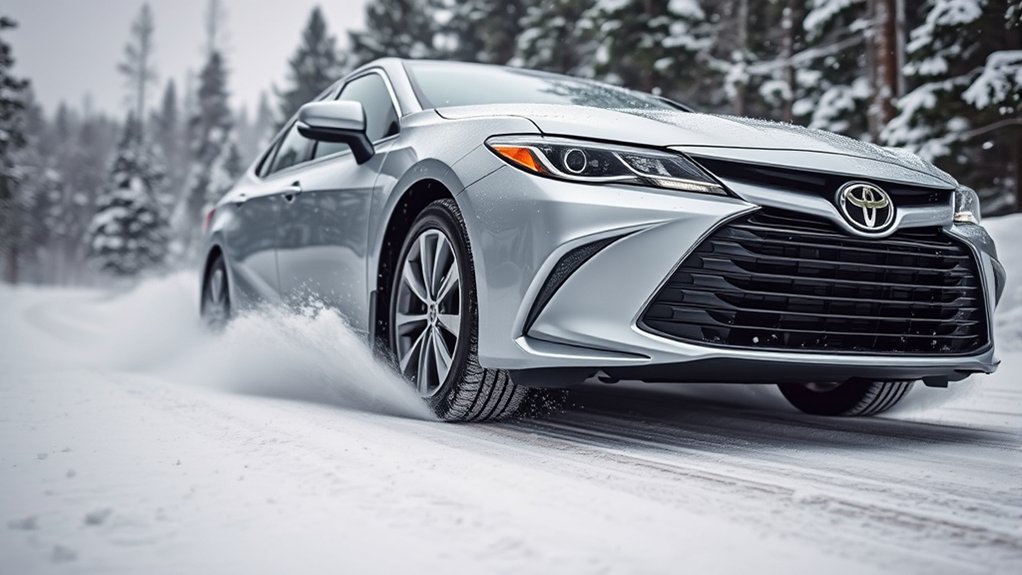
You can use a Toyota Camry’s traction control system in snow by leaving TRAC and VSC on for normal slippery driving, using smooth throttle and steering inputs, and turning TRAC off only if the vehicle is stuck and the system is cutting power too much to rock the car free. Do not rely on traction control, AWD, or any drive mode to replace winter tires, slower speeds, and extra following distance.
Quick Answer
For most snowy Camry driving, keep traction control and stability control on, accelerate gently, avoid sudden steering, and increase your following distance. Turn TRAC off only when you are stuck in snow, mud, or sand and need controlled wheel movement to free the car.
Key Takeaways
- Leave TRAC and VSC on for normal snow, slush, rain, and icy patches.
- Current U.S. Camry guidance does not support treating Snow Mode or Downhill Assist as universal Camry features.
- Turn TRAC off only when the Camry is stuck and you need to rock it free, then turn it back on.
- Use winter tires on all four wheels when snow and ice are common in your area.
- On steep descents, slow before the hill and use gentle braking or S mode/lower shift ranges where equipped.
At a Glance
| Time Required | 1–3 minutes before driving; longer if you are stuck |
| Difficulty | Easy |
| Tools Needed | Owner’s manual, tire-pressure gauge, snow brush, traction aid if stuck |
| Cost | No cost for system use; winter tires or chains vary by tire size and local rules |
What This Guide Covers and Who It’s For
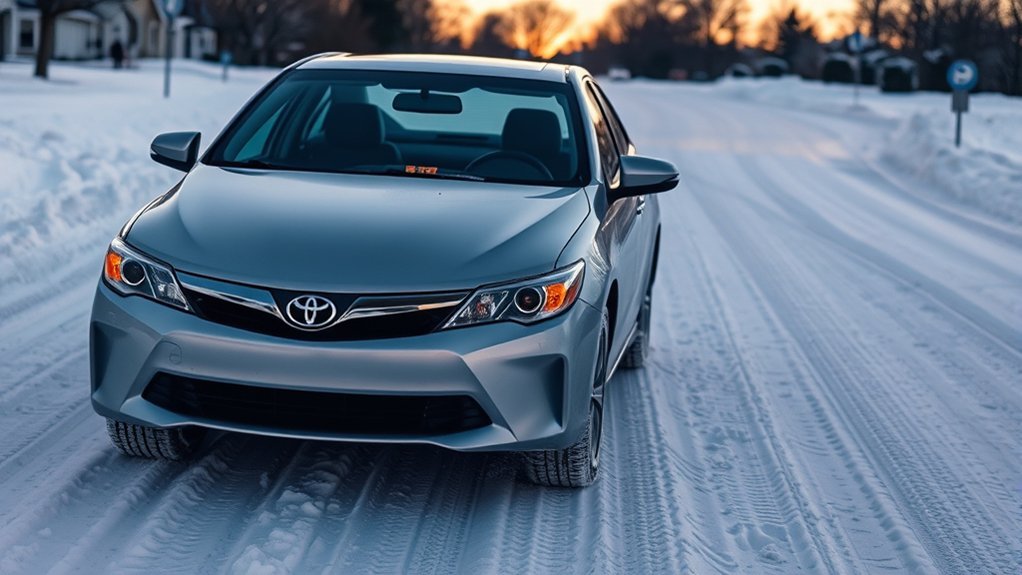
This guide is for Camry drivers who want a clear, safe way to handle snow, slush, ice, and slippery hills without guessing what each dashboard button does. It focuses on Toyota Camry traction control, Vehicle Stability Control, AWD if equipped, S mode or lower shift ranges where equipped, and the correct way to handle a stuck vehicle.
The most important correction is this: do not assume your Camry has a dedicated Snow Mode or Downhill Assist Control button. Some Toyota vehicles and some market-specific trims may have snow or downhill features, but current U.S. Toyota Camry owner information centers on TRAC, VSC, drive modes, AWD if equipped, and winter-driving preparation. Always follow the owner’s manual for your exact model year and trim.
Warning: Traction control, VSC, ABS, and AWD cannot create grip where your tires have none. On ice, your safest “traction feature” is slower speed, more distance, smooth inputs, and proper winter tires.
How Toyota Camry Traction Control Works in Snow
Toyota’s traction control system, often called TRAC, helps maintain drive power and helps prevent the drive wheels from spinning when you start or accelerate on slippery roads. It works with other systems such as VSC and ABS to reduce wheelspin and improve stability. You can read Toyota’s current Camry driving-assist description in the Toyota Camry driving assist systems manual page.
When the Camry detects wheel slip, you may feel pulsing, hear system noises, or see the slip indicator flash. That does not automatically mean something is broken. It usually means the system is trying to limit spin while you accelerate or correct the vehicle’s path.
What TRAC Does
TRAC is most helpful when you are pulling away from a stop sign, merging slowly on a snowy road, or driving over patchy slick spots. It reduces uncontrolled wheelspin so the tire can regain grip instead of polishing the snow or ice under it.
What VSC Does
Vehicle Stability Control helps when the car begins to slide away from your intended path. It is not a license to drive faster. It is a backup system that works best when you are already driving at a safe winter speed.
What ABS Does
ABS helps prevent wheel lockup during braking. On snow or ice, you may feel the brake pedal pulse. Keep steady pressure on the brake and steer where you want the car to go.
Does the Toyota Camry Have Snow Mode?
Do not treat Snow Mode as a standard Camry feature unless your own Camry’s owner’s manual shows it. Toyota’s current 2025 Camry drive-mode information describes normal, eco, and sport drive modes, not a universal Snow Mode. See Toyota’s Camry driving mode select switch page for the current U.S. manual language.
If your Camry is from another market or has a trim-specific snow setting, use it only as your manual describes. If your Camry does not have that setting, you are not missing the main safety feature. For snow, the bigger priorities are TRAC/VSC, winter tires, low speed, smooth throttle, and proper stuck-vehicle technique.
Note: Many online Camry guides mix Toyota features from different models, years, or markets. Before pressing a button in bad weather, confirm the feature in your own owner’s manual.
Traction Control vs. Drive Modes: When to Use Each
Traction control and drive modes are not the same thing. TRAC reacts to wheelspin. Drive modes change how the Camry responds to throttle and other vehicle settings. In snow, TRAC and VSC should usually stay on no matter which drive mode you choose.
- Normal slippery roads: Keep TRAC and VSC on. Use gentle throttle and gentle steering.
- Deep snow from a stop: Keep TRAC on at first. If the car is stuck and will not move, use the stuck-vehicle steps below.
- Highway snow: Keep TRAC and VSC on. Avoid cruise control, reduce speed, and leave extra space.
- Dry pavement after snow clears: Drive normally, but keep watching for shaded ice, bridge ice, and packed snow at intersections.
[Products Worth Considering]

This 50-pack of tire tread depth gauges offers a simple way to check tire wear quickly and accurately. Color-coded reading zones make it easy to see tread condition at a glance, while the compact design and pocket clip support convenient everyday carry. Built for repeated use, these gauges help drivers monitor tire safety with confidence.
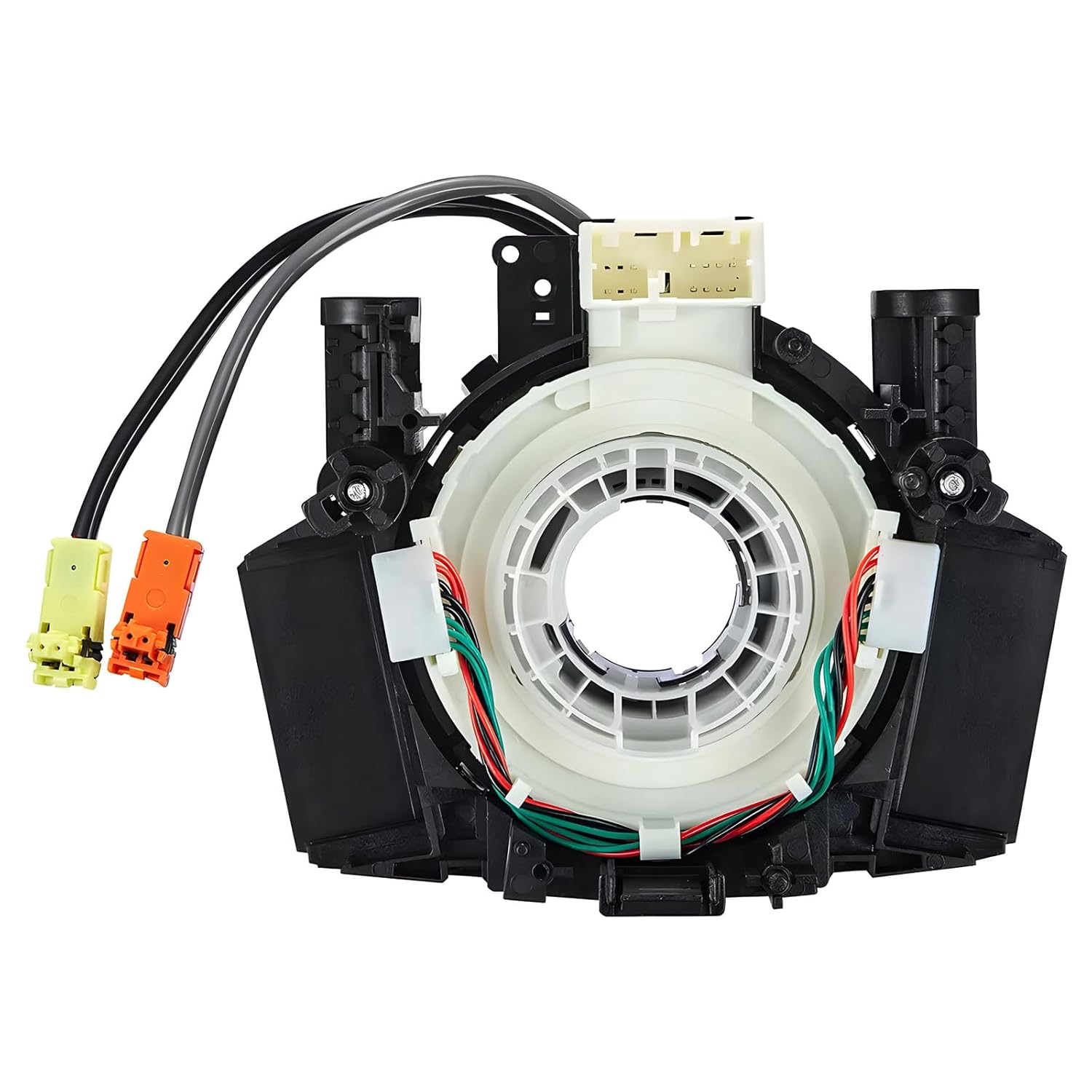
This steering clock spring assembly is an OEM-style replacement designed to restore steering wheel controls and related electronic functions in compatible Nissan vehicles. It supports audio, cruise control, and multi-function button operation while matching multiple factory part numbers for a reliable fit. Built for direct installation with vehicle-specific connectors, it helps return steering column electronics to proper working order.

These off-road traction boards are designed to help vehicles recover from mud, sand, and snow with reliable grip and easier ramp-up. Their double-sided diamond construction, cross-shaped teeth, and contoured ramps improve traction while the durable polypropylene build stays flexible in harsh conditions. Convenient mounting points, ergonomic handles, and a visible leash make them practical to carry, store, and retrieve when recovery is needed.
How to Start a Camry on Snow or Ice Without Spinning
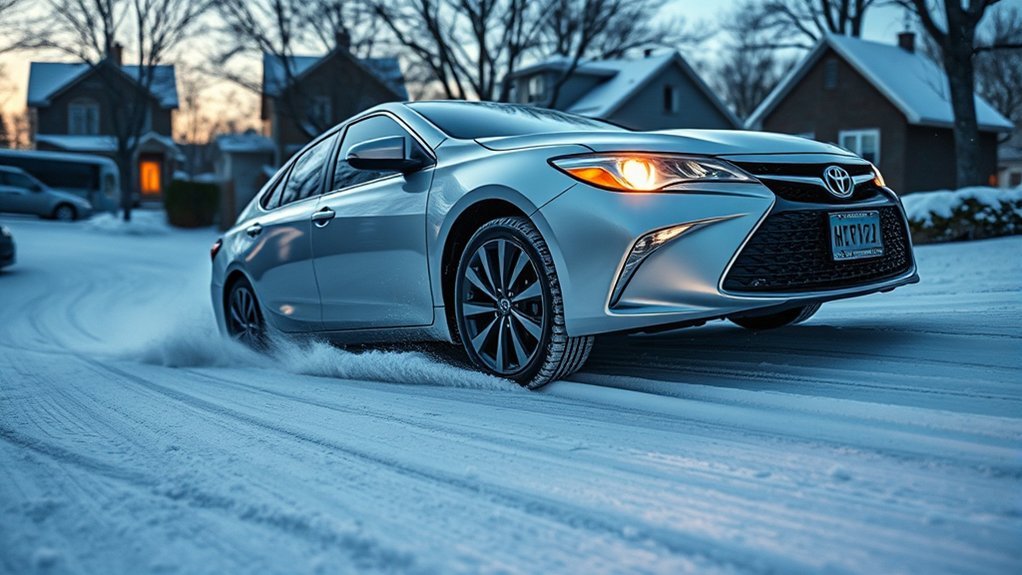
Most snow-driving problems begin with too much throttle. The goal is not to overpower the snow. The goal is to feed in just enough power for the tires to bite.
- Clear snow from the tires and around the car. Packed snow in front of the tires can act like a small wall.
- Start straight if possible. A turned front wheel needs more grip than a straight one.
- Press the accelerator lightly. Think of squeezing the pedal, not stepping on it.
- Let TRAC work. If the slip light flashes briefly, keep your inputs smooth.
- Back off if the tires spin. More throttle usually makes the surface slicker.
- Build speed slowly. The first few feet matter most.
Pro Tip: If you are parked on ice, turn the steering wheel as little as possible until the car is moving. Straight tires need less traction than turned tires.
When to Turn Traction Control Off
Leave traction control on for normal winter driving. The main time to turn TRAC off is when the Camry is stuck in snow, mud, or sand and the system is cutting power so much that the car cannot rock free. Toyota’s stuck-vehicle guidance says to remove snow or mud around the wheels, add traction material if available, shift carefully, and press the switch to turn off TRAC if it is difficult to free the vehicle. See Toyota’s Camry stuck-vehicle procedure.
Safe Stuck-Vehicle Steps
- Set the parking brake and shift to Park before clearing snow.
- Remove snow, slush, or ice from around the drive wheels.
- Place traction material in front of the tires, such as sand, traction mats, or a small amount of kitty litter.
- Restart the car and shift to Drive or Reverse.
- Use very light throttle. Do not spin the tires hard.
- If TRAC keeps cutting power and the car will not move, press the TRAC/VSC OFF switch as your manual describes.
- Once the car is free, turn TRAC back on.
Warning: Keep people away from the front and rear of the car when rocking a stuck vehicle. The Camry can lunge suddenly when it finds traction.
Using S Mode or Lower Shift Ranges on Slippery Descents
Most Camrys should not be described as having Downhill Assist Control. On slippery hills, use driver technique and the transmission controls your manual provides. Toyota’s 2025 Camry Hybrid transmission page says S mode lets the driver select shift ranges to control accelerating force and engine braking force. See the Toyota Camry Hybrid transmission manual page.
For an icy descent, slow before the hill, keep the car straight, avoid sudden braking, and use a lower shift range if your Camry provides one. Do not wait until the car is sliding to choose a lower range. If the hill is icy enough that you cannot control speed at the top, do not continue down it.
Icy Hill Technique
- Reduce speed before the downhill grade.
- Shift to S mode or a lower range only if your manual allows it and conditions are safe.
- Keep both hands on the wheel and steer gently.
- Brake early and lightly. Avoid stabbing the brake pedal.
- Do not use cruise control on snow, slush, or ice.
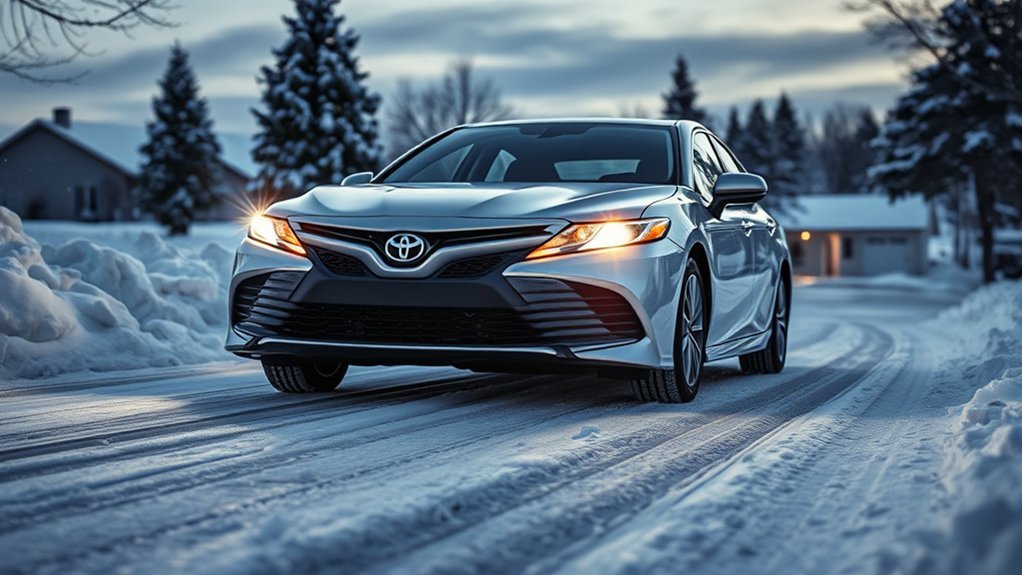
Scenario Guide: Which Camry Feature to Use for Snow, Ice, Slush, and Hills
| Condition | What to Use | What to Avoid |
|---|---|---|
| Packed snow | TRAC/VSC on, smooth throttle, winter tires | Hard acceleration or sudden lane changes |
| Black ice | Very low speed, extra distance, gentle braking | Cruise control and sharp steering |
| Slush | TRAC/VSC on, steady steering, slower speed | Crossing deep slush at highway speed |
| Uphill start | Straight wheels, light throttle, TRAC on | Flooring the accelerator |
| Icy descent | Slow before hill, gentle braking, S mode/lower range if equipped | Late braking and sudden downshifts |
| Stuck in snow | Clear snow, add traction material, turn TRAC off only if needed | Spinning tires aggressively |
[Products Worth Considering]

These X-BULL recovery traction tracks help drivers get unstuck from sand, snow, mud, or ice with a stable U-shaped elastic design and a wavy ramp that makes tire entry easier. Built from reinforced nylon, they are flexible, impact-resistant, and designed to perform in extreme temperatures while providing reliable emergency traction for a wide range of vehicles.
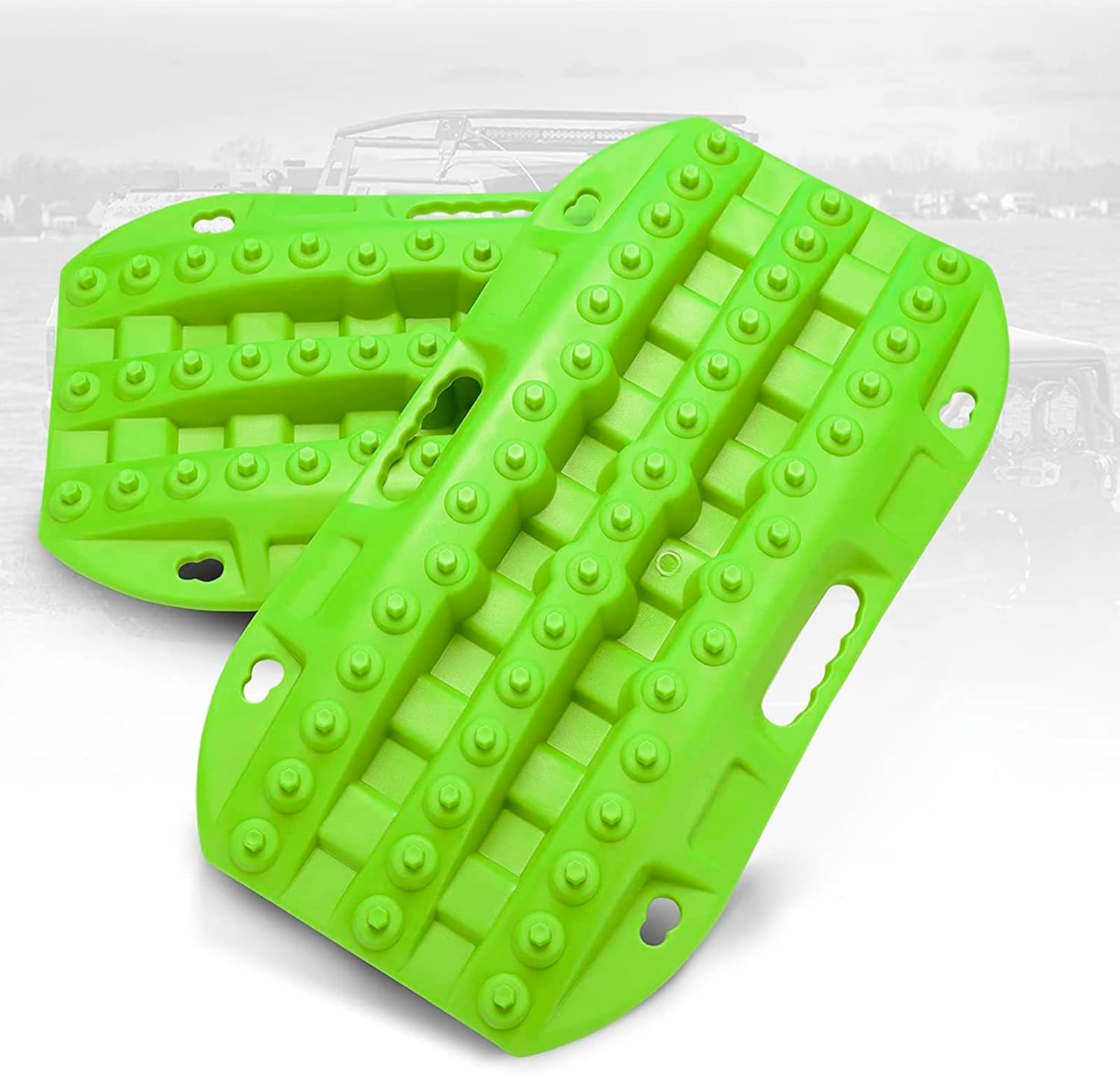
These short recovery traction boards are designed to help ATVs, UTVs, and other off-road vehicles regain grip in mud, sand, and snow. Built with strengthened teeth and a durable polypropylene construction, they provide reliable traction, easy handling, and year-round performance in tough conditions. Their nested, space-saving design and integrated shovels make them practical for carrying and using on remote adventures.

This steering clock spring is designed to restore reliable steering wheel controls across a wide range of Toyota models. It supports audio, cruise control, and other multifunction commands while matching OEM part numbers for confident replacement fitment. Built for dependable signal transfer and straightforward installation, it is an effective solution for repairing steering column control issues.
What AWD Changes—and What It Does Not
If your Camry has AWD, it can help the car get moving and maintain drive traction when conditions are slippery. That is useful in snow, but it does not make the car stop faster on ice. Braking and cornering still depend mostly on tire grip, speed, road surface, and driver input.
A front-wheel-drive Camry with good winter tires can often feel more controlled than an AWD Camry on worn all-season tires. AWD helps acceleration; winter tires help acceleration, braking, and steering.
The best winter setup is not one button. It is traction control on, proper tires, slower speed, smooth inputs, and a driver who plans every stop early.
Troubleshooting: Wheels Still Spin or the Traction Light Stays On
If the wheels still spin, do not assume traction control failed. Start with the basics:
- Check tire type. All-season tires harden and lose grip in severe cold compared with winter tires.
- Check tread depth. Low tread makes snow traction much worse.
- Check tire pressure cold. Use the pressure on the driver-door placard, not the number printed on the tire sidewall. NHTSA explains tire pressure should be measured cold on its TireWise tire safety page.
- Look for packed snow. Snow around the wheel wells, brakes, or tires can reduce control.
- Watch the warning light behavior. A flashing slip light during wheelspin is usually system operation. A light that stays on may need diagnosis.
- Scan ABS/TRAC codes if the warning remains. A wheel-speed sensor or wiring issue can affect TRAC, ABS, and VSC.
[Products Worth Considering]

This digital tire tread depth gauge helps you check tire wear quickly and accurately with fractional inch, decimal inch, and millimeter readouts. Its large LCD screen, zero reset function, and automatic shutoff make it easy to use for cars, motorcycles, SUVs, trucks, and pickups. Designed for clear readings and dependable measurement, it is a practical tool for routine tire safety checks.

This dash clock spring replacement is designed for a wide range of Toyota vehicles and helps restore reliable steering wheel control functions. It supports audio controls, cruise control, and other multi-function commands while using vehicle-specific connectors for easier installation. Built with durable materials and OEM-referenced part compatibility, it is a practical solution for repairing steering wheel signal issues.

This extendable snow brush and ice scraper helps clear windshields and vehicle surfaces quickly in harsh winter weather. Its rotating brush head, durable bristles, and strong scraper design make it easy to remove snow and ice without scratching your car, while the comfortable grip and detachable parts improve handling and storage.
Practical Safety Tips and Vehicle Prep for Driving a Camry in Ice and Snow
Toyota’s winter-driving guidance for the 2025 Camry says to use fluids appropriate for the outside temperature, have the 12-volt battery inspected, and fit four snow tires or use tire chains on front tires where allowed. It also notes that chains cannot be mounted on vehicles with 18-inch or 19-inch tires. Review the full Toyota Camry winter driving tips for your exact model guidance.
- Use four matching winter tires. Do not mix winter tires on only one axle.
- Check tire pressure when cold. Cold weather changes pressure, and underinflation reduces stability.
- Clear the whole car. Remove snow from windows, lights, mirrors, roof, hood, trunk, wheel openings, and around the tires.
- Carry basic traction supplies. A small shovel, gloves, flashlight, traction mats, and a blanket can turn a stuck situation into a short delay.
- Slow down before the problem area. NHTSA’s winter driving tips emphasize that slick or snow-covered surfaces make vehicles harder to control or stop.
Note: If local chain laws apply, follow local rules and your owner’s manual. Chain fitment depends on tire size, wheel size, and clearance.
Frequently Asked Questions
Should I use traction control when driving a Toyota Camry in snow?
Yes. Leave traction control on for normal snow, slush, rain, and ice driving. It helps reduce wheelspin during starts and acceleration. Turn it off only if the vehicle is stuck and TRAC is preventing the wheels from moving enough to free the car.
What is Snow Mode on a Toyota Camry?
Do not assume your Camry has Snow Mode. Current U.S. Camry manual guidance lists normal, eco, and sport drive modes rather than a universal Snow Mode. If your exact model-year, market, or trim has a snow setting, follow that owner’s manual.
When should I turn TRAC off in a Camry?
Turn TRAC off only when the Camry is stuck in snow, mud, or sand and the system is cutting power too much to rock the car free. Clear snow first, add traction material if available, use light throttle, and turn TRAC back on after the car is free.
Does a Toyota Camry have Downhill Assist Control?
Do not treat Downhill Assist Control as a standard Camry feature. For slippery descents, slow before the hill, avoid cruise control, brake gently, and use S mode or a lower shift range if your Camry is equipped and your manual allows it.
Is AWD enough for driving a Camry in snow?
No. AWD can help the Camry accelerate on slippery roads, but it does not replace winter tires or make braking distances disappear. You still need slower speeds, smooth inputs, and extra following distance.
Conclusion
Use your Toyota Camry’s traction control in snow by keeping TRAC and VSC on for normal winter driving, accelerating gently, and letting the systems help reduce wheelspin. Do not rely on unsupported Snow Mode or Downhill Assist advice unless your exact owner’s manual confirms those features. If the Camry gets stuck, clear the wheels, add traction, turn TRAC off only if needed, and turn it back on once you are moving again.
Sources
- Toyota Camry Driving Assist Systems — TRAC, VSC, hill-start assist, and related system descriptions
- Toyota Camry Driving Mode Select Switch — current Camry drive-mode language
- Toyota Camry Hybrid Transmission — S mode and engine-braking control
- Toyota Camry Winter Driving Tips — snow tires, chains, and winter preparation
- Toyota Camry If the Vehicle Becomes Stuck — stuck-vehicle procedure and TRAC-off context
- NHTSA Winter Driving Tips — winter road safety, speed, and following-distance guidance