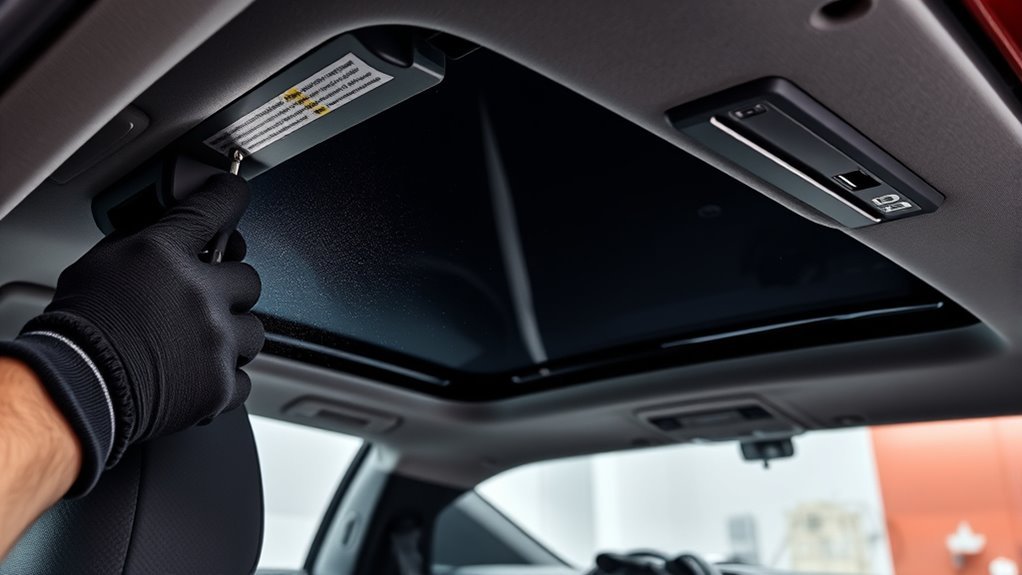
If your Toyota Camry’s sunroof is leaking, confirm it by having someone spray water while you watch for drips around the headliner, seals, seats and carpet. Inspect the rubber weatherstrip and tracks for cracks or debris, locate the four corner drains and clear them with thin wire or a soft brush, then test again. Clean and lubricate seals with silicone, adjust glass alignment if needed, and replace brittle weatherstrip; continue for step‑by‑step repair and prevention guidance.
Confirm a Toyota Camry Sunroof Leak (Quick Water Test)

Want to confirm a sunroof leak in your Toyota Camry? Have a friend spray water directly onto the closed sunroof while you sit inside and observe. You’ll perform a simple, controlled leak detection to verify intrusion without guessing. Watch the perimeter and ceiling for any water entry; steady drips or rivulets during the test are definitive indicators. Monitor seats, carpets, and the roof liner for damp spots forming; these show where water’s migrating into the cabin. Record the locations and timing of any wetting so you can target sunroof maintenance precisely. If you detect water, don’t stop at confirmation—you’ll need to investigate seals and the drainage system next to find the source. This quick water test is practical, technical, and empowers you to take decisive action rather than accept ongoing interior damage. Use the results to plan repairs or professional service and reclaim control over your vehicle’s weatherproofing.
Locate and Inspect Seals, Tracks, and Drain Holes
Start by visually and physically inspecting the sunroof seals, tracks, and drain holes so you can pinpoint the leak source: look for cracks, tears, or compressed weatherstripping; clear debris from the tracks that could prevent full closure; and locate each corner drain hole to verify they’re unobstructed. Perform a focused seal inspection: press along the weatherstrip, feel for soft spots or separations, and note any damage that undermines a watertight seal. For track maintenance, remove loose dirt and grit with a soft brush or vacuum, then cycle the sunroof to dislodge trapped particles. Identify each corner drain outlet and, without forcing, probe the upper openings with a thin, flexible wire to detect blockages in the tubing. Mark any compromised seals or obstructed drains for repair or replacement. These steps give you direct control over failure points, letting you act decisively to restore proper sealing and drainage before pursuing wet-testing or component replacement.
Clear Sunroof Drains and Run a Water Test
With seals, tracks and drain openings inspected, move on to clearing each corner drain and verifying flow with a water test. You’ll locate the four drain outlets, then use a thin, flexible wire or soft-bristled brush to perform systematic drain cleaning: insert gently, dislodge debris, and withdraw while rotating to avoid kinking or tearing tubing. Work each corner until you feel resistance drop.
After mechanical cleaning, run a controlled water flow test: pour water slowly along the sunroof seal so it follows the intended channels. Observe each drain exit for steady discharge under the vehicle or into an inspection port; no backup or puddling should occur. Repeat cleaning if flow is interrupted.
Do this maintenance at least twice a year to prevent leaks, mold, and interior damage. By keeping drains clear and confirming unobstructed water flow, you reclaim control over your cabin environment and reduce the risk of persistent sunroof leaks.
Seal, Lubricate, and Adjust to Stop Leaks (DIY Steps + Test)
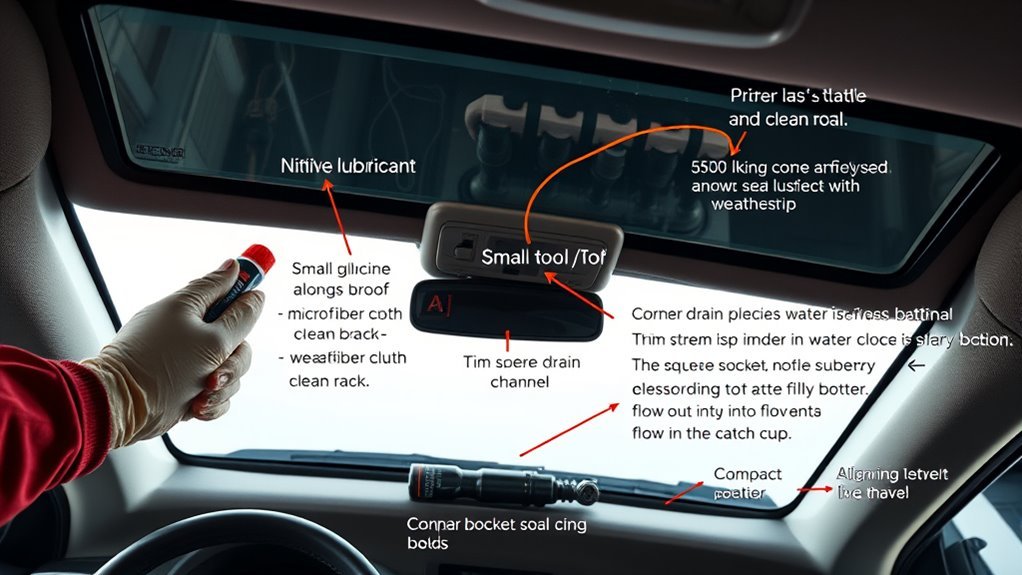
Inspect the rubber seals for cracks, hardening, or gaps and replace any section that won’t compress evenly against the glass; a compromised seal’s the most common cause of sunroof leaks. You’ll perform seal replacement on worn segments: remove the old seal, clean the channel, fit the new profile, and seat it evenly. Clean the weatherstrip with a mild soapy solution, rinse, dry, then apply approved lubrication techniques — a silicone spray or paste — to restore flexibility and water shedding.
Next, check glass alignment: loosen mounting screws slightly, operate the sunroof to center it, then re-torque screws so the glass sits flush without binding. After adjustments, pour water around the closed sunroof to run a practical leak test and confirm drainage tubes clear any residual flow. Maintain this routine twice yearly: inspect seals, reapply lubrication, and verify drains. That disciplined maintenance frees you from recurring leaks and keeps the cabin dry.
When to Replace Weatherstrip or Realign Sunroof (Signs & Costs)
If leaks continue after you’ve cleaned and cleared the drains, it’s time to evaluate the weatherstrip and alignment: visible cracks, hardening, or sections that won’t compress evenly mean the seal needs replacing, while a sunroof that doesn’t sit flush, rattles, or fails to close fully indicates misalignment.
You should inspect the weatherstrip lifespan by checking for brittleness, shrinking, or surface breakdown; age and UV exposure shorten service life. Alignment indicators include gaps at the front or rear, uneven contact when closed, and noise during travel or operation. If the seal is compromised, expect parts costs roughly $50–$150; DIY replacement saves labor but requires correct trim removal and adhesive. Professional installation runs about $100–$300 extra depending on rates; realignment often involves adjusting mounting bolts and track position, which pros handle faster and with calibrated tolerances. Prioritize decisive action: a proper seal and precise alignment stop water intrusion, protect the cabin, and restore your control over the vehicle’s condition.
Preventative Maintenance and When to Get Professional Help
After you’ve addressed seals, alignment, and drain clogs, keep a regular maintenance rhythm to prevent future leaks: check and clear drains twice a year, lubricate weatherstrips with a rubber-safe conditioner to preserve flexibility, and run a water test by pouring along the seal to confirm proper drainage. You’ll schedule sunroof maintenance as part of seasonal vehicle care: inspect seals for cracking, clear drain tubes with compressed air or flexible wire, and document conditions and any repairs for warranty or dealer follow-up. Use a simple log—date, findings, actions—to retain evidence and track recurrence. If a controlled water test still shows ingress, or you detect persistent wetness after cleaning and conditioning, don’t persist with guesses. Seek a qualified technician to check for misalignment, collapsed drains, or hidden frame damage. Professional intervention prevents progressive interior damage and preserves your rights under warranty. This approach keeps you proactive, empowered, and focused on effective leak prevention.
Frequently Asked Questions
How Often Do Toyota Sunroofs Leak?
They leak occasionally, especially in neglected units; you should test drains every six months. Use sunroof maintenance tips to prevent common causes like clogged drains, deteriorated seals, and debris buildup, so you reclaim control and freedom.
How to Permanently Seal a Leaking Sunroof?
You permanently seal a leaking sunroof by replacing damaged weatherstrips, realigning glass, clearing drains, and applying silicone sealant to cracks; follow sunroof maintenance tips and leak prevention strategies, and consult a pro if leaks persist.
Why Would My Sunroof Be Causing Water to Leak in My Car?
Your sunroof’s leaking because seals, drains or alignment failed — common leak causes. You’ll perform sunroof maintenance tips: clean drains, inspect seals, realign glass, and guarantee it fully closes so you reclaim control and protect your cabin.
How Much Does It Cost to Reseal a Sunroof?
You’ll pay about $200–$500 to reseal a sunroof; labor’s $100–$300, with $50–$150 extra for weatherstrip replacement. Think of it as gaining freedom—use sunroof maintenance tips to prevent common repair issues.
Conclusion
You’ve run the quick water test, checked seals, tracks and drains, and cleared blockages — and the leak’s still there. Before replacing the weatherstrip or realigning the panel, test the theory that clogged drains, not failed seals, cause most Camry sunroof leaks: plug the drains intentionally, run a calibrated water test, then clear them and retest. If leakage vanishes, drains were the culprit. If not, expect seal replacement or professional realignment; budget accordingly.