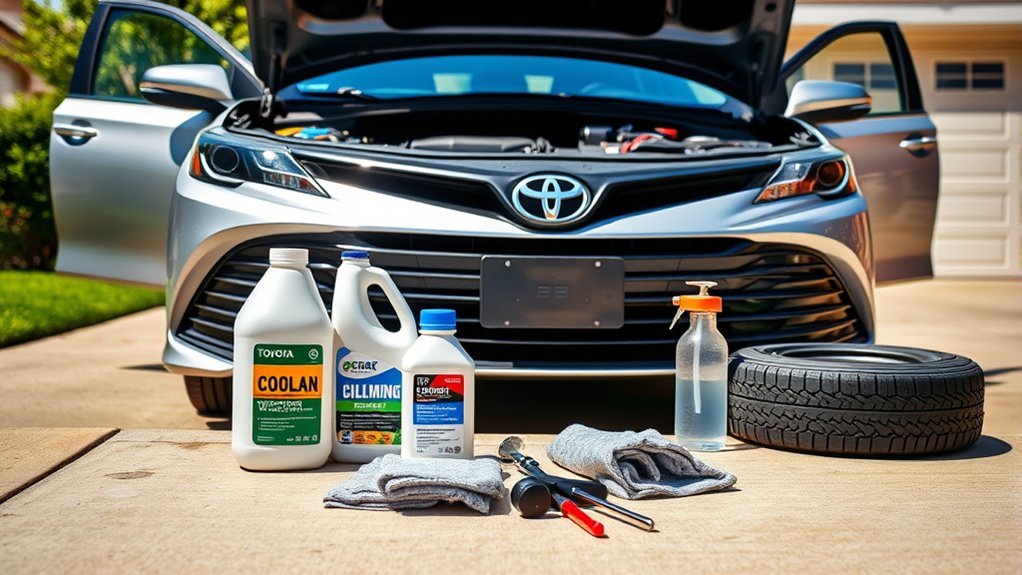
Get your Toyota Camry summer-ready by testing the A/C on its coldest setting and recharging or repairing leaks if cooling is weak, check coolant level and condition, verify tire pressure and tread, rotate tires, and inspect brakes and pads for wear or glazing. Clean or replace filters, check belts and spark plugs per mileage, test battery and alternator voltages, and top up fluids. Follow this checklist before trips — keep going to find specific steps and intervals.
Summer-Ready Checklist for Your Camry
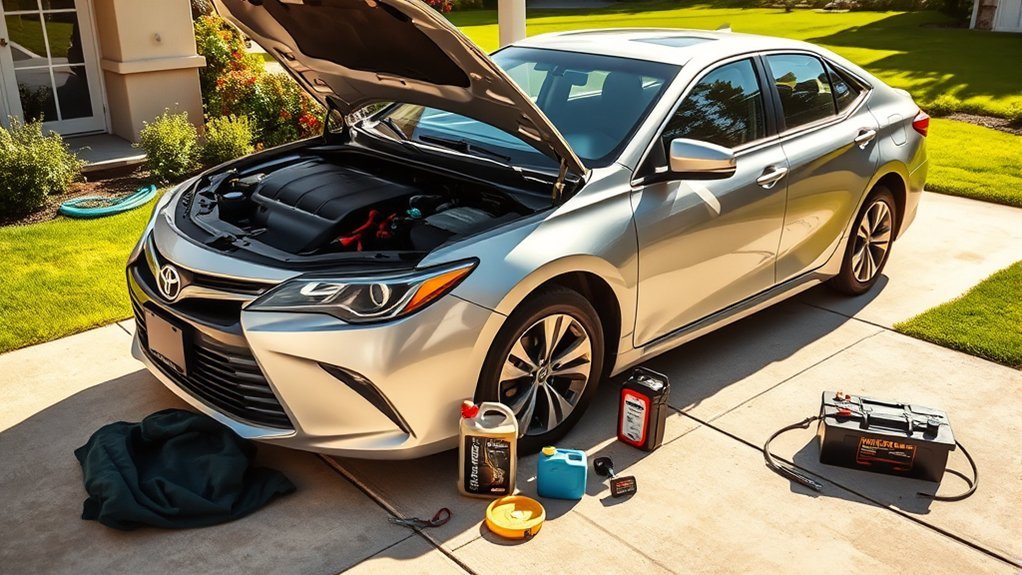
Before the heat hits, make sure your Camry’s cooling and comfort systems are ready: test the air conditioning and recharge it if needed, top off engine coolant to prevent overheating, check and inflate tires to the recommended pressure, swap a dirty engine air filter, and replace any wipers that leave streaks so you stay comfortable and safe on summer drives. You’ll want to verify coolant level and condition, addressing leaks or old fluid to avoid breakdowns on long drives. Inspect tire sidewalls and pressure; adjust to the manufacturer’s PSI to preserve handling and fuel economy under heat. Swap a clogged engine air filter to restore airflow and efficiency—vital for spirited, liberated travel. Confirm wipers clear streaks to maintain visibility in sudden storms. These summer driving tips focus on prevention and control: a functional A/C, topped-off coolant, properly inflated tires, fresh air filter, and reliable wipers are true road trip essentials that keep you free to roam without mechanical limits.
Test and Recharge Your Camry’s A/C
Start by running your Camry’s A/C on the coldest setting for about 10 minutes to confirm A/C performance. If cooling is weak, check refrigerant levels and have a pro recharge it if they’re low. Also inspect the compressor, condenser and connections for visible leaks or damage that could explain the problem.
A/C Performance Check
When your Camry’s A/C blows warm or the airflow seems weak, test the system immediately by turning it on and checking for cool, steady air; if it’s not cold, you may need a refrigerant recharge. You’ll run quick A/C troubleshooting tips: verify strong blower output, inspect the cabin air filter for clogs, and listen for unusual compressor noise. Look at the compressor clutch and hoses for visible wear or leaks—compressor maintenance advice includes replacing worn belts and addressing leaks promptly to avoid bigger failures. Use a gauge to confirm pressures and schedule a professional service every two years to keep efficiency high. Acting now frees you from uncomfortable drives and reduces risk of costly repairs later.
Refrigerant Level Inspection
If your A/C is weak or you’ve found clogged filters and worn belts, next check the refrigerant level to confirm the system has enough charge to cool properly. You’ll want an annual inspection and a pre-summer check so low charge from a refrigerant leak or normal depletion won’t sap cooling efficiency. If vents aren’t cold, don’t guess—have a qualified technician test pressure, verify the correct R-134a type, and recharge if needed. A proper charge restores cooling efficiency and reduces engine load, freeing you from swelter and wasted fuel. Avoid DIY overfilling; incorrect refrigerant or technique can harm the system. Schedule professional service promptly to keep your Camry reliably cool and efficient.
System Leak Detection
Because even a small leak can sap cooling and damage components, regularly check your Camry’s A/C system for leaks and address them promptly. You’ll use leak detection dye during service to trace escaping refrigerant; inspect hose connections, fittings, condenser, and evaporator visually and with UV light. If the compressor cycles too often, suspect a leak or low charge.
- Use dye and UV or electronic sniffer for reliable leak detection.
- Recharge to the manufacturer’s spec (about 1.5–2.0 lb) after repairs.
- Schedule summer checks before peak heat.
Keep refrigerant maintenance regular to protect performance and avoid costly failures. Act quickly when you see signs — that’s how you retain control and freedom on the road.
Check Coolant & Fluids (Type, Levels, When to Flush)
Check your coolant and fluids regularly to keep the Camry running cool and safe: use Toyota’s recommended red coolant, top off transmission, brake, and power-steering fluids at the specified levels, and plan a full coolant flush around 100,000 miles while consulting your owner’s manual for exact fluid types and intervals. You’ll perform effective coolant maintenance by visually checking the reservoir when the engine’s cold, keeping levels between the min/max marks, and using the correct coolant to prevent corrosion and overheating. Check transmission, brake, and power-steering fluids for proper color, level, and contamination; low or dark fluids demand service. In hot months, verify engine oil level and condition—clean oil lubricates and aids temperature control. Schedule a coolant system flush around 100k miles to remove deposits and restore efficiency, or sooner if the manual advises. Keep records of fluid types used and service dates so you stay free from overheating, brake fade, or steering issues and remain confidently in control of your Camry.
Camry Tires: Pressure, Tread Depth & Rotation
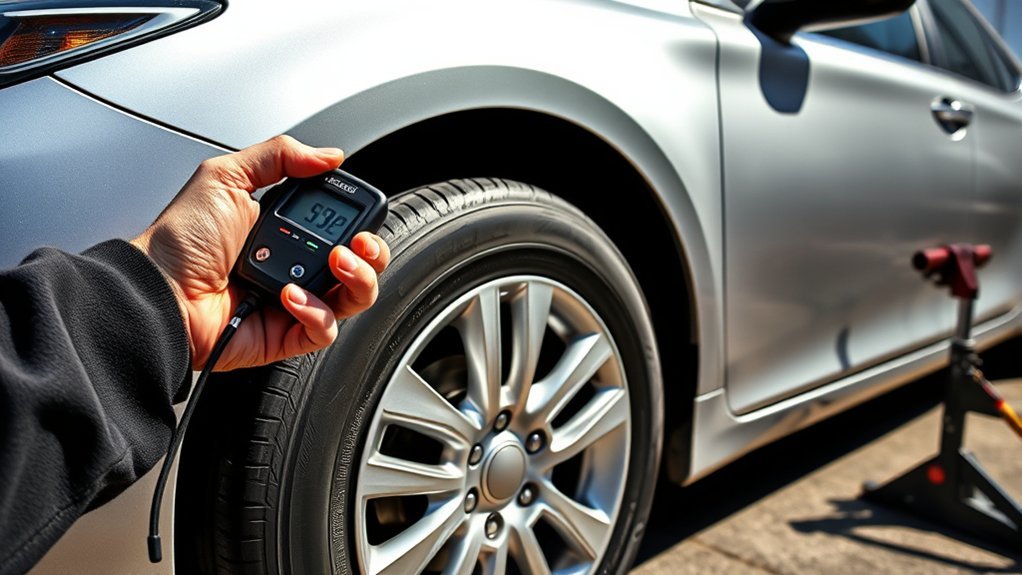
1 simple routine keeps your Camry safer and more efficient: monitor tire pressure, tread depth, and wear patterns regularly. Check tire pressure at least monthly and before long trips, inflating to the manufacturer’s spec on the placard. Proper pressure preserves fuel economy, handling, and tire life. Use the penny test to gauge tread depth — if Lincoln’s head shows, replace the tire. Watch wear indicators and sidewall damage; cracking or bulging requires immediate replacement to avoid blowouts.
Rotate your tires every 5,000–8,000 miles to equalize wear and extend service life. Uneven wear often signals alignment or suspension issues; fix those to regain control and safety. Adopt this simple maintenance rhythm to free yourself from avoidable roadside problems and keep your Camry performing reliably.
- Check pressure monthly and pre-trip.
- Test tread depth; heed wear indicators.
- Rotate every 5,000–8,000 miles.
Brakes: Summer Wear Signs & Service Triggers
Summer heat accelerates brake wear, so inspect pads, rotors, and fluid more often when temperatures climb. You’ll perform a brake pad inspection by checking pad thickness and looking for glazing or cracking from heat; pads thinner than about 3–4 mm or making squeaking/grinding noises need prompt service. Noticeable vibration, pulling, or a pulsating pedal often points to rotor damage—look for scoring, warping, or blueing on the rotor surface. A soft or spongy brake pedal signals fluid breakdown or air in the lines; replace fluid and bleed the system if responsiveness drops. If you drive stop-and-go, tow, or carry heavy loads, schedule inspections more frequently, since those conditions accelerate wear. Act early to keep control and freedom on the road: replace worn pads, machine or replace warped rotors, and service fluid as needed. You’ll preserve stopping power and avoid roadside compromises by treating summer brake symptoms decisively.
Battery & Electrical Checks for Summer Reliability
Check the battery for secure mounting, test its charge capacity, and replace it if it’s weak to avoid summer failures. Inspect terminals and clean any corrosion to maintain a solid electrical connection in high heat. Also test the charging system and scan fuses and wiring for heat-related wear so accessories and starting remain reliable.
Battery Health Inspection
Feeling confident your Camry will start on the hottest day of the year? Inspect the battery now to stay free from roadside dependence. Check terminals for buildup and follow corrosion prevention tips: clean with a baking soda solution, dry, and apply dielectric grease. Use a multimeter; with the engine off, expect 12.4–12.7 volts. Look for swelling, leakage, or loose mounts that vibration can worsen. If the battery’s over three years old, weigh battery replacement options — OEM, aftermarket, or high-temp specialty units — and consider a professional charge test.
- Clean terminals and secure mounts.
- Measure resting voltage.
- Inspect casing for damage.
Act decisively to keep your autonomy on the road.
Charging System Test
You’ve already cleaned the terminals and verified resting voltage—now verify the charging system keeps the battery topped while the engine runs. Start the engine, measure voltage at the battery: 13.7–14.7V confirms proper alternator output. If reading stays below that, act—loose belt, poor connection, or failing alternator reduces reliability in summer heat. Tighten and inspect connections; make sure no oxidation impedes flow. If battery is over three years or cranking slows, schedule a professional charging system maintenance check.
| Item | Quick check |
|---|---|
| Resting voltage | ~12.6V+ |
| Running voltage | 13.7–14.7V |
Follow charging system maintenance and battery longevity tips to keep you free from roadside constraints.
Corrosion And Terminal Care
Because corrosion can silently rob your battery of reliable contact, inspect the terminals regularly and clean any white or greenish buildup with a baking-soda-and-water paste, then rinse and dry before tightening connections. You want freedom from breakdowns, so practice disciplined battery maintenance: check charge and condition, test voltage with a multimeter (12.4–12.7 V engine off), and replace batteries older than three years. Prioritize terminal cleaning and secure connections to preserve electrical flow in hot weather.
- Inspect terminals monthly for corrosion and looseness.
- Clean with baking-soda paste, rinse, dry, then tighten.
- Test voltage and replace weak or aged batteries.
Stay proactive—maintain terminals and the battery so heat doesn’t trap you.
Filters, Belts & Spark Plugs: Summer Replacement Guide
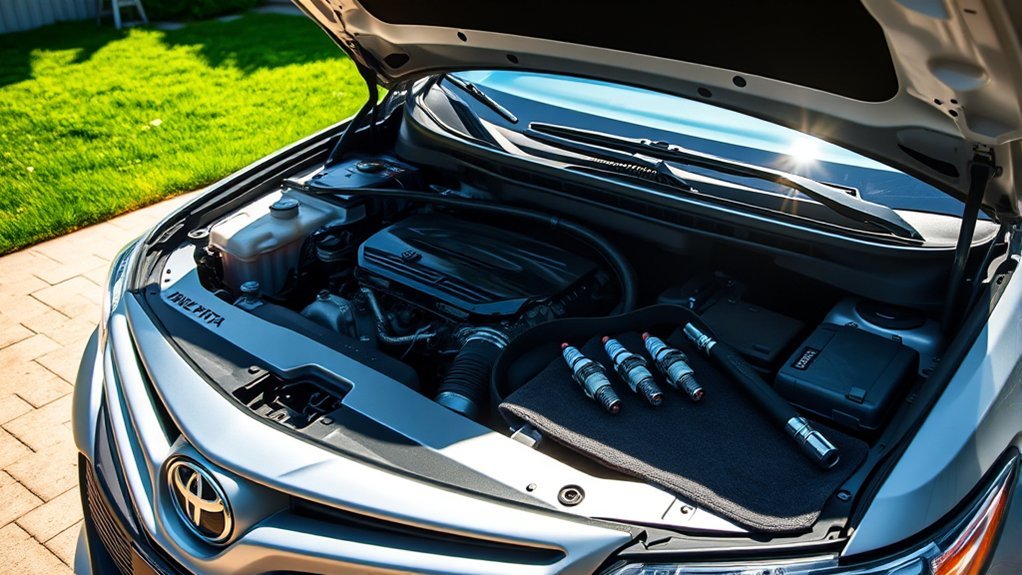
When summer brings dust and heat, check your air and cabin filters, serpentine belt, and spark plugs so your Camry’s engine and AC keep running efficiently; replace filters more often in dusty conditions, swap the belt at the first sign of cracking or glazing, and inspect spark plugs at 60,000 miles for V-6s (120,000 for four-cylinders). You’ll protect engine efficiency, maintain airflow optimization, and preserve cabin air quality. Prioritize filter maintenance and belt inspection; use OEM parts for reliability. Inspect the cabin filter monthly in heavy pollen or dust. Replace the serpentine belt if you see cracks, glazing, or fraying to avoid accessory failure. Check spark plugs at the recommended intervals to prevent misfires and loss of power. Choose OEM spark plug replacement for consistent performance. Be decisive: clean or replace filters, change worn belts, and swap plugs on schedule. That’s how you keep freedom on the road without breakdowns.
| Item | Action |
|---|---|
| Air & Cabin Filters | Inspect/replace often |
| Serpentine Belt | Replace if worn |
| Spark Plugs | Inspect/replace per miles |
Summer Emergency Kit, Driving Tips & When to Visit the Dealer
If you’re heading out in summer heat, pack a compact emergency kit with water, non-perishable snacks, a flashlight, a basic tool set, and a first-aid kit, and check coolant, A/C performance, and tire pressure before you leave so you won’t be caught off guard. You want freedom on the road, not dependence—inspect coolant levels, confirm the A/C cools efficiently, and set tire pressure to spec; hot pavement raises pressure and wears tread faster. Carry roadside assistance info and a charged phone; know how to change a tire or whom to call.
- Check coolant and A/C.
- Verify tire pressure and tread.
- Pack emergency kit and contacts.
Drive deliberately: avoid heavy loads, use cruise control on flats, and time drives to skirt peak heat. If you sense overheating, pull over, let the engine cool, and call roadside assistance. Schedule a dealer visit before long summer travel for a systems check—brakes, belts, fluids—so your Camry stays reliable and liberates your journeys.
Frequently Asked Questions
What Is the 30-60-90 Rule for Car Maintenance?
The 30-60-90 rule is a maintenance schedule where you perform preventive care at set intervals: 30 days for basics, 60 days for inspections and oil changes, 90 days for deeper checks to keep you free and driving confidently.
What Should I Keep in My Car in the Summer?
Think of your trunk like a lifeboat: keep an emergency kit, spare gallon coolant, first aid, portable charger, sunscreen, water, tire pressure gauge, spare tire and jack—so you’ll stay safe, mobile, and free on summer roads.
Conclusion
You’ve got a compact, practical plan to keep your Camry summer-ready; follow it and you’ll cut breakdown risk and improve comfort. Did you know over 60% of roadside breakdowns in hot months are cooling- or battery-related? That means simple checks—A/C recharge, coolant level, battery health—prevent most issues. Keep tires, brakes, filters and belts inspected, pack a basic emergency kit, and visit your dealer when a warning light or odd noise shows up.