If your Toyota Camry shudders during acceleration, it’s often due to torque converter issues, especially at 20-45 mph. You might notice persistent vibrations, rough downshifting, or unusual noises. Start by changing the transmission fluid with Toyota WS ATF or a compatible synthetic option, which can offer temporary relief. Consider using additives like Lubegard Platinum ATF for enhanced performance. Keep an eye on maintenance and software updates to address underlying problems. Find out more about effective long-term solutions.
Identifying the Causes of Shuddering in Your Camry
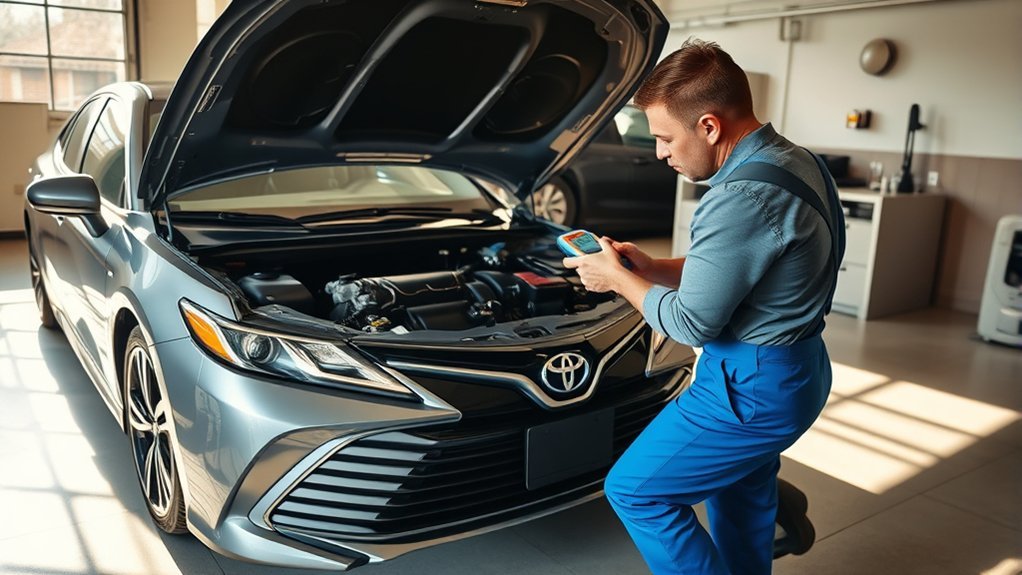
When you notice shuddering in your 2012-2014 Toyota Camry, especially at specific speeds like 20-25 mph or 40-45 mph, it’s often tied to issues with the torque converter’s engagement. This shuddering can manifest as rough downshifting and noticeable vibrations during acceleration, particularly in 4th and 5th gears. These symptoms indicate that the torque converter may not be functioning effectively, leading to an uncomfortable driving experience.
While many owners have benefited from firmware updates under the Limited Service Campaign (LSC E03), you might still face shuddering. One effective way to combat this is by switching to thicker synthetic fluids like Valvoline Maxlife, which can enhance fluid viscosity and improve performance. Regular maintenance, including timely fluid changes, is essential to keeping your transmission healthy and minimizing shuddering. By staying proactive, you can liberate your Camry from frustrating vibrations and enjoy a smoother ride.
Symptoms of Shuddering: When to Seek Help
Have you noticed persistent vibrations or shuddering while accelerating your Toyota Camry? These shuddering symptoms can indicate underlying acceleration issues that shouldn’t be ignored. If you experience any of the following, it’s time to seek help:
Persistent vibrations or shuddering during acceleration in your Toyota Camry indicate potential issues that need immediate attention.
- Vibrations at Specific Speeds: Feel shuddering around 20-25 mph or 40-45 mph during light acceleration.
- Persistent Clutch Engagement Problems: Notice vibrations that don’t resolve after fluid service or software updates.
- Unusual Transmission Noises: Hear strange sounds accompanying the shuddering.
- Fluid Condition Changes: Observe dirty or burnt transmission fluid, indicating potential problems.
Ignoring these symptoms can lead to more significant issues, including the need for torque converter replacement. Monitoring your transmission’s performance and fluid condition is essential. If you notice these signs, don’t hesitate to get your Camry checked out to guarantee a safer, smoother ride.
Immediate Steps for DIY Solutions to Shuddering
If you’re experiencing shuddering during acceleration in your Toyota Camry, addressing the issue promptly can save you time and money. Start with fluid maintenance: drain and refill the transmission fluid using Toyota WS ATF or a compatible full synthetic. This quick fix can temporarily relieve shuddering symptoms for about 10 months or 10,000 miles. Consider adding a transmission additive like Lubegard Platinum ATF to enhance performance further.
Next, monitor the transmission fluid regularly to guarantee it remains in good condition, as poor fluid quality can lead to more significant problems. If shuddering persists, look into software updates for the torque converter; many owners have found success with reprogramming. Finally, keep an eye on component wear, particularly the clutch assembly, as uneven wear can worsen shuddering during acceleration. Taking these steps can empower you to tackle shuddering head-on.
Best ATF Options for Reducing Shuddering in Your Camry

Choosing the right automatic transmission fluid (ATF) can make all the difference in reducing shuddering during acceleration in your Toyota Camry. To tackle shudder causes effectively, consider these top ATF options that emphasize fluid compatibility and performance:
- Valvoline Maxlife Multi-Vehicle ATF: A full synthetic fluid that exceeds Toyota WS standards, known for superior shudder control.
- Castrol Transmax ATF/CVT Universal: Thicker synthetic fluid offering viscosity benefits to help minimize shuddering.
- Toyota Genuine WS ATF: The OEM choice, ensuring compatibility and reliability for your Camry.
- Frequent Fluid Changes: Regular maintenance is essential for preserving dispersant levels, especially in high-mileage vehicles.
Avoid mixing different ATF types, as it can worsen transmission issues. By selecting the right ATF and maintaining it properly, you can liberate your Camry from annoying shuddering and enhance its performance.
How Can Software Updates Fix Your Camry’s Shuddering?
Software updates can greatly enhance your Camry’s performance by fixing a known torque converter firmware bug. This update improves clutch engagement during acceleration, which directly addresses the shuddering issue many owners experience. While some drivers see great results, others may still need further repairs if shuddering persists.
Software Bug Resolution
While many drivers may not realize it, a simple software update can greatly enhance your 2012-2014 Toyota Camry’s performance, especially when it comes to addressing shuddering during light acceleration. This software bug in the torque converter control can lead to frustrating experiences, but there’s a solution. Here’s how the update works:
- Improves Torque Converter Operation: It fine-tunes the control parameters.
- Reduces Clutch Engagement Frequency: Less engagement means smoother acceleration.
- Free Reprogramming: Available at any Toyota dealership until October 31, 2017.
- Warranty Compliance: Confirm your vehicle stays under warranty while enhancing performance.
Enhanced Torque Converter Performance
When it comes to addressing shuddering in your 2012-2014 Toyota Camry, enhanced torque converter performance can make a significant difference. Toyota’s software update targets a firmware issue, optimizing torque converter adjustments for smoother acceleration. This update, part of the Limited Service Campaign (LSC E03), offers free reprogramming and aims to mitigate engagement problems.
Here’s a quick overview of the benefits:
| Aspect | Before Update | After Update |
|---|---|---|
| Shudder Severity | High | Reduced |
| Engagement Smoothness | Rough | Smoother |
| Performance Enhancements | Minimal | Significant |
| Owner Feedback | Mixed | Variable but improved |
Repair Options for Shuddering: Dealer vs. Independent Shop
When your 2012 Toyota Camry shudders during acceleration, you’ll need to weigh your repair options carefully. Dealers have the expertise and tools to handle specialized issues, often backed by warranties, while independent shops may offer lower costs but might lack access to essential updates. Understanding the differences in repair processes and equipment can help you make an informed choice that best suits your needs.
Repair Process Comparison
Choosing between a dealer and an independent shop for fixing the shuddering in your 2012 Toyota Camry can greatly impact both your wallet and the quality of service. Here’s a quick comparison of your options:
- Dealer Advantages: Access to specific Toyota software updates and torque converter replacements, often covered under warranty.
- Costly Repairs: Dealer services typically range from $2,000 to $3,000, especially for thorough diagnostics.
- Independent Shop Benefits: Offers ATF drain and refill services for $100-$300, providing a temporary fix.
- Fluid Alternatives: Many independent mechanics recommend full synthetic fluids that exceed Toyota standards, saving you money.
While dealers provide official fixes, independent shops excel in cost-effective solutions, though they might miss critical manufacturer updates.
Cost Considerations
Cost considerations for fixing the shuddering in your 2012 Toyota Camry can vary greatly between dealerships and independent shops. At a dealership, you might face repair costs ranging from $2,000 to $3,000, mainly for torque converter replacement due to expired repair warranties. In contrast, independent shops often provide more affordable options, with transmission fluid services typically costing between $100 and $300. Many owners prefer these shops for a personalized experience and cost-effectiveness, especially when addressing shuddering causes. However, if your vehicle is still under warranty or needs specific recalls like the LSC E03 for software updates, dealership services can be beneficial. Research local independent shops to find reliable and budget-friendly solutions for your Camry’s issues.
Expertise and Equipment Availability
While considering repair options for the shuddering issue in your 2012 Toyota Camry, it’s important to weigh the expertise and equipment availability between dealerships and independent shops.
- Dealership Expertise: Dealerships often have specialized training and access to OEM parts, ensuring accurate transmission diagnostics.
- Technical Updates: They can access the latest technical service bulletins (TSBs), which independent shops may lack.
- Cost-Effectiveness: Independent shops generally offer lower labor rates, providing cost-effective solutions like fluid changes, though expertise may vary.
- Repair Warranties: Dealer repairs frequently come with repair warranties, offering peace of mind.
Ultimately, evaluating each shop’s reputation in handling transmission issues is vital to avoid future problems and costs.
Simple Maintenance Tips to Keep Your Camry Running Smoothly
Keeping your Toyota Camry running smoothly is essential for a reliable driving experience, and simple maintenance steps can make a big difference. Start with fluid maintenance—change the transmission fluid every 30,000 miles. Use Toyota WS ATF or a high-quality synthetic fluid like Valvoline Maxlife Multi-vehicle ATF to guarantee peak transmission care and longevity.
Next, perform regular inspections of your tires and suspension components. Worn or misaligned parts can lead to unwanted vibrations during acceleration.
Don’t forget about software updates for the torque converter, especially if your vehicle is still under warranty or has been part of recall campaigns. Finally, monitor fluid conditions; consider using additives like Lubegard Platinum ATF to help mitigate shuddering symptoms. By following these simple tips, you’ll enhance your Camry’s performance and enjoy a smoother ride.
Frequently Asked Questions
Can a Transmission Shudder Be Fixed?
Yes, you can fix a transmission shudder. Regular transmission maintenance helps address shudder symptoms. Consider fluid changes, software updates, or even a torque converter replacement for effective solutions, ensuring smoother driving and enhanced performance.
Why Does My Camry Stutter When Accelerating?
Ah, the joys of modern engineering! Your Camry stutters during acceleration due to engine performance issues, often linked to your driving habits. Check the torque converter, transmission fluid, and software updates for smoother journeys ahead.
What Is the Transmission Shudder Recall on the 2012 Toyota Camry?
The transmission shudder recall for your 2012 Toyota Camry addresses symptoms like shuddering during acceleration. Recall details include free software updates and potential torque converter replacements if issues persist beyond the initial fix.
Conclusion
In summary, addressing shuddering in your Toyota Camry is essential to maintaining its performance and longevity. Did you know that nearly 30% of drivers experience transmission-related issues in their vehicles? By staying proactive with maintenance and seeking professional help when needed, you can keep your Camry running smoothly. Whether it’s a simple fluid change or a software update, taking these steps guarantees a more reliable driving experience. Don’t wait; your Camry deserves the best care!