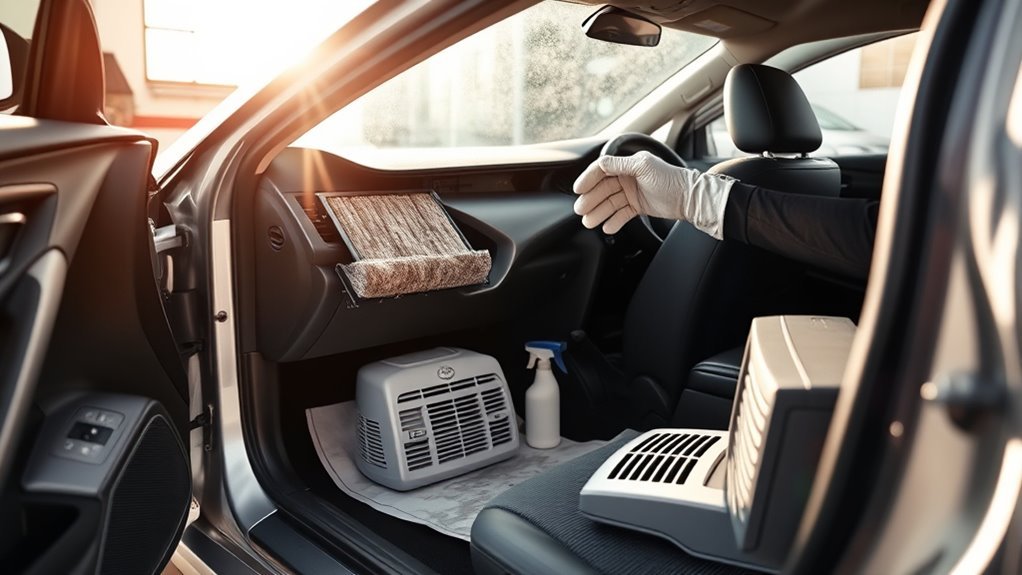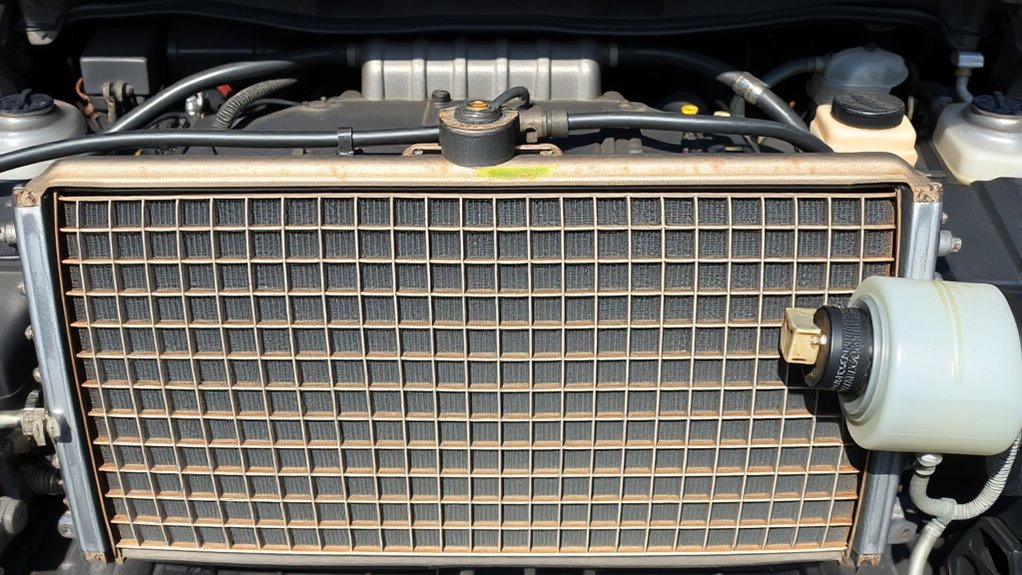
Last updated: August 31, 2026 · Reviewed for accuracy by: [VERIFY: add the real reviewer name and credentials]
A Toyota Camry radiator has no factory-set replacement age or mileage. Toyota schedules coolant service and cooling-system inspections rather than routine radiator replacement. RepairPal says replacement timing varies greatly and reports typically seeing radiators replaced at about 80,000 miles, but that is an observed repair benchmark, not a Toyota Camry replacement interval. Keep the radiator in service while it stays leak-free, maintains normal engine temperature, and shows no severe corrosion, restriction, or physical damage. Replace it when testing confirms a cracked tank, leaking seam or core, severe corrosion, internal clog, or damage that prevents proper cooling.
Quick Answer
A Toyota Camry radiator can remain serviceable for many years, but Toyota does not publish a radiator replacement interval. RepairPal reports that radiator replacement timing varies greatly and says it typically sees replacement at about 80,000 miles; do not treat that number as a Toyota service requirement. Judge your radiator by leaks, coolant loss, corrosion, restricted flow, physical damage, and whether the cooling system can hold a normal temperature.
Key Takeaways
- A coolant-service interval is not a radiator-replacement interval.
- RepairPal’s roughly 80,000-mile observed replacement point is not a Toyota factory schedule; condition and testing should determine whether the radiator needs replacement.
- For the 2025 Camry, Toyota lists initial engine/intercooler coolant replacement at 100,000 miles or 120 months. It lists initial inverter/intercooler coolant replacement, when applicable, at 150,000 miles or 180 months. Both use 50,000-mile or 60-month intervals afterward.
- Never open a cooling-system pressure cap while the engine is hot. Pressurized coolant can cause severe burns.
- Coolant loss, crusty residue, steam, rusty or cloudy coolant, and temperature warnings need prompt diagnosis.
- RepairPal’s estimate updated August 7, 2026 places average Camry radiator replacement at $931 to $1,116 before taxes, location adjustments, and related repairs.
Editorial method: This guide separates Toyota’s scheduled coolant service and inspection guidance from radiator replacement, then uses symptom-based diagnosis, Toyota maintenance guidance, current RepairPal estimates, and government coolant-safety references. It does not replace an inspection of your exact Camry.
How Long Does a Toyota Camry Radiator Usually Last?
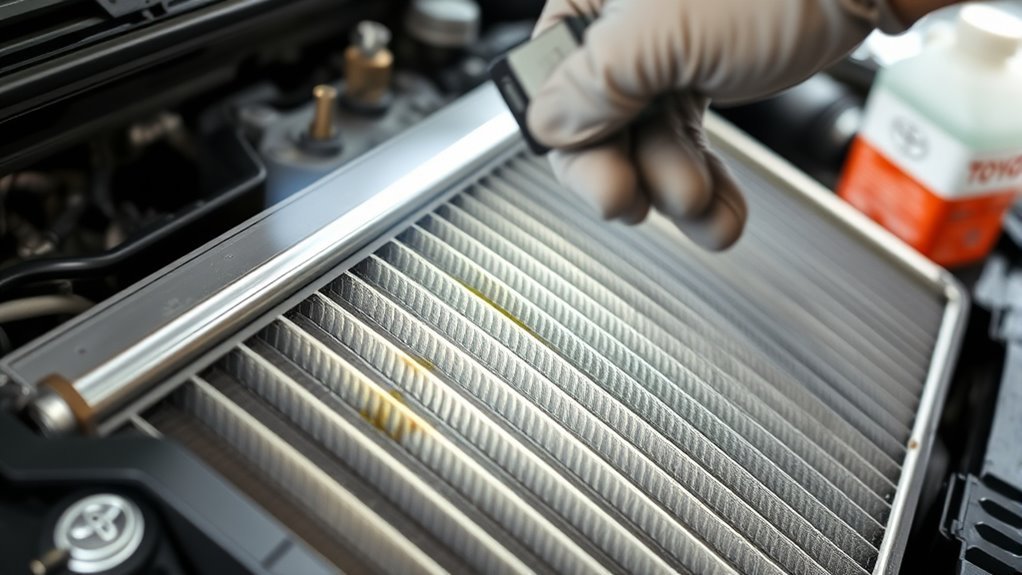
No reliable Toyota schedule says to replace a Camry radiator at 80,000 miles, 100,000 miles, 10 years, or any other fixed point. A dry radiator that holds pressure and controls temperature can stay in service. A younger radiator may need replacement after impact damage, corrosion, contaminated coolant, repeated overheating, or a cracked plastic tank.
Use mileage to schedule coolant service, not to predict the radiator’s death. Heat cycles can harden plastic end tanks and seals. Road salt can accelerate corrosion. Debris can bend fins or block airflow. Old or incompatible coolant can reduce corrosion protection and contribute to deposits.
Is 80,000 Miles a Camry Radiator Replacement Interval?
No. RepairPal says radiator replacement intervals vary greatly by vehicle and driving conditions and reports typically seeing radiators replaced at approximately 80,000 miles. That is an observed repair-industry benchmark, not a Toyota Camry factory replacement interval. Use it as context only; leaks, corrosion, restriction, impact damage, cooling performance, and test results should decide whether your radiator needs replacement.
| Radiator Condition | What It Means | Best Action |
|---|---|---|
| Dry seams, stable coolant level, normal temperature | No clear evidence of radiator failure | Keep inspecting and follow the correct coolant schedule. |
| Damp seam or dried coolant crust | Possible slow leak | Request a cold visual inspection and pressure test. |
| Cracked plastic tank or leaking core | Confirmed radiator damage | Replace the radiator and inspect connected hoses and caps. |
| Rusty coolant, cold spots, or poor heat rejection | Possible corrosion or internal restriction | Confirm coolant condition and radiator flow before authorizing replacement. |
Toyota’s maintenance schedule focuses on inspection and coolant replacement rather than a fixed radiator replacement date. In the 2025 Toyota Camry Warranty and Maintenance Guide, Toyota lists initial engine/intercooler coolant replacement at 100,000 miles or 120 months, followed by replacement every 50,000 miles or 60 months. The same guide separately instructs technicians to inspect the radiator, condenser and/or intercooler, when applicable, for damage, debris, corrosion, and other signs of damage. Always use the schedule for your exact model year.
For a dedicated explanation of year-specific coolant timing, see the Toyota Camry coolant replacement interval guide.
Note: A Camry may have more than one cooling circuit. The 2025 guide lists initial inverter/intercooler coolant replacement, when applicable, at 150,000 miles or 180 months, then every 50,000 miles or 60 months. Do not assume every reservoir follows the engine-coolant interval.
What Are the Warning Signs of a Failing Camry Radiator?
Radiator trouble usually appears as a leak, unexplained coolant loss, corrosion, blocked airflow, poor heat transfer, or overheating. A small leak can become rapid coolant loss, especially during hot weather or stop-and-go driving.
Warning: Never remove a radiator cap or other cooling-system pressure cap while the engine is hot. Let the engine cool completely. Hot coolant and steam can escape under pressure and cause serious burns.
[Products Worth Considering]

The OEMTOOLS coolant vacuum refill kit helps quickly refill a vehicle’s cooling system while removing trapped air that can lead to overheating and engine damage. It also performs vacuum leak tests to help confirm system integrity and reduce the chance of repeat repairs. With multiple bushings, adapters, and a tapered cone seal, it is designed for flexible use on many radiator and coolant bottle necks.

This engine coolant thermostat with seal is designed to help maintain proper engine temperature and support efficient cooling system performance. It is compatible with a wide range of Toyota, Lexus, Ford, Chevrolet, Mitsubishi, Scion, and Pontiac models, making it a versatile replacement choice for many vehicles. With included seal and durable metal-and-rubber construction, it offers a convenient fitment solution for cooling system repairs and maintenance.

This coolant electric water pump is designed as a replacement for select Toyota vehicles, helping maintain proper engine cooling performance and reliable temperature control. Built to OE specifications, it offers fitment support for compatible Avalon, Camry, and RAV4 models with 2.5L L4 engines. It also includes cross-reference part numbers for easier matching and comes with after-sales support for covered defects.
Does Engine Overheating Mean the Radiator Is Bad?
Not by itself. A rising temperature gauge, warning light, warning message, steam, or repeated temperature spikes can involve the radiator. The same symptoms can come from low coolant, a stuck thermostat, a weak water pump, a bad cap, trapped air, a failed cooling fan, or an engine-sealing problem.
If the temperature warning appears or the gauge rises above its normal range, pull over safely and stop the engine as soon as conditions allow. Do not continue driving to test whether the problem clears. Repeated or severe overheating can damage the cylinder head, head gasket, and other engine parts.
For a broader symptom-by-symptom diagnosis, see the Toyota Camry overheating guide.
What Does a Camry Radiator Leak Look Like?
Coolant can leave a colored puddle, wet trail, or dried crust under the front of the car. Color alone cannot identify the fluid because coolant products and prior service history vary. Confirm the source by checking the radiator seams, hose connections, drain area, pressure-cap area, reservoir, and lower splash shield while the engine is cold.
A leak at a clamp or hose may need a hose repair. A leak from the radiator core or a plastic tank seam usually supports radiator replacement.
Why Does the Coolant Level Keep Dropping?
Repeated coolant loss is not normal. The system may have an external leak, a hot leak that evaporates before forming a puddle, a weak pressure cap, or an internal engine leak. A cooling-system pressure test can help locate many external leaks, but further testing may be needed when the pressure test is inconclusive.
For a source-by-source leak checklist, see the Toyota Camry coolant leak guide.
What Causes a Sweet Smell, Steam, or Crusty Residue?
A sweet antifreeze odor after driving often points to coolant contacting a hot surface. Crust near a seam, hose end, water pump, or thermostat housing is dried residue. Steam from the engine bay is urgent because it may indicate active coolant loss or overheating.
Can a Radiator Fail Without Leaking?
Yes. Internal deposits can restrict coolant flow, and external debris or bent fins can reduce airflow. The radiator may stay dry yet fail to remove enough heat. Diagnosis can include comparing inlet and outlet temperatures, checking for cold sections across the core, confirming fan operation, and ruling out a thermostat or water-pump problem.
How Do You Tell a Radiator Problem From a Thermostat, Water Pump, or Head Gasket?
Overheating does not prove the radiator is defective. The cooling system works as a chain. Coolant, thermostat, radiator cap, water pump, radiator, fans, hoses, sensors, and engine sealing must all work together.
What Thermostat Failure Signs Can Mimic a Bad Radiator?
A thermostat stuck closed can restrict coolant flow and make the temperature climb quickly. A thermostat stuck open can delay warm-up and reduce cabin heat. Temperature swings, fast overheating after startup, or inconsistent heater output justify thermostat testing, but they do not identify the thermostat with certainty.
After thermostat service, the system needs the correct coolant and the proper air-bleeding procedure for that model year and engine.
What Water-Pump Symptoms Can Mimic Radiator Failure?
A weak or failing water pump can cause overheating even when the radiator is sound. Clues include coolant residue near the pump, bearing noise, poor circulation, or overheating that changes with engine speed and load. Access and replacement procedures vary by Camry generation and powertrain.
Can a Radiator Cap, Cooling Fan, or Clogged Core Cause Overheating?
A weak pressure cap may allow coolant loss or reduce the system’s pressure margin. A fan problem often causes overheating in traffic because road speed no longer supplies enough airflow. A clogged or debris-covered radiator can reduce heat transfer without an obvious external leak.
If you are checking cap design, pressure ratings, or replacement fit, use the Toyota Camry radiator cap pressure guide for model-specific context.
- Confirm whether the cooling fan operates when commanded.
- Inspect the radiator and condenser face for leaves, bags, insects, and packed dirt.
- Look for widespread bent fins, corrosion, or impact damage.
- Request a pressure test when coolant loss is not visible.
- Request a temperature-pattern or flow check when internal restriction is suspected.
What Head-Gasket Signs Point Away From the Radiator?
Persistent overheating, coolant loss without an external leak, continuous bubbling in the reservoir, milky oil, or persistent white exhaust after the engine is fully warm can indicate an internal engine problem. A technician may use a cooling-system pressure test, combustion-gas test, leak-down test, or other model-appropriate checks.
Warning: If your Camry overheats repeatedly, loses coolant quickly, or shows signs of coolant in the oil, stop driving and arrange an inspection or tow.
How Can You Find a Camry Radiator Leak?
Start with the engine completely cold. Use a flashlight and inspect from above and below the front of the engine bay. If the source is not visible, park on clean cardboard overnight. Drip location can help separate a radiator leak from a hose, water pump, reservoir, or heater-hose leak.
- Check the coolant reservoir level only when the engine is cold.
- Look around radiator seams and plastic end tanks for dampness or crust.
- Inspect upper and lower radiator hoses for cracks, swelling, soft spots, oil contamination, or loose clamps.
- Look under the front bumper and splash shield for coolant trails.
- Check for a sweet odor after driving without opening a hot system.
- Request pressure testing if the level drops but no puddle appears.
Pro Tip: Photograph the cold coolant level against the reservoir markings. Compare it under the same cold conditions several days later. This makes a slow change easier to confirm.
What Does Coolant Condition Reveal About Radiator Health?
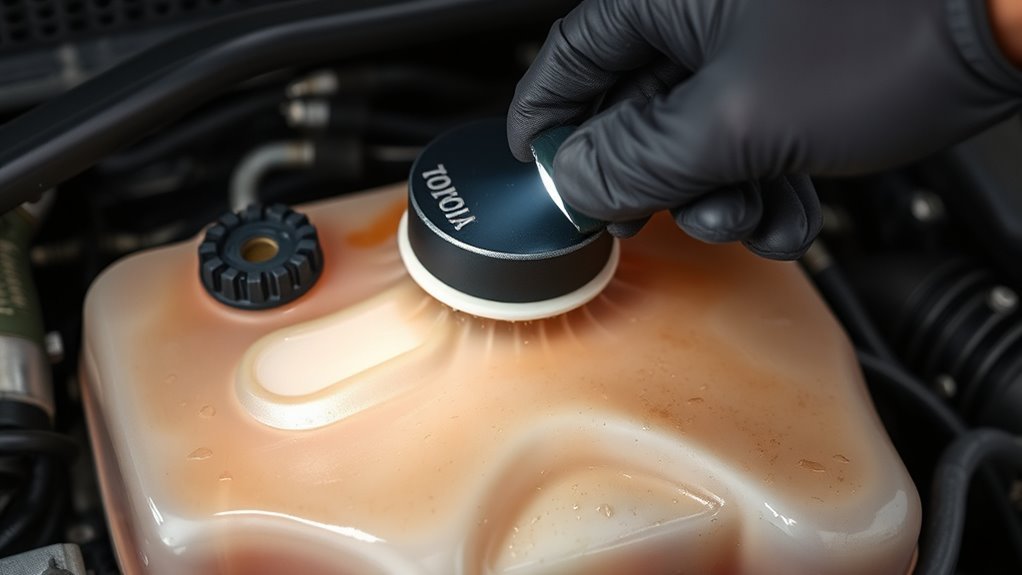
Coolant should match the condition and specification described for your model. Rusty or brown fluid can point to corrosion. Cloudiness or visible sediment can suggest contamination or deposits. An oily film or milky appearance needs prompt diagnosis because another fluid may be entering the cooling system.
Toyota directs owners to use Genuine Toyota Super Long Life Coolant or a similar high-quality coolant that meets the vehicle’s requirements. Check the owner’s manual for your exact Camry before topping off, mixing, flushing, or refilling the system.
Low, rusty, cloudy, oily, or repeatedly disappearing coolant is a diagnostic clue. Treat it as a warning, not as a routine top-off.
What Maintenance Helps a Camry Radiator Last Longer?
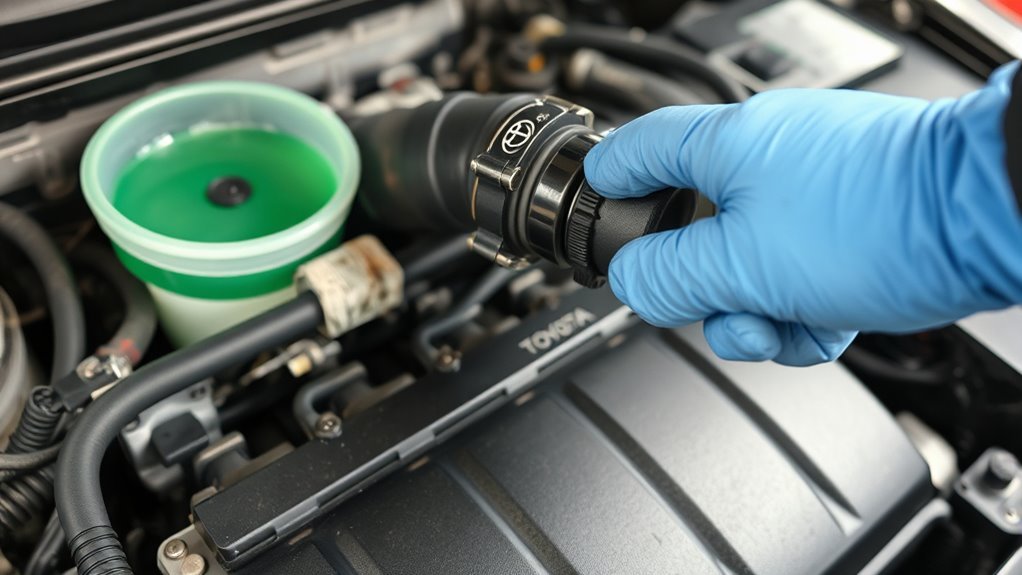
At a Glance
| Inspection Scope | Basic cold-engine visual inspection of coolant level, hoses, radiator condition, drips, and obvious airflow blockage |
| Difficulty | Easy for visual checks; professional testing for overheating or unexplained coolant loss |
| Tools Needed | Flashlight, gloves, clean rag, cardboard, and the correct coolant only if the manual permits a top-off |
| Current Cost Reference | RepairPal estimates $931 to $1,116 on average; model year, location, parts, coolant, and related repairs can change the total |
Use this cold-engine checklist during routine maintenance and before a long trip:
- Check the coolant level. Compare it with the reservoir markings under the conditions described in the owner’s manual.
- Check coolant condition. Look for rust, cloudiness, oiliness, or floating debris.
- Inspect hoses. Check for cracks, swelling, oil damage, hard or mushy sections, and residue near the ends.
- Inspect the radiator face. Look for corrosion, damp areas, impact damage, and debris that blocks airflow.
- Check for drips. Inspect the parking area after the car sits overnight.
- Watch temperature behavior. New warnings, repeated spikes, or overheating need diagnosis.
- Follow the correct coolant interval. Use the maintenance guide for the exact model year and cooling circuit.
When Should You Replace the Radiator Instead of a Hose or Water Pump?
Replace the part that testing identifies as faulty. Many problems blamed on the radiator come from a hose, pressure cap, fan, thermostat, water pump, sensor, or internal engine leak.
| Symptom | Likely Area | Best Next Step |
|---|---|---|
| Cracked, swollen, or soft hose | Radiator hose or clamp | Replace the damaged hose or clamp, then refill and bleed the system correctly. |
| Leak from a radiator seam, tank, or core | Radiator assembly | Replace the radiator after confirming the leak source. |
| Coolant residue near the pump or bearing noise | Water pump | Inspect the pump, drive system, and coolant circulation. |
| Overheats mainly in traffic | Cooling fan or blocked airflow | Test fan command and operation; inspect radiator and condenser blockage. |
| Rusty coolant, uneven core temperature, or poor heat rejection | Contamination, corrosion, or radiator restriction | Confirm coolant condition and flow before deciding between service and replacement. |
| Milky oil, persistent white exhaust, or continuous reservoir bubbling | Possible internal engine leak | Stop driving and request professional diagnosis. |
When replacing a radiator, inspect the hoses, clamps, pressure cap, thermostat, fan operation, and coolant condition. A new radiator will not correct a weak hose, trapped air, failed fan, or internal engine problem.
[Products Worth Considering]

This 16-piece hose clamp pliers set provides a complete solution for removing and installing a wide range of automotive hose clamps. It is designed to reach tight engine spaces and handle spring, flat band, and ring-type clamps on radiator, coolant, fuel, and vacuum hoses. Built from durable heat-treated steel and organized in a carrying case, it helps simplify repairs for cars, trucks, motorcycles, and DIY maintenance.

This engine water pump kit is designed to help maintain reliable cooling performance across a wide range of compatible Toyota, Lexus, Scion, and Pontiac vehicles. Built with aluminum and tested for leak-free operation, it offers a direct replacement solution that supports engine efficiency and long-term service life. The kit includes a professional water pump and gasket for a convenient installation-ready repair.

This coolant thermostat is a direct replacement designed for a wide range of Toyota, Lexus, and Scion vehicles. It helps maintain proper engine temperature, supports reliable cooling system performance, and installs easily without special tools or programming. Built to meet OEM standards, it offers durable, stable operation and dependable fitment for compatible models.
Should You Repair, Replace, or Get a Second Opinion?
A loose clamp, damaged hose, or faulty cap may be a smaller repair. A confirmed tank crack, core leak, severe corrosion, or internal restriction usually supports radiator replacement. Before approving the job, ask the shop to show the leak location or explain the test result that identifies the radiator.
RepairPal’s Toyota Camry radiator replacement estimate, updated August 7, 2026, averages $931 to $1,116. It estimates labor at $396 to $581 and parts around $535. Its listed estimates for 2025 and 2026 Camry models are higher at $1,383 to $1,714. Taxes, location, parts choice, coolant, hoses, and related repairs can change the final bill.
Note: A second opinion is reasonable when the temperature stays normal, the coolant level is stable, and the shop cannot show evidence of radiator failure. Do not delay when the car is actively overheating, steaming, or losing coolant quickly.
[Products Worth Considering]

This all-in-one radiator pressure tester and vacuum refill kit helps diagnose cooling system leaks, measure temperature, and refill coolant efficiently. It includes a wide range of adapters for broad vehicle compatibility, plus a pressure tester, vacuum refiller, thermometer, and storage case for organized use. Designed for DIY mechanics and professionals, it simplifies coolant service while reducing guesswork and unnecessary repairs.

This 9-piece hose clamp pliers set is designed to make automotive hose and clamp removal easier, faster, and more efficient. It includes a versatile mix of pliers and specialty tools for reaching clamps in tight engine spaces, handling coolant, radiator, heater, and fuel line tasks with less hand fatigue. Built from steel for durability, it is a practical kit for car, truck, and motorcycle maintenance.

This 9-piece hose clamp pliers set is designed to make automotive hose removal and installation faster and easier. It includes multiple clamp styles for working on fuel, oil, water, radiator, and heater hoses in cars, trucks, and motorcycles, with locking designs that help free your hands during repairs. The set comes with a carrying case for organized storage and transport, making it a practical choice for both professional mechanics and DIY repairs.
How Should You Handle and Dispose of Used Coolant?
Many automotive coolants contain ethylene glycol. Keep coolant away from children, animals, soil, and drains. Clean spills promptly, store used fluid in a sealed and labeled container, and follow local disposal rules.
The U.S. Environmental Protection Agency says used antifreeze should not be poured into sewers, onto the ground, or into regular trash. The Occupational Safety and Health Administration maintains chemical identification and exposure information for ethylene glycol. Use a household hazardous-waste program, recycling facility, or repair shop that accepts antifreeze.
Frequently Asked Questions
How long does a Toyota Camry radiator last?
Toyota does not publish a fixed radiator lifespan. RepairPal says replacement timing varies greatly and reports typically seeing radiator replacement at about 80,000 miles, but that is not a Toyota Camry service interval. Keep the radiator in service while it holds coolant, stays free of damaging corrosion or restriction, and maintains normal temperature. Replace it when inspection or testing confirms failure.
How much does it cost to replace a Toyota Camry radiator?
RepairPal’s estimate updated August 7, 2026 averages $931 to $1,116 before taxes, location adjustments, and related repairs. Its listed estimate for 2025 and 2026 Camry models is $1,383 to $1,714.
What coolant should I use in a Toyota Camry?
Use Genuine Toyota Super Long Life Coolant or a similar high-quality coolant only when it meets the specification in your exact model-year owner’s manual. Do not choose coolant only by color.
Can I drive my Camry with a small radiator leak?
Driving is risky because a slow leak can become rapid coolant loss. Stop if the temperature rises, steam appears, or the coolant level drops quickly. Arrange an inspection or tow instead of continuing to drive an overheating car.
Can a Camry radiator be bad without leaking?
Yes. Internal restriction, blocked fins, corrosion, or impact damage can reduce heat transfer without an external leak. Test airflow, fan operation, coolant flow, and core temperature before replacing the radiator.
Does a coolant flush fix a bad radiator?
A coolant service cannot repair a cracked tank, leaking seam, damaged core, or severe corrosion. Flushing may also be unsuitable for some contaminated or damaged systems. Diagnose the cause before authorizing a flush or replacement.
Should I replace the thermostat when replacing the radiator?
Not automatically. Replace the thermostat when testing shows it is faulty, it contributed to overheating, or its condition and access make replacement sensible. Inspect the hoses, cap, fan, and coolant at the same time.
How often should Camry coolant be changed?
For the 2025 Camry, Toyota lists initial engine/intercooler coolant replacement at 100,000 miles or 120 months. It lists initial inverter/intercooler coolant replacement, when applicable, at 150,000 miles or 180 months. Each is then replaced every 50,000 miles or 60 months. Check the guide for your exact model year.
Conclusion
Do not replace a Toyota Camry radiator only because the car reaches a certain age or mileage. Toyota does not publish a routine radiator replacement interval, and third-party mileage benchmarks are not substitutes for diagnosis. Keep monitoring the cold coolant level, coolant condition, radiator seams, hoses, airflow, and temperature behavior. If the Camry overheats, loses coolant, or shows a confirmed tank, seam, core, or flow problem, get the cooling system tested before engine damage follows.
Sources
- Toyota 2025 Camry Warranty and Maintenance Guide: coolant replacement intervals plus radiator, condenser and/or intercooler inspection guidance.
- Genuine Toyota Super Long Life Coolant: Toyota coolant product and owner-manual guidance.
- RepairPal Toyota Camry Radiator Replacement Cost Estimate: replacement benchmark and estimate updated August 7, 2026.
- U.S. EPA Used Antifreeze Disposal Fact Sheet: used-antifreeze handling and disposal guidance.
- OSHA Ethylene Glycol Chemical Data: chemical identification and exposure information.