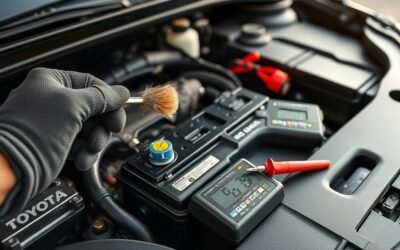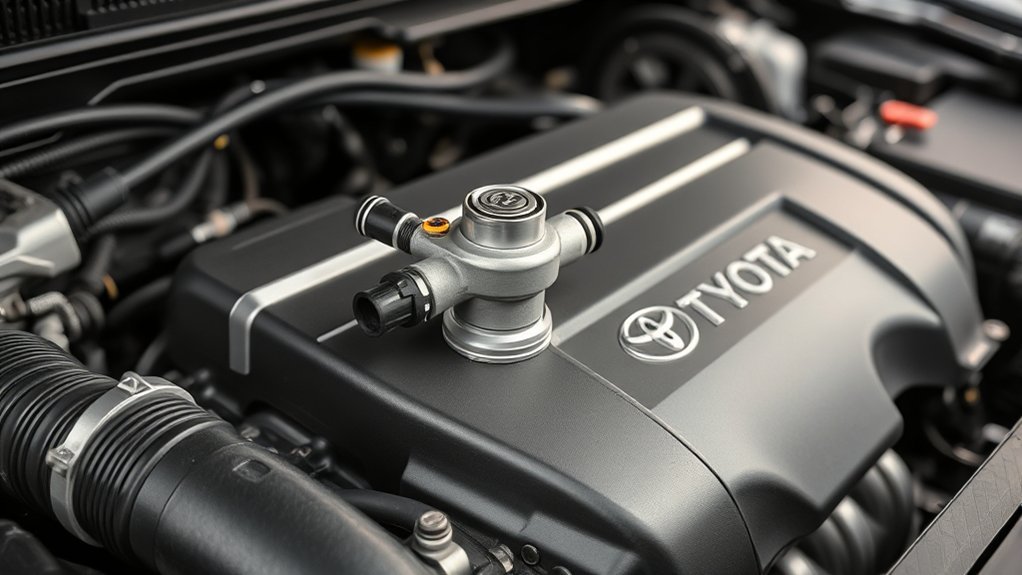
You’re looking at a simple crankcase pressure control: the Camry’s PCV routes blowby back into the intake to lower emissions, prevent leaks, and keep oil out of the intake tract. You’ll check for hissing, rough idle, oil consumption, or sludge and test the valve by shaking or watching engine response to a blocked port. Replace suspect valves every 30–50k miles, use correct low‑volatility oil, and follow fitment specs — more practical checks and fixes follow below.
What the PCV System Does in a Toyota Camry
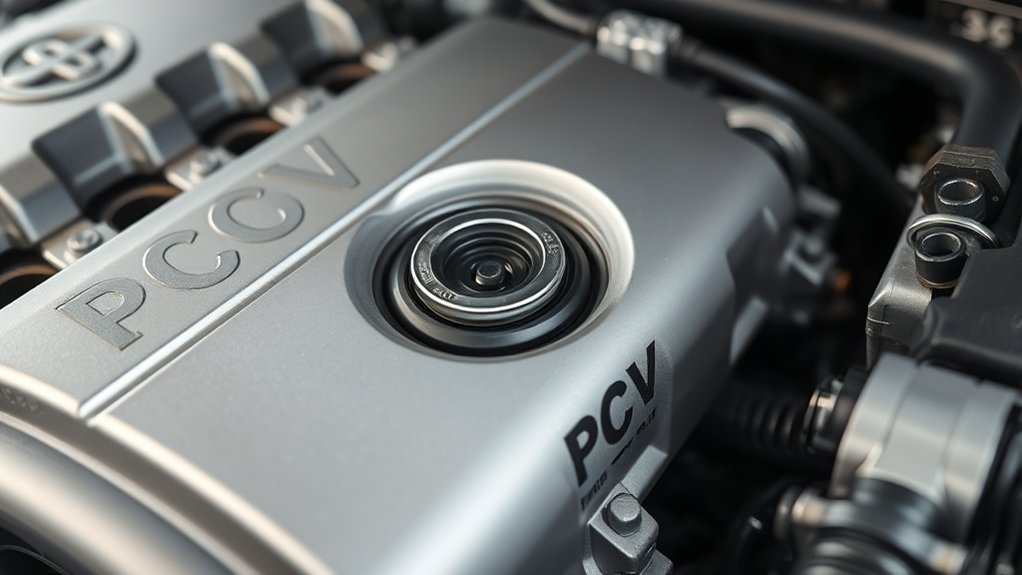
Think of the PCV system as the Camry’s crankcase pressure regulator: it routes blowby gases back into the intake manifold so they’re burned instead of vented, keeping pressure balanced and the engine running efficiently. You’ll rely on the valve to open under acceleration and load, relieving pressure, and to stay closed at idle so fumes don’t escape. You’ll also count on the system to draw fresh air into the crankcase, which minimizes oil vapor and supports emissions reduction while preserving engine efficiency. Inspecting and maintaining the PCV valve is a hands‑on act of liberation: you replace a stuck valve to stop oil consumption and forestall wear. Use the right viscosity, high‑quality oil to reduce volatility and limit oil loss through the PCV path. When you treat the PCV system as a precision control, you protect combustion integrity, cut harmful outputs, and keep the Camry responsive and durable without surrendering performance to preventable leaks.
Symptoms of a Bad Camry PCV : Quick Checklist
You’ve seen how the PCV keeps crankcase pressure and emissions under control; now watch for clear, actionable signs it’s failing. Listen for hissing or vacuum leaks—those sounds often mean a stuck‑open PCV valve letting unregulated air into the intake. Note rough idling or engine misfires: an incorrect air‑fuel mix from a faulty valve directly harms engine performance. Track oil consumption; if you’re topping off more often, excessive blowby from a failing PCV system is a likely culprit. Inspect sludge buildup visually during oil changes—greater sludge signals the valve isn’t expelling contaminants, choking oil flow and long‑term reliability. Pay attention to the check engine light; codes related to emissions or misfires frequently point back to PCV system faults. Use this checklist as a diagnostic filter: audible vacuum issues, unstable idle/misfires, rising oil use, accelerating sludge, and CEL codes. These are concrete, liberating cues to act before damage compounds.
Quick DIY Checks for the Camry PCV System
Start with the basics: pop the oil‑fill cap and inspect the PCV hose and valve—remove the valve from the valve cover, shake it (a rattle means it’s likely OK; silence suggests clogging), and visually check the hose for cracks, hardening, or oil sludge that would restrict flow. Next, gather simple DIY tools: gloves, flashlight, pliers, and a replacement PCV if needed. Feel the hose for soft spots and pinch it to detect internal collapse. Check oil level and watch for unusual consumption—excessive loss points toward PCV failure. Perform a vacuum check by briefly blocking the PCV intake; if the engine stumbles or stalls, the valve is likely letting vacuum through. Replace the valve every 30–50k miles as preventive maintenance to preserve PCV benefits like reduced crankcase pressure and lower emissions. Track rough idling or performance changes; they’re red flags that demand immediate action. These steps free you from guessing and keep your Camry breathing clean.
Camry PCV Operation: Idling, Acceleration, and Load
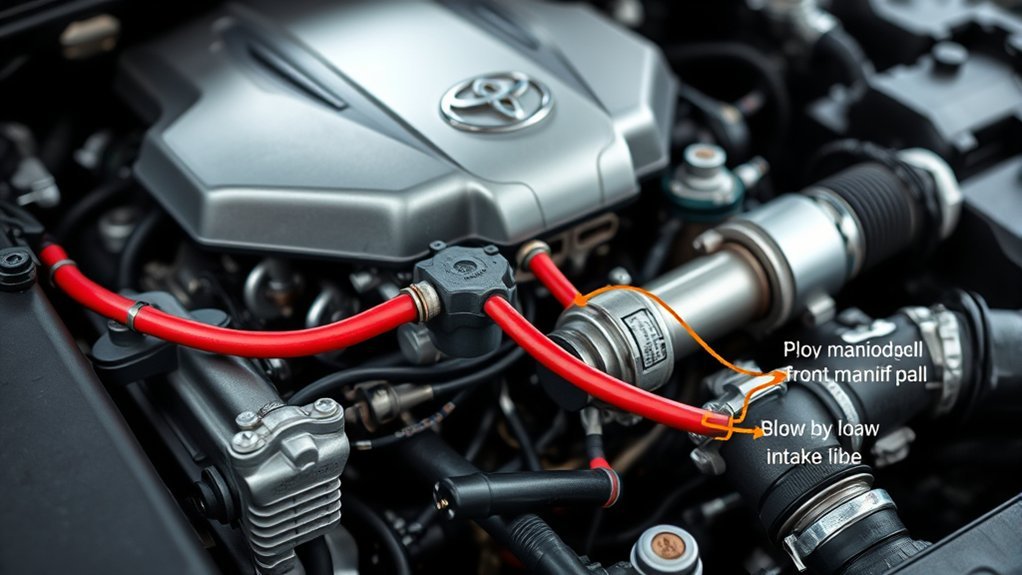
When your Camry is idling or coasting, the PCV valve stays closed to keep crankcase fumes from venting, but under acceleration and heavy load it opens to admit fresh intake air and purge blow‑by gases, relieving crankcase pressure and preventing oil contamination. You should treat this action as a diagnostic signal: a closed valve at idle preserves cabin air quality and limits harmful emissions, while an open valve under load protects engine performance by evacuating combustion byproducts. If you detect rough idle, increased oil consumption, or higher crankcase pressure, suspect a sticking or failed PCV valve. Use maintenance tips: check hoses for blockage, listen for vacuum leaks, and feel for valve movement when safe. Timely valve replacement restores proper flow, reduces oil consumption, and curbs harmful emissions. Stay proactive; the PCV system is simple, and keeping it serviceable liberates you from avoidable wear and keeps your Camry running clean and strong.
Camry PCV Types by Model/Year and Engine (Location & Part Numbers)
Think of the PCV on your Camry as a small but critical part whose exact location and part number depend on year and engine: you’ll find the PCV valve on the valve cover or intake manifold, and selecting the right unit prevents headaches. For 2012–2017 2.5L engines use 12204-0H010; 2018+ 2.5L models moved to an integrated design, 12204-0H020, improving emissions control. Older 2002–2006 3.0L V6s commonly use 12204-0A020, while 2007–2011 2.4L engines take 12204-0A010. Engine differences like V6 versus inline‑4 change routing and part fitment; note that maintenance tips include inspecting the valve during regular services and replacing per replacement frequency recommendations or if you see blowby. For liberated DIYers, use this troubleshooting guide: check for oil leaks, vacuum leaks, and poor idle. Consider performance impact and cost factors when sourcing OEM vs aftermarket parts—correct selection restores control, emissions compliance, and engine health.
How Oil Choice and Volatility Affect Your Camry PCV
You’ve already seen how the PCV’s location and part number vary by Camry year and engine; now look at another variable that directly affects how that valve performs: the oil you put in the crankcase. You need to understand oil viscosity impact and volatility effects because they determine how much oil migrates through the PCV and whether sludge forms to seize passages.
- Choose oil by the maker’s spec; thinner grades (0W16) raise volatility effects and may increase oil loss through the PCV.
- High volatility promotes blowby vapor carrying light oil fractions that condense as sludge, restricting the valve and hoses.
- Use high‑quality, low‑volatility formulations to preserve crankcase integrity and reduce oil entering the PCV assembly.
- Maintain regular oil changes with the correct viscosity to minimize volatility effects and extend PCV and engine life.
You’ll free yourself from recurring PCV failures by controlling oil choice, schedule, and quality—simple, decisive actions that protect the system.
Replacing the Camry PCV Valve : Step-by-Step (Common Engines)
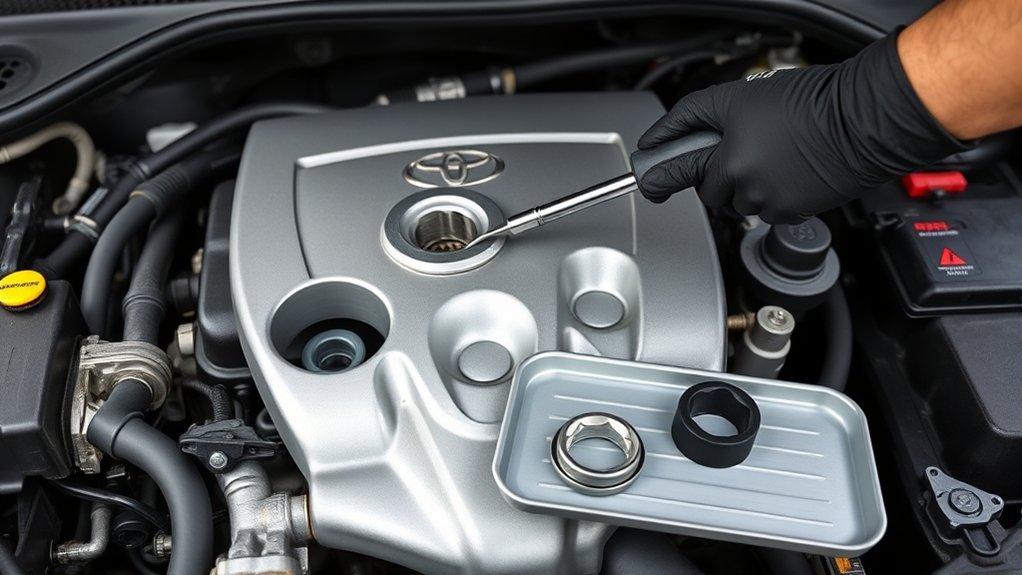
Start by locating the PCV valve on the valve cover or intake manifold with the engine cool to avoid burns. Gently twist and pull the valve from its hose, then inspect both valve and hose for cracks, blockages, or wear. Fit the new valve snugly, reseat the hose, start the engine, and check for vacuum leaks or abnormal noises to confirm proper operation.
Locate The PCV
On most Camry engines you’ll find the PCV valve mounted on or very near the valve cover; with the engine cool, take a quick visual sweep to spot a small plastic valve protruding from the grommet and note the hose routing so you can disconnect it cleanly. You’ll want to locate it confidently to protect engine longevity and keep freedom from costly shop visits.
- Inspect the valve cover area for a small plastic nipple or elbow — that’s the PCV valve.
- Trace the vacuum hose from the intake manifold back to the grommet; learn the routing before you touch it.
- Verify there are no nearby electrical connectors that could be mistaken for PCV fittings.
- Note grommet condition and accessibility so you can remove and replace the valve without force.
Remove And Inspect
Grip the PCV valve and vacuum hose firmly, then disconnect the hose and twist the valve counterclockwise to remove it from the grommet. You’ll find the valve on the valve cover or near the intake manifold depending on engine model. Inspect the old valve for clogging, soot, or a stuck plunger — these are signs of compromised PCV functionality overview and poor blowby management. Clean the surrounding area before moving on so dirt won’t enter the engine. This step frees you from symptom guessing and highlights Valve replacement benefits: restored crankcase ventilation and reduced oil contamination.
| What to check | What to look for |
|---|---|
| Hose condition | Cracks, brittleness |
| Valve plunger | Moves freely |
| Exterior | Soot, oil buildup |
| Mounting grommet | Tight, undamaged |
Install And Test
With the engine cool, seat the new PCV valve straight into the grommet and press until it snaps fully home, then reconnect any hoses or clips so nothing can draw in unmetered air. You want firm engagement and a clean seal; this is liberation from leaks and rough idle.
- Locate the PCV valve position on the valve cover or near the intake manifold and confirm orientation before pushing it in.
- Use installation techniques that avoid twisting the grommet; push straight to prevent damage and guarantee a tight fit.
- Reattach hoses and clips, then inspect the surrounding area for oil or sludge that could signal deeper issues.
- Start the engine, verify a smooth idle and listen for abnormal sounds—if present, recheck fitment.
OEM vs Aftermarket Camry PCV Parts: When to Choose Which
When you pick between OEM and aftermarket PCV parts, weigh cost versus quality and confirm exact fitment to avoid leaks or misrouting. Stick with OEM if warranty, resale value, and guaranteed compatibility matter, but consider vetted aftermarket options when you need lower cost or specific performance features. In either case, choose reputable suppliers and replace the valve on schedule to maintain engine efficiency and prevent oil consumption.
Cost Versus Quality
Although cheaper aftermarket PCV valves can save you 20–50% up front, you’ll usually trade off longevity and strict fit with parts not engineered to Toyota’s specs. You want freedom from breakdowns, so weigh cost against real-world consequences: performance trade offs and installation challenges can cost more in time and repairs than you save.
- OEM: predictable life, engineered tolerances, supports warranty—buy when you want reliability and fewer surprises.
- Aftermarket (quality brands): lower price, acceptable short-term service, inspect regularly to catch premature wear.
- Cheap aftermarket: high risk of failure, increased blowby, possible engine efficiency loss—use only if you accept frequent checks.
- Decision rule: prioritize long-term liberation—choose OEM for peace of mind, aftermarket for controlled savings.
Fitment And Compatibility
Because fit and function directly affect engine sealing and vacuum control, you should confirm PCV parts match your Camry’s model year and engine code before buying. Inspect fitment factors: mounting points, hose diameters, and electrical connectors (if present). Choose OEM when you want plug‑and‑play accuracy and the reassurance of factory specifications—especially on late‑model engines with tight tolerances.
If you’re leaning aftermarket, research brands and read technical specs to avoid compatibility issues. High‑quality aftermarket valves can free you from high OEM cost without sacrificing performance; low‑grade options risk premature failure and oil leaks. In practice, diagnose the failure mode first: replace like‑for‑like for sealing faults, consider vetted aftermarket upgrades for cost‑effective maintenance and the freedom to customize.
Warranty And Support
If you’re weighing warranty and support, choose OEM PCV parts when you want clear protection against defects and easier claims handling, since they come with factory-backed coverage that aligns with Toyota’s service standards. You’ll protect warranty implications and access Toyota support resources, keeping your Camry’s engine coverage intact.
- OEM: predictable fit, factory warranty, straightforward claims — ideal when you want certainty.
- Aftermarket: lower upfront cost, variable quality, limited or no warranty — choose only trusted brands.
- Inspection routine: assess PCV condition regularly; documented maintenance strengthens any claim.
- Decision guide: prioritize OEM for long-term engine health and warranty integrity; use aftermarket only if you accept higher risk and confirm support resources and warranty terms.
Preventive Maintenance and Oil-Change Tips to Protect the PCV
When you stick to regular oil changes with the right-grade, high-quality oil and follow Toyota’s PCV replacement intervals, you’ll keep sludge from forming and reduce the chance of a sticking valve or restricted crankcase ventilation. You’ll keep freedom from avoidable breakdowns by treating oil change as mission-critical and syncing it to the maintenance schedule. Use oil with the recommended viscosity and low volatility for your driving—this minimizes oil vapor entering the PCV and reduces deposits.
Inspect the PCV valve and hose at each service: feel for cracks, listen for rattles, and verify airflow. Maintain normal engine temperatures; if the engine runs hot, oil will break down faster and compromise the PCV’s effectiveness. Replace the PCV valve per interval or earlier if symptoms appear. Record each inspection and service to break dependency on surprises—you’re building a predictable, liberating routine that preserves ventilation, limits blowby effects, and keeps the Camry running efficiently.
Troubleshooting Persistent Blowby, Sludge, and Related Issues
Although persistent blowby and sludge often start quietly, you’ll spot them by diagnosing specific symptoms and tracing their sources: check for elevated crankcase pressure, oil leaks at seals and gaskets, excessive oil consumption, rough idle, and dark, oily deposits around the PCV hose and valve. You act like a mechanic and a freed rider—identify the root, then remove constraints.
- Measure crankcase pressure and inspect PCV hose for oily deposits; high pressure confirms blowby causes from worn rings or valve guides.
- Remove and test the PCV valve; a clogged valve from poor oil quality signals sludge buildup and impaired ventilation.
- Check oil condition and consumption; switch to high‑quality, lower‑volatility oil and shorten change intervals for sludge prevention.
- Repair leaks and address engine wear (rings, gaskets) to stop blowby flow and restore vacuum balance.
Follow this diagnostic sequence, replace faulty parts, and you’ll reclaim performance, reduce emissions, and extend your Camry’s life.
Frequently Asked Questions
How Does a Toyota PCV Valve Work?
The PCV valve routes blowby into intake to control pressure; you’ll inspect and clean for PCV valve maintenance, replace when stuck, and perform PCV valve replacement decisively so your engine breathes freely and you stay empowered.
How Does a PCV System Work?
Think of it like a pressure valve in a revolution: you route blowby into intake, so the PCV function clears crankcase gases, you diagnose blockages, and you’ll boost engine efficiency, cut oil loss, and free your engine’s performance.
Conclusion
Think of your Camry’s PCV system as the engine’s breather — a small, smart valve that keeps pressure and contaminants from turning the motor into a clogged lung. Stay diagnostic: inspect hoses, swap a tired valve, use OEM parts when fit matters, and keep oil fresh to avoid sludge and relentless blowby. With routine checks and quick fixes you’ll keep combustion clean, pressure controlled, and the car breathing easy for miles.