
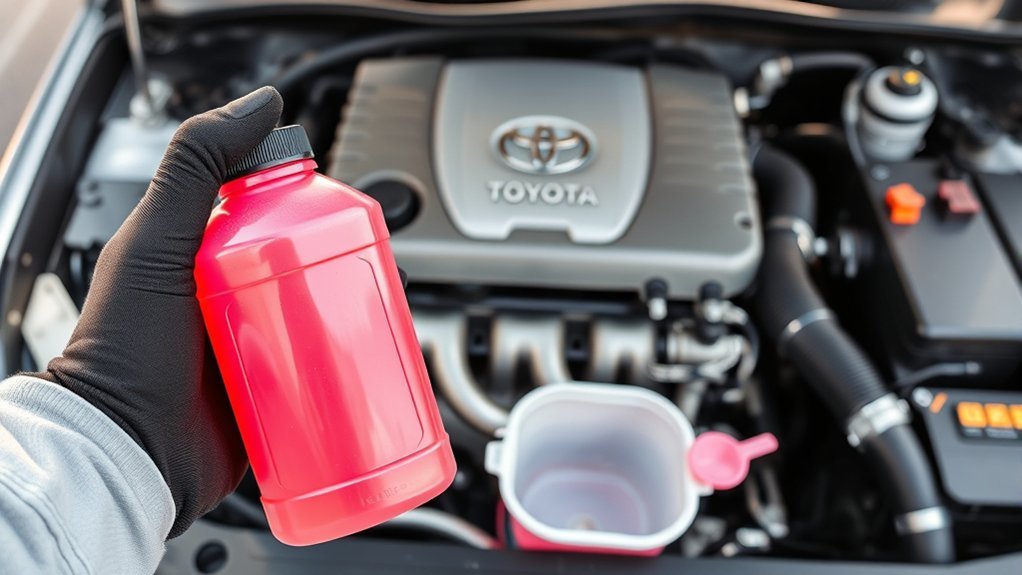
Your Camry’s coolant should be identified by specification first, not by color alone. For a 2007 Toyota Camry, the factory fill is Toyota Super Long Life Coolant or a similar high-quality ethylene-glycol coolant with long-life hybrid organic acid technology. Color, reservoir labels, service records, and the owner’s manual all help you confirm what is in the system before you top off, drain, refill, or flush.
Quick Answer
A 2007 Toyota Camry uses Toyota Super Long Life Coolant or an equivalent ethylene-glycol, non-silicate coolant with long-life hybrid organic acid technology. Toyota lists the 2007 coolant replacement interval as 100,000 miles or 120 months first, then every 50,000 miles or 60 months after that.
Key Takeaways
- For a 2007 Camry, use Toyota Super Long Life Coolant or an equivalent that matches Toyota’s long-life hybrid organic acid coolant specification.
- Do not rely on color alone. Pink usually points to Toyota SLLC, but dyes vary by brand and can fade with age.
- Toyota’s 2007 Camry maintenance guide calls for the first engine coolant replacement at 100,000 miles/120 months, then every 50,000 miles/60 months.
- Flush only when coolant is contaminated, the chemistry is unknown, or there are flow/heater/overheating symptoms; routine service is usually a controlled drain and refill.
- Never open the radiator cap hot, and never pour used coolant onto the ground, into a drain, or into regular trash.
At a Glance
| Time Required | 10–15 minutes to top off; 60–120 minutes for a drain and refill |
| Difficulty | Easy for topping off; moderate for a full coolant change |
| Tools Needed | Gloves, funnel, drain pan, safety glasses, correct coolant, distilled/deionized water if using concentrate, basic hand tools |
| Cost | Usually $25–$80 for DIY coolant service, depending on capacity and coolant brand |
Identify the Coolant in Your Camry by Color, Age, and Labels
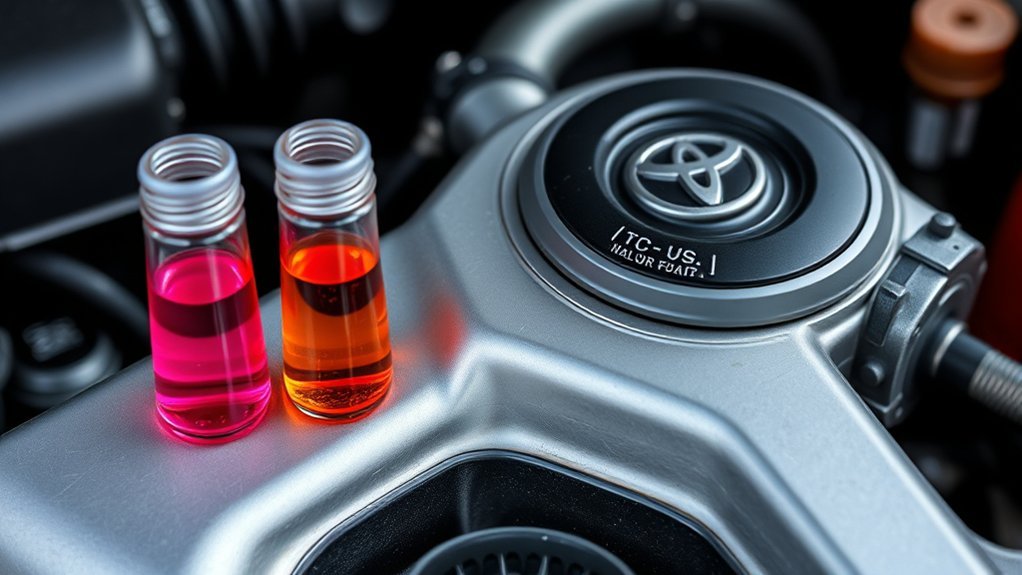
Start with the coolant reservoir or overflow tank when the engine is cold. On most 2007 Camry models, the reservoir should be translucent, with “F” and “L” level marks. Coolant should sit between those marks when cold. If it drops soon after topping off, inspect for a leak instead of repeatedly adding fluid.
Next, check the color and condition. Toyota Super Long Life Coolant is commonly pink, while older Toyota Long Life Coolant is commonly red. But color is only a clue. Aftermarket coolants can be dyed red, pink, blue, yellow, orange, or green, and old coolant can fade or turn rusty brown. The safer check is the wording on the bottle, the service record, and the coolant specification in your owner’s manual.
- Healthy coolant: clear, bright, and free of particles or oil film.
- Old or contaminated coolant: rusty, muddy, cloudy, sludgy, oily, or full of floating debris.
- Unknown coolant history: treat it as a risk. Plan a proper drain, refill, or flush rather than mixing more chemistry into the system.
- Repeated low level: check the radiator, hoses, reservoir, radiator cap, drain cock, water pump area, and heater-core area for leaks.
Note: Toyota’s 2007 Camry owner’s manual specifies “Toyota Super Long Life Coolant” or a similar high-quality ethylene-glycol coolant that is non-silicate, non-amine, non-nitrite, and non-borate with long-life hybrid organic acid technology.
Camry Coolant by Year and Mileage: Which to Use
Coolant selection depends on the exact model year, engine, market, and service history. For the 2007 Camry, Toyota’s official wording is clear: use Toyota Super Long Life Coolant or a similar coolant with long-life hybrid organic acid technology. Toyota’s 2007 maintenance guide lists the first engine coolant replacement at 100,000 miles or 120 months, then every 50,000 miles or 60 months.
| Camry model | Best coolant choice | Service guidance |
|---|---|---|
| Older Camry models with Toyota Long Life Coolant history | Use the coolant type listed in that model’s owner’s manual; many older Toyota systems used red Toyota Long Life Coolant. | Follow the maintenance guide for that exact year. If switching chemistry, drain and refill thoroughly instead of casually mixing. |
| 2007 Camry 2.4L 4-cylinder | Toyota Super Long Life Coolant or equivalent long-life hybrid organic acid coolant. | Initial replacement at 100,000 miles/120 months; every 50,000 miles/60 months after that. |
| 2007 Camry 3.5L V6 | Toyota Super Long Life Coolant or equivalent long-life hybrid organic acid coolant. | Initial replacement at 100,000 miles/120 months; every 50,000 miles/60 months after that. |
| 2007 Camry Hybrid | Toyota Super Long Life Coolant for both the engine cooling loop and the inverter/traction motor/motor generator loop. | Hybrid models have separate coolant reservoirs. Avoid high-voltage components and use the hybrid owner’s manual procedure. |
| Later Camry models using Toyota SLLC | Toyota Super Long Life Coolant or a Toyota-approved equivalent meeting the same chemistry requirements. | Many Toyota maintenance guides continue to use the 100,000-mile/120-month first replacement and 50,000-mile/60-month later interval when SLLC is used. |
For newer Camrys, Toyota’s later maintenance guides still describe Genuine Toyota Super Long-Life Coolant as a non-silicate, non-amine, non-borate ethylene-glycol coolant with long-life hybrid organic acid technology. The 2024 Camry guide also states that if another ethylene-glycol coolant is used, the replacement interval may be different.
2007 Camry Coolant Capacity and Mix
Capacity matters because a simple radiator drain may not remove every bit of old coolant from the engine block, heater core, and hoses. Toyota’s 2007 Camry owner’s manual lists these cooling-system total capacities:
| 2007 Camry version | Cooling-system capacity | Important note |
|---|---|---|
| 2.4L 4-cylinder gasoline engine | 6.2 L / 6.6 qt | Use Toyota SLLC or equivalent. Do not use plain water alone. |
| 3.5L V6 gasoline engine | 9.0 L / 9.5 qt | A full refill may need more coolant than a simple radiator drain. |
| 2007 Camry Hybrid engine loop | 6.2 L / 6.6 qt | Separate from the inverter/traction motor coolant loop. |
| 2007 Camry Hybrid inverter/traction motor loop | 2.9 L / 3.1 qt | Use the hybrid manual procedure or a qualified technician. |
Toyota Super Long Life Coolant is commonly sold as a premixed coolant. For the 2007 Camry, Toyota describes the U.S. mixture as 50% coolant and 50% deionized water, with freeze protection to about -31°F (-35°C). In Canada, Toyota describes a 55% coolant and 45% deionized-water mixture, with protection to about -44°F (-42°C). If you buy concentrate instead of premix, dilute only with distilled or deionized water according to the label.
[Products Worth Considering]

This coolant thermostat is a direct replacement designed for a wide range of Toyota, Lexus, and Scion vehicles. It helps maintain proper engine temperature, supports reliable cooling system performance, and installs easily without special tools or programming. Built to meet OEM standards, it offers durable, stable operation and dependable fitment for compatible models.

This engine water pump kit is designed to help maintain reliable cooling performance across a wide range of compatible Toyota, Lexus, Scion, and Pontiac vehicles. Built with aluminum and tested for leak-free operation, it offers a direct replacement solution that supports engine efficiency and long-term service life. The kit includes a professional water pump and gasket for a convenient installation-ready repair.

This coolant electric water pump is designed as a replacement for select Toyota vehicles, helping maintain proper engine cooling performance and reliable temperature control. Built to OE specifications, it offers fitment support for compatible Avalon, Camry, and RAV4 models with 2.5L L4 engines. It also includes cross-reference part numbers for easier matching and comes with after-sales support for covered defects.
Compatibility Pitfalls and Choosing an OEM-Equivalent
Coolant compatibility is about inhibitor chemistry, not just dye color. Toyota’s specification for the 2007 Camry points to an ethylene-glycol coolant that is non-silicate, non-amine, non-nitrite, and non-borate with long-life hybrid organic acid technology. When shopping for an OEM-equivalent, the label should clearly say it is suitable for Toyota, Lexus, Scion, or Asian vehicles that require this coolant family.
Do not assume every “universal,” “all makes,” “long-life,” or orange OAT coolant is a safe match. Some coolants use different inhibitor packages. Mixing incompatible coolant types can reduce corrosion protection, create deposits, shorten service life, and restrict heater-core or radiator flow.
Warning: Never open the radiator cap when the engine or hybrid system is hot. Pressurized hot coolant and steam can cause severe burns. Wait until the system is completely cool before checking or servicing coolant.
Toyota red Long Life Coolant and Toyota pink Super Long Life Coolant are Toyota-family coolants, but they are not the same product and do not share the same service interval. If you only need a small emergency top-off, use the closest Toyota-compatible coolant you can get and correct the mixture later. If the system already contains unknown, rusty, oily, or mixed coolant, choose a controlled flush and refill rather than continuing to blend products.
Pro Tip: Keep a photo of the coolant bottle label and write the date, mileage, coolant brand, and amount used in your service log. That record helps the next top-off or replacement decision.
[Products Worth Considering]

This professional water pump kit is designed as a direct OE replacement for select Toyota and Lexus 3.5L V6 vehicles, helping restore reliable engine cooling performance. Built to strict quality standards and tested for leak-free operation, it includes the necessary gasket for easier installation and a secure fit. It offers a practical upgrade for drivers seeking dependable cooling system maintenance and long-lasting performance.

This engine coolant thermostat with seal is designed to help maintain proper engine temperature and support efficient cooling system performance. It is compatible with a wide range of Toyota, Lexus, Ford, Chevrolet, Mitsubishi, Scion, and Pontiac models, making it a versatile replacement choice for many vehicles. With included seal and durable metal-and-rubber construction, it offers a convenient fitment solution for cooling system repairs and maintenance.

The OEMTOOLS coolant vacuum refill kit helps quickly refill a vehicle’s cooling system while removing trapped air that can lead to overheating and engine damage. It also performs vacuum leak tests to help confirm system integrity and reduce the chance of repeat repairs. With multiple bushings, adapters, and a tapered cone seal, it is designed for flexible use on many radiator and coolant bottle necks.
Coolant Flush vs. Full Replacement: When to Do Each
A full replacement usually means draining the old coolant, refilling with the correct coolant, bleeding air, checking for leaks, and recording the service. This is the right choice for routine maintenance when the coolant is old but still clean and the system has no obvious contamination.
A coolant flush is more aggressive. Choose it when you find rust, sediment, sludge, oily contamination, unknown coolant chemistry, heater-core restriction, repeated overheating, or evidence that incompatible coolant has been mixed. A flush helps remove deposits and old chemistry before the correct coolant goes back in.
- Choose drain and refill for clean coolant that has reached the scheduled service interval.
- Choose a flush for brown, muddy, rusty, sludgy, or unknown coolant.
- Stop and diagnose first if coolant looks oily, smells like exhaust, bubbles constantly, or disappears quickly after topping off.
- Use a qualified technician if the vehicle overheats, has hybrid coolant-loop issues, or needs pressure testing.
Toyota’s 2007 Camry schedule calls for engine coolant replacement at 100,000 miles or 120 months first, then every 50,000 miles or 60 months thereafter.
How to Top Off or Change Camry Coolant: Step-by-Step
Before touching the cooling system, park on level ground, set the parking brake, let the engine cool fully, and wear gloves and eye protection. Coolant is toxic and slippery, so wipe spills immediately and keep pets and children away from the work area.
[Products Worth Considering]
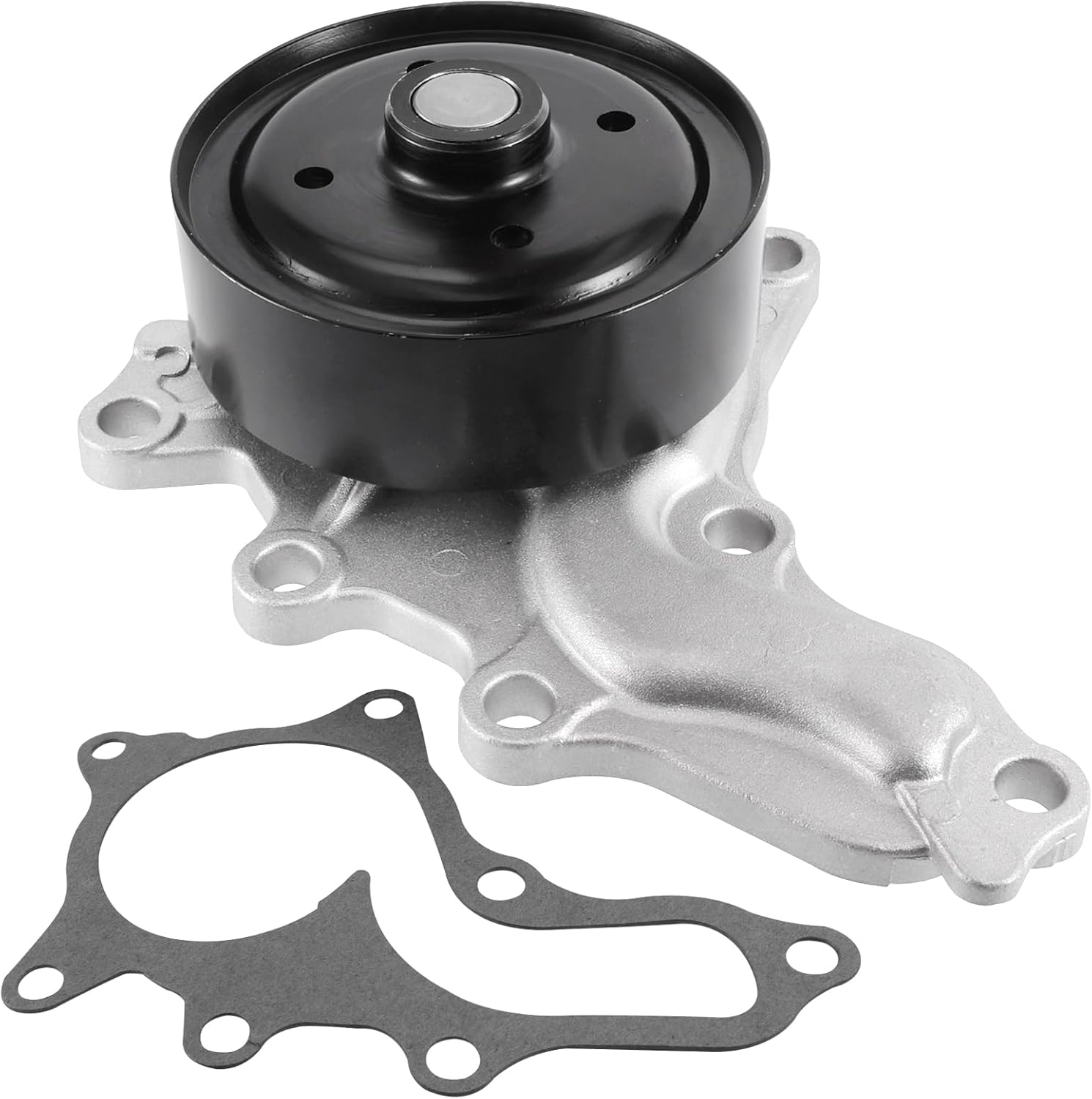
This AW6252 water pump is designed for a wide range of Toyota, Scion, and Lexus applications, helping maintain reliable engine cooling across compatible models. It features case hardened bearings for durability, a graphite-impregnated gasket for a secure seal, and 100% function and leakage testing for dependable performance. Built in TS16949 certified facilities, it offers a strong replacement option backed by service support.

The Funnel King 32950 Oil Drain Pan is a compact fluid catch basin designed for clean, easy draining during routine maintenance. Its open shape and pour edge help transfer used oil, coolant, and other shop fluids with less mess, while the lightweight polypropylene construction stands up to common automotive chemicals. Sized to fit under many cars and small engines, it is a practical choice for garages, workshops, and DIY oil changes.

This coolant bypass valve is a direct replacement for select Toyota models, helping regulate coolant flow for stable engine temperature and dependable performance. Built from high-temperature, corrosion-resistant materials, it is designed to handle demanding driving conditions while supporting long-term durability. Its straightforward design also makes installation quick and hassle-free.
How to Top Off Camry Coolant
- Let the engine cool completely. Check the see-through reservoir only when the engine is cold.
- Confirm the coolant type. Use Toyota Super Long Life Coolant or an equivalent that matches Toyota’s specification.
- Check the level marks. The coolant should be between the low and full marks on the reservoir.
- Add coolant slowly. Use a clean funnel and bring the level up to the full mark. Do not overfill.
- Inspect for leaks. If the level drops again within a short time, check hoses, radiator, reservoir, cap, drain cock, and water pump area.
How to Change Camry Coolant
- Confirm the procedure for your exact year and engine. Gas and hybrid Camrys do not all have the same layout.
- Place a drain pan under the radiator drain cock. Keep used coolant separate from oil, fuel, brake fluid, and other waste fluids.
- Open the drain carefully. Drain the old coolant into the pan. Some coolant may remain in the block and heater core.
- Flush only if needed. If coolant is contaminated or the chemistry is unknown, flush with the correct procedure before refilling.
- Close the drain and refill with the correct coolant. Use Toyota SLLC or a matching equivalent. If using concentrate, dilute with distilled or deionized water.
- Bleed air from the system. Run the engine to operating temperature with the heater set to hot, monitor the temperature gauge, and top off as air purges.
- Recheck after cooling. After the first drive cycle, let the engine cool and recheck the reservoir level.
- Record the service. Write down the date, mileage, coolant brand, quantity, and whether the system was flushed or drained and refilled.
Note: A 2007 Camry Hybrid has an engine coolant loop and a separate inverter/traction motor/motor generator coolant loop. Do not touch orange high-voltage cables or hybrid components. Use the hybrid manual procedure or a qualified hybrid technician.
Testing Coolant and Troubleshooting Symptoms
Coolant can look acceptable and still be weak, diluted, or past its useful life. For a better check, use the right test method for the coolant family:
- Refractometer or hydrometer: checks freeze/boil protection and coolant concentration.
- Coolant test strips: can help evaluate pH and inhibitor condition, but use strips that match the coolant type and follow the strip instructions.
- Pressure test: helps find leaks when the coolant level drops, the cabin smells sweet, or there is crusty residue around hoses and fittings.
- Combustion-gas test: helps diagnose possible head-gasket or combustion leakage if coolant bubbles, overheats, or disappears with no visible leak.
Watch for warning signs: weak cabin heat, fluctuating temperature readings, overheating in traffic, coolant smell inside the cabin, white exhaust smoke, oily film in the reservoir, or crusty pink/white residue around the radiator, water pump, or hose joints. These are not “just coolant age” problems; they need diagnosis.
Common Mistakes to Avoid: Mixing, Disposal, and Testing
The most expensive coolant mistakes are usually small: topping off with the wrong product, using tap water with concentrate, ignoring a slow leak, or treating contaminated coolant as if it only needs dilution. You’ll preserve the radiator, heater core, water pump, seals, and aluminum engine parts by verifying the coolant before you add anything.
Always confirm your Camry’s coolant type before topping off. Match the Toyota specification, use distilled or deionized water when dilution is required, and flush if contamination appears.
- Do not mix unknown coolant types. Drain and refill when chemistry is unclear.
- Do not use plain water alone. Toyota specifically warns against this because water alone lacks freeze, boil, and corrosion protection.
- Do not use tap water with concentrate. Minerals can contribute to deposits and scale.
- Do not ignore repeated low coolant. Find the leak or pressure-test the system.
- Do not pour used coolant down a drain, into a storm sewer, onto the ground, or into regular trash. The EPA warns that used antifreeze may contain toxic ethylene glycol and dissolved metals, and it should be recycled or handled through approved disposal routes.
For warranty concerns, an aftermarket coolant does not automatically void a U.S. vehicle warranty. The FTC says a manufacturer may not deny warranty coverage unless it can show the aftermarket product caused the needed repair. Still, you protect yourself by using a coolant that clearly matches Toyota’s specification and by keeping receipts and service records.
Frequently Asked Questions
What color coolant does a 2007 Toyota Camry use?
A 2007 Toyota Camry commonly uses pink Toyota Super Long Life Coolant from the factory. However, color is not enough to prove chemistry. Confirm the coolant against the owner’s manual and the bottle label.
Can I mix Toyota coolant with universal long-life brands?
Only use a universal coolant if the label clearly says it matches Toyota’s required coolant chemistry. If the current coolant type is unknown, do not mix. Drain, flush if needed, and refill with Toyota Super Long Life Coolant or a verified equivalent.
Can I mix Toyota red coolant and Toyota pink coolant?
Avoid mixing them as a routine practice because Toyota red Long Life Coolant and pink Super Long Life Coolant are different products with different service intervals. A small emergency top-off with a Toyota-compatible coolant is one thing; planned service should use one correct coolant family after a proper drain and refill.
Is distilled water necessary when diluting concentrate?
Yes. Use distilled or deionized water when diluting concentrate. Tap water can contain minerals that promote scale and deposits. If you buy Toyota Super Long Life Coolant as a premix, do not dilute it further unless the label or service procedure says to.
How often should coolant pressure be tested?
Pressure-test the cooling system when the coolant level drops, you smell coolant, you see crusty residue, the engine overheats, or cooling-system parts have been serviced. For routine maintenance, many shops check the system during major service or when coolant is replaced.
Can coolant type affect cabin heater performance?
Yes. Incorrect, old, or contaminated coolant can reduce heat transfer, create deposits, restrict heater-core flow, or promote corrosion. Weak cabin heat can also come from low coolant, trapped air, a thermostat problem, or a clogged heater core.
Are there warranty implications for using aftermarket coolant?
Using aftermarket coolant does not automatically void a U.S. warranty, but a claim can be challenged if the wrong coolant caused the failure. Use a coolant that clearly matches Toyota’s specification, keep receipts, and document the date and mileage of service.
Conclusion
Now that you know how to identify, match, and safely service your Camry’s coolant, you can avoid the common traps: trusting color alone, mixing unknown formulas, using tap water with concentrate, or stretching coolant past the schedule. For a 2007 Camry, the safe baseline is Toyota Super Long Life Coolant or a verified equivalent, with replacement at 100,000 miles/120 months first and every 50,000 miles/60 months after that. When the fluid is rusty, sludgy, oily, or unknown, flush and reset the system with the right coolant instead of gambling with corrosion or overheating.
Sources
- Toyota 2007 Camry Owner’s Manual — coolant type, coolant mixture, warning not to remove the radiator cap hot, and 2007 gasoline-engine coolant capacities.
- Toyota 2007 Camry Scheduled Maintenance Guide — initial coolant replacement at 100,000 miles/120 months and subsequent replacement every 50,000 miles/60 months.
- Toyota 2007 Camry Hybrid Owner’s Manual — hybrid coolant reservoirs, engine and inverter coolant capacities, and hybrid cooling-system cautions.
- Toyota 2024 Camry Warranty & Maintenance Guide — later Camry coolant specification and replacement-interval notes for Toyota Super Long-Life Coolant.
- Genuine Toyota Super Long Life Coolant — Toyota product reference for SLLC.
- U.S. EPA Used Antifreeze Disposal Fact Sheet — disposal, recycling, and toxicity guidance for used antifreeze/coolant.


[…] model-specific examples, see the guides to Toyota Camry coolant types and RAV4 coolant-loss diagnosis. This page should remain the general decision guide, while those […]