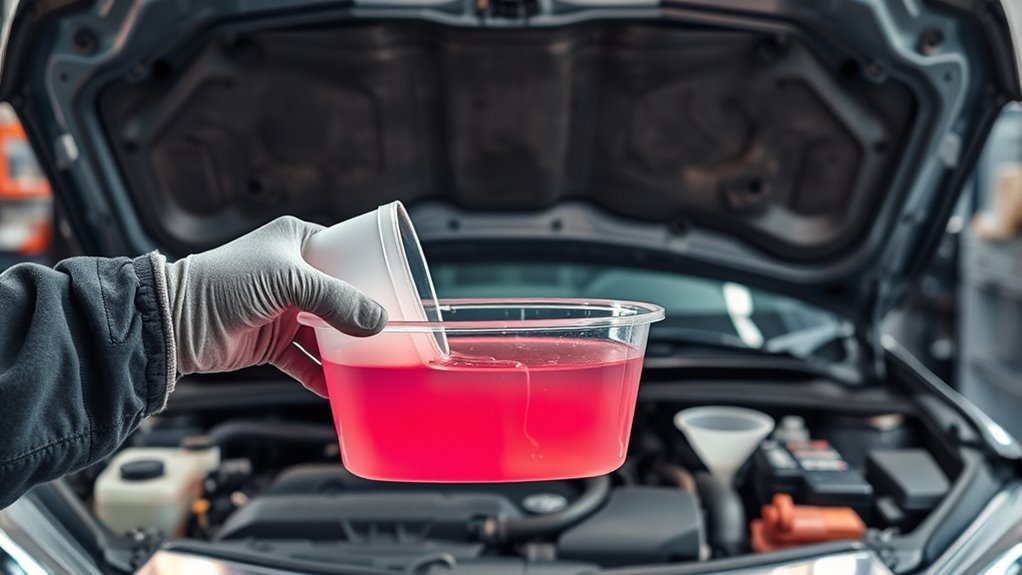
You should change your Camry’s coolant every 30,000 miles or two years if you’re using older silicate formulas, or switch to Toyota’s pink Super Long Life coolant to extend service to about 100,000 miles (five years). Inspect the reservoir and cap monthly, check for rust, sediment, sweet odors, gurgling or high temp readings, and test pH (below 7.5 is bad). Choose drain‑and‑fill for routine care, full flush for contamination, and keep service records to track compatibility and intervals—more guidance follows.
Quick Answer : Camry Coolant Intervals (30k–100k Miles)
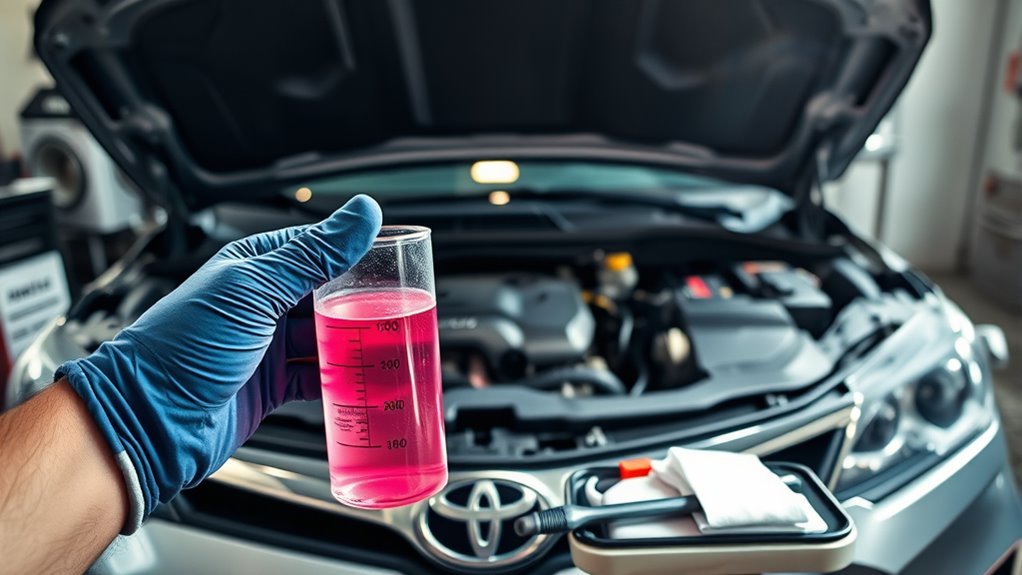
For most Toyota Camrys, change the coolant every 30,000 miles or about every two years when using traditional silicate-containing formulas; if you’re using Toyota’s pink Super Long Life or another extended-drain coolant, service intervals can extend to roughly 100,000 miles or five years. You’ll choose coolant types based on your model and catalyst needs; consult the owner’s manual to confirm compatibility. Inspect the reservoir and radiator cap monthly: check level, color, and odor; brown or oily fluid signals contamination. When draining, capture fluid, flush the system with distilled water until clear, then refill to specified concentration with approved coolant and distilled water. Bleed air pockets using the manufacturer procedure to prevent hot spots. Keep records of service dates and mileage to assert control over the vehicle’s lifecycle. These maintenance tips limit rust, corrosion, and overheating, preserving mechanical autonomy and reducing dependency on costly repairs or dealer interventions.
Coolant Intervals by Model Year and Coolant Type
Although intervals vary by year and coolant chemistry, you should follow model-specific guidance: inspect your owner’s manual to confirm the approved coolant types and prescribed service intervals for your Camry’s model year. If your car uses Toyota pink long-life coolant, you can plan for extended intervals—up to 100,000 miles or 10 years—while older silicate-containing formulations require replacement about every 30,000 miles to limit corrosion. For most model years, a conservative schedule is coolant replacement every 30,000 miles or every two years unless the manual specifies the long-life pink formula. Regardless of year, perform interim checks every 15,000 miles to catch debris or sediment that shortens life. Use these maintenance tips: document coolant type, record service dates, and only mix compatible chemistries. When you change coolant, flush according to model procedures and use the manufacturer-recommended mixture ratio. Following model-specific intervals and disciplined maintenance tips keeps your cooling system reliable and reduces dependency on emergency interventions.
Signs You Need a Coolant Change Now : Symptoms, Tests, pH
When you notice specific symptoms—sweet antifreeze odor under the hood, gurgling on startup, temperature gauge pegged in the red, or visible rust and sediment in the reservoir—you should stop driving and inspect the cooling system immediately; these signs indicate a leak, low level, contamination, or degraded inhibitor effectiveness that require a coolant change and system service. Check coolant level and cap pressure when the engine is cool; low level or air ingestion often causes gurgling and prefaces engine overheating signs. Smell test plus visual inspection for color change or particulates identifies contamination. Use a handheld pH tester: readings below 7.5 mean corrosive conditions and lost corrosion inhibitors—replace coolant and flush affected passages. Pressure-test the system to locate leaks that produce the sweet smell. Record results and act decisively: document pH, visual condition, and pressure findings, then perform the coolant change and corrective repairs. These coolant maintenance tips keep you free from avoidable breakdowns and reclaim control of your vehicle.
Drain‑and‑Fill vs. Full Flush : Pros, Cons, and When to Choose
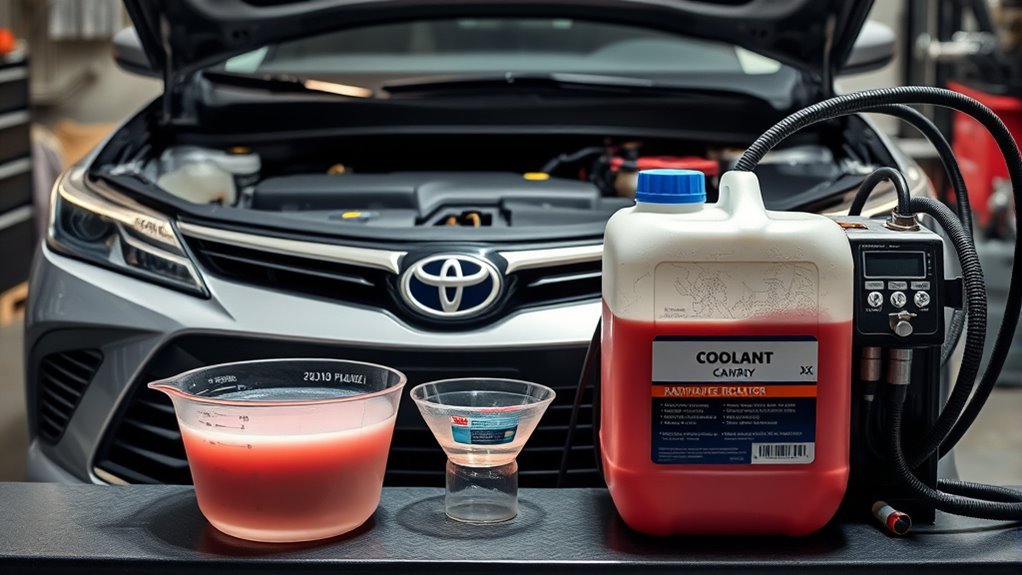
If your Camry’s coolant looks clean and you’ve kept up with routine service, a simple drain-and-fill will restore inhibitor concentration with less risk and cost than a full flush. You’ll remove part of the old fluid, add fresh mix, and rebalance protection without exposing the system to unnecessary disturbance. Drain and fill benefits include lower cost ($70–$115), reduced chance of air locks, and minimal intervention—ideal for routine 30,000‑mile or two‑year maintenance when the coolant tests normal.
Reserve a full flush for contaminated, discolored, or neglected systems where near-total fluid removal is required. Full flush risks include potential component stress and higher cost ($70–$220) if performed improperly; use trained technicians and proper equipment when you choose this path. Always consult your owner’s manual and inspect coolant condition before deciding. Choose the conservative drain-and-fill when protection is intact; escalate to a full flush only when contamination or age demands complete system renewal.
DIY Drain‑and‑Fill Checklist and Preventative Schedule (Water Pump, Hoses, Fluids)
Because regular coolant maintenance prevents overheating and premature component failure, follow a concise DIY drain‑and‑fill checklist and preventative schedule that covers fluid replacement, hose and clamp inspection, and water‑pump condition checks. You’ll do a drain‑and‑fill every 50,000 miles or five years for a 2020 Camry, adjusting for coolant types and severe driving. Check levels every 15,000 miles and inspect for sediment; log each service to claim control of your car’s history.
- Verify manufacturer coolant capacity, use approved coolant types, and purge air pockets during refill.
- Drain old coolant, inspect for debris, and flush only if contamination persists.
- Inspect radiator and heater hoses, clamps, and replace any with cracks, bulging, or soft spots.
- Check water pump for leaks, shaft play, and bearing noise; replace if any defect is present.
- Record dates, mileage, coolant color, and service notes; follow these maintenance tips on a visible schedule.
Execute with confidence; stay liberated from unexpected breakdowns.
Frequently Asked Questions
Can I Mix Different Brands or Colors of Coolant in My Camry?
You shouldn’t mix different brands or colors without checking coolant compatibility; you’ll risk chemical reactions or reduced corrosion protection. Follow manufacturer specs, flush system if switching, and prioritize compatible formulations over brand differences for reliable performance.
Does Coolant Type Affect Heater Core Performance or Cabin Heat?
Yes — coolant chemistry influences heater efficiency and heater core performance. You’ll pick compatible, specified coolant to prevent corrosion, clogging, or scale. Flush, refill, and inspect the system periodically to maintain ideal cabin heat.
How Long Does It Take for a Full Coolant Flush at a Shop?
About 60–90 minutes is typical for a full coolant flush; shops average 75 minutes, so coolant flush duration reflects shop efficiency. You’ll get procedure steps, inspection, and system bleeding—then reclaim freedom from overheating risk.
Are Hybrid Camry Coolant Intervals Different From Gas Models?
Yes — you’ll follow similar intervals, but hybrid components demand attention; you’ll monitor coolant efficiency for the inverter/HV system, inspect hoses and temps more frequently, and replace per hybrid-specific service schedules to guarantee reliability.
Can I Use Distilled Water Only in Emergency Top-Offs?
Yes — in emergencies you can use distilled water only briefly; it’s a stopgap that preserves coolant properties temporarily for emergency maintenance. Flush and refill with proper coolant soon to restore corrosion protection and boiling/freeze control.
Conclusion
Keep Camry cooling system maintenance predictable: follow your model-year interval and coolant type (typically 30k–100k miles), watch for overheating, low coolant, rust, or a sour smell, and use pH/boil tests if unsure. Prefer drain‑and‑fill for routine service, flush for contamination or long-neglect cases. Replace hoses and the water pump on schedule. Example: a 2012 Camry with 95k miles had rusty coolant and a failing pump—full flush plus pump/hose replacement stopped overheating and extended service life.