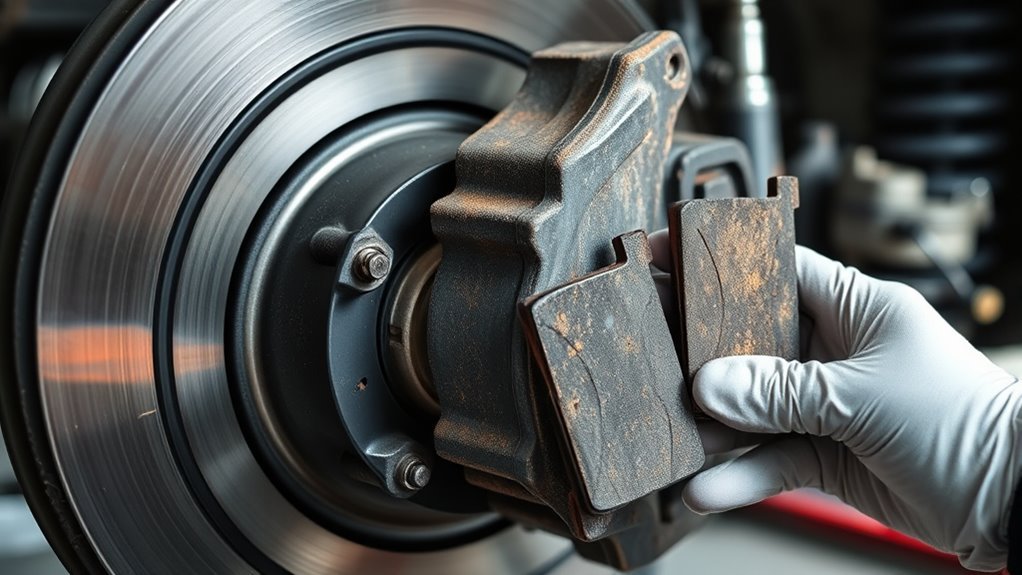
Your Camry’s brake pads typically run 30,000–70,000 miles and rotors about 50,000–70,000 miles, though actual life depends on driving style, load, and environment. You should monitor pad thickness and rotor wear with calibrated tools, inspect calipers, boots, slide pins and drums for corrosion or scoring, and replace pads and rotors together to prevent uneven wear. Address uneven wear, noise, and fluid quality promptly to extend service life — continue for detailed inspection and replacement guidance.
How Long Do Toyota Camry Brake Pads and Rotors Last?
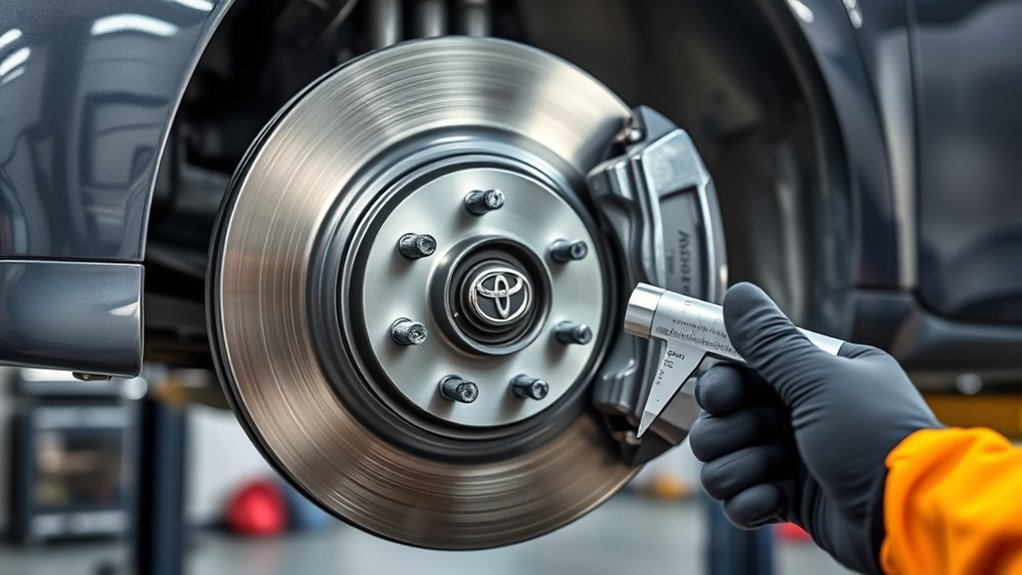
How long will your Toyota Camry’s brake pads and rotors last? You should expect brake pad longevity of roughly 30,000–70,000 miles and rotor life typically between 50,000–70,000 miles. You monitor pad thickness and rotor wear at regular intervals; neglect lets thin friction material accelerate rotor degradation and risks brake failure. You’ll prevent uneven wear by replacing pads and rotors together when measurements approach minimum service limits. Use calibrated micrometers or manufacturer-specified gauges to verify pad backing-plate clearance and rotor thickness against Toyota specifications. You’ll document wear rates to project remaining service life and schedule maintenance proactively, which preserves your mobility and autonomy. When inspections reveal scoring, runout, or thickness below spec, you’ll machine or replace rotors per torque and finish standards to restore uniform contact. These methodical steps guarantee braking performance, safety, and the liberation that comes from reliable, predictable vehicle control.
Driving Habits and Conditions That Shorten Camry Brake Life (City, Towing, Hills)
When you drive in stop‑and‑go city traffic, tow heavy loads, or repeatedly descend steep grades, your Camry’s brake pads and rotors incur higher thermal and mechanical stress that shortens service life; frequent engagements raise operating temperatures, increase frictional wear, and promote glazing, scoring, and corrosion. You’ll see accelerated pad thickness loss and rotor runout when you habitually use aggressive driving techniques—hard stops and rapid accelerations—because they multiply energy dissipation per stop. Towing increases kinetic energy the system must absorb; expect higher contact pressures, faster material transfer, and earlier heat‑related microcracking. On hills, riding the brakes elevates sustained temperatures that degrade friction material and accelerate corrosion, especially in wet or sandy environments where abrasive particles embed in pads. Adopt liberation‑oriented practices: use controlled engine braking, increase following distance, and modulate speed to reduce engagements. These procedural changes, combined with scheduled brake maintenance, reduce peak temperatures and wear rates, extending pad and rotor life in predictable, measurable ways.
Inspecting Toyota Camry Pads, Rotors, Calipers, and Drums at Home
Although you don’t need a shop to perform basic brake inspections, you should follow a systematic checklist and use the right tools to assess pads, rotors, calipers, and drums on your Camry. Start by measuring pad thickness at multiple points; note minimum spec and plan pad replacement before material is critically thin. Spin each wheel and visually inspect rotors for scoring, grooves, or lateral runout; document uneven wear and schedule rotor maintenance—resurfacing or replacement—concurrent with pad work. Retract and operate caliper pistons, check boots and slide pins for corrosion or seizure; four-piston calipers demand particular attention since a stuck piston reduces braking force and requires prompt action. For drum systems, remove the drum, inspect shoes, springs, and hardware; replace rusty components and worn shoes to restore function. Finally, verify shims, fitting kits, and fasteners are intact and torqued to spec. Record findings and act on any item that compromises stopping performance.
When to Repair or Replace Brakes (Maintenance Tips to Extend Life)
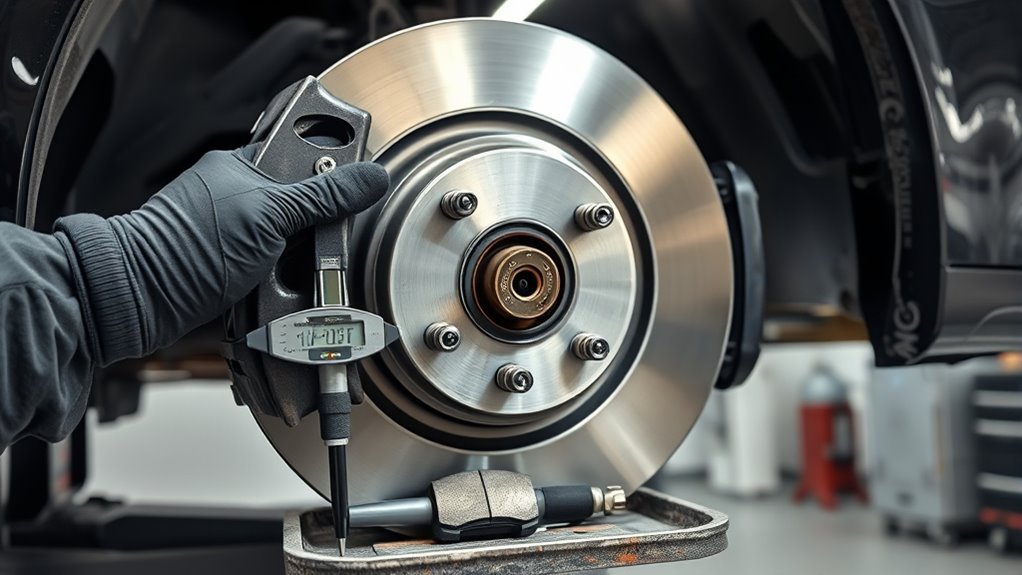
Want to extend the service life of your Camry’s braking system? You’ll start with scheduled inspections: measure pad and shoe thickness and replace them before they reach critical wear. Address uneven wear immediately — it signals alignment, caliper, or hydraulic problems that will shorten component life. When you service pads, replace rotors as specified; worn rotors undermine new pads and reduce stopping power.
Perform methodical brake noise diagnosis whenever you hear squeal, grind, or vibration; isolate pads, rotors, and hardware to prevent cascading failures. Inspect calipers for seizing and restore proper slide and piston movement or replace the unit to avoid uneven wear. Incorporate periodic fluid quality checks: test boiling point and contamination, then flush and replace fluid per interval or if degradation appears.
Choose quality original parts to maintain predictable performance. Maintain a regimented inspection and service cadence — it gives you mechanical freedom and minimizes unexpected brake failures, preserving safety and control.
OEM vs Aftermarket for Toyota Camry Brakes: Performance, Cost, and Common Pitfalls
Because braking is a safety-critical system, you should weigh OEM and aftermarket options based on measured performance, durability, and total lifecycle cost rather than initial price alone. You’ll find OEM advantages in longevity, engineered fit, and predictable pedal feel; they reduce noise and premature wear. Aftermarket risks include inconsistent friction, increased vibration, and more frequent replacements that raise lifecycle costs despite lower upfront price. Assess parts by lab data, material spec, and real-world longevity.
| Metric | Impact |
|---|---|
| Longevity | OEM advantages: longer service life |
| Compatibility | OEM advantages: designed for Toyota tolerances |
| Maintenance Cost | Aftermarket risks: higher long-term expense |
Select premium aftermarket kits only if independent test data matches OEM performance and total cost projection. You should prioritize measured results over marketing. Choose parts that free you from avoidable failure modes and preserve your autonomy on the road.
Frequently Asked Questions
How Long Do Brakes Usually Last on a Toyota Camry?
You’ll typically get 30,000–70,000 miles for brake pads and 50,000–100,000 miles for rotors; monitor brake wear, follow maintenance tips like regular inspections and timely replacements to preserve safety, control, and your freedom on the road.
How Long Do Toyota Factory Brakes Last?
A commuter’s Camry lasted 55,000 miles; you’ll typically get 30,000–70,000 miles from Toyota factory brakes. Follow brake maintenance tips, choose proper brake pad types, inspect wear regularly, and replace pads/rotors methodically for freedom.
Conclusion
You’ll find Toyota Camry brakes can feel imperceptibly worn one week and decisively spent the next; that contrast demands vigilance. Inspect pads, rotors, calipers, and drums every 6,000–12,000 miles, and replace components as measured wear or vibration thresholds are exceeded. Drive habits and loads will halve or double service life, so monitor thickness, runout, and fluid condition methodically. Choose OEM for predictable specs or vetted aftermarket to balance cost without sacrificing measured performance.