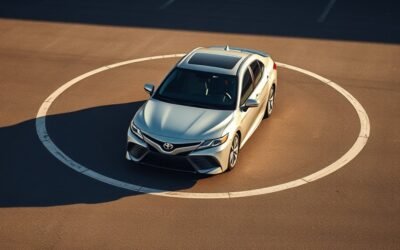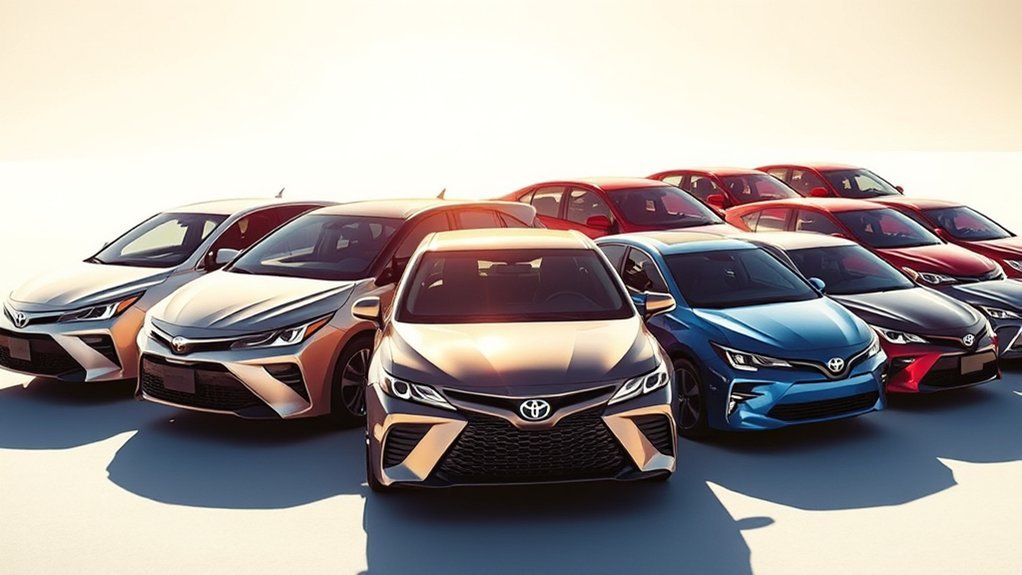
Since its launch in 1983, the Toyota Camry’s body styles have transformed considerably. You’ve seen variations like the original sedan and liftback, with the second generation adding a practical wagon option. As the Camry evolved into a midsize format, features like aerodynamics and comfort took center stage. Today, sporty designs and hybrid options appeal to modern consumers. There’s much more to explore about how these changes impact performance and the future of the Camry.
The Camry’s Evolution: From Compact Origins to Midsize Success
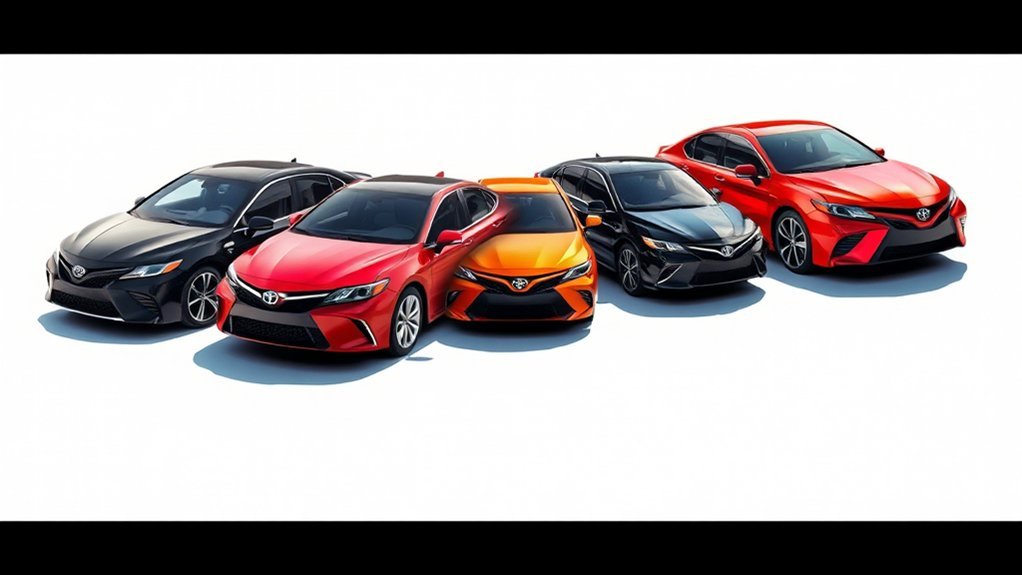
The Toyota Camry‘s journey from its compact origins to becoming a midsize success story is fascinating. Launched in 1983, the Camry initially showcased compact features with its sedan and liftback body styles, appealing to the practical driver. As it evolved, the second generation introduced a wagon variant, broadening its appeal to diverse consumer needs. By the third generation in 1992, the Camry underwent a significant midsize shift, solidifying its reputation as a go-to family sedan. The fourth generation further emphasized aerodynamics and comfort, enhancing the driving experience. Meanwhile, the 1993 introduction of the sporty Camry Solara coupe offered a dynamic alternative, although it later faded from the lineup. Today, the eighth generation continues to impress with sportier designs and hybrid options, ensuring the Camry remains a strong contender in the competitive midsize market. This evolution reflects Toyota’s commitment to innovation and consumer satisfaction.
Key Body Styles Introduced in Each Generation
How has the Toyota Camry adapted its body styles over the years to meet changing consumer demands? Each generation reflects a keen understanding of what drivers want. The first generation (1983–1986) debuted with sedan and liftback variations, marking its entry into the compact market. By the second generation (1987–1991), the introduction of a wagon variant showcased the Camry’s commitment to family-friendly practicality. Shifting to the third generation (1992–1996), it embraced a wider midsize sedan format while adding the sporty Camry Solara coupe. The fourth generation (1997–2001) focused solely on sedans, refining comfort and aerodynamics without new body styles. Today, the eighth generation (2018–Present) retains the classic sedan style but introduces sportier aesthetics with options like the XSE, appealing to modern tastes. This evolution illustrates how the Camry balances tradition and innovation, ensuring it meets diverse consumer needs across time.
How Design Changes Affect Performance and Functionality
While design changes often seem purely aesthetic, they markedly impact the Toyota Camry’s performance and functionality. Each generation has brought enhancements that elevate your driving experience. For instance, the third generation’s wider body design substantially improved aerodynamic efficiency, leading to better stability and handling. This shift allowed the Camry to achieve an ideal performance balance, making it more responsive on the road.
The fourth generation’s boxy design prioritized rear legroom and trunk space without compromising safety, showcasing how functionality can harmonize with style. Fast forward to the eighth generation, where the TNGA platform introduces a lower center of gravity, further enhancing handling dynamics. The sporty TRD model, launched in 2020, incorporates performance-oriented elements like a firmer suspension and aerodynamic enhancements, proving that design changes can invigorate both aesthetics and functionality. Ultimately, each evolution of the Camry illustrates how thoughtful design can elevate your driving pleasure.
Comparing Camry Body Styles: Sedans, Liftbacks, and Wagons
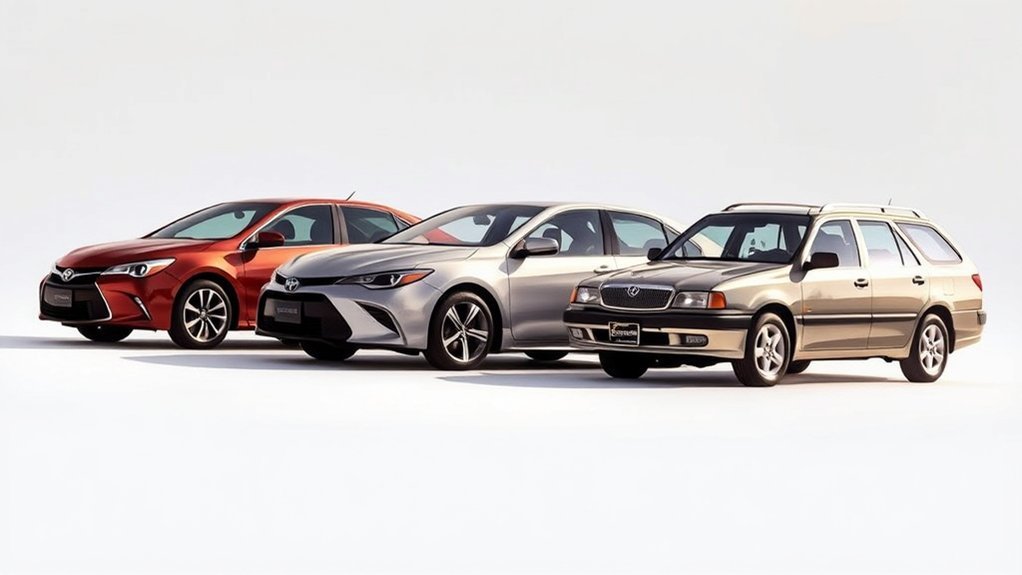
Design changes in the Toyota Camry not only enhance performance but also influence the variety of body styles available, catering to different preferences and lifestyles. Each body style offers unique advantages that might suit your needs:
- Sedan advantages: Spacious interiors and efficient fuel consumption make sedans a practical choice for daily commutes.
- Liftback appeal: Earlier models provided a stylish blend of sportiness and functionality, perfect for those who valued both aesthetics and utility.
- Wagon versatility: The wagon variant introduced in the second generation offered ample cargo space, ideal for family outings or road trips.
- Sporty options: The reintroduction of the coupe in the fourth generation attracted buyers looking for a dynamic driving experience.
- Modern design: The latest sedan’s aggressive styling aligns with contemporary trends, appealing to a younger audience.
Choosing the right body style guarantees you find a Camry that truly fits your lifestyle and preferences.
What’s Next for Camry Body Styles?
What innovations can we expect in the next generation of Toyota Camry body styles? As the automotive landscape evolves, future trends indicate a shift towards sportier designs, building on the aggressive aesthetics introduced with the TRD model in 2020. The ninth generation, debuting in 2024, is likely to maintain its sleek sedan silhouette while expanding hybrid options, aligning with growing consumer preferences for eco-friendly vehicles.
With competition heating up, you might see the Camry adopting crossover-like characteristics, catering to a desire for versatility and spaciousness. As technology and safety features advance, expect these elements to play a pivotal role in shaping future body styles, ensuring the Camry stays relevant in a fast-changing market. Ultimately, the next Camry promises to blend tradition with innovation, offering a compelling choice for those seeking liberation through modern automotive design.
Frequently Asked Questions
When Did the Toyota Camry Body Style Change?
The Toyota Camry’s body style changed considerably from its 1983 launch through various generations, reflecting evolving design trends. You’ll notice shifts like the move to midsize in 1992 and the focus on sporty aesthetics since 2018.
What Are the Different Generations of Toyota Camry?
Think of the Camry as a chameleon; it’s evolved through nine distinct generations. Each iteration showcases unique design features, reflecting the Camry’s evolution from compact roots to a modern, sportier midsize sedan that captivates.
What Year Was the Best Toyota Camry Built?
The best Toyota Camry was built in 2007. It combined most reliable performance features with a robust 268-hp V6 engine, delivering impressive speed and a smooth ride, making it a standout choice for drivers.
Conclusion
As you journey through the evolution of the Toyota Camry, you can see how its body styles have transformed like a chameleon, adapting to the shifting demands of drivers. Each generation tells a story of innovation, merging aesthetics with functionality. Whether you’re drawn to the sleek sedan, the versatile liftback, or the spacious wagon, the Camry continues to shape the road ahead. With whispers of future designs, one can only wonder what the next chapter holds for this iconic vehicle.