Use the battery chemistry Toyota specified for your exact Camry unless a Toyota parts lookup or qualified fitment guide confirms an approved change. AGM can be a useful upgrade from a standard flooded battery in compatible applications, especially for repeated accessory use and short-trip cycling. However, chemistry is only one part of the decision. The group size, terminal layout, hold-down, vent connection, cold-cranking amps, reserve capacity or amp-hour rating, model year, powertrain, and market must also match.
Last updated: July 23, 2026. Toyota model-year, hybrid-system, fitment, charging, and battery-safety guidance reviewed.
Quick Answer
Choose AGM if your Camry originally uses AGM. Choose EFB if Toyota specifies EFB, unless an approved replacement guide permits another chemistry. A standard flooded battery remains a sensible lower-cost choice when it matches the original specification. If you want to upgrade a factory-flooded Camry to AGM, first verify the exact group size, posts, hold-down, venting, capacity, and vehicle application by model year or VIN.
Key Takeaways
- Factory specification comes first: do not select a battery only because AGM sounds more advanced.
- AGM handles cycling well: it is useful for compatible vehicles with frequent short trips, accessory loads, vibration, or repeated shallow discharge.
- Flooded costs less: a correct, good-quality flooded battery can be reliable in a Camry designed for it.
- EFB is not basic flooded: it is a strengthened flooded design intended to tolerate more cycling.
- Venting is a safety requirement: any original vent hose or vent elbow must connect to the replacement battery correctly.
- Chemistry does not identify size: AGM, EFB, and flooded batteries can come in different BCI or JIS case sizes and terminal layouts.
At a Glance: Follow the Existing Battery Label
| Current Label or Vehicle Setup | Safest Replacement Path |
|---|---|
| AGM | Use an approved AGM with matching size, terminals, ratings, hold-down, and vent provisions. |
| EFB | Use the specified EFB or a Toyota-approved equivalent. Do not automatically downgrade to basic flooded. |
| Standard flooded | Use a matching flooded battery, or verify that an AGM is an approved direct replacement before upgrading. |
| Vent hose or enclosed location | Use a vehicle-designed battery with the correct vent port and reconnect the hose exactly as specified. |
| Label missing or unclear | Check the owner’s manual, Toyota parts catalog, dealer lookup, or battery application guide using the VIN. |
AGM vs Flooded Battery for Toyota Camry: Which Should You Choose?
| Battery Type | Best For | Main Advantage | Main Trade-Off |
|---|---|---|---|
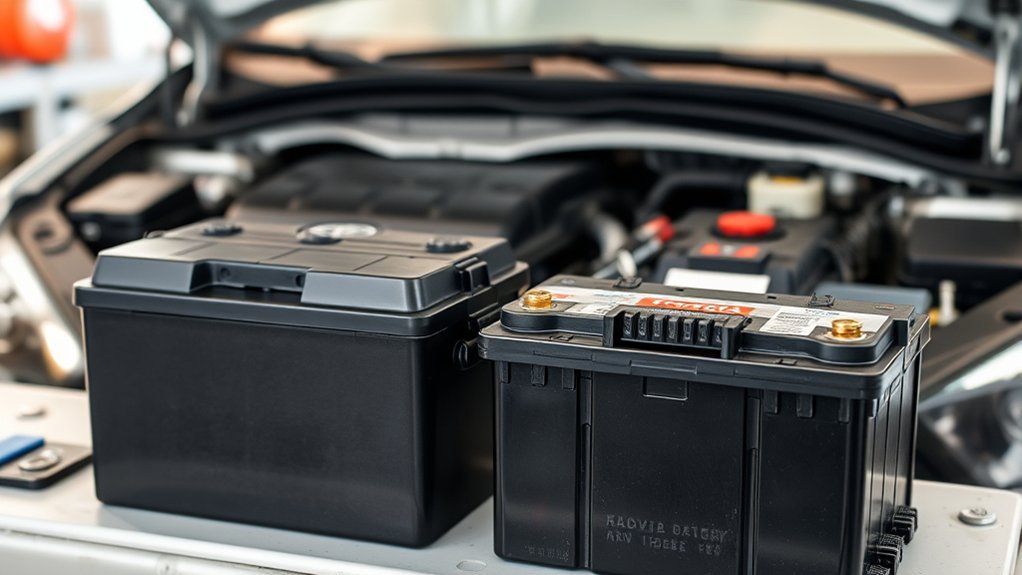
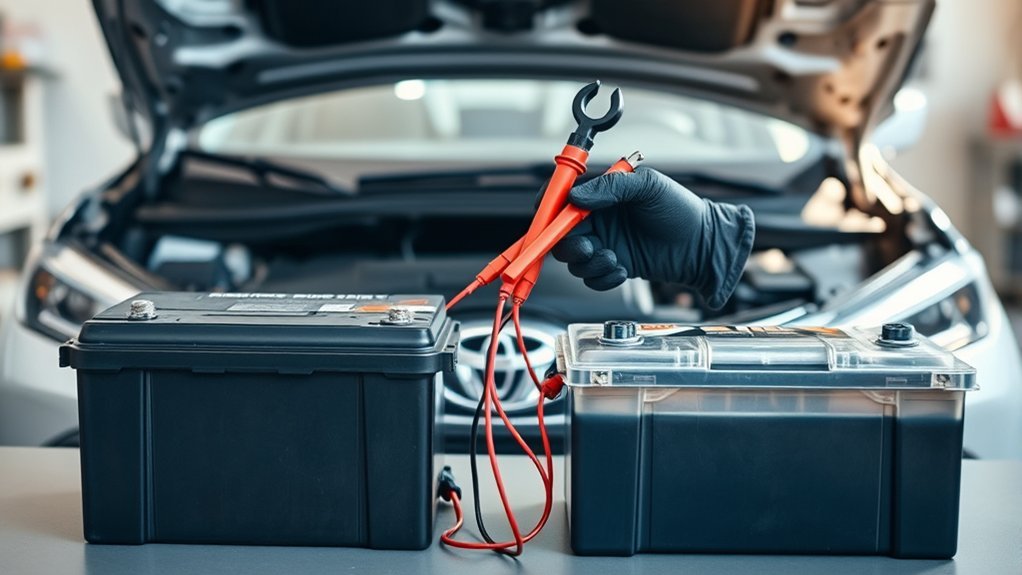
| AGM | Camrys originally equipped with AGM and compatible flooded applications that need stronger cycling performance | Fast charge acceptance, strong cycling ability, vibration resistance, and spill-resistant construction | Higher purchase price; confirm vehicle fitment and use AGM mode with an external charger |
| Flooded | Camrys specified for a standard flooded starting battery and owners prioritizing lower initial cost | Lower purchase price and broad availability | Less tolerance for repeated cycling; serviceable versions need electrolyte care |
| EFB | Camrys or Toyota replacement applications that specifically call for enhanced flooded technology | More cycling capability than a basic flooded battery, often at a lower price than AGM | Not identical to AGM and should not replace factory AGM unless the application permits it |
AGM is often the stronger performer when two batteries are equally suitable for the vehicle. Its lower internal resistance helps it accept charge quickly, and its construction handles repeated shallow discharges and vibration well. That can benefit a Camry used for short trips, frequent accessory use, dash cams, or long periods between drives.
Flooded batteries remain a practical choice when Toyota specifies one and the car has ordinary electrical demands. A correct-fit flooded battery is not automatically inferior simply because it costs less. Its starting rating, reserve capacity, manufacturing quality, installation, temperature exposure, and state of charge all affect performance.
EFB stands for Enhanced Flooded Battery. It still uses liquid electrolyte, but its plate and separator construction is strengthened for greater cycling durability than a basic flooded starting battery. Do not treat EFB and standard flooded as interchangeable labels.
Whatever chemistry you choose, match the group size, terminal orientation, case height, hold-down shape, vent ports, cold-cranking amps (CCA), and reserve-capacity or amp-hour specification. AGM, EFB, and flooded describe internal construction; they do not tell you whether the case will fit your Camry.
Model-year note: Toyota made the U.S. 2025 Camry lineup exclusively hybrid. Older gasoline Camrys and Camry Hybrids use different 12-volt battery locations and charging arrangements. Check the exact Toyota Camry battery group size, powertrain, and VIN before ordering.
[Products Worth Considering]

The NOCO GENIUS1 is an all-in-one smart charger, maintainer, trickle charger, and desulfator designed to help restore and keep batteries ready for use. It supports 6V and 12V lead-acid and lithium batteries, uses temperature compensation for safer charging, and can recover deeply discharged batteries with advanced charging modes. Compact and easy to leave connected, it is built for cars, motorcycles, ATVs, boats, and other vehicles that need reliable battery care.

The MOTOPOWER MP0514A makes it easy to check battery and charging system health with simple plug-and-test operation. Its digital LCD display and LED indicators provide clear voltage readings and alternator status, while built-in reverse connection and over-voltage protection help support safe use. Compact and portable, it is a practical tool for drivers and mechanics who want quick, reliable diagnostics.
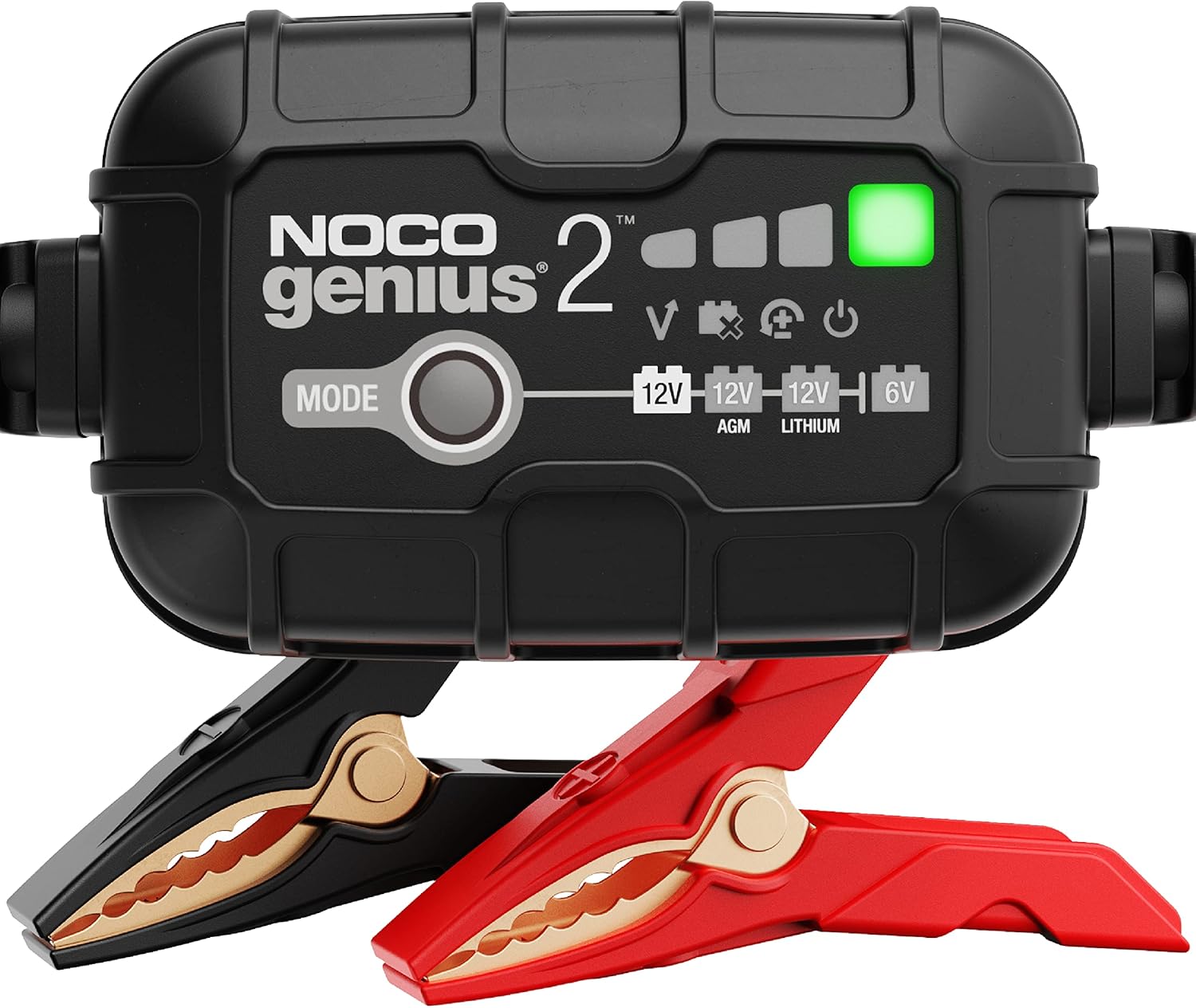
The NOCO GENIUS2 is a compact, all-in-one smart charger that automatically charges, maintains, and restores 6V and 12V lead-acid and lithium batteries. It features temperature compensation, overcharge protection, pulse desulfation, and Force Mode for reviving deeply discharged batteries, making it ideal for long-term battery care across many vehicle types. Designed for safe indefinite connection, it helps extend battery life and keep batteries ready to go.
Which Battery Type Does Your Camry Actually Need?
Your Camry’s original battery label is the best starting point. Look for wording such as AGM, EFB, flooded, or lead-acid, followed by the case size and electrical ratings. Also note the positive-terminal position and whether a vent elbow or hose connects to the case.
Then confirm the application using the owner’s manual, a Toyota parts lookup, or a qualified battery catalog. Use the model year, engine or hybrid powertrain, market, and VIN. Two Camrys that look similar may not use the same group size or auxiliary-battery design.
In a conventional gasoline Camry, the 12-volt battery supplies the starter motor as well as modules, lights, security systems, infotainment, and accessories. In a Camry Hybrid, the auxiliary battery powers low-voltage electronics and helps the vehicle initialize the hybrid system. It does not perform the same conventional starter-motor job.
A weak hybrid auxiliary battery can prevent the vehicle from reaching READY even when the high-voltage traction battery is healthy. The 12-volt battery and high-voltage battery are separate systems and require different testing and safety procedures.
Hybrid safety: Battery selection and basic 12-volt checks do not require touching the high-voltage system. Never open, probe, disconnect, or service orange high-voltage cables, the traction-battery case, service plugs, or inverter components unless you are trained and properly equipped.
[Products Worth Considering]

This fully automatic 5 amp, 12 volt battery charger and maintainer delivers a complete charge and then switches to float mode to keep batteries ready without overcharging. Designed for lead acid, AGM, gel, and lithium applications, it includes smart safety features like reverse polarity detection, spark-proof connection, and adaptive charging for dependable everyday use. With compact construction and long cord reach, it’s a convenient solution for keeping cars, SUVs, trucks, and other vehicles powered up.

This smart automatic battery charger and maintainer helps keep automotive batteries charged and ready by delivering a full charge before switching to float mode for long-term maintenance. It supports 6V and 12V batteries with broad compatibility for lead-acid, AGM, gel, and lithium types, while built-in safety features like reverse polarity detection and spark-proof connection help ensure reliable use. Compact construction, included connection cables, and indicator lights make it a convenient choice for cars, SUVs, trucks, and storage maintenance.

Fast Starting Power: This 12V 70Ah 710 CCA delivers strong, steady starts is ready for any weather in any season.
How Does a Flooded Battery Work?
A flooded lead-acid battery uses lead plates submerged in liquid electrolyte. Chemical reactions between the plates and electrolyte release electrical energy during discharge and reverse during charging. The design is proven, widely available, and usually less expensive than AGM.
There are two owner-facing versions:
- Serviceable flooded batteries: The battery manufacturer may permit electrolyte inspection and distilled-water top-offs.
- Maintenance-free flooded batteries: These are closed for normal owner use. Do not remove covers or pry open a battery marked maintenance-free or non-serviceable.
A starting-type flooded battery works best when it stays near full charge. Repeated deep discharge, long periods in a partly charged state, high heat, vibration, poor mounting, and charging-system faults can shorten its service life.
Flooded batteries must remain upright and properly ventilated. If the original Camry battery has a vent hose, the replacement must provide the correct connection. Do not improvise a vent arrangement in the trunk, passenger compartment, or another enclosed area.
Warning: Wear eye protection and gloves around any lead-acid battery. Keep flames, sparks, cigarettes, and metal jewelry away. Battery electrolyte is corrosive, and hydrogen released during charging can ignite in a poorly ventilated area.
How Does an AGM Battery Work?
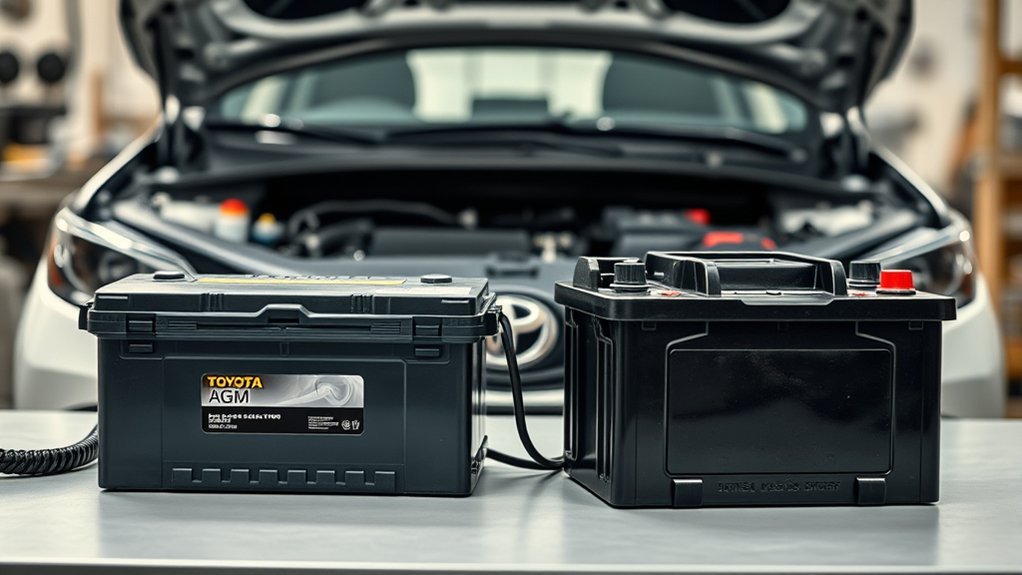
AGM means Absorbent Glass Mat. Fiberglass separators hold the electrolyte against the battery plates instead of allowing it to move freely around the case. AGM is a type of valve-regulated lead-acid battery.
This construction makes AGM spill-resistant during normal use and helps it tolerate vibration. It also supports low internal resistance, strong charge acceptance, and repeated shallow cycling. Those characteristics can be useful when a compatible Camry makes short trips, runs accessories while parked, sits between drives, or repeatedly operates below a full state of charge.
AGM is not completely gas-proof. If it is overcharged, overheated, damaged, or internally pressurized, its relief valves can open. Always use any factory vent connection required by the vehicle and do not assume that “maintenance-free” means installation location no longer matters.
Clarios reports that its AGM batteries produced stronger cycling performance than EFB in the company’s start-stop lab and fleet testing. That supports AGM’s use in demanding applications, but it is manufacturer test data and does not prove that every AGM is the correct replacement for every Camry.
Pro Tip: If the current Camry battery label says AGM, replace it with an approved AGM. Do not downgrade to flooded merely because a battery with similar exterior dimensions fits the tray.
Is AGM Better Than Flooded for a Camry?
Does AGM Always Have More Starting Power?
No. AGM batteries often provide strong starting performance for their size, but chemistry alone does not determine CCA. Compare the actual label ratings. A high-CCA flooded battery can exceed the rating of a lower-spec AGM in the same general size category.
CCA is especially important for a conventional gasoline Camry because the battery must crank the engine in cold conditions. On a Camry Hybrid, the 12-volt battery’s capacity, condition, voltage stability, venting, and Toyota application are more useful selection factors than choosing the highest CCA number available.
Which Type Handles Short Trips and Accessory Loads Better?
AGM generally handles repeated shallow discharge and recharge better than a basic flooded starting battery. This matters when trips are too short to replace the energy used during startup, or when dash cams, audio systems, heated features, chargers, lights, or other electronics draw power while the car is not fully charging.
EFB provides a middle level of cycling durability. It is stronger than a basic flooded design but is not the same as AGM. Use it when the original application or an approved replacement guide specifies EFB.
Which Battery Recharges Faster?
AGM generally accepts charging current faster than a standard flooded battery because of its lower internal resistance. Faster charge acceptance can help recovery, but it cannot compensate for a failing alternator, DC-DC converter, loose cable, parasitic draw, or driving pattern that never allows enough charging time.
If a battery has been deeply discharged, charge it fully with an appropriate external charger rather than assuming a short drive will restore it.
Can a Camry’s Charging System Handle an AGM Battery?
An AGM upgrade does not automatically require a different alternator. Battery-manufacturer guidance indicates that AGM batteries can directly replace flooded batteries in many applications when the physical size, electrical capacity, and vehicle application are compatible.
That general compatibility is not permission to install any AGM in any Camry. Confirm the exact application first, particularly on a hybrid, a vehicle with an enclosed battery location, or a model that originally uses EFB or another specialized auxiliary battery.
Vehicle Charging System
A conventional gasoline Camry normally uses an alternator and voltage regulation system. A Camry Hybrid uses a DC-DC charging path associated with the hybrid system rather than a conventional belt-driven alternator diagnosis.
If you suspect charging trouble, test the battery and charging system together. Check cable voltage drop, terminal condition, grounds, stored low-voltage codes, parasitic draw, and charging output under load. Do not replace a battery solely because the vehicle needed one jump-start.
For a step-by-step fault check, see the Camry charging system warning guide.
External Charger Settings
External chargers are different from the vehicle’s charging system. Use the mode listed for the installed battery:
- AGM or Absorbed mode for an AGM battery.
- Standard or Flooded mode for a flooded battery.
- EFB mode when the charger provides one and the battery manufacturer calls for it.
- Repair or desulfation mode only when both the charger instructions and battery manufacturer permit it.
Interstate advises selecting AGM or Absorbed mode when charging AGM externally and warns that uncontrolled high voltage can overheat the battery or force its pressure valve to open.
Warning: Turn the engine or hybrid system off before connecting an external charger unless the charger and Toyota procedure specifically state otherwise. Stop charging if the battery becomes very hot, swells, leaks, vents heavily, or produces a strong sulfur or rotten-egg odor.
How Do You Install a Camry Battery Safely?
Do not assume every Camry battery is under the hood. Battery location varies by generation and powertrain, and some Camry Hybrid designs place the auxiliary battery in the trunk or rear body area. Check the exact owner’s manual before disconnecting it.
Before buying or installing a replacement, confirm:
- Original chemistry: AGM, EFB, or standard flooded.
- Correct group size: The case must sit fully in the tray without forcing it.
- Correct terminal orientation: The cables must reach naturally without stretching or crossing.
- Secure hold-down: The battery must not slide, tip, or vibrate.
- Correct venting: Reconnect every original vent elbow, plug, and hose as designed.
- Correct electrical rating: Use the CCA, reserve-capacity, or amp-hour requirement listed for the exact application.
- Clean connections: Remove corrosion and replace damaged clamps or cables.
- Safe case condition: Do not install a battery that is cracked, swollen, leaking, or has damaged posts.
A higher CCA or capacity number is acceptable only when the battery remains an approved physical and electrical fit. Do not buy a taller case, reverse-post model, or oversized battery merely because its performance rating is higher.
Disconnecting a Camry battery may reset stored settings or adaptive values. Follow the vehicle manual, keep the key away from the car, turn all loads off, and use the prescribed disconnection order. If the battery is difficult to access or is installed near hybrid components, have a qualified technician replace it.
When Is AGM Worth the Extra Cost?
AGM is worth considering when it is factory-installed or when an approved flooded-to-AGM upgrade serves a clear need. Examples include frequent short trips, long accessory use, repeated periods of low charge, vibration exposure, or a driving pattern that demands stronger cycling performance.
A standard flooded battery may be the better value when the Camry was designed for it, electrical demand is modest, the vehicle regularly completes longer drives, and the owner wants the lowest initial cost. Buying AGM without a demanding use case does not guarantee a financial return.
Real battery life depends on temperature, charging health, driving frequency, parasitic draw, installation quality, battery construction, and time spent discharged. High heat accelerates deterioration, while repeated short trips can leave either chemistry undercharged.
Maintenance differs by design:
- AGM: No watering; requires correct charging and secure mounting.
- Maintenance-free flooded: No owner watering; still requires clean terminals, ventilation, and secure mounting.
- Serviceable flooded: May require distilled water when the battery manufacturer permits it.
- EFB: Usually maintenance-free for the owner but should be treated as its specified chemistry rather than basic flooded.
AAA recommends annual battery testing after the battery reaches three years of service. Age alone does not prove that replacement is necessary, but regular testing helps identify declining starting or reserve capacity before a no-start.
The lowest-priced battery is not always the lowest-cost choice. The better value is the correctly specified battery that stays charged, fits securely, vents safely, and passes periodic testing.
[Products Worth Considering]

Vehicle Compatibility: Compatible with 2025-2026 Toyota Camry hybrid models. Replacement for part number G92DH-33080. Verify the year, model, part number, and filter shape before ordering.

✅Batter dimensions: 10.75" L x 6.81" W x 8.98" H, Terminal: Tapered terminal (Left negative (-), Right positive (+)). ✅Please ensure to verify the dimensions and terminal position before making a purchase to guarantee compatibility with your vehicle to avoid any fitment issues.

Battery dimensions --- BCI Group size 48 (H6 L3), 10.98 x 6.81 x 7.51 inches, Terminal Layout: Left: - Right: +. Battery dimensions, cold cranking amps, terminal location and battery type are key factors in getting the right unit. Please measure your old battery and compare the size with this battery, if the measurements are the same, the positive and negative positions are the same, there is not much difference in CCA and it will fit your vehicle.
60-Second Fitment Check Before You Buy
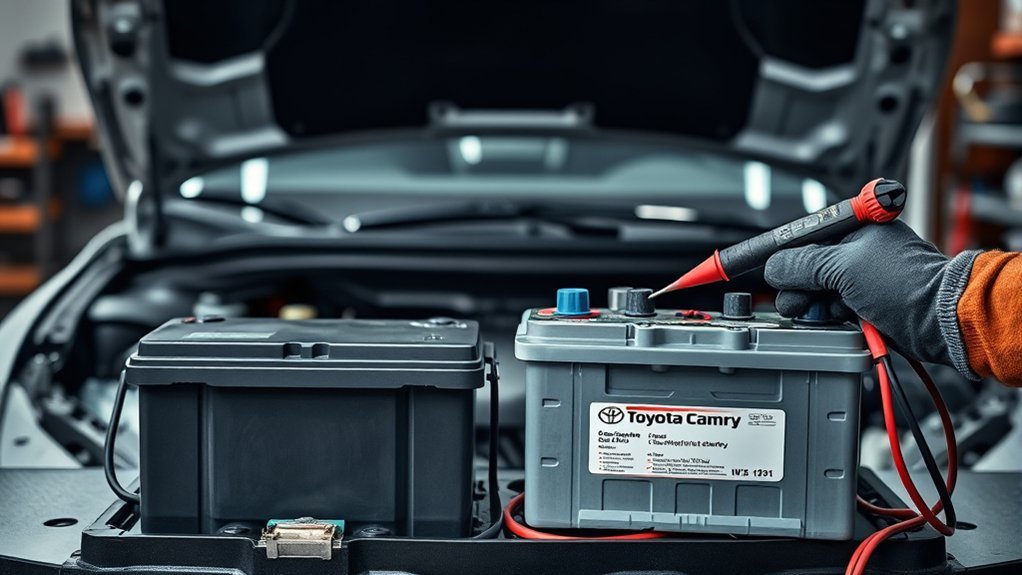
- Read the current battery label. Record AGM, EFB, or flooded; the group size; CCA; RC or Ah; and the part number.
- Identify the powertrain. Confirm conventional gasoline versus Camry Hybrid.
- Inspect the posts and tray. Match terminal sides, case height, base shape, and hold-down.
- Check the vent arrangement. Record the port location, elbow, hose, and any plugged unused vent.
- Verify the application. Use the owner’s manual, Toyota parts catalog, or a trusted battery guide with the exact model year and VIN.
- Confirm any chemistry change. Do not assume that a battery fitting the tray makes the swap approved.
- Plan the charging method. Use the correct external charger mode if the replacement needs charging before or after installation.
- Recycle the old battery. Return it to a battery retailer, recycler, Toyota service center, or repair shop.
Common Battery-Selection Mistakes
- Buying by chemistry alone: AGM does not guarantee correct group size, posts, venting, CCA, or capacity.
- Buying by price alone: A cheap battery with inadequate ratings or poor fit can create repeat no-starts.
- Assuming every Camry uses the same battery: Model year, market, powertrain, options, and battery location matter.
- Downgrading factory AGM: A flooded battery may have lower cycling capability or the wrong enclosed-location design.
- Downgrading EFB to basic flooded: EFB is built for more cycling and should be replaced according to the application listing.
- Ignoring a vent tube: Missing or incorrect venting can allow gas into an enclosed vehicle area.
- Reversing the terminal layout: Stretched or crossed cables create a short-circuit and fire risk.
- Using the wrong external charger mode: Excessive charging voltage can damage AGM batteries.
- Opening a sealed battery: Do not pry open a maintenance-free or valve-regulated case.
- Skipping cable and charging tests: A loose connection, parasitic draw, alternator fault, or DC-DC problem can kill a new battery.
When Should You Test or Replace the Battery?
Test the battery if you notice slow cranking, clicking, repeated jump-starts, dim lights while the car is off, low-voltage warnings, intermittent accessories, or a hybrid that does not reach READY normally. Also inspect it after a deep discharge, long storage period, charging-system warning, or visible corrosion.
Once the battery has been in service for three years, test it at least annually and before long trips. A battery may show acceptable open-circuit voltage and still fail under load, so resting voltage alone is not enough to approve or condemn it.
A useful diagnosis combines:
- A visual inspection for swelling, leaks, corrosion, and loose mounting.
- A conductance or load test using the correct battery chemistry and rating.
- A vehicle charging-system test under electrical load.
- A voltage-drop test of the positive and ground cables when symptoms persist.
- A parasitic-draw test if the battery repeatedly discharges while parked.
- A Toyota-capable code scan when warnings or hybrid-system symptoms are present.
Frequently Asked Questions
What is better for a Toyota Camry, AGM or flooded?
The battery Toyota specifies for the exact Camry is the better choice. AGM generally handles cycling, vibration, and accessory loads better, while flooded costs less. If the car originally uses AGM or EFB, do not downgrade without an approved application listing.
Can I replace my Camry’s flooded battery with an AGM battery?
Often, but not automatically. The AGM must be an approved application with the correct group size, terminal orientation, hold-down, vent ports, CCA, reserve capacity or amp-hour rating, and vehicle charging compatibility. Confirm by model year, powertrain, and VIN.
Can I replace an AGM battery with a flooded battery?
Usually not. A Camry designed for AGM may depend on its cycling ability, case design, and venting provisions. Replace factory AGM with an approved AGM unless Toyota or a verified application guide explicitly permits another chemistry.
Do Toyota Camry Hybrid models need a different 12-volt battery?
They can. A Camry Hybrid has a high-voltage traction battery and a separate 12-volt auxiliary battery. The auxiliary battery powers low-voltage electronics and helps initialize the hybrid system. Use the battery listed for that exact hybrid model, especially when it has an enclosed location or special vent connection.
Does an AGM battery need a different Camry alternator?
Not necessarily. Approved AGM replacements are compatible with many conventional vehicle charging systems. However, that does not make every AGM suitable for every Camry. Verify the exact application, and remember that Camry Hybrid models use a different 12-volt charging arrangement from older gasoline models.
Do I need a special charger for an AGM Camry battery?
Use a smart external charger with an AGM or Absorbed setting. The correct mode controls voltage and charging stages for the battery design. For flooded or EFB batteries, select the mode listed by the battery and charger manufacturers.
What battery group size does a Toyota Camry use?
There is no single group size for every Camry. The correct BCI or JIS size varies by model year, powertrain, market, and battery location. Read the existing label and confirm the replacement with the VIN instead of ordering by vehicle name alone.
Does an AGM battery always last longer than flooded?
No. AGM often performs better under repeated cycling and accessory loads, but battery life also depends on heat, charging health, driving frequency, parasitic draw, manufacturing quality, and time spent discharged. A correct-fit flooded battery can outlast a neglected AGM.
Conclusion
AGM is not automatically the best battery for every Toyota Camry. The best choice is the chemistry and application Toyota specifies for the exact model year and powertrain. Keep factory AGM as AGM, follow an EFB application with the correct EFB or approved equivalent, and use flooded when it matches the original specification and driving needs.
Before buying, read the current label, confirm the group size and terminals, inspect the vent connection, check CCA plus RC or Ah, and verify the application by VIN. If the existing battery repeatedly dies, test the charging system and parasitic draw before installing another battery.
Sources
- Toyota Owners — 2025 Camry Owner’s Manual — supports vehicle-specific 12-volt battery, warning, and safety guidance.
- Toyota USA Newsroom — 2025 Camry Goes Exclusively Hybrid — supports current U.S. Camry powertrain context.
- Toyota Technical Information — Camry Hybrid Emergency Response Guide — supports the distinction between the high-voltage pack and 12-volt auxiliary battery, including enclosed battery placement on the covered generation.
- Toyota Genuine Parts — TrueStart and True-2 Batteries — supports using Toyota application data for replacement selection.
- Clarios — AGM Batteries for Start-Stop Vehicles — provides manufacturer test data on AGM cycling and high-electrical-load performance.
- Interstate Batteries — How to Charge an AGM Battery — supports AGM external-charger mode and overvoltage cautions.
- East Penn Manufacturing — AGM Identification, Charging, and Testing Guide — supports valve-regulated construction and compatible direct replacement in many applications.
- VARTA Automotive — EFB Battery Technology — supports the distinction between enhanced and standard flooded construction.
- AAA — When to Replace a Car Battery — supports annual testing after three years and common warning signs.
- Trojan Battery — Flooded Lead-Acid Battery Maintenance — supports flooded-battery maintenance and handling guidance.