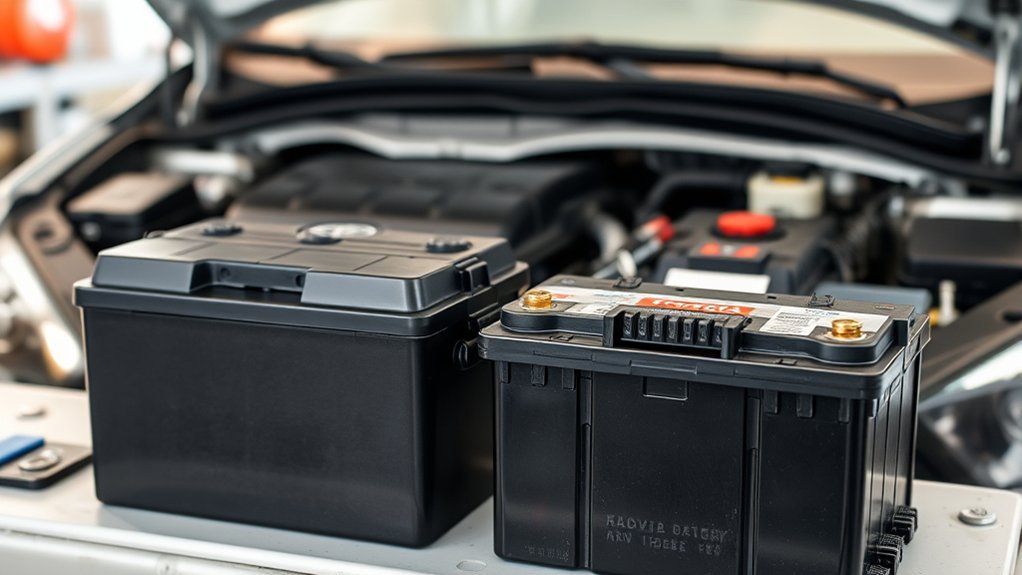
For your Toyota Camry, choose an AGM if you want maintenance-free reliability, higher cold-cranking amps, faster recharge, and better support for start-stop systems and heavy electronics; AGMs handle short trips and cold weather better. Flooded (wet) batteries cost less up front and work fine for simple, infrequent use but need periodic water checks and offer slower recharge and shorter real-world life. Keep going to get charger settings, installation tips, and a decision checklist.
Quick Comparison: AGM vs Flooded for Toyota Camry
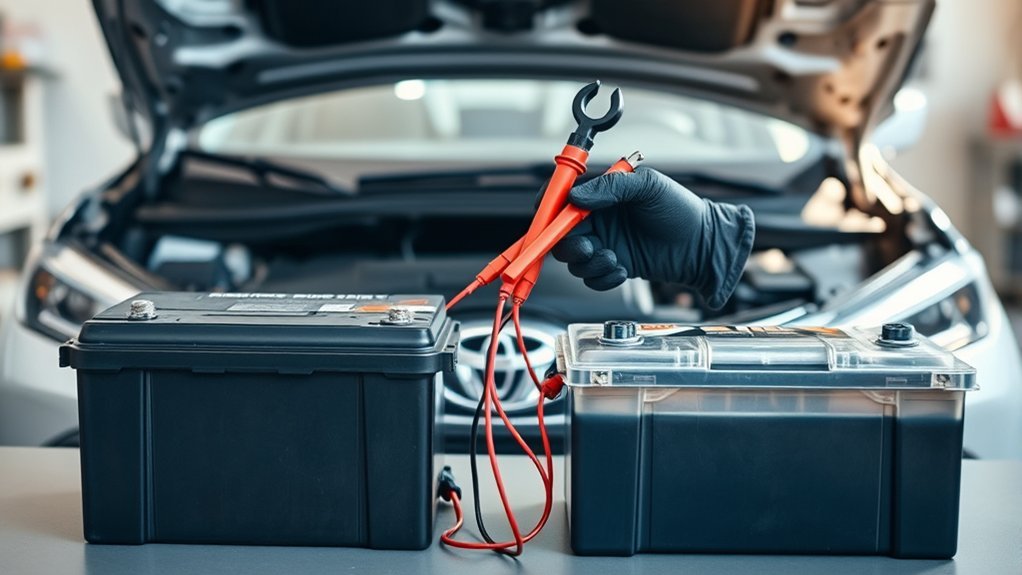
Choosing the right battery for your Toyota Camry comes down to balancing performance, maintenance, and cost: you’ll often choose AGM for modern Camrys with start-stop systems and heavy electronics because AGM’s sealed design removes maintenance and spill risk, fitting tight engine bays. Compared to flooded batteries, AGMs recharge faster—typically 10–25% of capacity versus flooded’s under 10%—so you’ll get quicker recovery after loads and better sustained output. Flooded cells are cheaper upfront, but you’ll need to check fluid levels and add distilled water regularly, which can tie you down. For longevity and reliability, AGM usually wins, giving you more trouble-free miles and safer installs. When you shop, compare battery brands and performance ratings rather than price alone; look for proven cycle life, recharge speed, and fitment for your Camry. Choose freedom from maintenance and consistent power if you value convenience and dependability.
Why Battery Choice Matters for Your Camry: Starts, Reliability, Electronics
Because your Camry’s starter and dozens of electronic systems depend on steady voltage, picking the right battery directly affects how reliably the car starts, how long accessories run, and how often you’ll need maintenance. You want a battery that delivers consistent cranking power in extreme weather; flooded batteries can struggle in cold or heat and usually demand more battery maintenance like fluid checks. AGM batteries accept charge faster, supply steadier voltage to infotainment, sensors, and start-stop systems, and can be mounted without leak risk—useful if space is tight. That means fewer unexpected no-starts, longer component life, and less hands-on upkeep, which frees you from constant service chores. Flooded cells cost less up front and can be fine if you check fluids and maintain charging, but they’re a trade-off: more routine care for lower initial price. Choose based on your tolerance for upkeep and how critical immediate, reliable electronics performance is to your independence on the road.
How Flooded (Wet) Batteries Work
You’ve just seen why battery type affects starting and electronics; now let’s look at how flooded (wet) batteries actually produce that power. You’ll find lead plates submerged in a liquid electrolyte—sulfuric acid and water—where controlled chemical reactions convert stored chemistry into electricity. That process is exposed and serviceable, so you’ll manage electrolyte levels and meet routine maintenance requirements to keep performance reliable.
- They support high discharge rates and deliver strong surge currents, so they’re well suited to heavy-starting loads and power bursts.
- Charging follows defined voltages (about 14.2V bulk, 13.4V float) to reverse the reaction without overcharging, preserving life and capacity.
- Their open design demands periodic checks and distilled water top-ups; leakage risk and upkeep affect application suitability in enclosed or maintenance-free scenarios.
You’ll appreciate that flooded batteries give raw power and repairable freedom, but they require attention and safe handling to stay effective.
How AGM Batteries Work
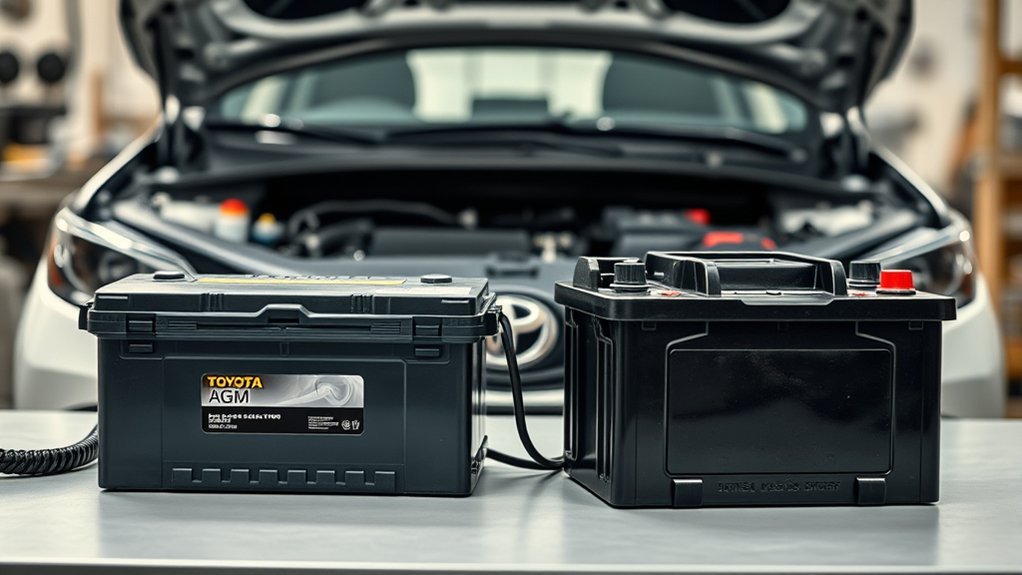
Although they look similar to sealed lead-acid cells, AGM batteries use a fiberglass mat that soaks up and holds the electrolyte against the lead plates, letting the cell move ions efficiently without free liquid pooling. You’ll find the absorbed electrolyte prevents leaks and lets you mount the battery in any orientation, freeing you from constraints that tether older designs. The glass mat wicks electrolyte to plates as demand changes, keeping reactions efficient and reducing stratification.
AGM technology benefits include low internal resistance and rapid charge acceptance, so your Camry’s electrical systems get stable power and faster recovery after draw-downs. These cells recombine gases during charging, cutting hazardous emissions and simplifying maintenance. For someone seeking autonomy over vehicle reliability, AGM offers predictable performance and reduced upkeep. Consider battery lifecycle impact: AGM construction tends to extend usable life under shallow cycling and high-load conditions, though deep, repeated discharges still shorten lifespan. Choose based on your driving and accessory needs.
Side-by-Side Performance for Camry: Starting, Cycling, Charge Acceptance
When comparing starting power, you’ll notice AGM batteries deliver higher cold-cranking amps and lower internal resistance, so your Camry starts more reliably in cold weather. For charge acceptance, AGMs recharge faster and tolerate deeper discharge cycles, which helps with stop-start driving and frequent short trips. Flooded batteries cost less and can perform well under high-discharge bursts, but they need more maintenance and generally lag AGMs on both starting and recharge speed.
Starting Power Comparison
Because modern Camrys often pair higher electrical loads with cold starts, choosing the right battery matters for real-world starting performance: you want reliable starting power and strong cold cranking when it counts. AGM batteries win here — lower internal resistance delivers higher cold cranking amps, so your Camry starts more consistently in cold weather. Flooded batteries can still perform but may struggle in extremes.
- AGM: superior starting power, better cold cranking, maintenance-free and flexible installation.
- Flooded: adequate for moderate climates, handles high surge currents, requires regular maintenance.
- Practical choice: pick AGM if you drive in cold climates, use start-stop tech, or want freedom from upkeep; choose flooded only if you prioritize upfront cost and routine service.
Charge Acceptance Rates
Having covered starting power, let’s look at how quickly and efficiently each battery type takes a charge—something that affects how soon your Camry can recover after big electrical draws. AGM batteries accept charge faster than flooded types, typically handling 10–25% of capacity versus flooded’s <10%, so your car regains usable power sooner. AGM bulk voltage runs about 14.7V versus flooded at 14.2V, which helps charge efficiency and suits modern Camry electrical loads. AGMs also tolerate frequent cycling better, supporting repeated discharges without the same degradation, which improves battery longevity in demanding use. Flooded batteries work fine for basic needs but need maintenance and recharge patience. Choose AGM if you want quicker recovery and less upkeep.
Charging Voltages for Camry: Alternator and Charger Settings
When you check charging voltages for your Camry, aim for an alternator-regulated bulk range near 14.2–14.7 V so both AGM and flooded batteries charge effectively. Set your external charger to match the battery type: about 13.8 V float for AGM and roughly 13.4 V float for flooded batteries. Also verify the alternator doesn’t exceed 14.7 V for flooded cells to avoid overheating and accelerated water loss.
Alternator Regulated Voltage
1 key to keeping your Camry’s battery healthy is ensuring the alternator regulates charging voltage correctly; for flooded batteries you’ll typically see about 14.2–14.7 V during bulk charge, while AGMs generally need around 14.7 V to charge efficiently. You want solid voltage regulation to maximize charging efficiency without stressing cells. The alternator should also drop to safe float voltages—about 13.4 V for flooded and 13.8 V for AGM—so the battery stays topped without overcharge. Exceeding roughly 14.4 V can overheat AGMs and shorten life, so monitor and adjust if needed. Freedom from battery failure starts with disciplined voltage control.
- Check alternator output under load.
- Prefer settings that favor battery longevity.
- Monitor float and bulk voltages.
Charger Voltage Settings
If you’re charging a Camry’s battery, set your charger to match the chemistry: about 14.7 V bulk and 13.8 V float for AGM, and roughly 14.2 V bulk with a 13.4 V float for flooded cells. You’ll avoid damage and extend life by ensuring charger compatibility—select a charger with AGM and flooded modes or adjustable voltages. The Camry’s alternator already regulates output within safe ranges for both types, but you should still use voltage monitoring during charging to confirm settings and resting voltages. Don’t let a generic charger force higher voltages; AGM cells are sensitive above ~14.4 V. Check and adjust settings regularly, and you’ll keep the battery healthy, reliable, and ready to fuel your freedom on the road.
Installation & Safety in the Camry: Placement, Ventilation, Vibration
Because the Camry can accept both AGM and flooded batteries, you’ll want to pick the right type and mount it correctly: AGMs are sealed and can be installed in tighter or varied orientations (even in trunks or under seats), while flooded batteries must stay upright in a well-ventilated area to avoid gas buildup and spillage. You’ll follow installation tips that respect battery orientation and ventilation needs. Secure the tray, reduce vibration, and keep terminals clean to protect the electrical system and your freedom to drive without worry.
- Use a firm mounting clamp and vibration-damping pad to prevent movement; vibration management extends life and prevents leaks.
- For flooded units, verify clear airflow and exhaust paths; ventilation needs are non-negotiable to avoid hydrogen buildup and corrosion.
- Inspect and tighten terminals; terminal maintenance prevents voltage drops and guarantees safety considerations like grounding and charge control.
Choose placement that matches your lifestyle while prioritizing safe, durable installation.
Cost, Maintenance, and Real-World Lifespan Scenarios for Camry Owners
When weighing replacement options for your Camry, cost and upkeep often matter as much as performance, since AGM packs can run three to four times the price of flooded lead-acid units but save you routine watering and terminal chores. You’ll weigh battery pricing against convenience: AGMs cost more up front but eliminate frequent distilled-water fills and corrosion cleaning, reducing maintenance frequency to nearly zero. Flooded batteries lower initial outlay, handle higher surge currents for starting, and tolerate deeper discharge when you keep up with care, but they demand checks and topping off every few months. Real-world lifespan favors AGMs in stop-and-go use and electronics-rich Camrys—expect roughly 5–7 years if you avoid deep discharges and keep charging healthy. Flooded units typically reach 3–5 years with proper attention. Choose based on your driving patterns, budget constraints, and desire for freedom from routine service: higher battery pricing buys lower maintenance frequency and often longer practical life.
Decision Checklist: Choose the Right Battery for Your Toyota Camry
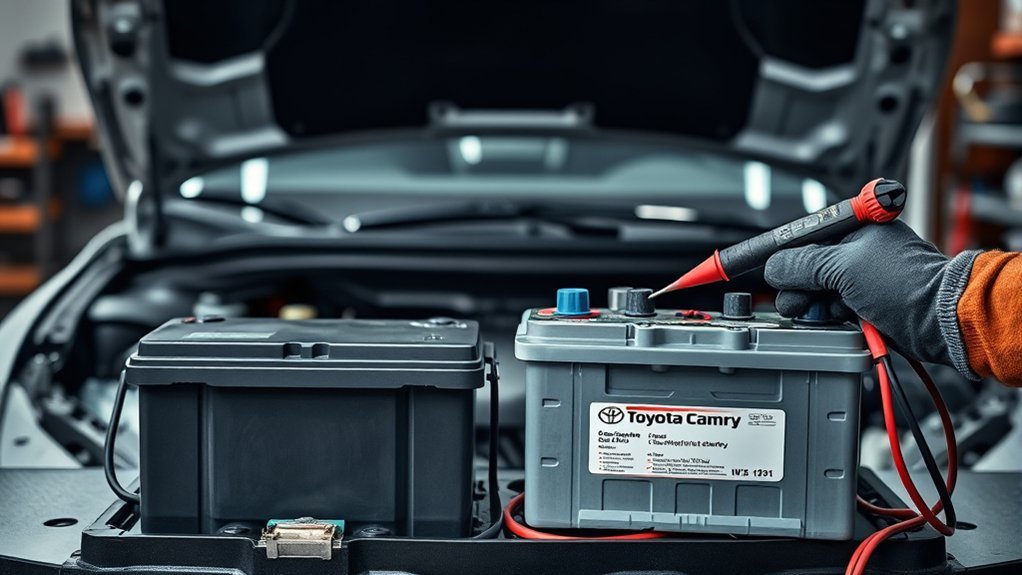
You’ve weighed costs, maintenance, and real-world lifespans—now use a practical checklist to pick the battery that fits your Camry and driving habits. Decide if you want low fuss and longer battery lifespan: choose AGM for sealed, maintenance-free performance, safer enclosed installation, and compatibility with higher charging voltages. If upfront cost matters more than longevity, a flooded cell can work but needs regular checks.
- Confirm voltage and charging needs (AGM ~14.7V vs flooded ~14.2V) and match to your Camry’s system.
- Consider maintenance freedom and installation tips: AGM lets you install in tight, enclosed spots without worrying about leaks or off-gassing.
- Compare costs versus real-world lifespan: higher AGM cost can pay back via fewer replacements and less downtime.
Trust your driving profile—urban stop-start and accessory-heavy setups benefit from AGM; minimalist, infrequent use might accept flooded. Follow manufacturer specs and professional installation for best results.
Frequently Asked Questions
What Is Better, an AGM or a Flooded Battery?
AGM advantages usually make it better for everyday, low-maintenance use; you’ll avoid Flooded disadvantages like frequent watering and leakage. You’ll choose flooded only if you need lower upfront cost or extreme discharge capability.
Can I Replace My Flooded Battery With an AGM Battery?
Yes — you can replace a flooded battery with an AGM if it meets battery compatibility (size, voltage). Consider installation considerations like secure fit, charging profile limits, and voltage management to protect the AGM and free yourself from maintenance.
Conclusion
You’ve got the facts—AGM gives better cycling, vibration resistance, and electronics protection; flooded is cheaper and forgiving on charging. Pick AGM if you’ve got stop-start, lots of accessories, or want near-military durability; choose flooded if you’re on a budget and can check fluid and terminals. Either way, match group size and terminal layout, set correct charging volts, and secure the battery—follow those steps and your Camry will start like clockwork, every single day.