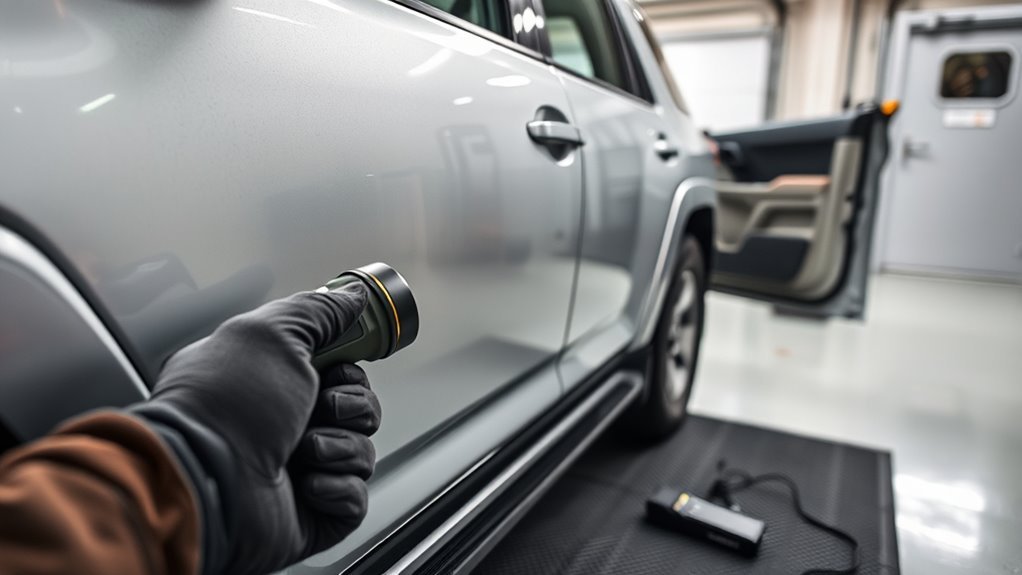
Find your 4Runner VIN on the dashboard, door jamb, or paperwork; it’s a 17-character code that tells you manufacture, model, engine, trim, plant and serial number. Characters 1–3 ID maker and country, 4–8 describe body, engine and safety, 9 is a check digit, 10 is model year, and 11–17 give factory and sequence. You can verify authenticity with visual checks and online lookup services, use the VIN for parts and recalls, and learn more if you keep going.
Locate Your Toyota 4Runner VIN Quickly

Looking for your Toyota 4Runner’s VIN? You’ll spot it most often on the dashboard, visible from the driver’s side windshield — a primary VIN location tip that saves time. If glare or grime hides characters, tilt your head or wipe the glass to improve dashboard visibility. You can also check the sticker inside the driver’s door jamb or printed under the hood; registration and insurance documents usually carry the same number. For post-1981 models, the 17-character VIN encodes model, engine, and safety features, so matching the VIN across vehicle locations and paperwork is vital before you buy. When you verify consistency, you protect yourself from fraud and undisclosed history. Use a flashlight and phone camera for a quick capture, then compare each character to documents. These practical VIN location tips give you control over verification, letting you move forward confidently and free from uncertainty about the 4Runner you’re considering.
Read the 4Runner VIN: What Each of the 17 Characters Means
Now that you’ve found and confirmed the VIN on your 4Runner, you’re ready to read what each of the 17 characters actually means. You’ll use the VIN Importance to reveal Manufacturer Codes (positions 1–3) that tell you who made the vehicle and where. Characters 4–8 carry Character Significance for model, body, engine and trim; they shape how you interpret Vehicle History later. The 9th character is the check digit for Authenticity Checks. The 10th gives model year, and positions 11–17 deliver Production Insights: factory, serial, and unique build details.
| Positions | Purpose | What it tells you |
|---|---|---|
| 1–3 | WMI | Manufacturer Codes, country |
| 4–8 | Descriptor | Model/body/engine/trim (Character Significance) |
| 9–17 | Validation & Serial | Check digit, year, factory, production number (Authenticity Checks, Production Insights) |
Read deliberately: each character reveals information about Vehicle History and confirms authenticity.
Decode Model Year, Engine & Trim (VIN Positions 4–10)
When you decode VIN positions 4–10 on a Toyota 4Runner, you’ll uncover the vehicle’s safety equipment, trim level, engine and transmission details, plus the model year code — all essential for verifying features and ordering compatible parts. You’ll read position 4 first: it flags safety equipment such as airbags or ABS, letting you confirm the protection package without guesswork. Positions 5–8 then map to trim specifications and powertrain details, showing which trim line you’ve got and the engine configuration and transmission type fitted at the factory. Those codes tell you whether the 4Runner has a V6, specific displacement, automatic or manual gearbox, and which trim options—critical when matching replacement parts or upgrades. Finally, position 10 gives the model year code (for example, N = 2022, P = 2023), so you can quickly verify production year. Decoding these positions frees you to make informed buying, maintenance, and parts decisions with confidence.
Verify VIN Authenticity and Run Recalls/History Checks
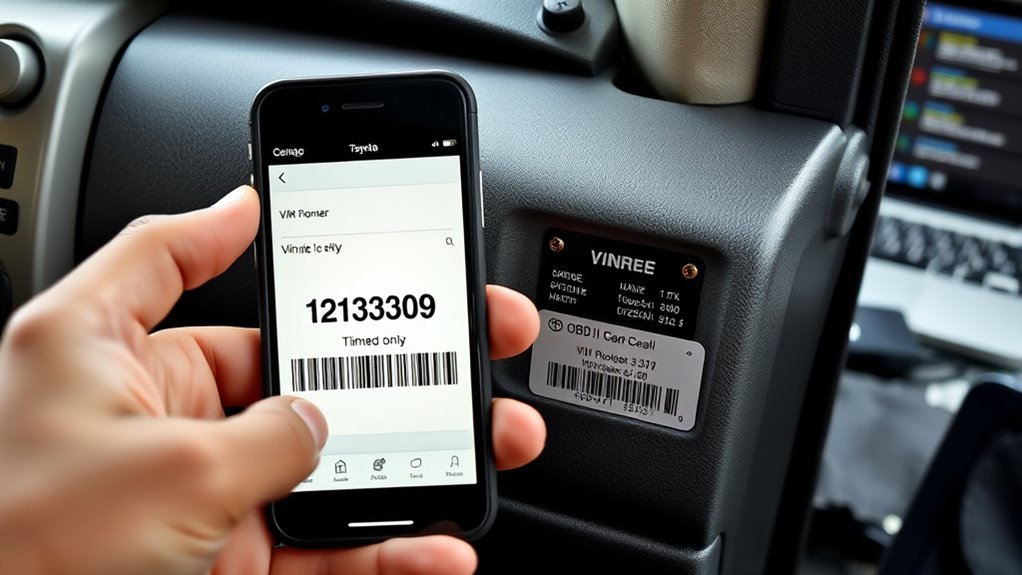
Why trust a VIN you haven’t checked? You should confirm authenticity—matching the VIN on the dashboard, door jamb, and registration prevents buying a stolen or altered 4Runner. Use VIN verification methods like visual cross-checks and online decoders to confirm characters, especially the 10th character for model year.
| Checkpoint | Action |
|---|---|
| Visual match | Compare dashboard, door jamb, and documents |
| Online lookup | Use NHTSA or VIN check sites |
| History report | Pull accident, ownership, and theft records |
Run historical data analysis via reputable services to reveal past accidents, title problems, and theft reports. For recalls, enter the VIN at NHTSA or manufacturer portals—the 10th character helps target model-year specific recalls. You’ll liberate yourself from uncertainty by combining physical inspection with digital checks. Do the checks before purchase or registration, keep reports, and insist on fixes for open recalls. That way you own a 4Runner whose story is fully known and verifiable.
Use Your 4Runner VIN to Order Parts and Plan Maintenance
After confirming the VIN matches the vehicle and clearing any open recalls, use that same 17-character number to order parts and plan maintenance with confidence. You rely on VIN accuracy to pull precise OEM part numbers so you won’t waste time or money on wrong components. Decode the VIN to reveal trim, engine, and options; that information directly informs Parts compatibility when shopping online or calling a parts counter. Retailers often require the VIN to lock in the correct fitment, and you should provide it every time.
For maintenance scheduling, use the VIN to access model-year–specific service intervals and recommended fluids and filters. That lets you plan preventive work that preserves value and avoids unnecessary repairs. Keep Recall awareness active: address any open recalls before ordering related parts or scheduling service, so fixes aren’t undone. With the VIN as your tool, you’ll cut dependency on guesswork and take control of parts, repairs, and long-term vehicle freedom.
Fix Common VIN Problems: Invalid Codes, Missing Plates, Verification Errors
Fixing common VIN problems starts with a clear checklist you can follow immediately: confirm the VIN is exactly 17 characters and contains no I, O, or Q; compare the stamped VIN on the dash, door jamb, title, and registration for mismatches; and scan records for theft, salvage, or major accident history. If you find invalid codes, stop: an incorrect character or wrong length can void registration and signal fraud. Missing plates demand action—document the condition, check alternative VIN locations, and notify the DMV to avoid registration issues. When verification errors crop up between title, registration, or insurance, initiate a formal correction with supporting photos and receipts. If modification impacts altered the vehicle beyond its original specs, pursue a reconstructed VIN or updated paperwork through the DMV to preserve vehicle authenticity. Cross-check national databases for theft, recalls, and accident history; resolving discrepancies protects your ownership rights and guarantees the 4Runner serves your path to freedom.
Frequently Asked Questions
Can VIN Decoding Tell Me if My 4runner Was Ever in an Accident?
No, VIN decoding won’t tell you accident history; it reveals manufacture data and specs. You can use VIN-based reports to check accident history and vehicle maintenance records, empowering you to claim transparency and freedom in ownership.
Does the VIN Indicate Original Factory Paint Color?
A stitch in time saves nine: you won’t get paint color from the VIN alone, but you can use it to access original specifications and build sheets, then verify original paint color through dealer records or physical inspection.
Can I Transfer a VIN Plate Between Vehicles Legally?
No, you can’t legally transfer a VIN plate between vehicles; doing so creates VIN legality issues and undermines vehicle identification. You should pursue lawful title transfer or consult authorities to protect your freedom and avoid criminal liability.
Will the VIN Show if the Odometer Was Rolled Back?
No—VINs don’t record odometer rollback; they’re like a tree’s rings showing origin while mileage tampering hides in shadows. You’ll need vehicle history reports, inspection, and fraud checks to reveal or contest odometer rollback.
Are Vin-Based Warranties Transferable to New Owners?
Yes — warranty transferability varies; you’ll need warranty eligibility confirmed and ownership verification completed, since some VIN-based guarantees transfer automatically while others require registration, fees, or OEM approval, so check the specific policy terms now.
Conclusion
Now that you know how to locate and read your 4Runner’s VIN, you can quickly decode model year, engine, trim, and more to order parts and plan maintenance with confidence. If a plate’s missing or a character looks off, verify authenticity and run a history check before you buy — don’t throw caution to the wind. Keep a record of the VIN and use it regularly to avoid costly surprises down the road.