Toyota’s Hill-Start Assist Control (HAC) can reduce rollback when a 4Runner starts on an uphill, but exactly how it works depends on the vehicle’s model year and drivetrain. Some older 4Runners use different activation logic and hold times than the redesigned 2025-and-newer model. HAC is useful assistance, not a parking brake, and Toyota warns that steep grades, ice, low traction, and other conditions can limit its effectiveness.
Quick Answer
Yes, Hill-Start Assist Control can reduce a Toyota 4Runner’s backward movement while you transition from the brake to the accelerator. It does not guarantee zero rollback, however, and its activation logic and hold time vary by model year. On 2025-and-newer 4Runners, the brake hold can end after a maximum of about two seconds after brake release.
Key Takeaways
- HAC is an assist system: it is designed to reduce rollback, not hold your 4Runner indefinitely on a hill.
- Model year matters: older, fifth-generation, and 2025+ 4Runners do not all use identical HAC logic.
- 2025+ models: Toyota documents automatic HAC operation when the required conditions are met and a maximum brake-hold window of about two seconds after brake release.
- Very steep or icy grades can defeat the benefit: tire grip still determines whether the vehicle can remain controlled.
- Persistent or abnormal behavior deserves diagnosis: especially when a traction, stability-control, ABS, or slip warning remains illuminated.
Will HAC Stop a 4Runner From Rolling Back?

Usually it will reduce rollback, but it is not designed to guarantee that the vehicle will remain perfectly stationary. Toyota describes Hill-Start Assist Control as a system that helps minimize backward movement when starting on a steep ascent. Road grade, surface grip, driver input, vehicle configuration, and the particular HAC generation can all affect what you feel from the driver’s seat.
This distinction explains why one 4Runner owner may describe HAC as a noticeable brake hold while another may feel a small amount of rearward movement before the system reacts. The correct benchmark is not another Toyota model or another driver’s experience; it is the operating description for your exact 4Runner model year and drivetrain.
Warning: Never use HAC as a substitute for the service brake or parking brake. Toyota specifically warns that hill-start assist may not operate effectively on very steep inclines or icy roads and is not intended to hold the vehicle stationary for an extended period.
[Products Worth Considering]

This hydraulic floor jack combines aluminum and steel construction for dependable strength, smooth mobility, and easier lifting in garage or roadside use. Its dual-pump design helps raise vehicles faster, while the low-profile build works well with lower-clearance cars, SUVs, and trucks. Safety-focused details like a rubber saddle, handle bumper, and overload protection add confidence during operation.
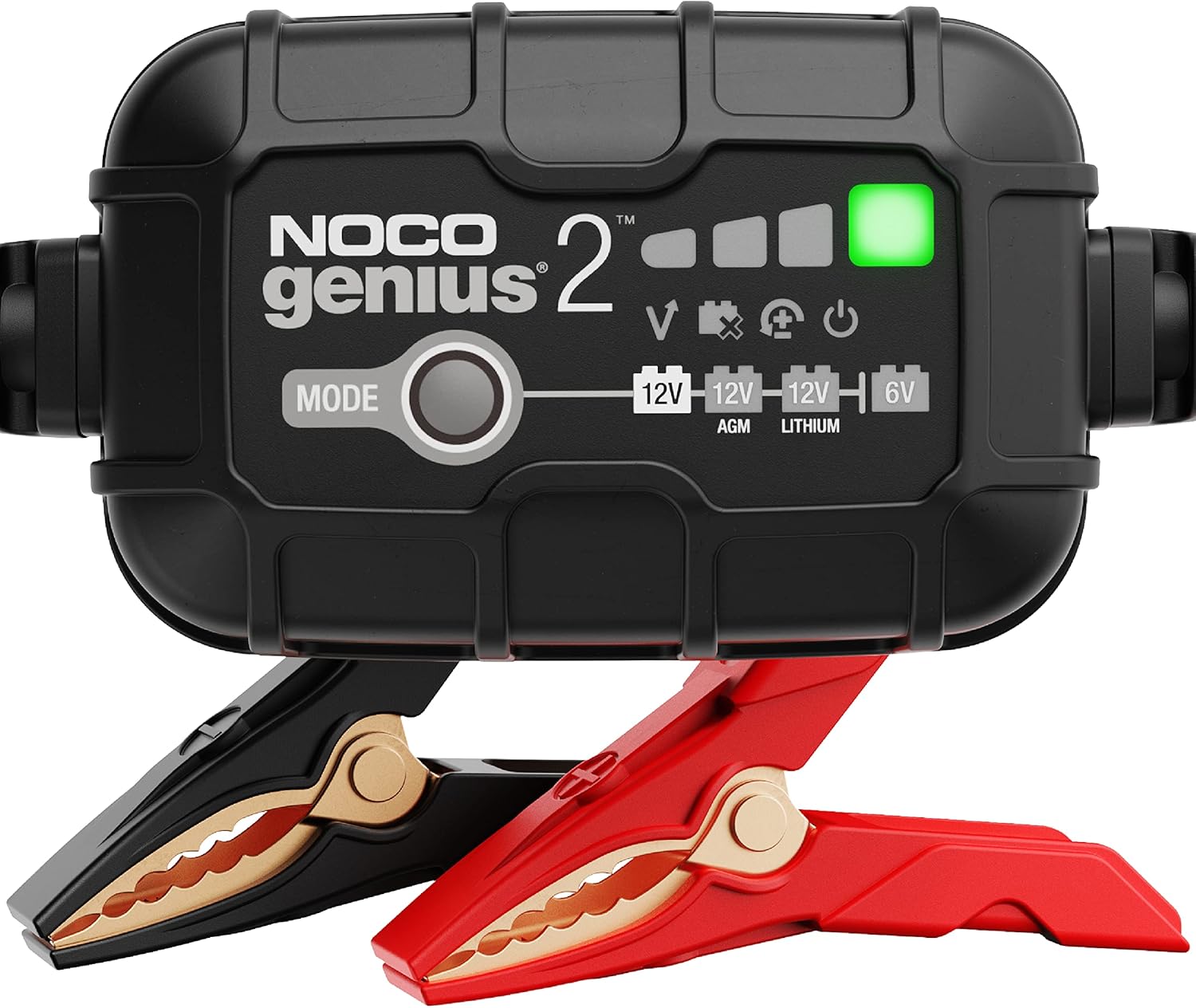
The NOCO GENIUS2 is a compact, all-in-one smart charger that automatically charges, maintains, and restores 6V and 12V lead-acid and lithium batteries. It features temperature compensation, overcharge protection, pulse desulfation, and Force Mode for reviving deeply discharged batteries, making it ideal for long-term battery care across many vehicle types. Designed for safe indefinite connection, it helps extend battery life and keep batteries ready to go.

𝗗𝗜𝗬 𝗿𝗲𝗺𝗼𝘁𝗲 𝘀𝘁𝗮𝗿𝘁 𝗸𝗶𝘁: Add remote start functionality to your vehicle for a fraction of the cost. Enjoy a comfortable driving experience from the start by pre-heating and defrosting your windshield in the winter or cooling down your vehicle before entering in the summer.
How Hill-Start Assist Works on a 4Runner
HAC is part of the 4Runner’s electronically controlled braking and stability systems. Its purpose is simple: when the required conditions are met on an uphill start, the vehicle can temporarily maintain braking force or apply braking assistance so you have time to begin accelerating without excessive backward movement.
Do not assume, however, that every 4Runner activates HAC in exactly the same way. Toyota has changed the system over the vehicle’s long production history.
| 4Runner generation | What owners should know |
|---|---|
| 2003–2009 | Earlier Toyota manuals describe HAC operation lasting as long as about five seconds under the specified conditions. Do not apply the newer two-second rule to these vehicles. |
| 2010–2024 fifth generation | Operating logic can differ between drivetrain configurations. On some 4WD versions, Toyota describes HAC reacting when backward movement is detected rather than behaving like a simple pre-set stationary brake hold. |
| 2025+ sixth generation | Toyota documents HAC as operating automatically when its required conditions are met. The system can cancel after a maximum of about two seconds following brake-pedal release. |
Note: Toyota uses the name Hill-Start Assist Control (HAC). “Hill Start Assist” or “HSA” is often used generically, but HAC is the better term when looking through a 4Runner owner’s manual.
How HAC Works on a 2025-and-Newer 4Runner
The redesigned 2025 4Runner introduced a new generation, so advice written for an older model should not automatically be applied to it. Toyota’s current documentation lists Hill-Start Assist Control as a 4Runner feature and describes the system as helping reduce backward movement when starting uphill.
According to the 2025 Toyota 4Runner Owner’s Manual, HAC operates when the required conditions are met, including:
- The transmission is in a position other than P or N for the applicable uphill start.
- The vehicle is stopped.
- The accelerator is not being pressed.
- The parking brake is not engaged.
- The engine switch is ON.
The same manual describes HAC cancellation when conditions change. That includes shifting to P or N, depressing the accelerator, engaging the parking brake, switching the engine off, or allowing the maximum brake-hold period after brake release to expire. For this generation, Toyota states that the period can be up to about two seconds.
That means you should already be prepared to accelerate when you release the service brake. HAC gives you a transition window; it is not intended to leave the SUV parked on the slope.
What HAC Actually Prevents — And What It Does Not
HAC is meant to reduce the brief rearward movement that can happen when you move from the brake pedal to the accelerator on an incline. On a suitable surface, that can make a hill start smoother and reduce the chance of unexpectedly drifting toward a vehicle, curb, obstacle, or trailer behind you.
What it does not do is overcome the laws of traction. If the tires cannot grip an icy, muddy, gravel-covered, or extremely steep surface, electronic braking assistance cannot create grip that is not available. Toyota specifically warns against relying too heavily on HAC in those conditions.
Think of HAC as a short transition aid between braking and acceleration—not as an automatic parking brake.
HAC should also not be confused with a dedicated Brake Hold or parking-brake function. Brake Hold systems are designed for a different purpose: keeping a stopped vehicle held until specified release conditions occur. Hill-Start Assist is specifically intended to help with starting on a grade.
Common Reasons a 4Runner May Still Roll Back

A small amount of rollback does not automatically mean HAC is broken. Check the operating conditions first.
- The vehicle is an older or fifth-generation 4Runner. Its HAC strategy may differ from the 2025+ system.
- The parking brake is engaged. On newer implementations, this changes HAC operating conditions.
- The accelerator was already pressed. The system may leave its holding phase as you request forward power.
- The transmission is in P or N. HAC is not intended to perform an uphill launch from those positions.
- The road has poor grip. Ice, mud, loose gravel, worn tires, or other low-friction conditions can allow sliding even when the brakes are being controlled.
- The grade is extremely steep. Toyota warns that HAC effectiveness can be reduced on steep inclines.
- A related traction or stability system is unavailable. On some earlier 4Runners, HAC can be affected by TRAC/VSC status, brake-system temperature, or rear differential-lock operation.
- The assist window has expired. On 2025+ models, Toyota documents a maximum of about two seconds after brake-pedal release.
On certain fifth-generation 4WD 4Runners, Toyota’s manual describes HAC operation in terms of the system detecting rearward vehicle movement. That means a driver may perceive some initial movement before the intervention becomes obvious. This is another reason not to diagnose a fifth-generation 4Runner using instructions written for the redesigned 2025 model.
Use HAC Safely: Practical Hill-Start Tips
Start with normal, smooth pedal operation. Hold the service brake firmly while stopped, select the correct drive position, check your surroundings, and be ready to apply the accelerator smoothly as you release the brake.
- Keep the vehicle fully controlled with the brake while preparing to start.
- Confirm the correct gear rather than shifting repeatedly in an attempt to “reset” HAC.
- Release the brake only when you are ready to accelerate.
- Apply the accelerator progressively instead of stabbing the throttle, especially on a low-grip surface.
- Use the parking brake when the owner’s manual calls for it on a particularly steep start.
- Leave extra space behind you whenever another vehicle or obstacle is close on a hill.
Pro Tip: Before deciding HAC is faulty, test it in a safe, low-traffic location on a moderate paved incline using the procedure in your exact model-year owner’s manual. That separates normal calibration differences from a repeatable malfunction.
Toyota’s 2025 steep-uphill starting procedure also shows why the parking brake remains useful. The manual describes shifting to D with the brake pedal depressed, manually setting the parking brake, gently beginning to accelerate, and then releasing the parking brake. This gives the driver positive control instead of depending solely on the short HAC window.
[Products Worth Considering]

PLEASE CONFIRM YOUR FITMENT: Using the Amazon Confirmed Fit bar at the top of the page or check the Product Description to confirm your vehicle fitment. This may be delivered in multiple boxes

☆Vehicle Compatibility: Compatible for Toyota 4Runner 1996 1997 1998 1999 2000

【Perfect Fitment】You can click the FITMENT button at the upper left corner to check whether your vehicle is applicable - Compatible with Toyota 4Runner Camry Corolla Highlander Matrix RAV4 Sequoia Sienna Tacoma Tundra Venza Yaris Avalon Celica Corolla iM FJ Cruiser
Troubleshooting HAC and When to Visit a Toyota Dealer
If your 4Runner consistently rolls farther than expected, troubleshoot it against the correct model year instead of comparing it with a RAV4, Highlander, or another 4Runner generation.
| Symptom | What to check |
|---|---|
| Brief rollback followed by intervention | Check whether your generation/drivetrain uses rollback-detection logic rather than a conventional pre-hold. |
| Vehicle begins rolling after roughly two seconds | On 2025+ models, this can be consistent with Toyota’s documented maximum hold period after brake release. |
| HAC seems unavailable with parking brake or certain drivetrain settings | Check the operating conditions for your model year, including parking-brake, TRAC/VSC, and differential-lock requirements. |
| HAC is weak on ice, mud, or a very steep hill | This can be a system limitation rather than a fault. Tire traction is critical. |
| Slip/TRAC/ABS warning remains on | Have the vehicle inspected. HAC depends on related brake and stability-control systems. |
| No assistance on a normal dry incline despite correct conditions | Document the conditions and have a Toyota technician reproduce the behavior using the correct service information. |
Some noise or vibration can be normal while electronically controlled brake and stability systems operate. Toyota manuals note that motor sounds, brake-system noises, or vibration can occur without indicating a malfunction. A persistent warning indicator, however, is different and deserves attention.
If you visit a dealer, give the technician useful details: model year, 2WD or 4WD configuration, drive mode, slope type, road surface, whether the parking brake was engaged, warning lights displayed, and whether the behavior can be reproduced consistently. That is much more useful than simply reporting that another Toyota “holds longer.”
[Products Worth Considering]

CEL Doctor: The ANCEL AD310 is one of the best-selling OBD II scanners on the market and is recommended by Scotty Kilmer, a YouTuber and auto mechanic. It can easily determine the cause of the check engine light coming on. After repairing the vehicle's problems, it can quickly read and clear diagnostic trouble codes of emission system, read live data & hard memory data, view freeze frame, I/M monitor readiness and collect vehicle information

Multi-Functions - Practical Multi-Functions OBD2 code reader features built-in OBD2 DTC lookup library, which help you to determine the cause of the engine light, read code, erase code, view freeze frame, I/M ready, vehicle information, data flow, real-time curve, get vehicle speed information, calculate load value, engine coolant temperature, get engine speed.
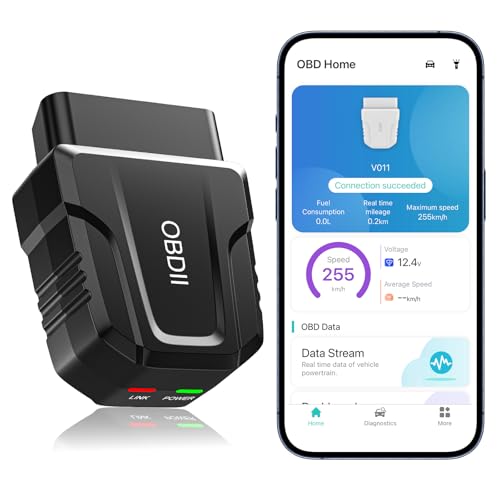
【Comprehensive Performance Testing】V011 OBD2 Scanner provides a complete diagnostic solution, giving you a thorough understanding of your vehicle's condition. It supports a variety of performance tests, support 9 protocols,👍automotive fault clearing,including fast reading of DTCs, access to electronic emission readiness, turning off CEL or MIL, resetting monitors, reading live data and retrieving the vehicle's VIN, freeze frame, sensor data, data streaming, diagnostic reports, onboard monitoring, live data streaming, and more. With these features, you can monitor your car's performance in real time and discover potential problems before they become major issues.
Frequently Asked Questions
Should I have Hill-Start Assist turned on?
There normally is not a separate everyday HAC switch that you need to turn on before each hill. On modern 4Runners, HAC is integrated with the vehicle’s driving-assistance systems and operates automatically when its conditions are met. Related traction, stability, parking-brake, or drivetrain settings can still affect availability.
What is the purpose of Hill-Start Assist Control?
Its purpose is to reduce unwanted backward movement while you transition from the brake to the accelerator on an uphill start. It is an assistance feature, not a replacement for the service brake or parking brake.
What is Hill-Start Assist Control on a Toyota 4Runner?
HAC is a brake-control function that helps reduce rollback during an uphill launch. The exact activation conditions and duration depend on the 4Runner’s generation, model year, and drivetrain.
How long does 4Runner Hill-Start Assist hold the brakes?
There is no single answer for every 4Runner. Some early-generation manuals describe operation lasting up to about five seconds. The 2025+ system can cancel after a maximum of about two seconds following brake-pedal release. Always check the manual for your exact year.
Is a little rollback normal on a 4Runner?
It can be, depending on the generation and operating strategy. Some fifth-generation 4WD documentation describes HAC responding after backward movement is detected. Excessive or repeatable rollback under the correct conditions should still be investigated.
Does HAC work on ice or very steep hills?
It may provide assistance, but Toyota specifically warns that Hill-Start Assist may not operate effectively on very steep inclines or roads covered with ice. The system cannot overcome insufficient tire grip.
When should I have the HAC system checked?
Have the vehicle checked if HAC repeatedly fails under the correct operating conditions, the behavior changes suddenly, or a related ABS, traction-control, stability-control, or slip warning remains illuminated. Diagnose the exact model year rather than comparing it with another Toyota.
Conclusion
Hill-Start Assist can help keep a Toyota 4Runner from rolling backward, but it should never be treated as a guaranteed brake hold. The most important detail is your model year. Older 4Runners, fifth-generation models, and the redesigned 2025+ 4Runner use different operating logic and hold characteristics.
Use smooth brake-to-accelerator control, follow Toyota’s steep-hill procedure when extra control is needed, and rely on the parking brake rather than HAC when you need the vehicle held securely. If the system repeatedly behaves outside the conditions described in your owner’s manual—or a related warning stays illuminated—have the vehicle inspected.
Sources
- Toyota 2025 4Runner Owner’s Manual — current-generation HAC operating conditions, cancellation conditions, and hill-start procedure.
- Toyota 2025 4Runner Sales Consultant Guide — HAC availability and Toyota’s warning that grade, surface conditions, and driver input affect effectiveness.
- Toyota Canada 2026 4Runner Specifications — confirms Hill-Start Assist Control on the current 4Runner lineup.
- Toyota 2018 4Runner Owner’s Manual — fifth-generation HAC operation, system limitations, warning indicators, and drivetrain-related conditions.
- Toyota 2006 4Runner Owner’s Manual — earlier-generation HAC operation and maximum operating period.
- Toyota USA Newsroom — Anti-Lock Braking and HAC — Toyota explanation of Hill-Start Assist Control and temporary braking assistance.