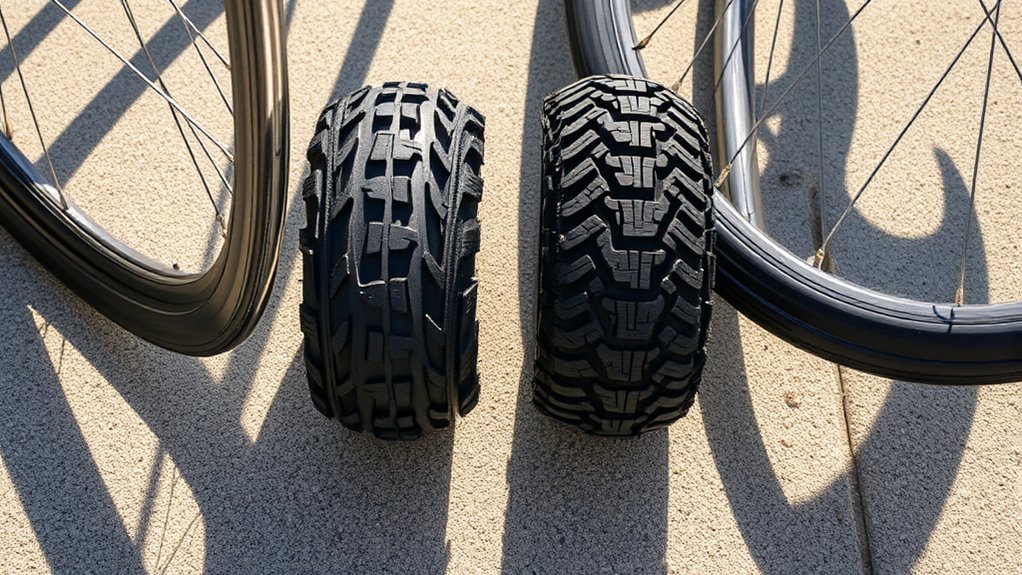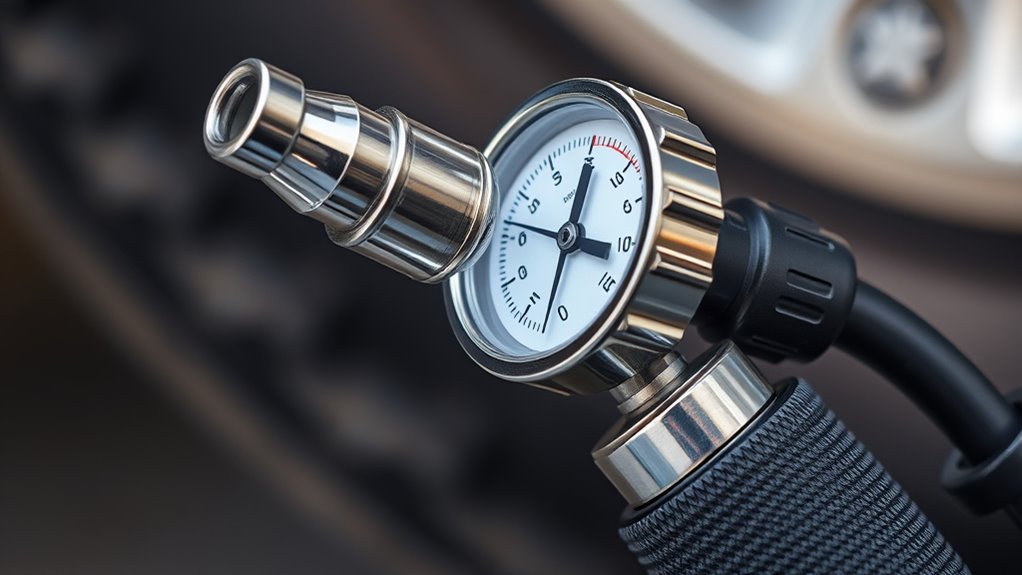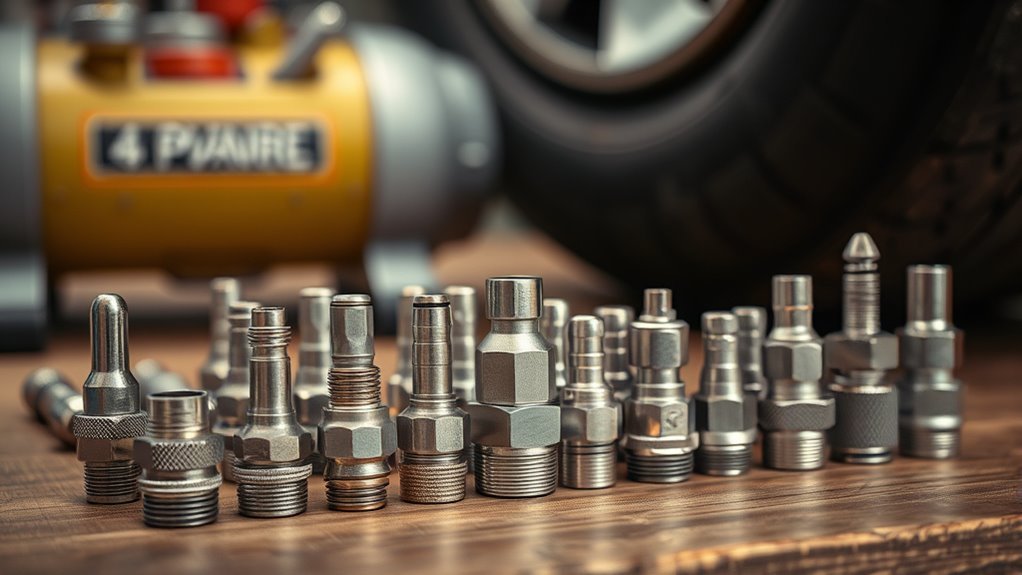
Tire inflator adapters let one inflator work with more than just a car tire. The right nozzle or adapter can help you inflate Schrader, Presta, and Dunlop valves, plus sports balls, air mattresses, pool floats, and other inflatables without fighting leaks or damaging the valve.
Quick Answer
Most car tires use Schrader valves and connect directly to a standard tire inflator. Presta bike valves need a Presta-compatible pump head or a Presta-to-Schrader adapter. Dunlop valves often work with Presta-style pump heads, but compatibility varies. Balls need an inflation needle, while air mattresses and pool floats need a tapered nozzle.
Key Takeaways
- Match the adapter to the valve first: Schrader, Presta, Dunlop, ball needle, or tapered inflatable nozzle.
- For vehicle tires, inflate to the recommended cold PSI on the door placard or owner’s manual, not the maximum pressure molded on the tire sidewall.
- A secure chuck, clean valve stem, and good rubber gasket prevent most air leaks.
- Presta valves are narrow and delicate, so loosen the top nut before inflating and avoid bending the pin.
- Tire inflator spray is an emergency repair product, not a permanent repair; tell the tire shop if you used it.
At a Glance
| Time Required | 1–5 minutes for most tires or inflatables |
| Difficulty | Easy, as long as the adapter matches the valve |
| Tools Needed | Tire inflator, pressure gauge, correct adapter, and valve cap |
| Cost | Usually low; basic adapter kits are inexpensive and reusable |
Understanding Tire Inflator Adapters: What Are They and Why You Need Them
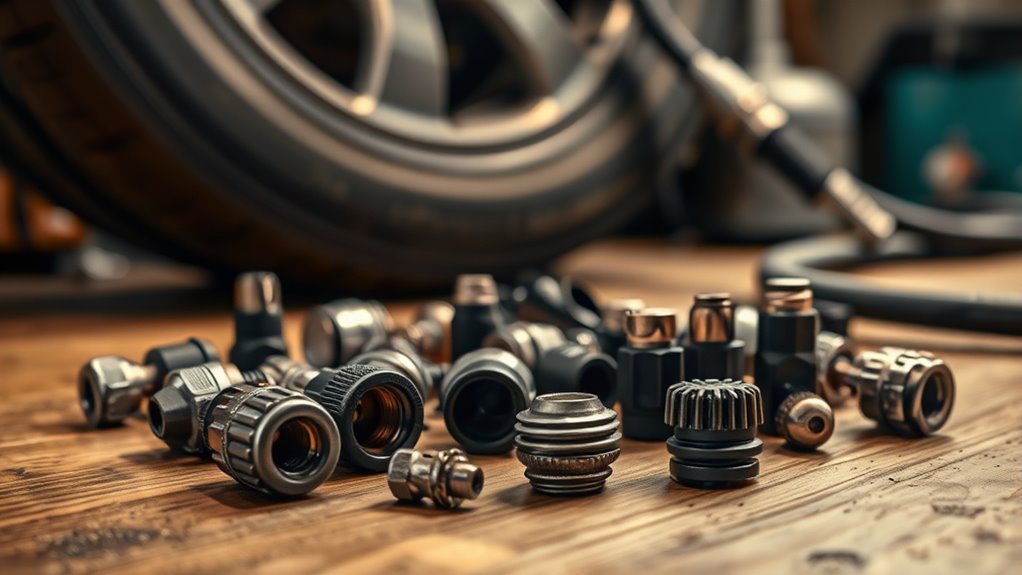
A tire inflator adapter is a small connector that helps your inflator seal against a valve or inflatable opening. Without the right adapter, air can leak around the connection, the chuck can pop off, or the valve can be damaged.
Most portable tire inflators are built around a Schrader-style chuck because Schrader valves are used on car tires and many bicycles. A good adapter kit expands that same inflator so it can handle Presta bike valves, Dunlop/Woods valves, sports balls, pool toys, and low-pressure inflatables.
The goal is simple: create a tight seal, inflate to the correct pressure, and remove the nozzle with as little air loss as possible.
Warning: For vehicle tires, use the recommended cold tire pressure listed on the vehicle tire placard or in the owner’s manual. The pressure molded on the tire sidewall is usually the tire’s maximum rating, not the normal inflation target. The National Highway Traffic Safety Administration also recommends checking tire pressure monthly with an accurate gauge.
Types of Tire Valves: Schrader, Presta, Dunlop
Before choosing a tire inflator nozzle, identify the valve. The three most common tire valve types are Schrader, Presta, and Dunlop/Woods. Each uses a different sealing style, so the correct adapter matters.
| Valve Type | Common Uses | Adapter Needed | Key Tip |
|---|---|---|---|
| Schrader | Cars, trucks, motorcycles, many bikes | Usually no adapter for a standard tire inflator | Push or clip the chuck straight on to avoid leaks. |
| Presta | Road bikes, gravel bikes, performance bikes | Presta pump head or Presta-to-Schrader adapter | Loosen the small top nut before inflating and avoid bending the pin. |
| Dunlop / Woods | City bikes, commuter bikes, many European-style bikes | Often Presta-compatible, but check your pump head | Some traditional Dunlop valves are harder to read with a pressure gauge. |
Schwalbe’s bicycle valve guide notes that Presta, also called Sclaverand, is narrower than car and Dunlop valves and must be opened by loosening the knurled nut before inflation. It also warns that the thin top pin can bend if the pump connector is attached roughly.
Note: A Presta tube can physically fit through a larger Schrader-drilled rim hole, but it is not ideal as a long-term setup unless the rim is properly adapted. A loose valve can move and tear at the base.
Selecting the Best Adapter for Your Tire Inflator
The best tire inflator adapter is the one that matches the valve, pressure range, and item you are inflating. A car tire, road bike tire, basketball, and air mattress all need different attachments.
[Products Worth Considering]

This 16-piece stainless steel pin puller tool set is built for automotive repair tasks that demand strength, reliability, and organization. Its durable construction supports long-lasting performance, while the included portable bag makes storage and transport convenient for garages, workshops, or roadside use. Designed as a practical addition to any car tool kit, it helps keep essential repair tools ready when needed.

These aluminum alloy tire stem valve caps provide a stylish, protective upgrade for your vehicle’s valve stems while helping keep out dirt, dust, and road debris. Designed for easy hand installation, they fit most cars, SUVs, trucks, motorcycles, and bicycles, making them a practical accessory for everyday maintenance and a thoughtful gift for drivers.

These universal valve stem caps help protect tire valves from water, dust, and sand while supporting a tighter seal to reduce air leakage. Made from durable aluminum alloy, they are easy to install by hand and fit a wide range of vehicles, including cars, SUVs, trucks, motorcycles, and bicycles. The sleek black finish adds a clean look and makes them a practical accessory for everyday vehicle maintenance.
Valve Compatibility Considerations
Start with the valve stem. If it looks like the valve on a car tire, it is almost certainly Schrader. If it is narrow, metal, and has a tiny locknut at the top, it is Presta. If it looks like an older bicycle valve with a removable cap and core assembly, it may be Dunlop/Woods.
- For car tires: use a Schrader chuck and a pressure gauge rated for vehicle tire pressure.
- For road bikes: use a Presta pump head or screw on a Presta-to-Schrader adapter before using a standard inflator.
- For city bikes with Dunlop valves: try the Presta side of a dual-head pump first, but keep a small adapter in your kit if your pump does not seal.
- For balls: use a ball inflation needle and insert it gently to protect the valve bladder.
- For air mattresses and pool floats: use a tapered nozzle that fills the larger opening without forcing high pressure into the item.
Essential Adapter Kit Components
A practical tire inflator adapter kit should include these pieces:
- Presta valve adapter: Screws onto a Presta valve so a Schrader inflator can connect.
- Ball inflation needle: Inflates basketballs, footballs, soccer balls, volleyballs, and similar sports equipment.
- Tapered nozzle: Fits wide plastic openings on air mattresses, pool floats, and inflatable toys.
- Extra rubber washers or O-rings: Replace worn seals that cause slow leaks.
- Compact storage case: Keeps small adapters from disappearing in the glove box, bike bag, or garage drawer.
Pro Tip: Keep a Presta-to-Schrader adapter on the bike, not just in the garage. It lets you use many gas-station air pumps or car-style inflators in an emergency.
Essential Components of Your Adapter Kit
A good adapter kit is not just a pile of small fittings. It should cover the items you actually inflate and seal well enough that you do not lose pressure while connecting or disconnecting the nozzle.
[Products Worth Considering]

These aluminum alloy tire valve stem caps provide durable, corrosion-resistant protection for your vehicle’s valve stems while helping maintain stable tire pressure. The rubber seal design helps block dust, moisture, and debris, reducing the risk of air leakage and valve damage. Easy to install and styled for a clean look, they fit a range of cars, SUVs, trucks, and motorcycles.

Be ready for roadside emergencies with this comprehensive car safety kit designed to help you handle common breakdown situations quickly and confidently. It includes a portable air compressor for fast tire inflation, jumper cables for dead batteries, and a self-contained emergency set with essential tools and first aid supplies. Built for all-weather preparedness, this kit helps keep drivers, passengers, and families safer on the road.

Add a clean, patriotic finishing touch to your wheels with these DECURCAR tire valve stem caps. The aluminum outer shell with plastic liner helps resist corrosion and supports a reliable seal, while the easy hand-tightened design makes installation simple. Built for wide compatibility with standard Schrader valves, this set is a practical upgrade for cars, trucks, motorcycles, bikes, and more.
Must-Have Adapter Components
For most drivers, cyclists, and homeowners, these are the must-have components:
- Schrader chuck: The standard connection for vehicle tires and many bicycle tires.
- Presta adapter: Converts a Presta valve so a Schrader chuck can inflate it.
- Dual-head or reversible pump head: Useful if you regularly switch between Presta and Schrader valves. For example, Park Tool’s INF-2 shop inflator uses a dual-sided head for Presta and Schrader bike tires.
- Ball needle: A thin needle for sports balls and some small toys.
- Tapered nozzle: A cone-shaped nozzle for low-pressure, high-volume inflatables.
- Quick-connect coupler: Useful with compressors because it lets you swap chucks and nozzles quickly.
Importance of Quality Materials
Material quality matters because adapters are small parts that deal with repeated pressure, twisting, and rubber seals. Brass and aluminum adapters usually hold up better than thin plastic parts. Rubber gaskets and O-rings matter just as much because they create the airtight seal.
| Component | Recommended Material | Why It Matters |
|---|---|---|
| Valve adapter | Brass or aluminum | Resists thread wear and holds a firm shape. |
| Inflation needle | Stainless steel or plated metal | Slides into ball valves cleanly and is less likely to bend. |
| Tapered nozzle | Durable plastic, rubber, or aluminum | Creates a snug seal in larger inflatable openings. |
| Seal or gasket | Rubber or silicone | Prevents hiss, wobble, and slow air loss. |
| Storage case | Rigid plastic or durable fabric | Keeps tiny adapters clean, dry, and easy to find. |
How to Use a Tire Inflator Adapter Step by Step
Using a tire inflator adapter is simple, but the order matters. A few extra seconds can prevent air loss, bent valve pins, and overinflation.
- Identify the valve or opening. Confirm whether you are working with Schrader, Presta, Dunlop, a ball valve, or a wide inflatable port.
- Check the target pressure. For car tires, use the cold PSI listed on the vehicle placard or owner’s manual. For bike tires and inflatables, use the range printed on the tire or product label.
- Choose the adapter. Use a Schrader chuck for car-style valves, a Presta adapter for Presta valves, a ball needle for sports balls, or a tapered nozzle for larger inflatables.
- Prepare the valve. Remove the cap. For Presta, loosen the small top nut and tap it once to make sure air can flow.
- Attach the adapter straight. Avoid cross-threading screw-on adapters. Push-on chucks should sit squarely on the valve stem.
- Inflate in short bursts. Pause to check pressure with a gauge, especially on bike tires and small inflatables.
- Disconnect quickly and cleanly. Remove the chuck straight off the valve, then reinstall the valve cap.
- Recheck pressure. If the reading drops right away, check the adapter seal, valve core, or gasket.
The best adapter is not always the most complicated one. It is the one that seals cleanly, fits the valve without forcing it, and lets you confirm the final pressure with a gauge.
Using Tire Inflator Adapters for Various Inflatables
Tire inflator adapters are useful beyond car and bike tires. The trick is to match pressure and airflow to the item.
- Car and truck tires: Use a Schrader chuck and inflate slowly while checking PSI. Do not overfill.
- Bicycle tires: Use the correct valve head or adapter. Road bike tires may need higher pressure than mountain bike tires, so check the tire sidewall.
- Sports balls: Use an inflation needle. Moisten the needle slightly before insertion so it slides into the valve without tearing it.
- Air mattresses: Use a tapered nozzle. These need volume, not high pressure, so stop when the mattress is firm but not stretched tight.
- Pool floats and inflatable toys: Use a tapered nozzle and low pressure. Overinflation can split seams, especially in hot sun.
Note: Tire Pressure Monitoring Systems are helpful, but they are not a substitute for checking tire pressure with a gauge. NHTSA notes that TPMS warnings typically appear only when a tire is significantly underinflated.
Enhancing Your Inflating Experience With Specialized Nozzles
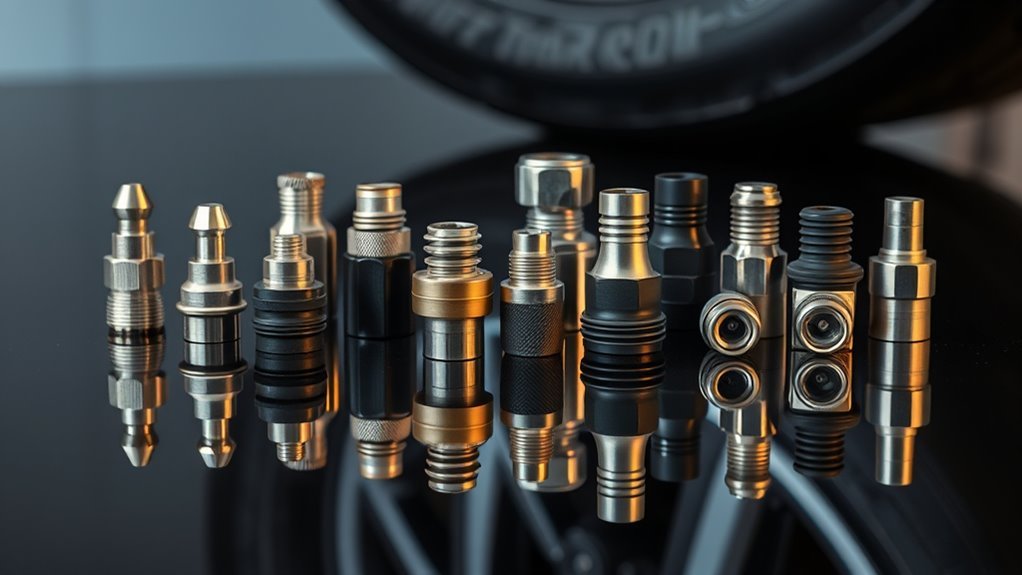
Specialized nozzles make inflation faster and less frustrating because they are designed for different openings and pressure needs.
Tapered nozzles work best for larger low-pressure openings, such as air mattresses and pool floats. Inflation needles are best for sports balls. Dual-head pump nozzles are useful for cyclists who switch between Presta and Schrader valves. Clip-on tire chucks are convenient for car tires because they hold onto the valve stem while the inflator runs.
Air compressor users may also see open-flow and closed-flow chucks. Closed or sealing chucks are designed to seal when connected, while open-flow chucks require airflow control from the inflator or gauge. Milton Industries lists a range of air chucks, including closed or sealing types, which shows why matching the chuck style to the tool matters.
[Products Worth Considering]

These universal tire valve stem caps are designed to help protect tire valves from moisture and debris while adding a clean, customized look to your vehicle. Suitable for cars, trucks, motorcycles, SUVs, and bikes, they offer easy push-on installation and durable everyday use. Their personalized design makes them a simple accessory for enhancing both style and tire protection.

This AC Schrader valve tool is designed for leak-free removal and replacement of valve cores in automotive air conditioning systems filled with refrigerant. It helps prevent refrigerant loss, secures the valve core during installation or removal, and simplifies servicing with included guidance. Built from brass and aluminum alloy and stored in a protective EVA case, it offers a practical solution for both high and low pressure valve core work.
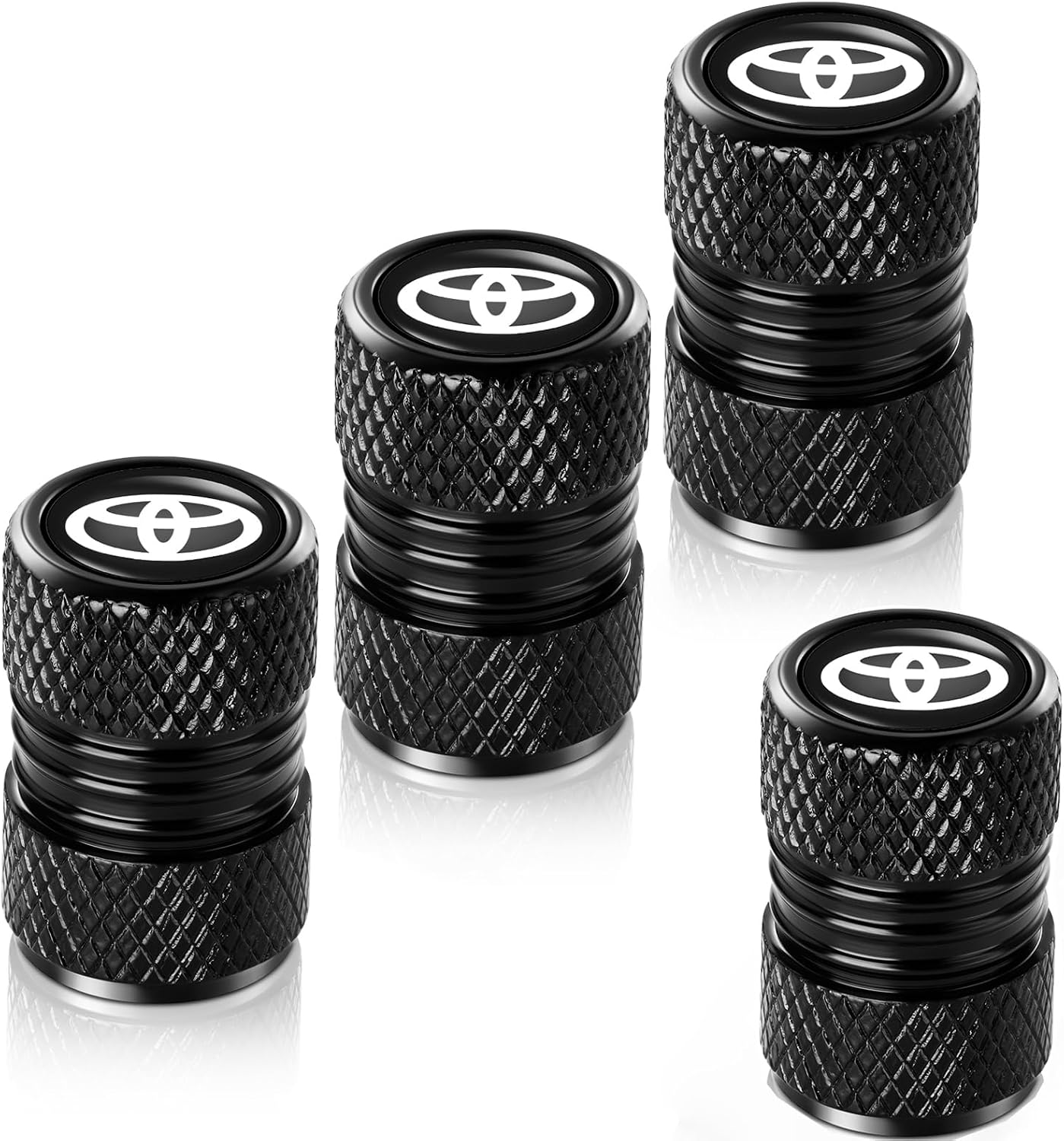
These metal tire valve stem caps are designed to protect tire valves from dust, moisture, corrosion, and air leakage while adding a clean, stylish look to your wheels. Made from durable aluminum alloy with rubber sealing rings, they are easy to install without tools and help support stable tire pressure for safer driving.
Using Tire Inflator Spray Safely
Tire inflator spray, such as aerosol flat-tire repair products, is different from a normal air inflator. It adds sealant and air through the valve stem to help with certain small punctures. It is meant for emergencies, not as a permanent tire repair.
Fix-a-Flat describes its aerosol product as an emergency repair inflator for small punctures. The company also says that if the product is used, the tire repair professional should be told so the tire and TPMS area can be cleaned properly during repair.
Warning: Do not use tire inflator spray on severe sidewall damage, large cuts, shredded tires, or a tire that has come off the rim. Use it only as directed on the product label, drive cautiously, and arrange a proper tire inspection or repair as soon as possible.
Maintenance Tips for Your Tire Inflator and Adapters
Proper maintenance keeps your tire inflator adapters ready when you need them. Small fittings are easy to ignore, but dirt, worn gaskets, and damaged threads are the most common reasons they leak.
- Clean after use: Wipe dust, sealant, and moisture off adapters before storing them.
- Inspect gaskets: Replace cracked or flattened rubber washers and O-rings.
- Check threads: Do not force brass or aluminum adapters if they feel cross-threaded.
- Store dry: Keep adapters in a small case so they do not collect grit or corrode.
- Limit heat buildup: Small portable inflators can overheat during long runs, so follow the inflator’s duty-cycle instructions.
- Test for leaks: Apply soapy water to the connection. Bubbles show where air is escaping.
Troubleshooting Common Issues With Tire Inflator Adapters
Most adapter problems come from a poor seal, the wrong nozzle, or a worn gasket. Use this quick table to identify the issue before replacing the whole inflator.
| Issue | Likely Cause | Fix |
|---|---|---|
| Air hisses at the valve | Chuck is crooked or gasket is worn | Remove it, reseat it straight, and inspect the rubber seal. |
| Adapter will not screw on | Wrong thread or cross-threading | Stop turning, back it off, and realign. Do not force it. |
| Presta valve will not take air | Top nut is still closed or valve core is stuck | Loosen the top nut and tap it briefly to release a tiny puff of air. |
| Ball loses air after inflation | Needle damaged the valve or ball was overinflated | Moisten the needle next time and inflate to the ball’s recommended pressure. |
| Air mattress will not get firm | Nozzle is too small or valve flap is blocking airflow | Use a larger tapered nozzle and hold the valve open while inflating. |
| Pressure reading jumps around | Loose chuck or inflator gauge lag | Pause inflation, reseat the chuck, and verify with a separate pressure gauge. |
Frequently Asked Questions
How do you use a tire inflator nozzle?
Remove the valve cap, attach the nozzle straight onto the valve stem, lock or tighten it if needed, and inflate in short bursts. Watch the pressure gauge and stop at the recommended PSI. Remove the nozzle quickly and reinstall the valve cap.
How do you use a tire inflator spray?
Use tire inflator spray only as directed on the can. In general, you attach the hose to the valve stem, release the product, and let it add sealant and air. It is an emergency repair, not a permanent fix. After using it, drive cautiously and tell the tire repair professional that sealant was used.
How do you attach an air compressor nozzle to a tire?
Use a Schrader-compatible tire chuck for most vehicle tires. Press or clip the chuck squarely onto the valve stem, make sure it seals without hissing, then add air slowly. Check the pressure with a reliable gauge before removing the chuck.
What is the nozzle called that puts air into a tire?
The fitting is usually called a tire chuck, air chuck, or inflator chuck. The valve on most car tires is a Schrader valve. Bicycle tires may use Schrader, Presta, or Dunlop valves, so the nozzle or adapter must match the valve.
Can you use a car tire inflator on a Presta bike valve?
Yes, if you use a Presta-to-Schrader adapter or a pump head that supports Presta valves. Open the Presta valve by loosening the small top nut first, then attach the adapter gently so you do not bend the valve pin.
Why does air leak when I attach the inflator?
Air usually leaks because the chuck is crooked, the adapter is the wrong type, the rubber gasket is worn, or the valve stem is dirty. Remove the chuck, inspect the seal, clean the valve, and reconnect it straight.
Conclusion
Tire inflator adapters make a basic inflator much more useful, but only when the adapter matches the job. Use a Schrader chuck for most vehicle tires, a Presta adapter or Presta-ready head for many road and performance bikes, a compatible head for Dunlop valves, an inflation needle for sports balls, and a tapered nozzle for low-pressure inflatables.
For the best results, focus on fit, pressure, and safety. A tight seal prevents leaks, a reliable gauge prevents overinflation, and the correct adapter protects delicate valves. Keep a small adapter kit with your inflator, replace worn gaskets, and you’ll be ready for tires, bikes, balls, and inflatables with far less frustration.
Sources
- National Highway Traffic Safety Administration — TireWise tire safety guidance — supports cold tire pressure, placard PSI, monthly pressure checks, and TPMS cautions.
- Schwalbe — Bike Tire Valves — supports Presta/Sclaverand, Dunlop, and car valve differences and handling notes.
- Park Tool — INF-2 Shop Inflator — supports dual-sided Presta and Schrader inflator head compatibility.
- Milton Industries — Air Chucks — supports air chuck terminology and sealing/closed-flow chuck types.
- Fix-a-Flat — What Is Fix-a-Flat? — supports emergency aerosol tire inflator use.
- Fix-a-Flat — TPMS FAQ — supports TPMS cleaning guidance after sealant use.