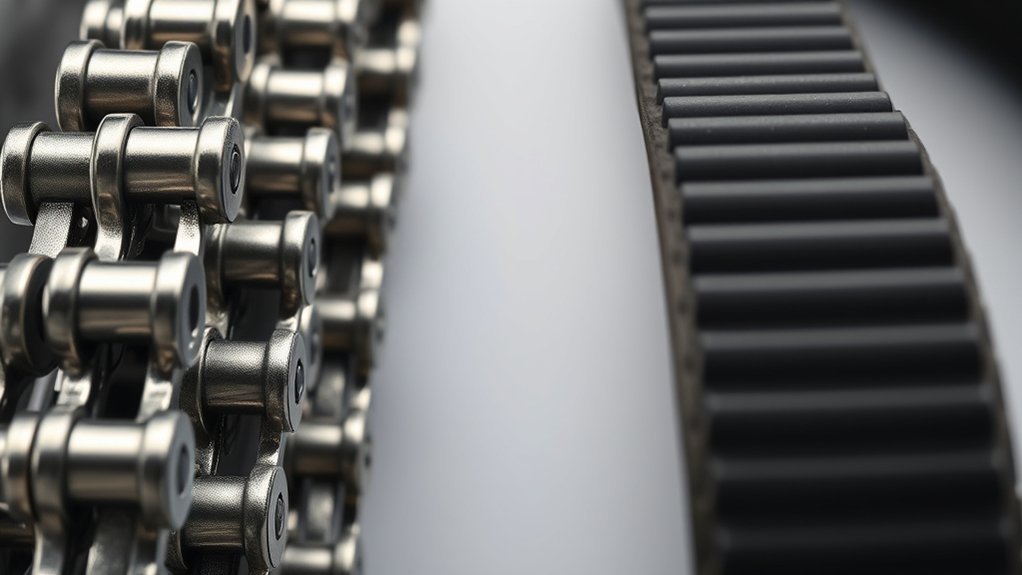
When comparing timing chains and timing belts, you’re looking at two essential engine components. Timing belts, made from reinforced rubber, typically last 55,000 to 90,000 miles and require replacement every 5-7 years. In contrast, metal timing chains can last over 300,000 kilometers and often outlive the vehicle. While belts are cheaper to manufacture, chains generally offer better durability despite higher replacement costs. Understanding these differences can help you maintain your engine’s performance and longevity effectively. More insights await you.
Understanding Timing Systems: Belts vs. Chains
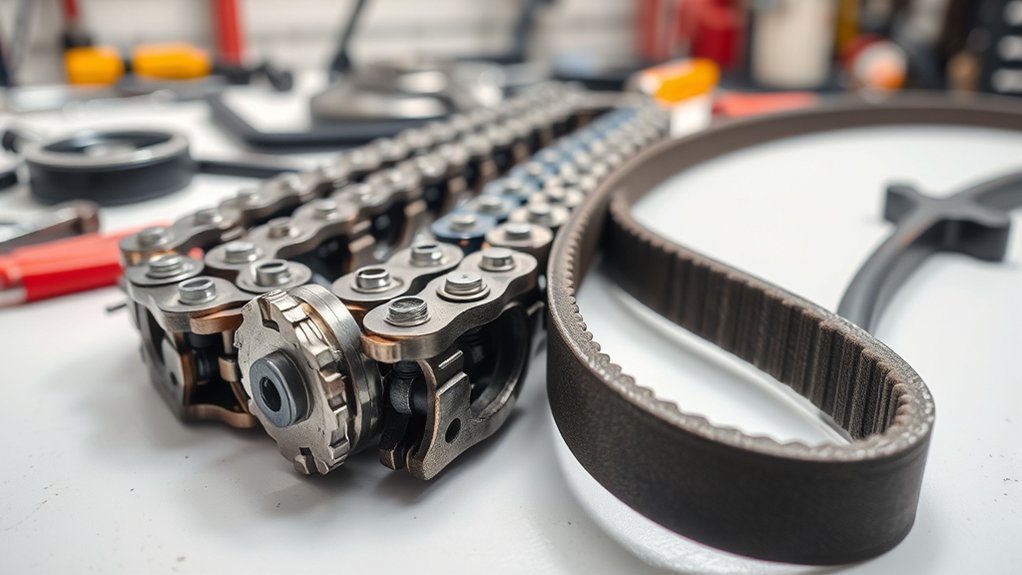
Timing systems are essential for your engine’s performance, as they synchronize the rotation of the crankshaft and camshaft. Understanding the differences between timing belts and chains is vital for maintaining ideal engine function. Timing belts, made of rubber composite, usually need replacement every 55,000 to 90,000 miles. They require proper belt tension to function effectively, ensuring smooth operation. On the other hand, timing chains, crafted from metal, can last the vehicle’s lifetime, often exceeding 300,000 km, but they necessitate regular chain lubrication to prevent wear.
While timing belts offer quieter engine operation and lower replacement costs, timing chains provide superior durability. Misalignment in these systems can lead to severe engine damage, underscoring the importance of regular maintenance. Many modern vehicles favor timing chains for their longevity, while older models, like certain Ford EcoBoost and Peugeot engines, still utilize timing belts, each with distinct advantages and maintenance needs.
Key Features of Timing Belts: What You Need to Know
Timing belts are constructed from a reinforced rubber composite, offering flexibility and minimizing engine noise. You’ll need to replace them every 55,000 to 90,000 miles to avoid catastrophic engine failure, with costs averaging around £300 due to labor. Understanding these key features is essential for effective vehicle maintenance and longevity.
Material Composition and Strength
In automotive engineering, the choice between timing belts and timing chains hinges greatly on their material composition and strength. Timing belts are made from a reinforced rubber composite, which provides excellent belt flexibility and reduces engine noise. This rubber construction not only makes belts cheaper to manufacture but also contributes to a smoother operation. On the other hand, timing chains are constructed from metal, offering vastly superior chain durability and strength. While timing chains generally last the vehicle’s lifespan, timing belts require replacement every 55,000 to 90,000 miles. Neglecting worn timing belts can lead to catastrophic engine failure, emphasizing the critical importance of regular maintenance. Understanding these material differences is essential for making informed automotive decisions.
Replacement Frequency and Costs
When choosing between a timing belt and a timing chain, understanding their replacement frequency and costs is essential. Timing belts generally require replacement every 55,000 to 90,000 miles to prevent catastrophic engine failure, with an average replacement cost around £300. In contrast, timing chains can last for the vehicle’s entire lifespan, often exceeding 300,000 kilometers, but their replacement can be costly, ranging from £500 to £1,300. While timing belts are cheaper regarding parts, the labor costs for replacement are higher due to the complexity involved. Regular servicing and adherence to manufacturer guidelines can help mitigate risks and cost implications associated with both timing belt and timing chain maintenance, ensuring your engine runs smoothly.
Understanding Timing Chains: Unique Characteristics
While many car owners might overlook the importance of a timing chain, understanding its unique characteristics reveals why it plays an essential role in engine performance. Here’s what you should know about timing chains:
- Durable Construction: Made from metal, they’re stronger than rubber timing belts.
- Longevity: Designed to last the vehicle’s lifespan, often exceeding 300,000 kilometers.
- Wear Indicators: Unlike belts, chains can produce noise when they start to wear, alerting you to potential issues.
- Complicated Replacement: Replacing a timing chain is more complex and costly, typically ranging from £500 to £1,300.
- Engine Design: They contribute to a heavier engine design and can be noisier, but provide a more reliable long-term solution for engine timing.
Understanding these unique features helps you appreciate the essential role timing chains play in your vehicle’s overall performance and longevity.
How Timing Belts and Chains Function in an Engine
In your engine, timing belts and chains play a vital role in synchronizing the crankshaft and camshaft, ensuring that the valves open and close precisely when needed. This synchronization maintains ideal valve timing regulation, essential for peak engine performance. Without proper operation of these components, you risk significant engine misalignment and damage.
Timing System Synchronization
The timing system plays an essential role in synchronizing the crankshaft and camshaft, ensuring that the engine’s valves open and close at precisely the right moments throughout the combustion cycle.
- Timing belts are made of reinforced rubber, while chains are constructed from metal.
- Proper timing synchronization is crucial; misalignment can severely damage your engine.
- Timing belts typically need replacement every 55,000 to 90,000 miles.
- In contrast, timing chains are designed to last the vehicle’s lifespan.
- Manufacturers choose between belts and chains based on factors like engine noise and maintenance.
Understanding these differences helps you appreciate the timing synchronization challenges and their direct engine performance impact, ultimately guiding your vehicle maintenance decisions.
Valve Timing Regulation
Understanding how timing belts and chains function in an engine is essential for maintaining peak performance. These components connect the crankshaft to the camshaft, ensuring precise valve synchronization with the pistons’ movements. This alignment is vital; any misalignment can severely impact performance and lead to catastrophic engine damage. Timing belts, made from reinforced rubber, usually need replacement every 55,000 to 90,000 miles, while metal chains often outlast the vehicle. While belts operate more quietly, chains can produce noticeable noise. Regular maintenance of your timing system is imperative—neglecting it can lead to belt breakage or chain wear, resulting in significant performance degradation. Prioritize this aspect to keep your engine running smoothly and efficiently.
Lifespan Comparison: How Long Do Timing Belts and Chains Really Last?
How long can you expect your timing belt or chain to last? Understanding the differences in lifespan between these components is essential for maintaining your vehicle’s performance.
- Timing belts typically need replacement every 55,000 to 90,000 miles.
- Their rubber composition leads to wear and tear, affecting belt lifespan.
- Timing chains, made from metal, often outlast the vehicle, exceeding 300,000 kilometers.
- Chain longevity results from their robust design, offering greater durability.
- Ignoring a worn timing belt can cause catastrophic engine failure.
Regular maintenance and following manufacturer guidelines can extend the lifespan of both timing belts and chains. While belts may require periodic replacement, chains are generally set for the long haul, meaning you should keep an eye on your vehicle’s specific needs to guarantee peak performance. Understanding these differences will empower you to make informed decisions about your car’s maintenance and reliability.
Cost Comparison: Replacing Belts vs. Chains
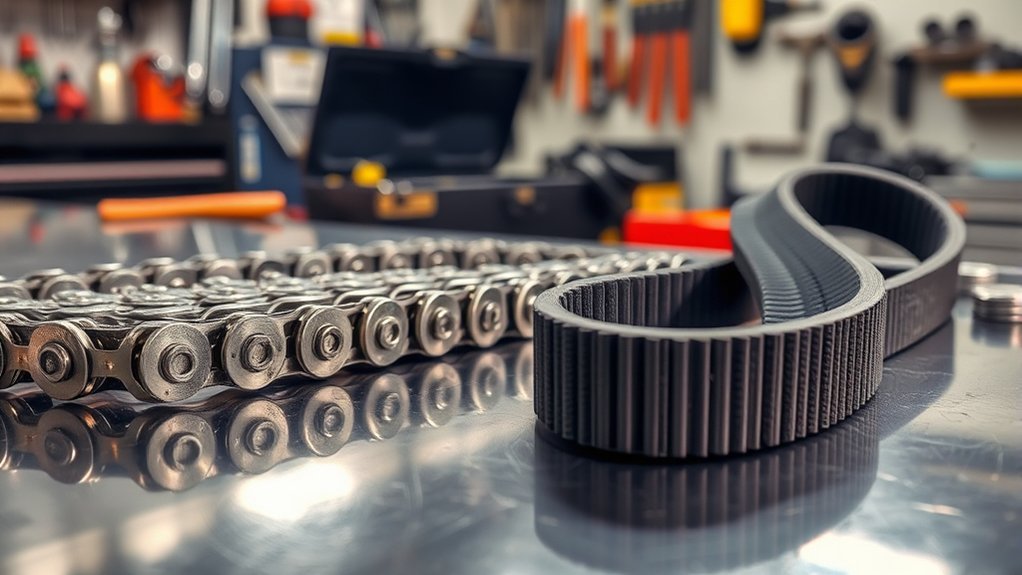
When considering the cost of replacing timing belts versus chains, you’ll notice considerable differences that can impact your wallet. Timing belts range from £300 to £1,000 for replacement, while timing chains can cost between £500 and £1,300, with some exceeding £3,000. Though belts are cheaper to produce, they need replacing every 55,000 to 90,000 miles, leading to higher long-term costs. In contrast, chains often last the vehicle’s lifespan, minimizing maintenance strategies. Labor costs considerably affect the total expense, frequently eclipsing parts costs.
| Component | Timing Belt Cost | Timing Chain Cost |
|---|---|---|
| Average Repair | £300 – £1,000 | £500 – £1,300 |
| High-End Repair | N/A | >£3,000 |
| Lifespan | 55,000 – 90,000 miles | Lifetime of vehicle |
| Replacement Frequency | Every 5-7 years | Rarely needed |
| Labor Impact | Considerable | Considerable |
Timing Belts vs. Timing Chains: Why Do Different Cars Make Different Choices?
Why do some cars opt for timing belts while others favor timing chains? The choice often hinges on several critical factors:
- Design preferences: Manufacturers align components with specific engine layouts.
- Maintenance requirements: Timing belts need regular replacement, while chains often last the vehicle’s lifetime.
- Performance balance: Belts provide smoother operation, enhancing driver experience, while chains support high-performance demands.
- Noise reduction: Timing belts operate more quietly, appealing to those prioritizing a serene ride.
- Cost efficiency: Belts are cheaper to produce and replace, making them attractive for budget-conscious buyers.
Ultimately, each vehicle’s choice reflects a strategic balance among these elements, ensuring that performance and longevity meet consumer expectations. This thoughtful selection process drives innovation, catering to varied preferences in the automotive landscape.
Common Issues With Timing Belts and Chains to Watch for
Timing belts and chains can present several common issues that drivers should monitor closely. For timing belts, watch for belt cracking or excessive wear, especially if it’s nearing the 55,000 to 90,000 mile mark. A failing belt may emit a noticeable squealing noise, signaling the need for immediate inspection or replacement.
Timing chains, while generally more durable, can develop chain noise as they age. This noise often indicates wear and may require urgent attention. Additionally, stretching of timing chains can lead to misalignment issues, affecting engine performance and increasing the risk of serious damage.
Regular inspections are essential for identifying wear indicators early, helping you avoid costly repair expenses down the line. By staying vigilant about these common issues, you can guarantee your vehicle’s timing system remains functional and efficient, preserving both performance and peace of mind.
How to Maintain Your Timing System for Longevity
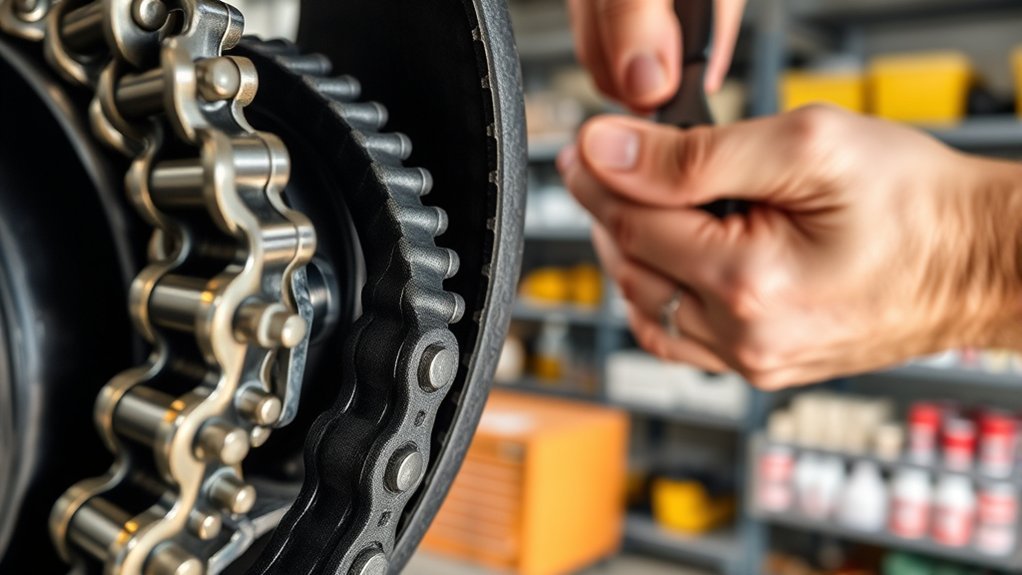
To guarantee your timing system remains reliable and efficient, regular maintenance is essential. Implementing effective timing maintenance tips can save you from costly repairs and make certain your engine operates smoothly. Here are some key strategies:
- Inspect and replace timing belts every 55,000 to 90,000 miles.
- Listen for unusual noises from timing chains, indicating potential wear.
- Follow the manufacturer’s maintenance schedule for peak performance.
- Use high-quality lubricants and engine oil to minimize wear.
- Schedule routine engine check-ups to catch issues early.
Frequently Asked Questions
Why Do Hondas Still Use Timing Belts?
Honda still uses timing belts for their reliability, engine performance, and lower maintenance costs. These design choices balance efficiency with affordability, ensuring you enjoy a quieter operation while benefiting from Honda’s trusted engineering.
Conclusion
In conclusion, whether you choose a timing belt or chain, understanding their unique characteristics and maintenance needs is essential. As the saying goes, “A stitch in time saves nine.” By staying proactive with inspections and replacements, you can avoid costly engine damage down the road. Both systems have their pros and cons, but with the right knowledge, you can make an informed decision that keeps your engine running smoothly for years to come.