Every sixth-generation Toyota 4Runner (2025 and newer) already has a turbocharger. Both powertrains are built around the same turbocharged 2.4-liter four-cylinder: the standard i-FORCE makes 278 horsepower and 317 lb-ft of torque, and the i-FORCE MAX hybrid adds an electric motor for 326 horsepower and 465 lb-ft. This guide explains what the turbo does, why the engine feels the way it does, and how to look after it.
Quick Answer
The 6th-gen 4Runner uses a single turbocharger on its 2.4-liter i-FORCE engine. Exhaust gas spins the turbo, which pushes compressed air into the engine so it can burn more fuel and make more power than its size suggests. Peak torque arrives at just 1,700 rpm. On the i-FORCE MAX, a 48-hp electric motor inside the 8-speed automatic adds torque the moment you press the pedal, before boost builds. You don’t need, or want, an aftermarket turbo kit. What the turbo does need is clean oil changed on Toyota’s schedule.
Key Takeaways
- Both 6th-gen powertrains are turbocharged; the V6 and its five-speed automatic are gone.
- The i-FORCE makes 278 hp and 317 lb-ft; the i-FORCE MAX hybrid makes 326 hp and 465 lb-ft.
- Peak torque comes at 1,700 rpm, so the engine pulls hard at low speed for towing and trail work.
- Toyota rates the 6th-gen 4Runner to tow up to 6,000 pounds, 1,000 more than the previous generation.
- Oil quality matters more on a turbo engine, so follow the oil interval and grade in your owner’s manual and maintenance guide.
How a Turbo Boosts a 6th‑Gen 4Runner

A turbocharger is two small fans on one shaft. Hot exhaust leaving the engine spins the turbine side. The turbine drives the compressor side, which squeezes intake air before it enters the cylinders. Denser air carries more oxygen, so the engine can burn more fuel on each stroke and make more power without a larger displacement.
That is how a 2.4-liter four-cylinder replaces the previous 4.0-liter V6. Toyota’s numbers show the result: the old V6 made 270 hp and 278 lb-ft, while the new standard i-FORCE makes 278 hp and 317 lb-ft. The turbo engine uses Toyota’s D-4ST fuel injection, which combines direct and port injection, and runs an 11:1 compression ratio.
| Specification | i-FORCE | i-FORCE MAX |
|---|---|---|
| Engine | 2.4L turbo four-cylinder (T24A-FTS) | Same 2.4L turbo four-cylinder plus electric motor |
| Output | 278 hp, 317 lb-ft | 326 hp, 465 lb-ft (system) |
| Peak torque | 1,700 rpm | 1,700 rpm |
| Electric assist | None | 48-hp motor in the transmission, 1.87-kWh NiMH battery |
| Transmission | 8-speed automatic | 8-speed automatic |
| Grades | SR5, TRD Sport, TRD Sport Premium; available on TRD Off-Road, TRD Off-Road Premium and Limited | Standard on TRD Pro, Trailhunter and Platinum; available on TRD Off-Road, TRD Off-Road Premium and Limited |
Grades are from Toyota’s 2025 and 2026 4Runner releases. Check the window sticker for the exact powertrain on a specific vehicle.
Why the Turbo Engine Feels Different From the Old V6
The biggest change you feel is where the torque lives. The turbo builds useful boost at low engine speed, and Toyota lists peak torque at 1,700 rpm. In practice, the 4Runner pulls strongly from a stop, climbs grades without revving hard, and holds speed on the highway in a taller gear. The 8-speed automatic, replacing the old five-speed, keeps the engine in that strong low-rpm band more of the time.
A turbo needs exhaust flow to spin up, so a turbocharged engine can have a short delay between pressing the pedal and full boost. This is where the i-FORCE MAX helps. Its electric motor sits between the engine and the 8-speed transmission and delivers torque instantly, filling the gap while the turbo spools. That is how the hybrid reaches 465 lb-ft, the most torque Toyota has offered in a 4Runner. For a deeper look at the hybrid side, see our i-FORCE MAX hybrid explainer.
Toyota’s 2026 release lists the i-FORCE at an EPA-estimated 26 mpg highway and the i-FORCE MAX at 24 mpg highway. Hard use of boost, such as towing near the 6,000-pound limit, will lower real-world mileage, because more boost means more fuel.
How to Take Care of the 4Runner’s Turbo

The turbo’s shaft spins on a film of engine oil and is cooled by oil and coolant. That makes oil condition the single most important maintenance item for the turbo.
- Follow Toyota’s oil schedule. Toyota’s 2026 4Runner Warranty & Maintenance Guide schedules service every 5,000 miles or 6 months. It calls for an oil change at 12 months even if the maintenance reminder has not appeared, and it shortens the oil interval to 5,000 miles or 6 months when most driving is on dusty roads or consists of repeated short trips in freezing weather. Our 4Runner maintenance schedule by mileage lays out each visit.
- Use the oil grade in your owner’s manual. Do not carry over a viscosity from a 5th-gen V6. Our 4Runner oil type by model year guide covers the differences.
- Go easy while the engine is cold. As a general turbo-engine practice, avoid full throttle until the engine has warmed up and the oil is flowing freely.
- Let it settle after hard work. After a long climb or heavy towing, a minute of gentle driving or idling before shutdown lets the turbo cool with oil still circulating. This is common practice for turbo engines rather than a specific Toyota instruction.
- Keep the air filter clean. Dust that gets past a damaged filter reaches the compressor wheel first. Dusty-road driving is one of Toyota’s special operating conditions, and the maintenance guide adds air-filter inspections for it.
Warning: Do not touch the turbocharger, exhaust manifold or downpipe after driving. They run extremely hot. On i-FORCE MAX models, never touch orange high-voltage cables or hybrid components.
Signs the Turbo System Needs Attention
Turbo problems usually show up as a change in how the 4Runner drives. Have it checked if you notice any of the following:
- A check engine light, especially with reduced power. Start with our 4Runner check engine light guide.
- Noticeably slower acceleration or a loss of the strong low-rpm pull.
- A new siren-like whine or whistle that rises with engine speed.
- Blue-gray smoke from the exhaust or oil consumption between changes.
- Oil residue around the turbo or intake piping.
Many of these symptoms also have simpler causes, such as a loose intake clamp or a sensor fault, so scan for codes before assuming the turbo has failed.
Should You Add or Upgrade a Turbo?
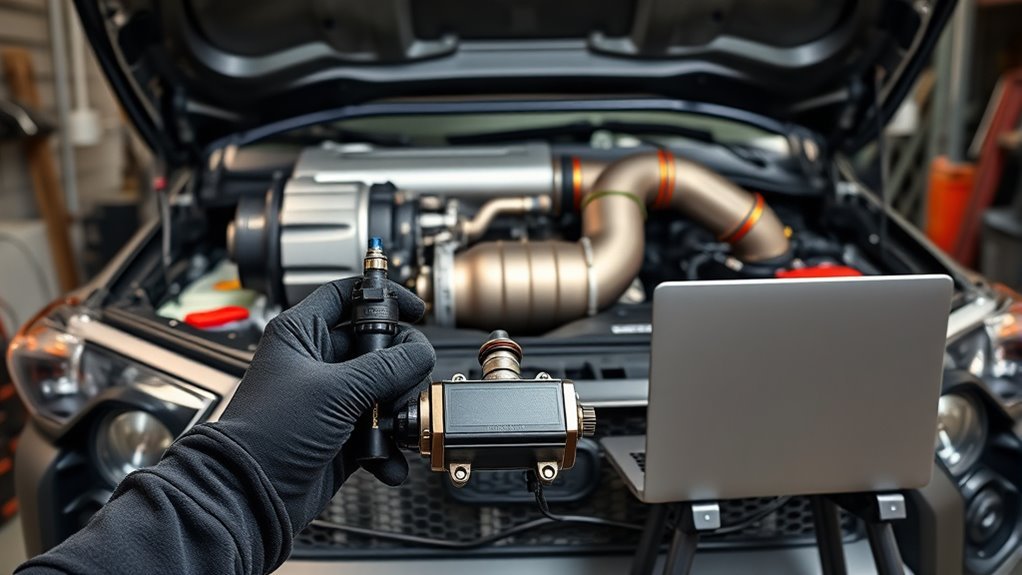
Aftermarket turbo kits were a thing for the 5th-gen 4Runner’s naturally aspirated 4.0L V6. They do not apply to the 6th generation, which leaves the factory with a turbo matched to its engine, fuel system, cooling and transmission. Raising boost or changing engine software adds heat and stress to the engine, turbo and transmission, and it can affect powertrain warranty coverage. If you are considering any engine tune, ask your Toyota dealer how it would affect your warranty before you buy it.
Frequently Asked Questions
Does the 2025 4Runner have a turbo?
Yes. Every 2025 and newer 4Runner uses a turbocharged 2.4-liter four-cylinder. The i-FORCE version makes 278 hp and 317 lb-ft, and the i-FORCE MAX hybrid version makes 326 hp and 465 lb-ft.
Is the 6th-gen 4Runner twin-turbo?
No. The 2.4-liter i-FORCE engine uses a single turbocharger. The i-FORCE MAX adds an electric motor, not a second turbo.
How much can a turbo 4Runner tow?
Toyota rates the 6th-gen 4Runner to tow up to 6,000 pounds, 1,000 pounds more than the 5th generation. The rating varies by configuration, so check the owner’s manual and door-jamb label for your vehicle.
Is the turbo four-cylinder as durable as the old V6?
It is too new for long-term data like the V6’s. The engine is shared with the current Tacoma and other TNGA-F trucks, and its long-term durability will depend heavily on oil changes and maintenance done on schedule.
What fuel does the turbo 4Runner need?
Use the octane listed in your owner’s manual and on the fuel-door label for your model year. Do not assume the requirement from another Toyota.
Conclusion
The 6th-gen 4Runner’s turbo is what lets a 2.4-liter engine out-pull the old 4.0-liter V6, with peak torque at 1,700 rpm and up to 465 lb-ft in i-FORCE MAX form. You don’t need to add anything to it. Keep the oil changed on Toyota’s schedule, use the specified grade, keep the air filter clean, and have any loss of power or new noise checked early.
Sources
- Toyota USA Newsroom: 2025 Toyota 4Runner Refines Adventure Ready Heritage — i-FORCE and i-FORCE MAX output, 48-hp motor, 1.87-kWh battery, 6,000-lb towing.
- Toyota USA Newsroom: The All-New 2025 Toyota 4Runner — powertrain availability by grade.
- Toyota USA Newsroom: The 2026 Toyota 4Runner: Engineered for Exploration — EPA highway estimates and 2026 grade availability.
- Kelley Blue Book: Toyota Reveals All-New 2025 4Runner — previous V6 output and five-speed transmission comparison.
- Toyota 2025 4Runner Product Information — T24A-FTS engine, D-4ST injection, 11:1 compression, peak torque at 1,700 rpm.
- Toyota 2026 4Runner Warranty & Maintenance Guide — 5,000-mile/6-month service visits and special operating conditions for oil service.