
When choosing between synthetic and conventional motor oil, you’ll find that synthetic oil, engineered for superior performance, lasts longer and performs better under extreme conditions. It allows for oil changes every 5,000 to 25,000 miles versus 3,000 to 7,000 miles for conventional oil. Synthetic oils resist heat and oxidation, enhancing engine efficiency. While they cost more upfront, their longevity may save you money in the long run. You’ll uncover more insights on this topic with further exploration.
What Is Conventional Motor Oil and How Is It Made?

Conventional motor oil, often seen as the backbone of engine lubrication, is entirely derived from mineral oil obtained through the refining of crude oil. This refining process involves distillation and purification, which separates useful hydrocarbons while leaving behind undesirable impurities. As you consider mineral extraction, keep in mind that the resultant oil serves as a cost-effective solution for basic engine protection and performance, especially in older vehicles. However, the natural impurities retained during refining can affect its performance, particularly when compared to synthetic options. Conventional oil typically requires changes every 3,000 to 5,000 miles, which you should monitor based on your driving conditions. This type of oil is best suited for those who don’t demand the advanced characteristics of synthetic oils, especially in mild driving environments. Understanding these aspects helps you make informed choices about engine lubrication tailored to your needs.
Understanding Synthetic Motor Oil: Composition and Benefits
While many drivers rely on conventional motor oil, understanding synthetic motor oil reveals its advanced engineering and benefits. Unlike conventional oils, synthetic motor oil is chemically engineered, creating a uniform molecular structure that guarantees superior lubrication. This consistency greatly enhances oil viscosity, allowing it to flow smoothly under varying temperatures.
Synthetic oils excel in extreme conditions, maintaining ideal performance in both frigid and high-heat environments. With better resistance to oxidation and thermal breakdown, you can extend oil change intervals from 5,000 to 25,000 miles, saving you time and money.
Additionally, the enhanced additive packages in synthetic oils protect your engine against wear and sludge formation, promoting a cleaner engine over time. Studies show that synthetic oils can outperform conventional options by up to 47% in key metrics like shear stability and oxidation resistance, making them an excellent choice for those seeking liberation from frequent maintenance.
Direct Comparison: Synthetic vs. Conventional Oil
When comparing synthetic and conventional motor oils, it’s essential to recognize the significant differences in their composition and performance. Synthetic oil consists of artificially engineered, uniform molecules, while conventional oil comes from refined crude oil, laden with natural impurities. This difference leads to enhanced performance, with synthetic oil showing up to 47% better shear stability, oxidation resistance, and volatility.
In terms of longevity, synthetic oil can last between 5,000 to 25,000 miles, compared to 3,000 to 7,000 miles for conventional oil. While synthetic options are typically 2 to 4 times more expensive, the extended change intervals can justify the initial cost over time.
Temperature resistance is another advantage; synthetic oil maintains ideal oil viscosity in extreme conditions, ensuring effective lubrication and reducing the risk of lubricant starvation. Finally, the environmental impact of synthetic oils is often lower due to reduced waste from less frequent oil changes.
Benefits of Synthetic Oil
When you choose synthetic oil, you’re opting for enhanced engine performance and protection against wear and sludge buildup. Its superior viscosity retention in extreme temperatures guarantees ideal flow and efficiency, especially under stress. Plus, with longer oil change intervals, you can enjoy less frequent maintenance, making it a practical choice for your vehicle.
Enhanced Engine Performance
Synthetic oil markedly enhances engine performance, especially in extreme temperature conditions. Its superior resistance to oxidation and thermal breakdown means your engine stays protected whether it’s sweltering hot or frigid cold. Improved shear stability reduces the risk of oil breakdown under high-stress situations, which directly contributes to engine longevity. Studies show that synthetic oils can outperform conventional oils by up to 47% in key metrics, including shear stability and oxidation resistance. Additionally, enhanced flow characteristics at low temperatures minimize lubricant starvation during cold starts, ensuring peak function right away. With these benefits, you achieve performance enhancement that keeps your engine running smoothly, allowing you to focus on the road ahead without worrying about your vehicle’s health.
Longer Oil Change Intervals
The enhanced performance of synthetic oils translates directly into longer oil change intervals, making them a practical choice for vehicle maintenance. You can expect synthetic oils to last between 5,000 to 25,000 miles, compared to the 3,000 to 5,000 miles typical for conventional oils. This oil longevity stems from their superior resistance to oxidation and thermal breakdown, ensuring consistent engine protection.
| Oil Type | Change Interval (miles) | Maintenance Savings |
|---|---|---|
| Conventional Oil | 3,000 – 5,000 | Lower initial cost |
| Synthetic Oil | 5,000 – 25,000 | Higher longevity |
Drawbacks of Conventional Oil: When It Falls Short
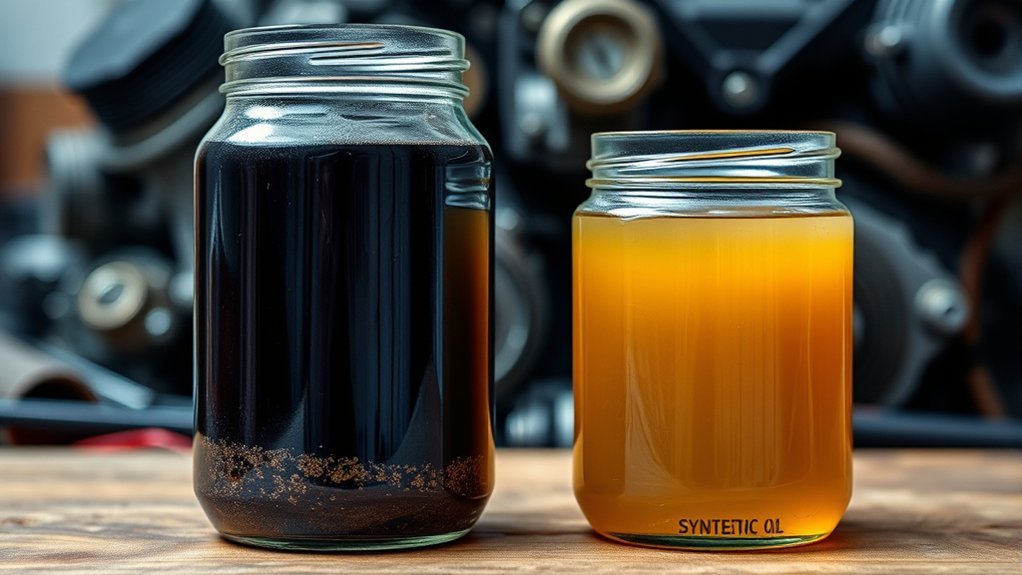
Conventional oil has significant limitations, especially in extreme conditions where it struggles to provide adequate protection, risking engine wear. You’ll also find that it requires more frequent oil changes, typically every 3,000 to 5,000 miles, due to faster oxidation and greater sludge formation. While it may seem cost-effective initially, these drawbacks can compromise your engine’s performance and longevity.
Limitations in Extreme Conditions
While many drivers rely on conventional motor oil for everyday use, it can struggle under extreme conditions. When faced with extreme temperatures, conventional oil may not maintain peak oil performance, leading to potential engine issues. Here are three key limitations:
- Cold Flow Issues: In low temperatures, conventional oil can become too viscous, risking lubricant starvation during startup.
- Oxidation Susceptibility: Conventional oils are prone to oxidation and thermal breakdown, leading to sludge and reduced efficiency, especially in high-stress scenarios.
- Viscosity Changes: Temperature fluctuations can cause significant changes in viscosity, making it less reliable during extreme driving situations.
In these conditions, the protection offered by conventional oil may fall short, increasing engine wear and risk of overheating.
Shorter Oil Change Intervals
Extreme conditions can exacerbate the limitations of conventional oil, particularly when it comes to oil change intervals. Typically, you’ll need to change conventional oil every 3,000 to 5,000 miles, markedly increasing your oil change frequency compared to synthetic options, which can last up to 25,000 miles. This frequent requirement not only disrupts your schedule but also raises maintenance costs over time. Under harsh driving conditions, such as towing or extreme heat, conventional oil degrades faster, pushing you to change it even sooner. With many modern engines designed for synthetic oils, relying on conventional oil may leave your vehicle vulnerable to wear and tear, ultimately compromising performance and increasing long-term expenses.
Greater Sludge Formation Risk
When you choose conventional motor oil, you face a higher risk of sludge formation due to its natural impurities and contaminants. This can lead to significant engine issues, especially in older or high-mileage vehicles. Here are some key points to reflect upon:
- High Temperatures: Conventional oil breaks down faster under heat, increasing sludge buildup.
- Obstructed Oil Passages: Sludge can block oil flow, reducing lubrication and causing wear on engine components.
- Maintenance Costs: Frequent oil changes become necessary to manage sludge, driving up your maintenance expenses.
To mitigate these risks, contemplate sludge prevention strategies and effective engine cleaning solutions. Opting for synthetic oil can provide superior resistance to oxidation, making it a more reliable choice for long-term engine health.
Recommended Oil Change Intervals for Each Type
Understanding the recommended oil change intervals for synthetic and conventional motor oils is essential for maintaining your vehicle’s performance and longevity. Conventional motor oil usually requires changes every 3,000 to 5,000 miles, influenced by driving conditions and manufacturer guidelines. In contrast, synthetic oil can extend those intervals considerably, with recommendations ranging from 5,000 to 10,000 miles, and some brands even allowing changes up to 25,000 miles under ideal conditions.
For vehicles with over 75,000 miles, high-mileage oils often suggest more frequent changes to counter oil burn-off and leaks. If you tow or drive in extreme temperatures, anticipate adjusting your oil change frequency accordingly. Always consult your vehicle owner’s manual for the most accurate recommendations tailored to your engine type and driving habits. These maintenance tips will help you make informed decisions, ensuring your engine runs smoothly for years to come.
Choosing the Right Oil for Your Engine: What You Need to Know
How can you guarantee your engine runs at its best? Choosing the right oil is essential for peak performance and longevity. Consider these factors to make an informed decision:
- Oil Compatibility: Check your vehicle’s manual for recommended oil types. High-performance engines often require synthetic oils, while older models may do well with conventional options.
- Seasonal Considerations: Synthetic oils excel in extreme temperatures, providing better flow in cold weather and stability in heat. If you live in a region with harsh climates, synthetic oil might be your best bet.
- Driving Conditions: For high-stress driving situations, synthetic oils offer superior protection against sludge and wear thanks to their robust additives.
Cost Comparison: Synthetic vs. Conventional Motor Oil
Cost is a significant factor when deciding between synthetic and conventional motor oil. Synthetic oil typically ranges from $4 to $10 per quart, making it 2 to 4 times pricier than conventional oil, which costs around $2 to $5 per quart. An oil change using conventional oil averages $38 for 5 quarts, while synthetic oil changes can run about $70. This leads to an annual cost difference of roughly $64 more for synthetic oil. However, consider the longer oil change intervals: synthetic oils can last between 5,000 to 25,000 miles, compared to conventional oils that require changes every 5,000 to 10,000 miles. While the initial investment in synthetic oil appears high, a thorough cost analysis reveals that the longevity and performance of alternative oils can result in savings over time, reducing the frequency of oil changes and ensuring your engine runs smoothly.
Frequently Asked Questions
Is It Better to Get Synthetic or Conventional Oil?
It’s generally better to choose synthetic oil for superior performance and longevity, despite the higher cost. The cost comparison often balances out over time, as fewer changes and better engine protection save you money and hassle.
Conclusion
To sum up, while some might argue that conventional oil is cheaper upfront, consider the long-term benefits of synthetic oil, like improved engine performance and protection. Investing in synthetic oil means fewer oil changes and enhanced efficiency, ultimately saving you money and time. Your engine deserves the best care, and choosing synthetic oil can lead to a smoother ride and greater peace of mind. Don’t compromise on your vehicle’s health—opt for what’s truly best for your engine.