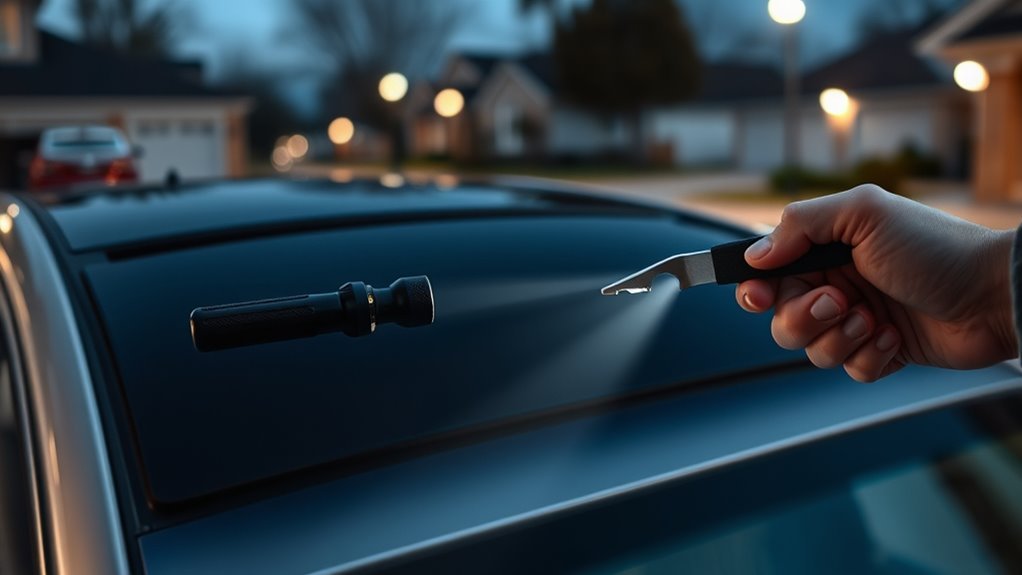
If your Sonata sunroof won’t close, first pull the dome light trim to find the motor and insert an Allen key into the manual-drive socket to crank it shut while guiding the glass by hand. Inspect tracks, hinges and the deflector for debris, cracked plastic or binding, and lubricate tracks and spring hinges. Test the switch after manual closure. If the motor hums but won’t finish, expect linkage or deflector replacement; keep going for step‑by‑step checks and cost guidance.
Close a Stuck Sonata Sunroof Right Now: Quick Fixes
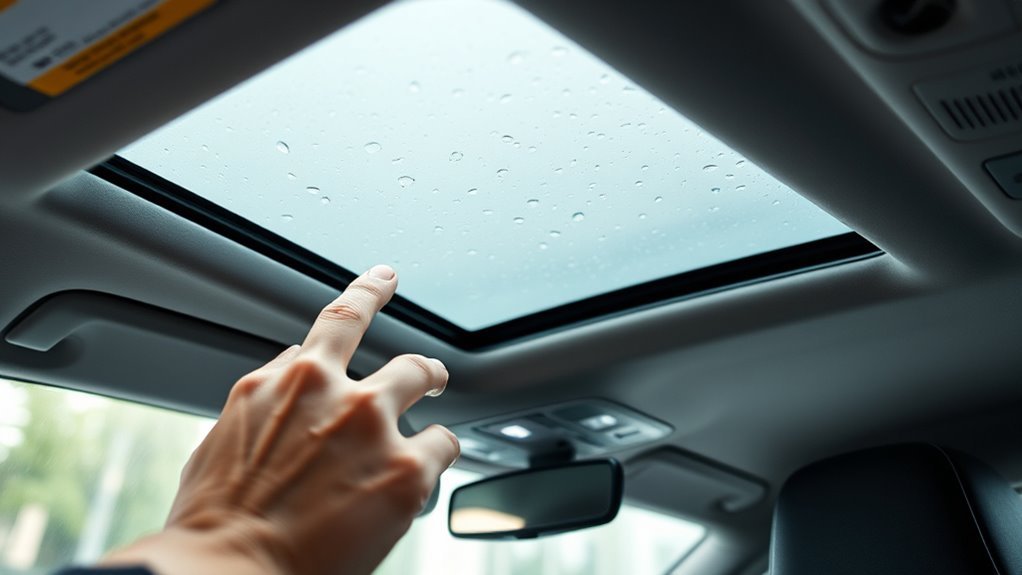
If your Sonata sunroof‘s stuck, act quickly: locate the motor behind the rear dome light, fit an Allen key into the manual-drive socket, and turn to close the panel. You’ll seize control—apply steady pressure and feel for engagement. Before forcing, glance for cracked plastic on the frame and stiff rear brackets that can jam movement. Lubricate running tracks and spring hinges with a PTFE or silicone spray lubricant every six months to prevent recurrence. If the panel stops then reverses, try assisting the glass by hand while lightly holding the switch; you may find a sweet spot to finish closure. These troubleshooting tips give you practical sunroof maintenance steps so you can free yourself from dependence on tow trucks or shops. Act, fix, move on.
Identify the Problem: Motor, Track, or Deflector?
Start by testing whether the motor runs smoothly and completes its cycle; if it struggles or stops, the motor or wiring is likely at fault. If the sunroof reverses or binds partway, inspect the tracks, linkages, and front deflector for misalignment, sticky spots, or a cracked plastic frame. Lubricate the tracks, check linkage adjustment, and replace any damaged deflector or frame parts to confirm the source of the jam.
Motor Versus Track
When your sunroof stops closing and reverses, you’ll want to isolate whether the problem’s in the motor, the tracks, or the front deflector by following a quick, systematic check: Start with motor troubleshooting—listen near the rear dome light for grind or weak spin, remove roof trim if needed to access the motor. If it only closes partway then reverses, test track alignment and inspect for debris. Lubricate rails, then operate slowly; stiff ends can trigger auto-reverse. Use the table to guide checks and actions so you reclaim control.
| Symptom | Quick action |
|---|---|
| Weak motor noise | Access motor, test power |
| Partial close/reverse | Inspect track alignment, clear debris |
| Stiff end travel | Lubricate rails, recheck operation |
Deflector And Linkage
Although the motor and tracks often get the blame, check the front deflector and linkage first because a misaligned or obstructed deflector, stiff linkage, or a cracked plastic frame can physically block travel and trigger the sunroof’s auto-reverse. Start by cleaning the deflector and surrounding channel; remove debris that prevents full closure and test deflector alignment visually. Inspect the linkage for binding or corrosion; move it by hand and note stiff spots. Probe the plastic frame near the deflector for cracks or warping that could jam the panel. If linkage stiffness is present, apply appropriate linkage lubrication sparingly and recheck movement. Replace cracked frame pieces or a warped deflector. Re-test the sunroof — if it still auto-reverses, proceed to motor and track diagnostics.
How to Close a Stuck Sonata Sunroof Manually
Access the motor behind the rear dome light and remove the roof trim so you can reach the manual override; insert an appropriately sized Allen key into the motor socket and turn it while gently guiding the sunroof by hand to locate the closing “sweet spot.” You’ll perform targeted sunroof troubleshooting: expose the motor, turn the Allen key, and nudge the glass until it moves smoothly. Stay deliberate — feel for resistance and stop if binding occurs. After closure, reset the switch and test operation.
| Step | Action | Outcome |
|---|---|---|
| 1 | Expose motor | Access override |
| 2 | Insert Allen key | Direct control |
| 3 | Guide sunroof | Find sweet spot |
| 4 | Test switch | Confirm fix |
Follow maintenance tips to prevent repeat failures and reclaim control.
Simple Checks & Lubrication: Tracks, Hinges, Deflector
Because a sticky track or misaligned deflector is often the culprit, start by visually inspecting and cleaning the running tracks, spring hinges, and front deflector before any adjustments. Remove debris from the tracks, wipe away grime, and check the deflector for nicks or bends that stop full closure. Apply a PTFE or silicone spray lubricant to the running tracks and spring hinges—this is your basic track maintenance to free seized parts. Reapply every six months, sooner in harsh climates, to prevent repeat failures. Test the sunroof slowly; if it hesitates at end of travel or reverses, note stiff points. Perform minimal hinge adjustments to align movement; tighten or loosen pivot fasteners incrementally until motion is smooth. These steps free you from small, fixable blockages.
Find the Motor and Use the Manual Override (And Common Breaks)

Locate the motor by removing the roof trim near the rear dome light to gain clear access. Use an Allen key in the motor’s manual override to close or open the sunroof when the motor or switches fail. Check for common breaks—stiff rear brackets, cracked plastic frame pieces, and worn linkage—and address them with lubrication, bracket adjustment, or part replacement.
Locate The Motor
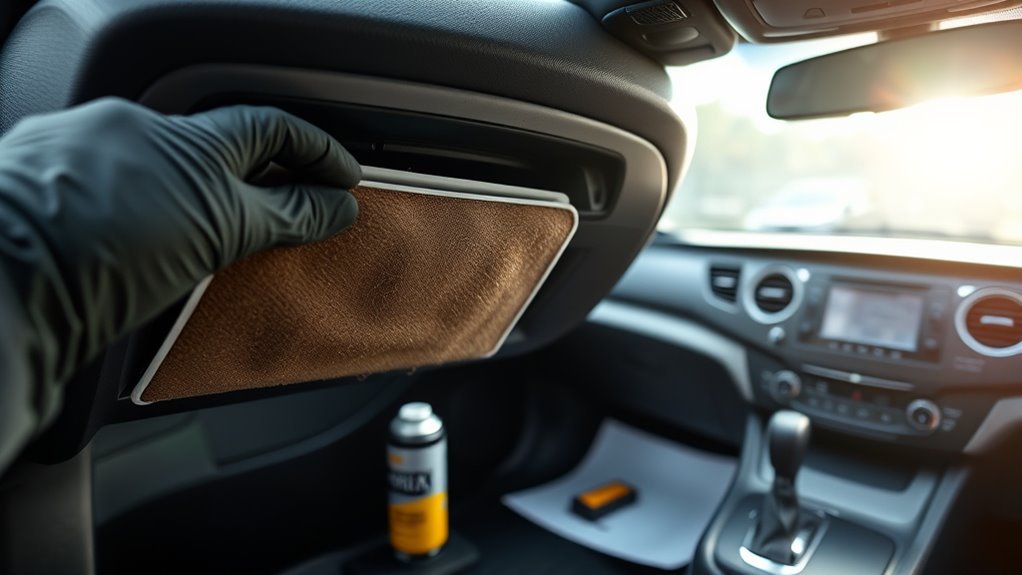
To reach the Sonata’s sunroof motor you’ll remove the roof trim near the rear dome light, since the motor sits behind that panel and is usually secured to the headliner; once exposed you can identify the motor housing, the Allen-key override socket, and the linkage points for inspection. Start by performing trim removal with a plastic pry tool, working outward to avoid damage. Note the motor location and mounting bolts; unclip connectors before touching electricals. Inspect the housing and linkage for cracked plastic, worn gears, or seized pivots that cause jamming. Check tracks and hinges for dry spots and debris. If components move freely, test the motor briefly with power applied. Document damaged parts for replacement and relubricate moving interfaces to reclaim reliable operation.
Access The Manual Override
When the sunroof won’t respond electrically, access the motor behind the rear dome light trim and use the Allen-key manual override to close it by hand; first remove the trim with a plastic pry tool, unclip the connector, and expose the motor housing and override socket. You’ll insert the correct-size Allen key into the override socket and turn steadily to retract the mechanism. Follow emergency procedures calmly: disconnect the battery if wiring looks compromised, keep fingers clear of moving parts, and work with a partner if the panel is heavy. Inspect the manual control and surrounding components for wear, cracked plastic, or stripped gears while you’re there. Knowing this procedure frees you from waiting for tow help and restores control fast.
Common Breaks And Fixes
Start by popping off the rear dome light trim to expose the sunroof motor and manual-override socket, then hook an Allen key into the override and turn steadily to close the panel if the motor’s failed. Once closed, inspect the frame for cracked plastic that can jam tracks; replace or brace cracked pieces to restore alignment. If the panel closes partway then reverses, check rear brackets and adjust or replace any stiff or bent components. Lubricate tracks and moving parts with a PTFE or silicone spray lubricant to prevent sticking. Use these troubleshooting tips routinely as sunroof maintenance: locate the motor, test the manual override, and address bracket, frame, or lubrication faults. Take control—repair, don’t accept confinement.
When to Call a Pro vs. Repair Yourself (Costs & Trade-In Considerations)
If the sunroof shows simple signs like grime, sticking tracks, or minor alignment issues, try basic DIY steps—clean the tracks, lubricate moving parts, and check for obstructions—then test operation; but if you spot cracked plastic, hear grinding from the motor, or electronic failures, call a pro because motor or internal-component work often requires specialized tools and can cost $100–$500, making it worth weighing repair expense against your car’s age, mileage, and trade-in value. Diagnose: verify noise source, check fuses, inspect visible plastic components. Decide: balance repair costs versus how much you expect when you trade in value. Act: attempt simple fixes first, record symptoms, and get one professional estimate. If repair approaches vehicle value, choose trade-in to free yourself.
- Clean and lubricate tracks.
- Inspect visible components.
- Get a professional estimate.
- Compare repair vs. trade-in.
Frequently Asked Questions
How to Reset Hyundai Sonata Sunroof?
Turn ignition to ON, hold the sunroof close switch ~10 seconds until closed, release, hold another 10 seconds to reset. If it reverses, clear obstructions, lubricate tracks. Use these sunroof maintenance tips from a Hyundai troubleshooting guide.
What Causes a Sunroof Not to Close All the Way?
Sometimes your sunroof stalls mid-close just as rain starts — cracked frame plastic, sticky tracks, misaligned deflector, or stiff brackets cause it. You’ll use sunroof maintenance tips to diagnose common sunroof issues and free it.
How Much Does It Cost to Repair a Sunroof That Won’t Close?
You’ll typically pay $200–$1,000 to repair a sunroof that won’t close; start with cost effective solutions like cleaning tracks, lubricating seals, and testing the motor, then escalate repairs if parts or frame replacement are required.
Conclusion
If your Sonata’s sunroof won’t close, don’t panic — you can often fix it yourself with a few quick checks. Inspect the track and deflector, clean debris, and lubricate moving parts; if the motor’s at fault, locate the manual override and turn the gearing to snug it shut. Try simple resets before pricey repairs. If the motor’s dead or electrical issues persist, call a pro — you’ll save time and avoid turning a tiny problem into a car-sized headache.