If your Sonata idles rough—RPM sagging, hunting, or vibrating—you’re likely dealing with carbon-clogged GDI intake valves or injectors, vacuum leaks, or failing ignition/fuel components disrupting airflow and combustion. Start by checking the air filter, vacuum hoses, MAF/throttle body, and spark plugs, then run sensor-safe fuel cleaners like Techron and Gumout and perform spirited highway runs to dislodge deposits. If issues persist, scan for codes and escalate to pressure or injector tests; more diagnostics and fixes follow below.
Common Sonata Rough Idle Symptoms
When your Sonata idles rough, you’ll often see the RPM drop to about 600 at a stop and feel vibrations through the brake pedal; these are classic diagnostic cues. You’ll notice engine performance sag: hesitant throttle response and inconsistent rev recovery when you accelerate from idle. Idle stability is compromised — RPM hunting or intermittent misfires occur, sometimes accompanied by a faint shake through the steering column. On GDI-equipped Sonatas, carbon buildup on intake valves degrades combustion quality over time, so symptoms appear without obvious check-engine codes. If you drive infrequently, deposits and low-temperature operation make rough idle more likely; scheduled spirited runs help maintain combustion. Technicians often recommend throttle body service, which can restore idle stability and is sometimes warranty-covered — follow up promptly.
Quick DIY Checks: Air, Vacuum Leaks, Spark Plugs
You’ve already seen the common symptoms; now start with simple, hands-on checks that quickly rule out the most frequent causes of a rough idle. You can liberate yourself from guesswork by methodically verifying intake and ignition components.
- Inspect the air filter and intake tract for blockage; replace the filter and check clamps for leaks.
- Probe vacuum hoses for cracks, disconnections, or hardening; small leaks skew the air-fuel ratio and cause instability.
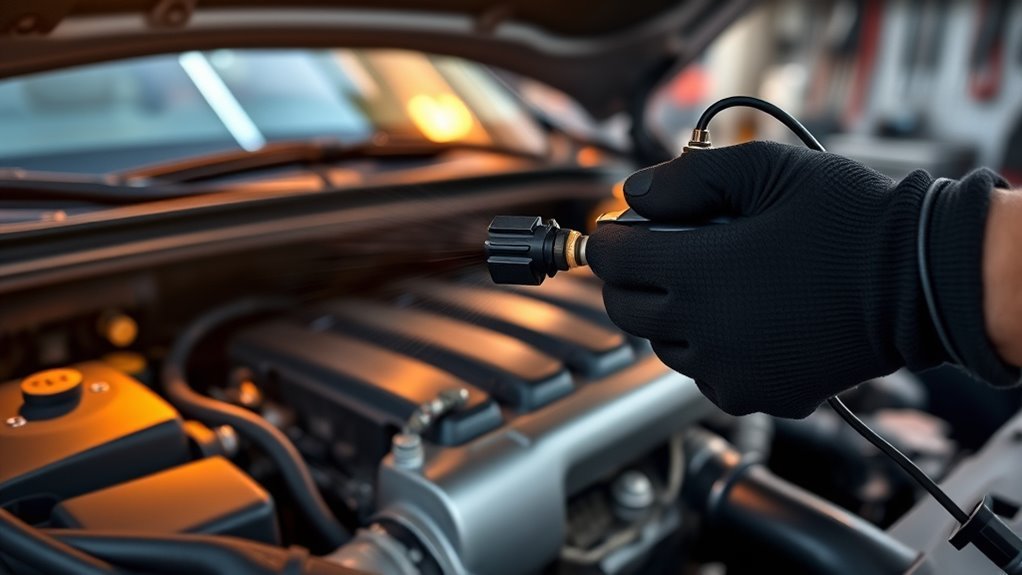
- Check the MAF sensor and throttle body for carbon deposits; clean per service manual to restore accurate airflow readings.
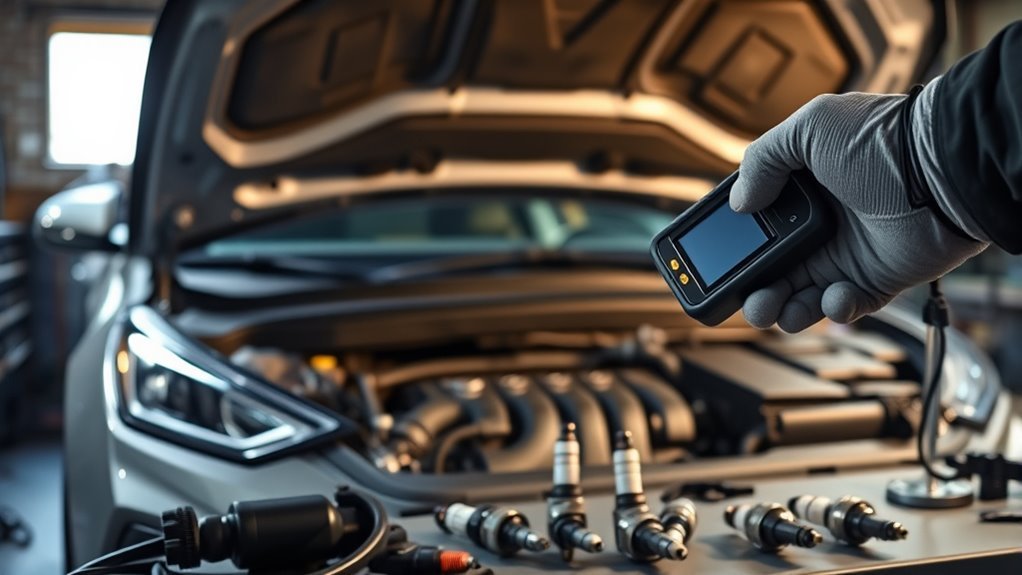
- Remove and inspect spark plugs for wear or carbon buildup; replace per spec and confirm fuel injector spray patterns if misfires persist.
These steps narrow causes before deeper diagnostics.
Fuel Treatments for Rough Idle: Techron, Gumout, Sea Foam
Use Techron first for its proven injector-cleaning detergents and be prepared to run a second bottle if idle doesn’t stabilize. If Techron doesn’t finish the job, follow with Gumout to target stubborn deposits and consider Sea Foam per label instructions for intake and fuel-system cleaning. On GDI Sonatas, remember treatments may not reach intake valves—pair products with a throttle-body service and a prolonged highway run to maximize deposit removal.
Techron Cleaning Benefits
Although fuel-injector deposits and carbon buildup in GDI engines often cause rough idle, regular use of a concentrated cleaner like Chevron Techron will actively dissolve deposits and restore spray patterns, improving idle stability and throttle response. You’ll notice Techron advantages in injector performance as it strips varnish, prevents re-depositing, and complements Top Tier gasoline. Use it regularly—about every 10k miles—and after heavy city driving perform an Italian tuneup to accelerate deposit removal. Techron works best as part of a liberation-focused maintenance routine that frees your engine from restrictions.
- Restores spray pattern and atomization
- Reduces idle variability and stumble
- Lowers carbon accumulation rate
- Synergizes with premium detergents and driving techniques
Gumout And Use
Gumout is a concentrated fuel-system cleaner that targets injector and intake-valve deposits to help stabilize a rough idle; when used in consecutive treatments—alternating or combined with Techron or Sea Foam—and paired with Top Tier gasoline, it dissolves varnish, restores atomization, and reduces stumble. You’ll use Gumout to reclaim drivability: its detergents remove carbon in GDI systems where other methods fail. Assess Gumout effectiveness by reduced misfire counts, smoother RPM, and improved throttle response. For maintenance, follow application frequency: every 10,000 miles or as diagnostics suggest. Alternate with Techron for broader surfactant spectrum. Table shows quick reference.
| Purpose | Interval | Expected result |
|---|---|---|
| Cleaning injectors | 10,000 mi | Restored spray |
| Prevent buildup | Periodic | Stable idle |
| Diagnostic aid | As needed | Clearer faults |
Sea Foam Procedures
When you add Sea Foam at the recommended rate of 1 ounce per gallon, it actively dissolves fuel-system deposits in injectors, intake valves, and combustion chambers to help stabilize a rough idle. You’ll use it to reclaim engine performance by cleansing deposits that restrict airflow and spray patterns. Use Sea Foam in rotation with Techron or Gumout; their chemistries act synergistically to remove stubborn carbon. Add Sea Foam to the tank, drive for an Italian tuneup (sustained higher rpm) to purge loosened residue, and pair with Top Tier gasoline for maintenance. Treat this as a tactical intervention to free your vehicle from degraded combustion.
- Add 1 oz/gal to fuel tank
- Cycle with Techron/Gumout
- Perform Italian tuneup drive
- Use Top Tier gasoline consistently
Sonata GDI Carbon Issues: Causes and Cleaning Schedule
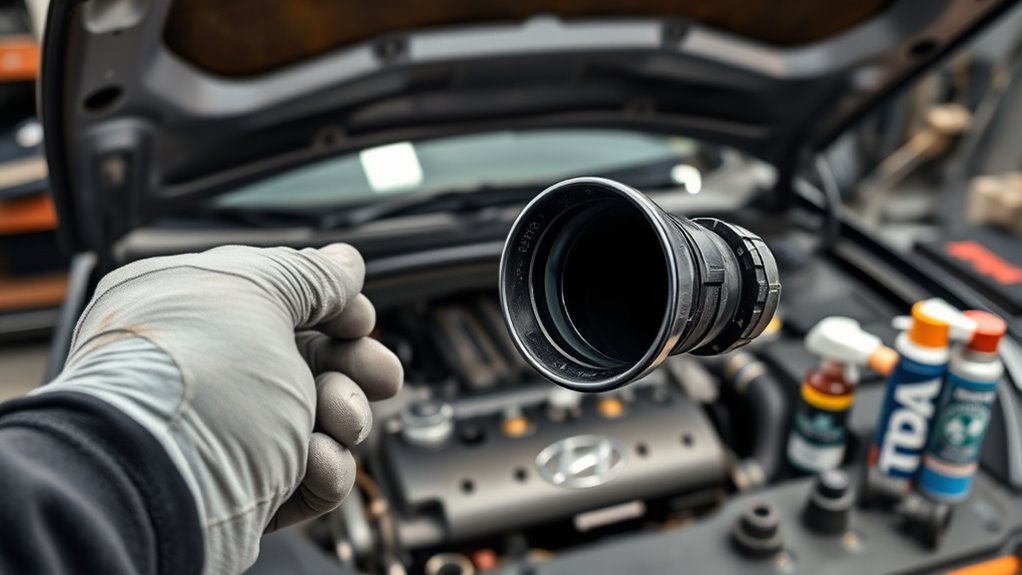
If your Sonata has a GDI engine, carbon will gradually coat the intake valves and throttle body because fuel no longer washes those areas, so you should expect regular cleaning to prevent rough idling and performance loss. You need targeted GDI maintenance strategies focused on carbon buildup prevention: schedule carbon cleaning every 10,000 miles as a baseline, adjust for driving style and symptoms. Use sensor-safe cleaners to avoid damaging MAP/MAF/idle sensors; brake-cleaning fluid rated safe for sensors is effective on stubborn deposits. Supplement cleaning with periodic spirited driving (“Italian tuneup”) to dislodge light deposits and restore flow. Diagnose by monitoring idle quality, misfires, and reduced throttle response; if symptoms persist, escalate to a mechanical intake valve clean and document intervals to reclaim control of engine health.
Throttle Body Service: What to Expect and How to Do It Safely
Carbon cleaning on GDI systems often highlights the throttle body as a frequent source of rough idle, so you’ll want to address it next by inspecting and cleaning the assembly. You’ll remove deposits that restrict airflow and confuse ECU inputs. Use sensor-safe cleaning techniques (brake cleaner labeled safe) and avoid abrasive tools; damaged sensors or coatings will worsen drivability. Check warranty before starting—dealers may cover service. Expect improved idle stability, reduced vibration, and sharper responsiveness when done correctly. Perform maintenance about every 10,000 miles to prevent recurrence.
- Inspect for carbon, sticking flap, electrical connector condition.
- Apply sensor-safe cleaning techniques; soak and wipe.
- Reassemble, verify throttle position sensor readings.
- Test idle and monitor for fault codes.
Driving Habits That Cause or Cure Rough Idle (Italian Tuneup)
If you mostly do short trips, you’re encouraging carbon buildup in the GDI intake and ports that shows up as a rough idle. Scheduling regular high-speed highway runs and occasional aggressive acceleration bursts (an Italian tuneup) helps oxidize and expel those deposits. Use controlled, higher-throttle intervals rather than constant light throttle to reduce deposit formation and improve idle stability.
Infrequent Short Trips
When you only run short trips, the engine rarely reaches the temperatures and load needed to fully vaporize fuel and burn off deposits, so carbon and varnish accumulate on intake valves and injectors and lead to a rough idle. You’ll notice unstable RPM, misfire codes, and sluggish throttle response. This is a maintenance and liberation issue: reclaim performance by adjusting engine maintenance and driving frequency.
- Schedule periodic longer drives to raise coolant and combustion temps and vaporize deposits.
- Avoid consistently light throttle during short runs; it limits injector self-cleaning.
- If idle remains rough, inspect injectors, intake, and spark condition; clean or replace as required.
- Track driving frequency and perform targeted tuneups to prevent repeated buildup and restore free movement.
High-Speed Highway Runs
Although short, gentle trips leave deposits behind, periodic high-speed highway runs—or an “Italian tuneup”—let higher RPMs and combustion temperatures oxidize and dislodge carbon on GDI intake valves and injectors, improving idle stability. You’ll use targeted sustained throttle to raise engine speed and temperature, which helps break down carbon buildup that idle cycles won’t touch. Diagnose by comparing idle smoothness after several highway sessions versus city-only use; persistent roughness suggests mechanical or fuel-system faults beyond deposits. Regularly scheduled highway runs restore engine efficiency, reduce misfires, and extend service intervals for intake cleaning. Don’t rely solely on timid, short commutes—embrace purposeful higher-speed drives occasionally to free your engine from the constraints of carbon buildup and reclaim responsive idle behavior.
Aggressive Acceleration Bursts
High-speed highway runs prime the engine to purge deposits, but targeted aggressive acceleration bursts—short, high-RPM throttle inputs—are the surgical tool for breaking down stubborn carbon on GDI intake valves, ports, and injectors. You’ll use bursts to restore engine performance by forcing higher combustion temperatures and improved fuel flow. Do it occasionally; overuse risks wear. If you drive infrequently, these bursts compensate for lack of heat and circulation that allows carbon buildup to worsen rough idle.
- Execute 5–10 second high-RPM pulls in a safe area.
- Avoid lugging the engine; reach reasonable operating temperature first.
- Monitor throttle response and idle smoothness after sessions.
- Combine with regular maintenance for lasting results.
This tactic liberates drivability and diagnoses persistent rough-idle causes.
Costs, Warranty, Dealer vs Independent Shop

If your Sonata is idling rough, you’ll want to weigh costs, warranty status, and service options before authorizing work; throttle body cleaning or replacement can run widely from about $150–$300 at a dealer, with independents often undercutting those rates depending on local labor. Do a cost comparison: get itemized estimates showing parts, labor, and diagnostic time. Check warranty terms—engine-related coverage can nullify out-of-pocket expense if still valid. Dealers offer OEM parts, manufacturer-level diagnostics, and documented service history; independents can deliver competitive pricing, faster turnarounds, and personalized attention. Use community reviews to assess service quality and reliability. You’ll want transparent estimates, written guarantees, and clear diagnostic reports so you can choose the liberating, cost-effective path.
Step-by-Step Troubleshooting Flowchart
Start with a systematic scan: plug in an OBD-II scanner and record any stored or pending fault codes before you touch components, since some misfires or sensor faults won’t illuminate the MIL immediately. Use codes to prioritize actions that restore engine performance and idle stability. Then follow a clear, iterative flow: verify codes, inspect fuel and intake, apply targeted fixes, and re-test.
Start with an OBD-II scan, note codes, inspect fuel and intake, apply targeted fixes, then retest.
- Read/clear codes, run live data, confirm misfire or sensor anomalies.
- Check fuel system pressure, filters, and use fuel treatment cycles if contamination suspected.
- Remove and inspect throttle body for GDI carbon; clean to regain idle stability.
- Adjust driving habits: perform spirited drives to help purge deposits, then reassess engine performance.
When to Escalate to a Pro: Diagnostics and Warranty Tips
When basic treatments and visual checks haven’t fixed a persistent rough idle, you should bring the Sonata to a pro for deeper diagnostics and warranty evaluation. If Techron-style fuel treatments and simple cleaning didn’t help, use a shop with advanced diagnostic tools and GDI experience. Ask the technician to run a dealership-level scan and live-data inspection; absence of trouble codes doesn’t rule out injector or carbon issues. Check warranty coverage before authorizing throttle-body cleaning, intake decarbonizing, or component replacement — some interventions may be covered. Consult community feedback to find reliable specialists. If you drive infrequently, discuss preventive strategies like periodic high-load runs (“Italian tuneup”) with the tech. Escalate when DIY limits are reached or warranty claims are possible.
Frequently Asked Questions
What Is the Most Common Problem With Hyundai Sonata?
The most common problem is a rough idle caused by engine misfire and fuel delivery issues; you’ll feel low RPMs and vibrations, so you’ll diagnose clogged injectors, carbon buildup, or throttle faults and reclaim reliable performance.
Conclusion
Think of your Sonata’s rough idle like a stuttering engine heartbeat — small, fixable interruptions that usually trace back to air, fuel, or ignition issues. You’ll start with quick DIY checks (air filter, vacuum leaks, plugs), try targeted fuel treatments, and schedule throttle or GDI cleaning if carbon’s built up. If symptoms persist, escalate to professional diagnostics; keep receipts and warranty records. Systematic troubleshooting turns chaotic idling into a steady, reliable pulse.