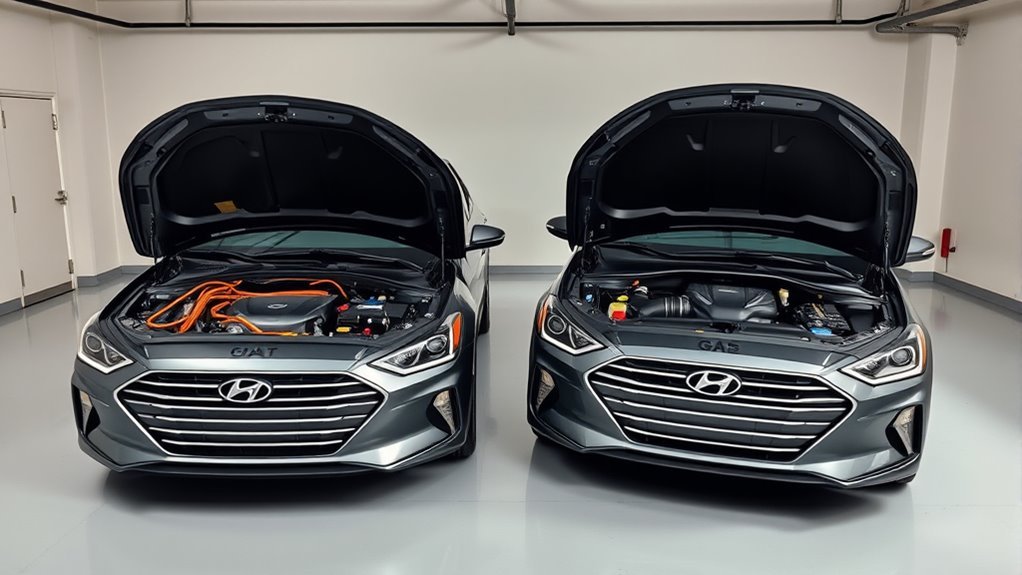
For a 2024 Hyundai Sonata gas vs Hybrid comparison, the Hybrid is the better fit for drivers focused on fuel economy, while the standard gas SEL is the better fit when a lower purchase price or available AWD matters more. The standard gas SEL makes 191 horsepower and the Hybrid makes 192 combined horsepower, so their rated output is nearly identical. The N Line is the performance outlier at 290 horsepower.
Last updated: September 16, 2026. Specifications, warranty coverage, federal tax-credit rules, independent road-test data, and used-market context were rechecked for this update.
Quick Answer
Choose the 2024 Sonata Hybrid if fuel economy is the priority: it is EPA-rated at 47 MPG combined versus 29 MPG for the gas SEL FWD. Choose the standard gas SEL if the actual purchase price is meaningfully lower or you need AWD. Choose the gas-powered N Line if acceleration matters most; its 290 horsepower is in a different performance category from the 191-hp gas SEL and 192-hp Hybrid.
Key Takeaways
- The standard 2.5-liter gas Sonata makes 191 horsepower, while the Hybrid makes 192 combined horsepower.
- The Hybrid is rated at 44 city, 51 highway, and 47 combined MPG. The gas SEL FWD is rated at 25 city, 36 highway, and 29 combined MPG.
- AWD was available with the 2.5-liter gas model, but the 2024 Sonata Hybrid was FWD only.
- The 290-horsepower N Line is the clear performance choice, but it is also the least fuel-efficient version.
- The Hybrid may reduce fuel and friction-brake costs, but it still needs normal gasoline-engine maintenance.
2024 Hyundai Sonata Gas vs Hybrid: Which Should You Buy?
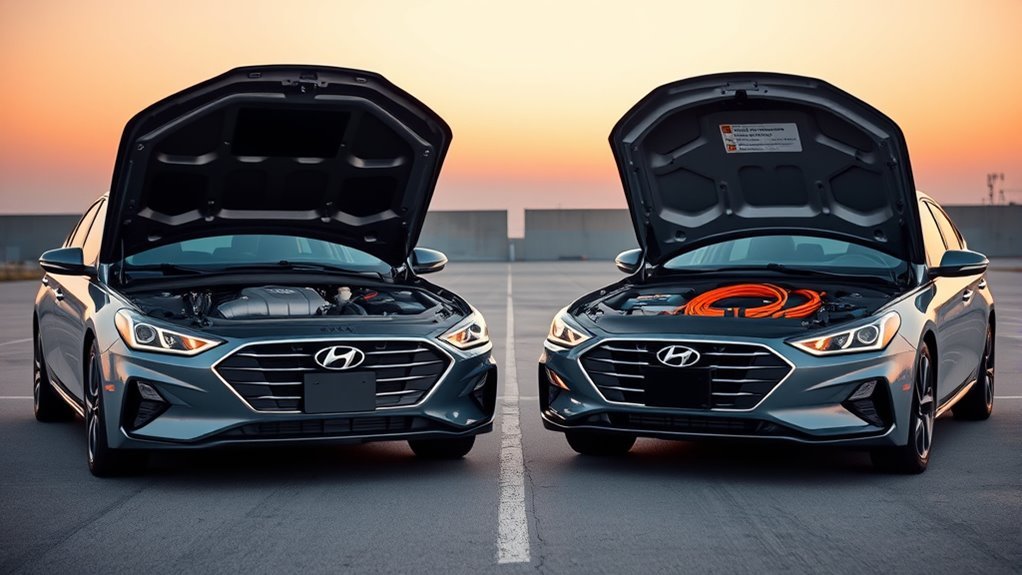
The best choice depends on your priorities. The Hybrid is strongest for frequent commuting and high annual mileage. The standard gas model makes sense when the purchase price is lower or you want AWD. The N Line serves a different buyer because it trades fuel economy for much stronger acceleration.
| Your priority | Best fit | Why |
|---|---|---|
| Lowest fuel use | Sonata Hybrid | EPA-rated at 47 combined MPG |
| Lower original starting price | Gas SEL | Its 2024 launch MSRP was $3,300 below the Hybrid SEL |
| All-wheel drive | Gas SEL AWD | The 2024 Hybrid was FWD only |
| Maximum performance | Gas N Line | Its turbocharged engine produces 290 horsepower |
| Stop-and-go commuting | Sonata Hybrid | Electric assistance, engine stop-start operation, and regenerative braking work well in urban driving |
[Products Worth Considering]

This filter combo is designed for Hyundai Sonata gas models from 2015 to 2019, including non-hybrid 2.4L vehicles, and replaces both the engine and cabin air filters in one convenient set. It helps improve engine airflow while also refreshing the cabin environment with activated carbon odor control and high-efficiency particle filtration for cleaner, quieter driving.

This cabin air filter with activated carbon helps improve in-vehicle air quality by trapping dust, pollen, and other airborne contaminants before they enter the passenger compartment. Designed as a replacement for select Toyota and Lexus models, it supports cleaner airflow and a more comfortable driving experience. The activated carbon layer also helps reduce unwanted odors for fresher cabin air.

EPAuto CP134 is a premium cabin air filter designed to help keep the air inside your vehicle cleaner and fresher. It includes activated carbon to help reduce odors and support a more comfortable ride for drivers and passengers. Built as a replacement option for many Honda and Acura models, it offers broad compatibility and dependable cabin air filtration.
2024 Sonata Gas and Hybrid Specifications
Hyundai offered three distinct powertrains for the U.S.-spec 2024 Sonata: a naturally aspirated 2.5-liter gas engine, a turbocharged 2.5-liter N Line engine, and a 2.0-liter hybrid system. The figures below come from Hyundai’s official 2024 Sonata specification sheet, pricing announcement, and published EPA estimates.
| Model | Powertrain | Horsepower | Transmission | Drive | EPA city/highway/combined | 2024 launch MSRP |
|---|---|---|---|---|---|---|
| Gas SEL FWD | 2.5L four-cylinder | 191 hp | 8-speed automatic | FWD | 25/36/29 MPG | $27,500 |
| Gas SEL AWD | 2.5L four-cylinder | 191 hp | 8-speed automatic | AWD | 25/34/28 MPG | $29,000 |
| Gas N Line | Turbocharged 2.5L four-cylinder | 290 hp | 8-speed wet dual-clutch | FWD | 23/32/27 MPG | $34,950 |
| Hybrid SEL | 2.0L engine plus 39-kW motor | 192 combined hp | 6-speed automatic | FWD | 44/51/47 MPG | $30,800 |
| Hybrid Limited | 2.0L engine plus 39-kW motor | 192 combined hp | 6-speed automatic | FWD | 44/51/47 MPG | $37,200 |
The listed prices are Hyundai’s original 2024 MSRPs and exclude the $1,115 delivery charge that applied at launch. They are not current used-car values. A 2024 model’s present price depends on mileage, condition, location, trim, accident history, and certified pre-owned status.
Standard 2.5-Liter Gas Powertrain
The standard gas engine produces 191 horsepower and 181 lb-ft of torque. It uses an eight-speed automatic transmission and was available with either FWD or AWD. Its main advantages are conventional power delivery, broader drivetrain choice, and a lower original starting price than the Hybrid SEL.
Sonata Hybrid Powertrain
The Hybrid combines a 150-horsepower 2.0-liter gasoline engine with a 39-kW electric motor. Hyundai rates the complete system at 192 combined horsepower. The motor itself is listed at 151 lb-ft of torque, while the gas engine produces 139 lb-ft.
You should not add the engine and motor torque figures together. They reach their maximum output at different speeds, and the hybrid control system blends their power through the transmission. Hyundai does not publish a simple combined torque rating for this system.
The Hybrid also has a 1.62-kWh lithium-ion battery and a six-speed automatic transmission. It is a conventional hybrid, not a plug-in hybrid. The engine and regenerative braking system recharge the battery while you drive.
The N Line Is a Different Performance Category
The gas-powered N Line produces 290 horsepower and 311 lb-ft of torque. It uses an eight-speed wet dual-clutch transmission and a sport-tuned chassis. It is the clear choice for acceleration, but its 27-MPG combined rating is the lowest in the 2024 Sonata lineup. For more background on the turbo powertrain, see the Hyundai Sonata turbo engine guide.
Note: A statement that “the gas Sonata has more horsepower” is only true when referring to the N Line. The standard gas SEL has one horsepower less than the Hybrid’s combined rating.
Performance and Driving Feel
The standard gas SEL and Hybrid have similar rated horsepower, but they deliver it differently. The gas model relies entirely on its engine and eight-speed automatic transmission. Its response is familiar and consistent because there is no transition between electric and gasoline propulsion.
The Hybrid can use electric assistance when starting, moving slowly, or accelerating gently. This may make low-speed driving feel quiet and smooth. The gasoline engine starts when more power is needed, when battery conditions require it, or when the climate-control system and other demands call for engine operation.
Regenerative braking also changes the pedal feel. During light deceleration, the electric motor acts as a generator and sends energy back to the battery. The friction brakes join as more stopping force is needed. Some drivers like the controlled deceleration, while others need time to become comfortable with the transition. For a model-specific explanation, see how regenerative braking works in the Hyundai Sonata.
The standard gas SEL and Hybrid are nearly equal in rated horsepower. The real performance jump comes from choosing the 290-horsepower N Line.
- Standard gas SEL: Best for familiar power delivery and available AWD.
- Hybrid: Best for smooth low-speed operation and fuel-efficient commuting.
- N Line: Best for strong acceleration and sportier response.
What Do Independent Road Tests Show?
Independent testing adds context that the horsepower numbers alone cannot provide. Car and Driver measured the 2024 Sonata Hybrid at 7.8 seconds from 0 to 60 mph, while MotorTrend recorded 8.6 seconds for a Hybrid Limited. MotorTrend also measured a 2024 Sonata N Line at 5.6 seconds and a 2024 Sonata SEL AWD at 7.9 seconds.
Those results reinforce the main decision: the Hybrid is not meaningfully more powerful than the standard gas car despite its one-horsepower advantage on paper, while the N Line is substantially quicker. Test times vary with tires, weather, surface, vehicle weight, and test method, so treat them as independent benchmarks rather than factory guarantees.
Fuel Economy in Real-World Driving
According to Hyundai’s published 2024 EPA estimates, the Sonata Hybrid SEL and Limited are rated at 44 city, 51 highway, and 47 combined MPG. The standard gas SEL FWD is rated at 25 city, 36 highway, and 29 combined MPG.
The Hybrid’s advantage is especially useful in urban and suburban driving. It can reduce engine idling, use electric assistance at low speeds, and capture some energy during braking. The EPA notes that hybrid fuel economy can benefit from in-town driving because of regenerative braking and reduced idling.
Actual MPG can be lower or higher than the rating. Speed, weather, short trips, hills, tire pressure, hard acceleration, climate-control use, and vehicle condition all affect fuel consumption. In independent testing, Edmunds reported just over 51 MPG on its mixed-driving evaluation route, while Green Car Reports averaged 40.6 MPG over 246 miles in cooler mixed suburban driving. The spread shows why your route and weather matter.
Annual Fuel-Cost Example
The following example compares a gas SEL FWD at 29 combined MPG with a Hybrid at 47 combined MPG. It assumes 12,000 miles per year and gasoline at $3.50 per gallon.
| Model | Estimated gallons per year | Estimated annual fuel cost |
|---|---|---|
| Gas SEL FWD | About 414 gallons | About $1,448 |
| Sonata Hybrid | About 255 gallons | About $894 |
| Estimated difference | About 159 gallons | About $555 saved per year |
Pro Tip: Estimate your own savings with this formula: annual miles ÷ MPG × local fuel price. Use your expected city and highway driving rather than relying only on the combined rating.
Purchase Price and Fuel-Savings Payback
At launch, the 2024 gas SEL started at $27,500 and the Hybrid SEL started at $30,800, excluding delivery. That created a $3,300 MSRP difference before taxes, financing, options, or dealer adjustments. Hyundai published these prices in its 2024 Sonata pricing announcement.
[Products Worth Considering]

Keep your vehicle neat and odor-free with these compact HOTOR car trash cans, designed to fit cup holders, door pockets, seat backs, and even home or office desktops. The flip-top lids open easily and close automatically to help contain smells, while the leakproof, waterproof build makes cleanup simple for everyday trash and wet waste. Each set includes matching disposable bags for quick replacement and convenient use.

This A-Premium serpentine belt is designed to deliver dependable drive performance for a wide range of compatible Toyota, Hyundai, Kia, Lexus, and Scion vehicles. Built with EPDM construction and precision dimensions, it helps promote stable tension, reduced noise, and reliable operation in demanding driving conditions. It is a practical replacement choice for maintaining accessory system performance and long-term confidence.
Current Used-Market Snapshot
As a September 2026 market snapshot, CarGurus listed the average 2024 Sonata at about $22,152, while its separate 2024 Sonata Hybrid data showed an average around $26,679. These are nationwide listing averages, not trim-matched transaction prices, so they should not be treated as the exact premium between a gas SEL and Hybrid SEL. Compare vehicles with similar mileage, condition, equipment, history, and location before calculating payback.
Using the 12,000-mile and $3.50-per-gallon example above, fuel savings of about $555 per year would recover a $3,300 difference in roughly six years. This is only a simple fuel calculation. It does not include:
- Differences in current used-car prices
- Trim equipment and options
- Sales tax and financing costs
- Insurance premiums
- Maintenance and repair history
- Changing fuel prices
- Resale value
A used Hybrid priced only slightly above a similar gas model may recover its premium sooner. A large price difference, low annual mileage, or mostly inexpensive highway travel can extend the payback period.
Note: The 2024 Sonata Hybrid is a conventional hybrid, not a plug-in hybrid, and it was not eligible under the former federal new clean-vehicle rules that required external charging and at least 7 kWh of battery capacity. In addition, current IRS guidance says the new and previously owned clean-vehicle credits are unavailable for vehicles acquired after September 30, 2025. Check current state and local incentives separately.
Maintenance, Hybrid Battery, and Resale
The Hybrid still contains a gasoline engine, transmission, cooling systems, filters, fluids, and spark plugs. It therefore requires normal scheduled engine maintenance. Follow the maintenance schedule for the specific VIN and driving conditions rather than assuming the Hybrid needs fewer oil changes.
According to the U.S. Department of Energy’s hybrid maintenance guidance, hybrid and plug-in-hybrid vehicles have broadly similar general maintenance needs to conventional vehicles. Their electrical components usually require little scheduled maintenance, and regenerative braking can reduce wear on the friction brakes.
Hybrid Battery and Component Warranty
Hyundai lists a 10-year/100,000-mile warranty for the hybrid battery and specified hybrid-system components, subject to the warranty’s complete terms and limitations. Covered components listed by Hyundai include the hybrid battery, starter-generator, power control unit, and automatic transmission with traction motor.
Battery capacity normally changes with age and use. That does not mean every older battery requires immediate replacement. When buying a used Sonata Hybrid, review the service history, check for warning lights, confirm warranty status, and arrange an inspection by a technician familiar with Hyundai hybrid systems.
Resale Value
Neither powertrain has a guaranteed resale advantage. A Hybrid may attract buyers who value fuel economy, while a gas or AWD model may be more desirable in another market. Mileage, condition, trim, accident history, maintenance records, fuel prices, and regional demand usually have a greater effect than the powertrain name alone.
Which 2024 Sonata Should You Buy?
[Products Worth Considering]
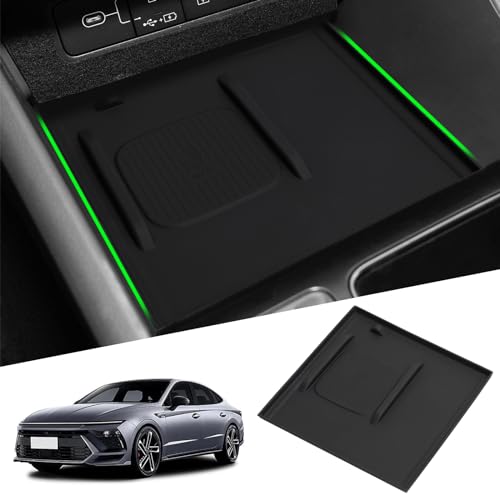
【Suitable model】 Compatible with 2024 2025 2026 Hyundai Sonata SEL/ Sonata N Line/ Sonata SEL Hybrid/ Sonata Limited Hybrid ( Only for configurations with wireless charging! ) 【Installation position】Center Console Wireless Charging Area NOTE: This product itself doesn't come with charging function, it is only a protective pad. Please understand before purchase. If your phone has a thick phone case, it can affect the phone's ability to charge. In general, it won't affect phones charging

𝐒𝐩𝐞𝐜𝐢𝐟𝐢𝐜 𝐭𝐨 𝐒𝐨𝐧𝐚𝐭𝐚:Designed with a precise 1:1 mold, this center console organizer is specifically made for the 2024/2025/2026 Hyundai Sonata SEL/SEL Convenience/SEL Hybrid/N Line/Limited Edition/Limited Hybrid. Its durable construction and convenient features make it a must-have accessory for your daily driver.
Choose the Standard Gas Sonata If:
- You find one at a meaningfully lower purchase price.
- You need the available HTRAC AWD system.
- You drive relatively few miles each year.
- Most of your driving is steady highway travel.
- You prefer a conventional gasoline-only driving experience.
Choose the Sonata Hybrid If:
- You drive frequently in city or suburban traffic.
- You expect to cover enough miles for fuel savings to matter.
- You plan to keep the car for several years.
- You value quieter low-speed operation.
- You do not need AWD or N Line performance.
Choose the N Line If:
- Acceleration and performance matter more than maximum MPG.
- You want 290 horsepower and a sport-tuned setup.
- You accept higher fuel consumption and FWD-only traction.
Frequently Asked Questions
Do hybrid engines last longer than gas engines?
Not necessarily. Electric assistance can reduce engine use in some situations, but the Hybrid also has additional electrical and cooling components. Either powertrain can last a long time when it receives proper maintenance. Vehicle history, driving conditions, mileage, climate, and service quality matter more than a simple gas-versus-hybrid label.
Is the 2024 Hyundai Sonata Hybrid worth buying?
It can be worth buying when you drive enough miles to benefit from its 47-MPG combined rating and the purchase premium is reasonable. Compare the actual price, condition, mileage, service records, insurance cost, and expected annual fuel savings before deciding.
Is a hybrid engine better than a gas engine?
A hybrid is better for fuel economy and low-speed efficiency. A gas model may be better when it costs less, you need AWD, or you want the N Line’s stronger performance. Neither option is best for every driver.
Does the Sonata Hybrid need to be plugged in?
No. The 2024 Sonata Hybrid is a conventional hybrid. Its gasoline engine and regenerative braking system recharge the battery while the vehicle is driven.
Is the gas Sonata more powerful than the Hybrid?
The standard gas SEL is not more powerful. It produces 191 horsepower, compared with 192 combined horsepower for the Hybrid. The gas-powered N Line is much stronger at 290 horsepower.
Does the 2024 Sonata Hybrid come with AWD?
No. The 2024 Sonata Hybrid was FWD only. AWD was available with the standard 2.5-liter gas powertrain.
How long is the Sonata Hybrid battery warranty?
Hyundai lists 10-year/100,000-mile coverage for the hybrid battery and specified hybrid-system components. Check the applicable warranty handbook and the vehicle’s in-service date for complete terms and remaining coverage.
How much fuel can the 2024 Sonata Hybrid save per year?
Using 12,000 miles per year and gasoline at $3.50 per gallon, the 47-MPG Hybrid uses about 255 gallons per year versus about 414 gallons for the 29-MPG gas SEL FWD. That is roughly 159 fewer gallons and about $555 in annual fuel savings. Your result changes with mileage, local fuel price, and actual MPG.
Does a 2024 Sonata Hybrid qualify for a federal clean-vehicle tax credit?
No current federal clean-vehicle credit applies to a 2024 Sonata Hybrid purchased now. It is a conventional hybrid rather than a plug-in vehicle, and IRS guidance also says new and previously owned clean-vehicle credits are unavailable for vehicles acquired after September 30, 2025. State or local incentives may differ.
Conclusion
In this 2024 Hyundai Sonata gas vs Hybrid comparison, the Hybrid is the stronger fuel-economy choice, the standard gas SEL is the stronger value or AWD choice when its purchase price is lower, and the N Line is the performance choice. The key is to compare the actual used-car price premium against your annual fuel savings rather than relying on the original MSRP gap.
For a fair comparison, match vehicles with similar mileage, condition, equipment, and history. Then calculate fuel costs using your annual mileage and local gasoline price. That approach gives you a more reliable answer than assuming every Hybrid saves money or every gas Sonata performs better.
Sources
- Hyundai 2024 Sonata Specifications — engine, motor, battery, horsepower, torque, transmission, drivetrain, and capacity data
- Hyundai 2024 Sonata Pricing Announcement — original trim pricing and delivery charge
- Hyundai 2024 Sonata HEV Release — official 2024 city, highway, and combined MPG ratings in the release notes
- Hyundai Warranty Information — hybrid battery and hybrid-system component coverage
- U.S. Department of Energy: Hybrid Electric Vehicles — hybrid operation, electric assistance, and regenerative braking
- U.S. Department of Energy: Hybrid Maintenance and Safety — maintenance similarities and regenerative-brake wear benefits
- Internal Revenue Service: Clean Vehicle Tax Credits — current federal credit termination date and eligibility guidance
- Car and Driver: 2024 Hyundai Sonata Review and Test — independent Hybrid and N Line acceleration data
- MotorTrend: 2024 Sonata Hybrid Limited First Test — independent acceleration and braking measurements
- Edmunds: 2024 Hyundai Sonata Review — independent mixed-driving fuel-economy result
- Green Car Reports: 2024 Sonata Hybrid Test Drive — independent 246-mile mixed-driving fuel-economy observation
- CarGurus: Used 2024 Hyundai Sonata Market Data — September 2026 nationwide listing-price context
- CarGurus: Used 2024 Hyundai Sonata Hybrid Market Data — September 2026 nationwide Hybrid listing-price context