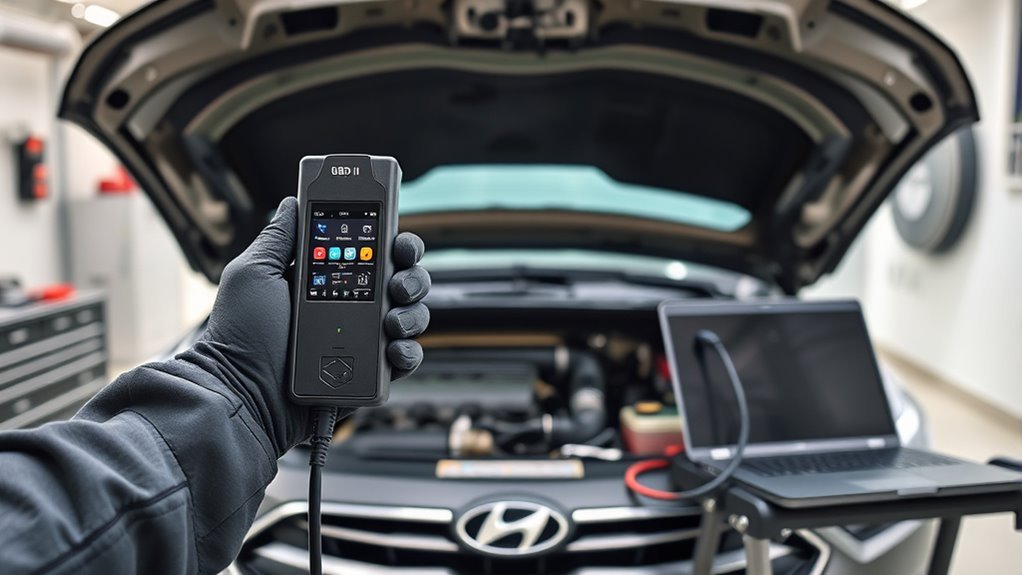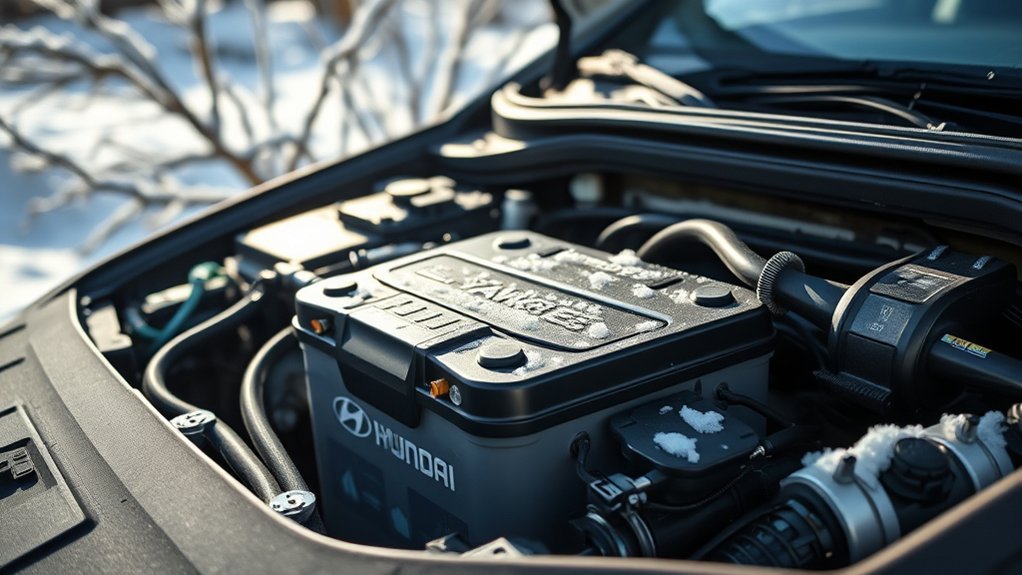
Cold weather is hard on a Hyundai Sonata battery because the battery has less available power at the same time the engine needs more effort to crank. A little pre-winter testing, cleaner terminals, smarter parking, and a battery maintainer for low-mileage driving can prevent most cold-morning no-starts.
Quick Answer
To keep your Sonata battery healthy in winter, test it before the first hard freeze, keep the resting voltage near a full charge, clean corrosion from the terminals, drive long enough to recharge after short trips, and use a smart battery maintainer if the car sits for more than a week.
Key Takeaways
- Have the battery and charging system tested before winter, especially if the battery is three years old or older.
- Cold Cranking Amps (CCA) matter in freezing weather, but the replacement battery should still match your Sonata’s required specification.
- Corrosion, loose clamps, dim lights, slow cranking, or repeated jump-starts mean the battery needs attention now.
- Use a smart maintainer for storage or infrequent driving; short winter trips often do not fully recharge the battery.
- Never jump-start or charge a frozen, cracked, swollen, leaking, or rotten-egg-smelling battery.
At a Glance
| Time Required | 10–20 minutes for a basic check; 30–60 minutes if you need a professional battery and charging-system test |
| Difficulty | Easy for inspection and maintainer use; moderate if cleaning terminals; professional help recommended for load testing or battery replacement |
| Tools Needed | Gloves, eye protection, flashlight, digital multimeter, battery terminal brush, baking soda/water mix, smart battery maintainer, and your Sonata owner’s manual |
| Cost | Often free for basic inspection; about $15–$40 for cleaning supplies; roughly $30–$100+ for a smart maintainer; battery replacement cost varies by model year and battery type |
Why Winter Is Tough on Your Sonata Battery
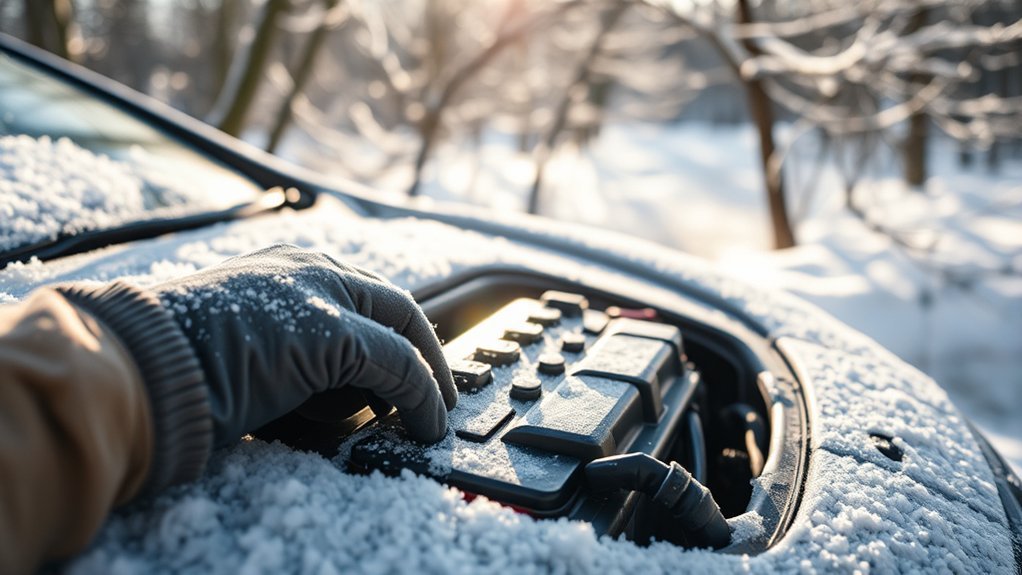
Winter creates a double problem for your Sonata. First, low temperatures slow the chemical reactions inside a 12-volt lead-acid battery, so it cannot deliver as much starting power. Second, cold engine oil makes the engine harder to turn over, so the starter asks for more power right when the battery has less to give.
AAA Oregon/Idaho reports that a car battery can lose about 35% of its strength at 32°F and about 60% at 0°F, while a cold engine may need up to twice the normal current to start. That is why a battery that seemed fine in October can fail during the first deep freeze.
A weak battery usually does not fail because winter is “mysterious.” It fails because cold weather exposes low charge, age, corrosion, or poor starting reserve.
Battery age matters too. A typical car battery often lasts about three to five years, depending on climate, driving habits, battery quality, and how often it is allowed to sit partially discharged. If your Sonata battery is older than three years, treat winter testing as a must-do maintenance step, not an optional extra.
How to Identify Battery Struggles in Cold Weather
Cold-weather battery problems usually show up before the car completely refuses to start. Watch for slow cranking, dim lights, repeated jump-starts, and electrical accessories acting strangely. These symptoms can point to a weak battery, but they can also come from corroded terminals, loose connections, an aging starter, or a charging-system problem.
Slow Engine Cranking
Slow engine cranking is one of the most common winter battery warnings. If the starter sounds labored, the engine takes longer than usual to fire, or the Sonata starts fine after a long drive but struggles after sitting overnight, the battery may not be holding enough charge.
If this happens more than once, test the battery’s Cold Cranking Amps (CCA). CCA measures how well a battery can deliver starting power in cold conditions. Interstate Batteries recommends matching the correct CCA to the vehicle manufacturer’s requirements, engine size, and climate rather than choosing a random “bigger” battery.
Flickering Dashboard Lights
Flickering dashboard lights, dim headlights, a weak horn, infotainment resets, or heated seats that behave oddly can all appear when voltage drops during startup. These signs do not automatically prove the battery is bad, but they do tell you the battery, terminals, alternator, and charging system should be checked.
- Dashboard warning lights appear during start-up.
- Interior lights dim sharply when you turn the key or press the Start button.
- The car needs frequent jump-starts.
- Accessories work inconsistently in cold weather.
- Battery terminals show white, blue, or green corrosion.
Note: A modern Sonata may use battery-management electronics, AGM battery technology, or remote jump points depending on model year and trim. Always check the owner’s manual before disconnecting, charging, or replacing the battery.
Key Testing Tips for Your Battery Before Winter
Do these checks before the first hard freeze, then repeat them if your Sonata begins cranking slowly.
- Check battery age. If it is three years old or older, schedule a professional battery and charging-system test before winter.
- Measure resting voltage. With the engine off and the car rested, a healthy fully charged 12-volt battery is usually around 12.6 volts or slightly higher. A reading near or below 12.4 volts means the battery is partially charged and should be charged or tested before cold weather gets worse.
- Test CCA under load. Resting voltage alone cannot prove a battery is strong. A parts store, repair shop, or dealer can perform a load test and compare the battery’s available CCA to the correct Sonata specification.
- Inspect the terminals. Look for loose clamps, cracked cables, frayed wiring, or white, blue, or green corrosion around the posts.
- Check the hold-down bracket. A battery that can move around may suffer vibration damage and poor cable contact.
- Look for danger signs. A swollen case, crack, leak, rotten-egg odor, or frozen battery means you should stop and call a professional.
Warning: Batteries can contain sulfuric acid and explosive hydrogen gas. Wear eye protection and gloves, keep sparks and flames away, and do not attempt to charge or jump-start a frozen, leaking, cracked, or swollen battery.
[Products Worth Considering]

The NOCO GENIUS10 is an all-in-one smart charger, maintainer, trickle charger, and desulfator designed to keep 6V and 12V batteries performing at their best. It supports lead-acid and lithium batteries, charges deeply discharged batteries, and uses temperature compensation for safer, more accurate charging in changing conditions. Compact and versatile, it is ideal for a wide range of vehicles and long-term battery maintenance.

This battery terminal care kit helps clean corroded connections and protect them from future buildup, making routine maintenance simpler for cars, marine batteries, and RVs. It includes two dual-ended terminal cleaners plus color-coded anti-corrosion fiber washers for positive and negative terminals. The kit is compatible with top post and side terminal batteries and is designed for quick, practical cleaning and protection.

This battery terminal maintenance kit helps remove corrosion fast and adds ongoing protection for cleaner, more reliable electrical connections. The dual-ended brushes restore terminal contact surfaces while the color-coded anti-corrosion washers help prevent future buildup on cars, trucks, RVs, boats, and other 6V or 12V batteries.
Best Practices for Maintaining Your Battery in Winter
Winter battery care is mostly about keeping the battery charged, clean, secure, and correctly tested. The steps below work for most Sonata owners, but your model year and battery type should guide any charging or replacement decision.
Regular Battery Inspections
Inspect the battery area at least once a month in winter. Check that the terminals are tight, the battery case is clean and dry, and the hold-down hardware is secure. Corrosion can interfere with the electrical connection and make the battery work harder to start the engine.
If you see corrosion, Interstate Batteries recommends safety glasses, gloves, good airflow, and a baking-soda-and-water mixture to neutralize and clean the buildup. Disconnecting a modern vehicle battery can affect electronics, so use a memory saver when appropriate or have a professional clean the terminals if you are unsure.
- Wear gloves and eye protection before touching the battery area.
- Brush loose corrosion away carefully.
- Use baking soda and water on the corroded area, keeping the mixture out of battery openings.
- Dry the top of the battery thoroughly.
- Reconnect securely and consider a terminal protectant after cleaning.
Utilize Battery Maintainers
A smart battery maintainer helps when your Sonata sits for long periods, makes mostly short trips, or is parked outdoors in cold weather. Unlike an old manual charger, a modern maintainer monitors the battery and shifts to maintenance mode so it does not keep forcing current into a full battery.
Connect the maintainer if the Sonata will sit for more than a week, especially during a cold snap. Use a maintainer that matches the battery type listed in your manual or on the battery label. Many newer vehicles use AGM batteries, and they need a charger or maintainer with the correct AGM setting.
Pro Tip: If your daily drive is only a few minutes, schedule one longer drive each week or use a smart maintainer. Short winter trips often use more energy for starting, lights, defrosters, and heated seats than the alternator can quickly replace.
Parking Tips to Shield Your Sonata Battery
Where you park can make a noticeable difference in winter starting. A garage is best because it protects the Sonata from cold wind, ice, and snow. If you do not have a garage, choose a wind-sheltered spot, keep the hood area clear of snow and ice, and park close enough to a safe power source if you plan to use a maintainer.
- Park in a garage or carport when possible.
- Use a quality car cover only if it is safe for your weather and parking situation.
- Clear snow from around the hood and windshield cowl so moisture does not refreeze around the engine bay.
- Keep the battery fully charged before a forecasted cold snap.
- Consider an engine block heater if you live where severe cold is common and your vehicle setup supports it.
Shade is helpful for reducing heat stress in summer, but in winter the bigger goal is protection from wind, ice, snow, and long periods of deep cold.
How Battery Maintainers Help Your Sonata in Winter
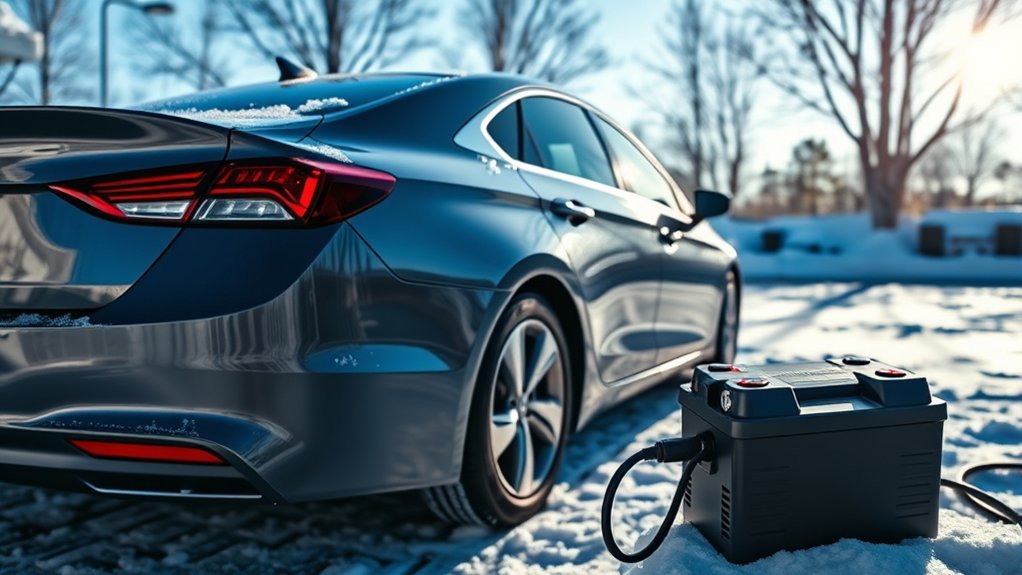
A smart battery maintainer keeps the battery near full charge during inactivity. This matters because a partially discharged battery is more likely to struggle in cold weather, and a deeply discharged battery is more vulnerable to freezing damage.
Use a maintainer when the Sonata will sit for more than a week, when you drive only short local trips, or when the battery is older but still tests good. Connect it according to the maintainer instructions and your Sonata manual. If your model uses remote charging or jump points, follow those points rather than guessing at hidden terminals.
[Products Worth Considering]

Battery Tender Plus is a smart 12V charger and maintainer designed to keep automotive, motorcycle, and powersports batteries in optimal condition. Its adaptive 4-step charging program helps extend battery life while the quick disconnect harness and included cables make setup simple and convenient. The two-color LED status indicator provides clear charging feedback for easy, worry-free maintenance.

The OXILAM jump starter delivers powerful emergency starting performance for gas engines and up to 12L diesel engines, helping revive dead batteries in seconds. It also doubles as a portable power bank and LED flashlight, with USB and Type-C ports for convenient device charging. Built with multiple safety protections, a clear LED display, and a rugged portable design, it is a reliable roadside companion for cars, trucks, motorcycles, and more.

The NOCO GENIUS5 is an all-in-one battery charging and maintenance solution for 6V and 12V lead-acid and lithium batteries. It features temperature compensation, dead-battery recovery, desulfation, and safe long-term maintenance to help extend battery life and performance. Compact and versatile, it works with a wide range of vehicles and comes with mounting accessories and a warranty.
Is It Time to Replace Your Sonata Battery This Winter?
Replace the battery before winter if testing shows weak CCA, if it cannot hold a charge, or if it repeatedly needs a jump-start. A recharge may help a good battery that was simply drained, but it will not restore a worn-out battery.
Strong replacement signs include:
- Battery age over three to five years plus slow starts.
- Repeated jump-starts within a short period.
- CCA test result below the correct specification.
- Resting voltage drops again soon after charging.
- Swollen, cracked, leaking, or foul-smelling battery case.
- Corrosion that returns quickly after cleaning.
When replacing the battery, match the correct group size, terminal layout, reserve capacity, and CCA rating for your Sonata’s year, engine, and trim. If your Sonata uses an AGM battery, replace it with the correct AGM type unless the manufacturer or a qualified technician says otherwise.
[Products Worth Considering]

This smart automatic battery charger and maintainer helps keep automotive batteries charged and ready by delivering a full charge before switching to float mode for long-term maintenance. It supports 6V and 12V batteries with broad compatibility for lead-acid, AGM, gel, and lithium types, while built-in safety features like reverse polarity detection and spark-proof connection help ensure reliable use. Compact construction, included connection cables, and indicator lights make it a convenient choice for cars, SUVs, trucks, and storage maintenance.

TOPDC heavy duty jumper cables are designed to help drivers get a dependable boost when a battery runs down. The 20-foot length offers added reach for cars, SUVs, and trucks, while insulated serrated clamps provide a secure connection to top-post and side-terminal batteries. A flexible PVC jacket, carry bag, and included guide make these cables practical for everyday emergency use.

The CRAFTSMAN CMXCESM258 is a versatile 4-in-1 battery charger and maintainer designed to charge, maintain, test, and restore a wide range of vehicle batteries. Its microprocessor-controlled operation, auto voltage detection, reverse hook-up protection, and multi-stage charging help support reliable starts and extend battery life for cars, motorcycles, ATVs, trucks, SUVs, and boats.
Preparing for Unexpected Battery Issues on the Road
Even a well-maintained battery can fail during a harsh cold snap. Keep a winter emergency kit in the Sonata and know the safe order of steps before you need it.
| Action | Frequency |
|---|---|
| Test resting battery voltage | Monthly in winter |
| Inspect terminals and cables | Monthly in winter |
| Clean corrosion safely | As soon as buildup appears |
| Professional battery and charging-system test | Before winter, after year three, or after any repeated no-start |
If the Sonata will not start, turn off lights, climate controls, heated seats, and accessories before trying again. If you use a jump pack, follow the jump pack instructions and the Hyundai manual. Hyundai’s jump-start guidance warns that jump-starting can be dangerous if done incorrectly, and it says not to jump-start a frozen battery. After a successful jump-start, Hyundai advises keeping the vehicle operating for at least 30 minutes; a completely discharged battery may require up to 60 minutes of runtime to fully recharge.
When you replace an old battery, recycle it properly instead of throwing it away. Lead-acid batteries contain materials that should be handled through proper collection and recycling systems. The U.S. Environmental Protection Agency documents lead-acid battery collection as part of responsible battery management.
Frequently Asked Questions
How do I keep my car battery from dying in winter?
Keep it fully charged, clean the terminals, avoid repeated short trips, test the battery before severe cold, and use a smart maintainer if the car sits for more than a week. If the battery is older than three years, have the battery and charging system tested before winter.
How long should a Hyundai Sonata battery last?
A Hyundai Sonata battery commonly lasts about three to five years, but heat, cold, short trips, corrosion, deep discharges, and driving habits can shorten that range. Test it annually once it reaches three years old.
How do you maintain a car battery in the winter?
Check resting voltage, schedule a load or CCA test, clean corrosion, tighten terminals, park in a garage when possible, and use a battery maintainer for long storage or low-mileage driving. Keep accessories off when the engine is not running.
Is 12.4 volts bad for a Sonata battery?
A resting reading around 12.4 volts is not automatically a dead battery, but it usually means the battery is not fully charged. In winter, charge and test it instead of waiting for a no-start.
Can I jump-start my Sonata if the battery is frozen?
No. Do not jump-start or charge a frozen battery. A frozen battery can crack or explode. If the case looks swollen, cracked, leaking, or frozen, call roadside assistance or a qualified technician.
Conclusion
Keeping your Sonata battery healthy in winter comes down to preparation. Test it before the first hard freeze, keep it charged, clean the terminals, reduce short-trip drain, and use a maintainer if the car sits. Most importantly, take slow cranking, dim lights, and repeated jump-starts seriously. Fixing a weak battery in your driveway is far easier than dealing with a dead Sonata on a freezing morning.
Sources
- Hyundai Owner’s Manual — Jump Starting — battery safety, frozen-battery warning, jump-start sequence, and post-jump runtime guidance.
- AAA Northeast — Maintaining Your Car Battery in the Winter — winter battery output, starting demand, battery lifespan, and cold-weather testing guidance.
- AAA Oregon/Idaho — Winter Battery Preparation — cold-weather capacity loss, signs of battery weakness, and replacement timing.
- Interstate Batteries — Understanding CCA in Car Batteries — Cold Cranking Amps, winter starting power, and choosing the correct specification.
- Interstate Batteries — How to Clean Car Battery Corrosion Safely — corrosion cleaning steps, PPE, ventilation, and baking soda/water guidance.
- U.S. EPA — Lead-Acid Battery Collection Case Study — responsible lead-acid battery collection and recycling context.