If your Toyota 4Runner’s 4LO light is blinking, the safest first move is to stop on a level surface, keep the brake applied, and follow the exact high-range-to-low-range procedure in your model-year owner’s manual. A flashing 4LO indicator usually means the requested transfer-case shift has not finished. A buzzer, rapid flashing, or other warning lights can point to a different problem that needs diagnosis.
Quick Answer
A blinking 4LO light usually means your 4Runner has not completed a shift into or out of low-range 4WD. Stop completely, hold the brake, select Neutral when your owner’s manual requires it, and operate the 4WD control again. If the indicator flashes rapidly, keeps returning, or appears with other warning lights, scan the vehicle and have the 4WD system diagnosed.
Key Takeaways
- Do not assume every 4Runner uses the same 4WD controls. Part-time and full-time systems have different selector positions.
- A steady transition flash is different from a flash with a buzzer or a rapidly flashing warning.
- Use a Toyota-capable scan tool if the problem persists; a basic engine-code reader may not access the 4WD control system.
- A transmission range/park-neutral switch can cause problems on some vehicles, but it should be tested rather than replaced by guesswork.
- Do not disassemble or force a transfer-case actuator without the correct repair procedure.
At a Glance
| Time Required | 5–15 minutes for operating checks; longer if scanning or electrical diagnosis is required |
| Difficulty | Easy for basic operating checks; moderate to advanced for electrical or actuator diagnosis |
| Tools Needed | Owner’s manual, flashlight, and preferably a Toyota-capable full-system scan tool; a multimeter is useful for qualified electrical diagnosis |
| Cost | $0 for basic checks; professional diagnosis and repair cost depends on the failed component, model year, labor rate, and warranty coverage |
Warning: Do not operate the 4WD selector while the wheels are spinning or slipping. If the 4LO/4WD indicators flash rapidly, the vehicle loses drive, the transfer shift will not complete, or the truck appears to be between transfer ranges, keep the brake applied and have the vehicle inspected. On newer systems, Toyota warns that an incomplete transfer shift can leave the drivetrain temporarily disengaged, so do not rely only on the transmission’s Park position until the transfer shift has completed.
How to Stop a Blinking 4LO Light Now
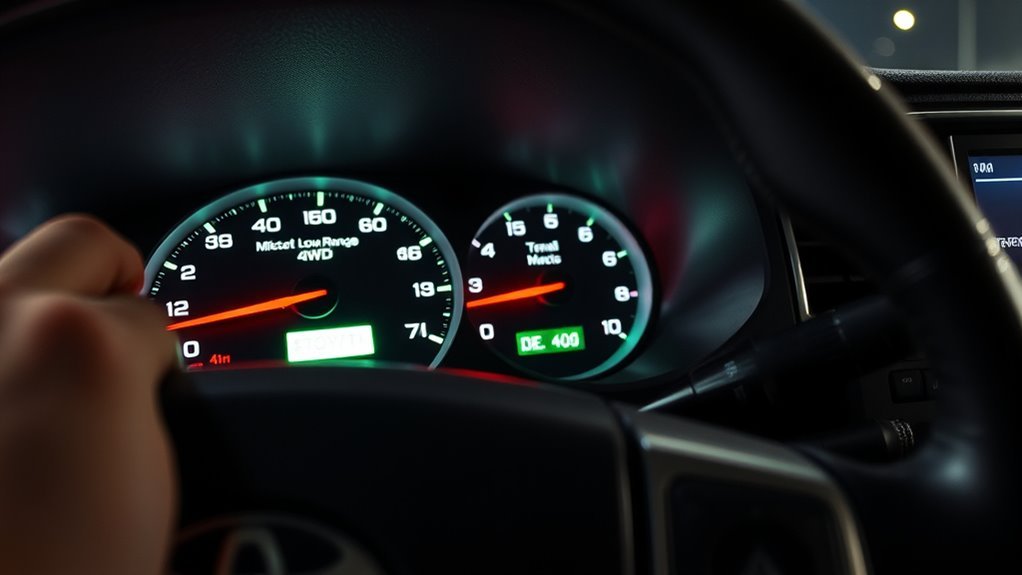
Start with the operating procedure before assuming that a part has failed. The correct sequence varies by model year and 4WD system, but many Toyota 4Runners require the vehicle to be completely stopped before shifting between high and low transfer ranges.
- Stop on a safe, level surface. Keep your foot firmly on the brake.
- Check the exact selector positions in your owner’s manual. Do not assume your vehicle has 2WD. Toyota has sold 4Runners with both part-time and full-time 4WD.
- For systems that require Neutral, shift the transmission to N. Then operate the 4WD control to the desired high- or low-range position.
- Wait for the transfer shift to finish. Do not immediately move the transmission selector if the 4LO indicator is still transitioning.
- If the light continues to flash, retry the procedure specified by Toyota for your model year. Do not repeatedly force or rapidly cycle the selector.
- If the indicator flashes rapidly or the problem keeps returning, stop troubleshooting by trial and error. Scan the relevant control modules and diagnose the fault.
For example, Toyota’s fifth-generation instructions state that if the low-speed four-wheel-drive indicator continues to flash, the transfer mode may not have successfully changed and the 4WD control should be operated again. If the flashing is accompanied by a buzzer, the vehicle may not be fully stopped and/or the transmission may not be in Neutral.
Older 4Runners can use a different procedure. Toyota’s 2003 4Runner manual, for example, instructs the driver to move forward or backward a short distance if the 4LO indicator continues blinking, then stop completely, shift securely into Neutral, and operate the transfer control again. That older instruction should not be treated as a universal procedure for later models.
Pro Tip: Before touching parts, look up your exact model year in Toyota’s owner-manual database. A procedure written for a 2003–2009 4Runner, a 2010–2024 model, and a 2025–2026 model may use different transfer controls even though all can display a 4LO warning.
[Products Worth Considering]

The TOPDON VeriDiag X800 BT is a wireless bidirectional automotive diagnostic scanner designed for full-system troubleshooting, active testing, and advanced service resets. It supports broad vehicle coverage, live data viewing, AutoVIN identification, and lifetime free updates to help DIYers and professionals diagnose issues faster and with greater confidence.

The GEARWRENCH Professional Bi-Directional Diagnostic Scan Tool brings OE-level diagnostics to your smart device for efficient troubleshooting and repair. It offers full bi-directional control, live actuation testing, live data mapping, freeze frame capture, and support for 23 reset and relearn functions to help technicians complete complex jobs with confidence. With software updates included, broad vehicle coverage, and a two-year warranty, it delivers powerful shop-ready capability without ongoing fees.

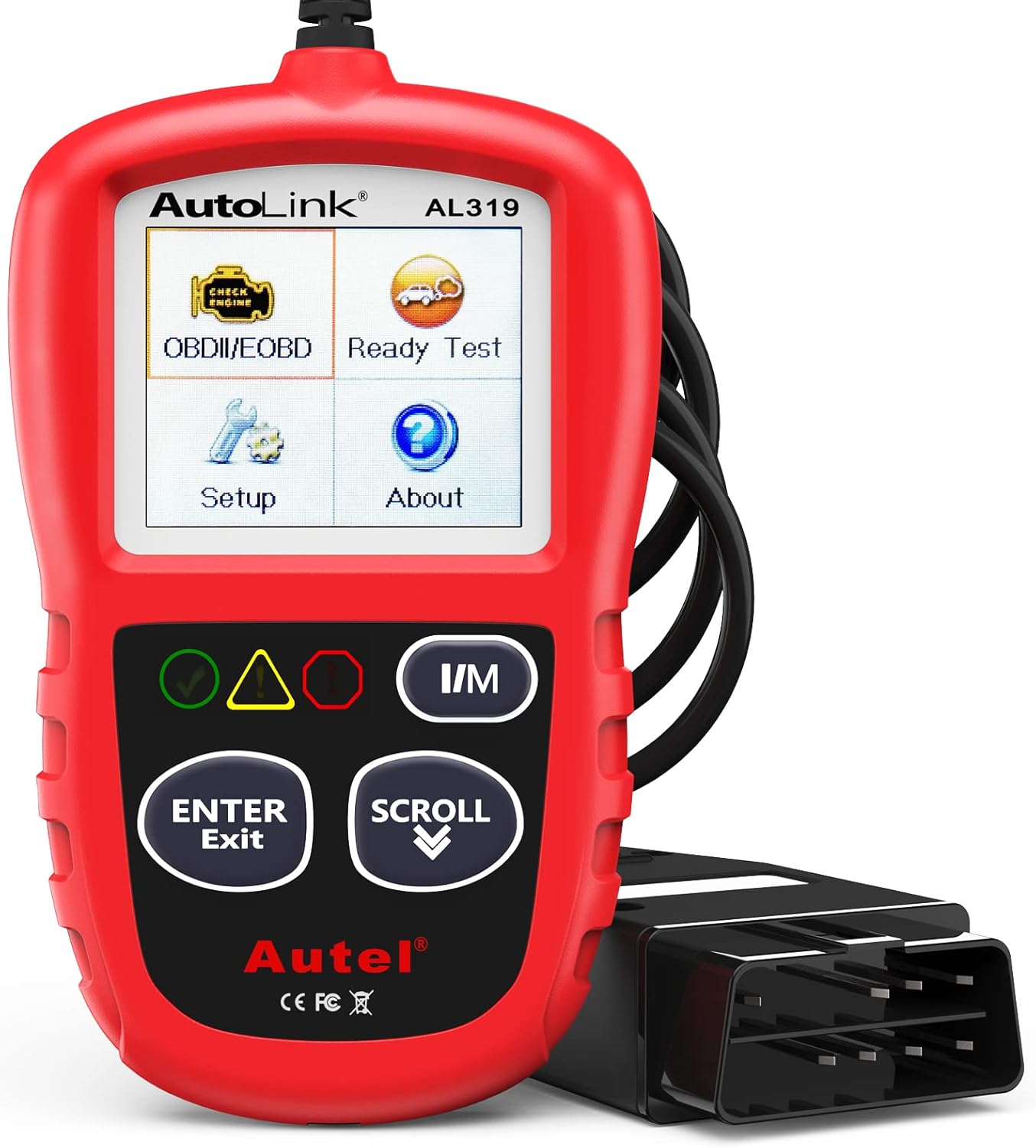
The OBDMATE OM901 is a handheld car diagnostic scanner designed to read and clear fault codes across ABS, SRS, engine, and transmission systems. It also offers full OBD2 functions like live data, freeze frame, I/M readiness, VIN retrieval, O2 sensor testing, EVAP testing, and onboard monitoring, making it useful for quick troubleshooting and emissions checks. With a large screen, battery voltage monitoring, DLC pin testing, and a protective carrying case, it is a practical tool for DIY drivers and professionals alike.
Part-Time vs. Full-Time 4WD Matters
A reset instruction that says “go back to 2WD” is not appropriate for every 4Runner. Toyota’s current 4Runner lineup includes both part-time 4WD and full-time 4WD configurations. Full-time systems use different transfer positions and may not offer the same 2WD selection as part-time systems.
Use the labels on your selector and the procedure in the manual rather than translating instructions from a different trim or generation.
What a Blinking 4LO Light Means
A blinking 4LO lamp is best understood as a transfer-status warning, not proof that one particular component has failed. The 4WD controller commands a transfer change and monitors switches or sensors to confirm that the requested mechanical position has been reached. If the expected status is not confirmed, the indicator can continue flashing.
| Pattern | What It Can Mean | What to Do |
|---|---|---|
| Flashes while you are requesting 4LO | Transfer shift is still in progress or has not completed | Keep the vehicle stopped and follow the model-specific procedure |
| Continues flashing after the shift attempt | Requested transfer mode was not successfully confirmed | Retry only as directed in the owner’s manual; diagnose if it persists |
| Flashing plus a buzzer | On applicable Toyota systems, the transmission may not be in Neutral and/or the vehicle may still be moving | Stop completely, hold the brake, select Neutral if required, and retry |
| Rapid flashing | Possible four-wheel-drive system malfunction | Have the vehicle inspected promptly |
| 4LO starts flashing unexpectedly while driving | Do not assume the truck is actually in low range; a control, sensor, electrical, engine, brake, or 4WD fault may be involved | Drive only as far as safely necessary, scan all relevant modules, and diagnose the warning |
Cold Weather and 4LO Engagement
Cold weather can matter, but it should be described precisely. On current Toyota systems, low transmission-fluid temperature can temporarily prevent a shift between high and low transfer ranges immediately after startup. When this happens, follow the message shown in the multi-information display and retry after the drivetrain warms.
Do not use cold weather as a reason to ignore a warning that persists after the vehicle is warm or returns repeatedly.
Diagnose a Blinking 4LO Light
If the correct operating procedure does not clear the warning, diagnose the system before replacing parts. The transfer controller depends on multiple electrical inputs and position confirmations, so a flashing lamp can result from several different faults.
[Products Worth Considering]

The BLCKTEC 440 Bluetooth OBD2 scanner helps drivers and DIY mechanics quickly read and clear trouble codes, monitor live data, and check emissions readiness with confidence. Its color display, graphing capabilities, and battery and charging system testing make it a versatile diagnostic tool for OBD-compliant vehicles. Designed for plug-and-play convenience, it runs directly from your vehicle and includes support for report sharing and ongoing updates.

Turn your iPhone, Android device, or Windows PC into a professional-grade diagnostic scan tool with this Bluetooth OBD2 adapter. It is designed for broad vehicle compatibility and supports popular apps for deeper diagnostics, live data, and code clearing. Built-in protections and firmware updates help keep your vehicle and scanner safe while delivering reliable performance.

The FOXWELL NT301 is a plug-and-play OBD2 code reader designed to help drivers and home mechanics diagnose check engine light issues with ease. It reads fault codes, clears emissions-related warnings, displays live sensor data in graph form, and shows I/M readiness so you can quickly check vehicle status before an emissions test. With broad compatibility across many OBD2 vehicles and a clear color screen, it offers a practical, user-friendly way to monitor and troubleshoot engine performance.
1. Scan the Relevant Modules
A basic emissions-only OBD-II reader may show engine or transmission codes but may not access every Toyota 4WD or chassis controller. Use a Toyota-capable full-system scan tool or Toyota’s factory-level Techstream diagnostic system when possible.
Record every code before clearing anything. Also record whether the 4LO lamp was flashing slowly or rapidly, whether a buzzer was sounding, which transfer position was requested, outside temperature, and any other warning lights.
Note: A code stored in the engine or transmission controller may be related to the warning even when the transfer case itself is mechanically healthy. Scan first instead of assuming the actuator has failed.
2. Check Park/Neutral or Transmission-Range Clues
The park/neutral or transmission-range signal is part of the 4WD control logic on documented Toyota systems. That means a faulty range sensor, its adjustment, its connector, or its wiring can interfere with a low-range request on some 4Runners.
Suspect this circuit more strongly when the 4LO warning appears with symptoms such as an incorrect or missing PRNDL/gear-position display, a transmission-range-related DTC, or a 4WD system that will not recognize Neutral correctly.
Do not replace the switch solely because the 4LO lamp is blinking. Confirm the code, live data and circuit operation first.
3. Inspect Transfer Actuator and Position Inputs
Depending on the generation, Toyota 4WD systems use transfer shift motors, detection or limit switches, a 4WD control ECU, and other drivetrain inputs to confirm the requested mode. A sticking actuator, failed position input, damaged connector, corrosion, wiring fault, or internal transfer problem can prevent confirmation of the selected range.
Look for damaged harnesses, loose connectors, water or corrosion around accessible electrical connections, and evidence of prior transfer-case work. If the actuator has previously been removed or opened, incorrect timing or assembly can also complicate diagnosis.
4. Treat Other Warning Lights as Diagnostic Clues
If the check-engine, ABS, slip, VSC or other warning lamps are illuminated with the 4LO warning, scan those systems too. Do not assume the ABS and 4LO systems are simply “disagreeing.” Multiple warning lamps can be triggered by a shared input, a separate stored fault, or a system that has disabled another function as a consequence of the original problem.
DIY: Safe Fixes and Checks Before Replacing Parts
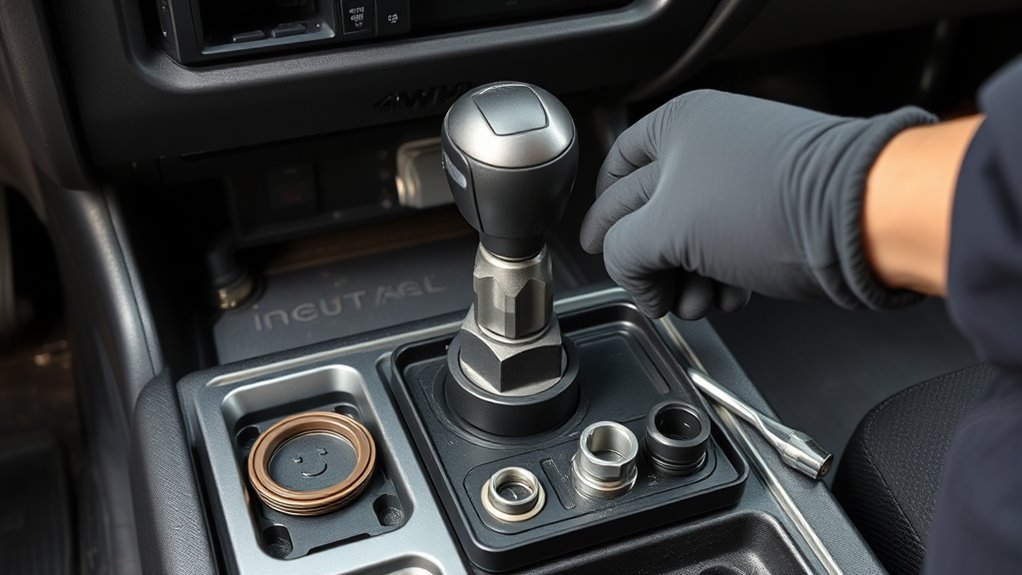
The best DIY approach is to separate safe operating checks from component repair. Do the simple checks first:
- Confirm the correct high-to-low shift procedure for your exact model year.
- Make sure the vehicle is completely stopped when the procedure requires it.
- Make sure Neutral is actually recognized when Neutral is required.
- Let the drivetrain warm if the vehicle is very cold and the manual or dash message instructs you to retry after warming.
- Inspect accessible 4WD-related connectors and wiring for obvious damage, looseness or corrosion.
- Read and record all diagnostic codes with a capable scanner.
- Use those findings to test the suspected circuit or component before ordering parts.
If testing points to the transmission range/park-neutral switch, transfer actuator, position switch, wiring or another component, use the Toyota repair procedure for that exact model and production date. Part numbers and removal methods vary, so an online price or another owner’s repair should not be treated as proof that the same part fits your truck.
Warning: Avoid opening, forcing, powering externally, loosening or retiming a transfer-case actuator unless you have the correct factory procedure and understand the actuator’s indexed position. Toyota service information warns that improper transfer-actuator procedures can damage the unit.
[Products Worth Considering]

FOXWELL NT201 is an easy-to-use OBD2 scanner designed to help drivers quickly read and clear check engine codes, view live engine data, and check emissions readiness. Its color screen, one-key I/M readiness test, and broad compatibility with most gasoline vehicles since 1996 make it a practical tool for everyday diagnostics and maintenance. With plug-and-play operation and lifetime free updates, it offers a simple way to understand vehicle issues without expensive shop visits.

Veepeak OBDCheck BLE is a Bluetooth LE OBD-II scanner designed to read and clear check engine codes, view live sensor data, and access freeze frame and readiness information through a compatible third-party app. It works with most 1996+ gas vehicles and many light trucks for standard diagnostics, with broader features depending on the app and vehicle support. This compact adapter is built for iOS and Android users who want a simple wireless way to monitor vehicle health without WiFi pairing.

This automotive test light combines a bright LED voltage display with quick polarity indication for fast, accurate circuit checks in a wide range of vehicle systems. It helps diagnose battery, charging, lighting, and fuse issues with a sharp stainless probe, long spring wire, and easy-to-use alligator clip for efficient troubleshooting.
What Should You Not Replace First?
Do not automatically start with a neutral safety switch, actuator, control module or transfer case. A blinking indicator is evidence that the controller has not confirmed the expected state; it does not identify which component is responsible.
A proper diagnosis compares the requested transfer mode with scan data and electrical/mechanical position inputs. That approach is usually faster and cheaper than replacing several plausible parts.
When to See a Dealer or 4WD Specialist
Get professional diagnosis if the 4LO light flashes rapidly, returns repeatedly, starts flashing without a transfer-range request, appears with multiple warning lamps, or the vehicle will not reliably shift into or out of low range.
Also seek help if you notice loss of drive, abnormal transfer-case noise, a vehicle that can roll unexpectedly, damaged wiring you cannot safely repair, or a transfer actuator that needs internal service.
A Toyota dealer or qualified independent shop with Toyota-enhanced diagnostic equipment can read the relevant control modules, check commanded versus actual transfer status, inspect the park/neutral input, test wiring and actuator circuits, and follow model-specific repair information.
Repair Cost and Warranty Expectations
There is no reliable universal price for a blinking 4LO repair. A loose connector or incorrect shift procedure costs far less to correct than an actuator, wiring-harness repair or internal transfer-case problem. Ask for a written diagnosis, the stored DTCs, the failed test result, parts required and labor estimate before authorizing major work.
Warranty coverage also depends on the model year, mileage, in-service date, failed component and the warranty or service contract that applies to your vehicle. Toyota’s current U.S. warranty information lists 36-month/36,000-mile basic coverage and 60-month/60,000-mile powertrain coverage for new vehicles, subject to the applicable Warranty & Maintenance Guide. Older 4Runners may be outside those periods unless another warranty applies.
Before paying for a safety-related repair, you can also enter the VIN in the NHTSA recall lookup to check for any unrepaired safety recall associated with that specific vehicle.
How to Reduce Future 4WD Engagement Problems
Exercise the 4WD system as directed in your owner’s manual instead of leaving it unused for long periods. Toyota manuals for applicable part-time systems specify driving in four-wheel drive for at least 10 miles (16 km) each month to help lubricate front-drive components.
Only use part-time 4WD on surfaces appropriate for that mode. Keep transfer-case service up to date, investigate fluid leaks, and repair damaged electrical connectors before corrosion becomes severe.
A blinking 4LO light tells you the requested drivetrain state has not been confirmed. Diagnose the missing confirmation instead of guessing which part failed.
Frequently Asked Questions
Why is my 4LO flashing and beeping?
On applicable Toyota 4Runner systems, a continuing 4LO flash with a buzzer can mean the vehicle is still moving and/or the transmission is not in Neutral when Neutral is required for the transfer shift. Stop completely, hold the brake, select Neutral and retry according to your owner’s manual. If it still flashes, diagnose the system.
Why are my 4LO and ABS or traction-control lights on together?
Multiple warning lamps do not identify one specific failed part. Scan the engine, transmission, ABS/skid-control and 4WD systems with a capable diagnostic tool. A shared input or one stored fault can affect more than one system, but each code must be diagnosed rather than assuming the warning lights are simply conflicting with each other.
What does a flashing 4LO light mean on a Toyota 4Runner?
It normally means the requested low-range transfer shift has not yet been confirmed or completed. A persistent or rapidly flashing indicator can also signal a 4WD-system problem. The exact meaning depends on the flash pattern and model year.
Can I drive with the 4LO light blinking?
Do not continue normal driving until you know the transfer case is fully in a usable range. If the truck drives normally after a failed shift request, move only as needed to a safe location and diagnose the warning. If the indicators flash rapidly, drive is lost, abnormal noises occur, or the transfer remains between ranges, arrange professional service or towing.
Can cold weather make the 4LO light blink?
Yes, on current Toyota systems a very cold drivetrain can temporarily prevent a high-to-low transfer shift because the transmission fluid is cold. Follow any dashboard message and retry after warming. Persistent flashing after the vehicle is warm still needs diagnosis.
Is the neutral safety switch always the cause of a blinking 4LO light?
No. The park/neutral or transmission-range signal is one input used by documented Toyota 4WD systems, so it can cause trouble when faulty. Transfer actuator inputs, wiring, connectors, other control-system faults or mechanical problems can produce a similar warning. Test the circuit and check codes before replacing the switch.
Will a normal OBD-II scanner diagnose a 4LO problem?
Not always. A basic reader may retrieve powertrain codes but may not communicate with Toyota’s 4WD or chassis controllers. A Toyota-enhanced full-system scan tool or Toyota Techstream provides much more useful information for this fault.
Conclusion
A blinking 4LO light on a Toyota 4Runner usually means the transfer system has not confirmed the requested low-range change, but the correct response depends on the model year, 4WD configuration and warning pattern. Start with the Toyota-specified shift procedure, pay attention to any buzzer or rapid flashing, and use a capable scan tool if the warning persists.
A park/neutral sensor, actuator, detection switch, connector or wiring fault may be involved, but none should be replaced without evidence. If the transfer shift will not complete, the warning flashes rapidly, other system warnings appear, or the vehicle loses reliable drive, have the 4WD system professionally diagnosed.
Sources
- Toyota 2026 4Runner Manuals & Warranties — current Toyota owner-manual and warranty information.
- Toyota 2023 4Runner Owner’s Manual — low-speed 4WD indicator operation and warning behavior.
- Toyota 2003 4Runner Owner’s Manual — older-model 4LO shifting and retry procedure.
- Toyota Techstream Lite — Toyota factory-level diagnostic capability through the vehicle diagnostic connector.
- NHTSA Recall Lookup — VIN-specific unrepaired safety recall search.