Last updated: July 31, 2026
To reduce your home AC load in extreme heat, set the thermostat as high as you can comfortably and safely tolerate, run fans in occupied rooms, block direct sunlight, check the air filter, keep supply and return vents clear, and avoid producing extra indoor heat during the hottest hours. Open windows only when the outdoor air is cooler than the indoor air and local air quality is acceptable. If the system blows warm air, forms ice, repeatedly trips a breaker, leaks near electrical components, or makes severe mechanical noises, arrange professional service instead of assuming the heat alone is responsible.
Extreme Heat Safety
Energy savings come second to health. Children, older adults, pregnant people, and anyone with a medical condition may need reliable cooling at a lower temperature. Do not rely on an electric fan in a closed room when the indoor temperature is in the mid-90s Fahrenheit or higher. Move to a safely cooled location if the home becomes dangerously hot. See the EPA extreme-heat and indoor-air guidance.
Quick Checklist for Reducing Home AC Load
| Action | What to Do | Why It Helps |
|---|---|---|
| Thermostat | Use the highest comfortable and safe setting. Around 78°F is a common efficiency starting point, not a requirement. | A smaller difference between indoor and outdoor temperature reduces cooling demand. |
| Fans | Run ceiling or portable fans in occupied rooms and turn them off when people leave. | Moving air improves personal comfort without lowering the room temperature. |
| Sunlight | Close blinds, shades, or curtains on sun-facing windows before peak afternoon heat. | Blocking solar heat before the room warms reduces the load on the AC. |
| Air filter | Inspect the filter monthly during heavy use and clean or replace it as its manufacturer directs. | A loaded filter can restrict airflow and extend cooling cycles. |
| Outdoor unit | Remove loose leaves and debris while preserving the clearance required by the equipment manufacturer. | Clear condenser airflow helps the system release indoor heat outdoors. |
| Indoor heat | Delay oven use, clothes drying, and other heat-producing tasks until cooler hours when practical. | The AC has less newly generated heat to remove. |
[Products Worth Considering]

This 8-piece automotive pliers set is designed to make fuel line, hose clamp, connector, and trim removal jobs easier and faster. The ergonomic, spring-loaded tools help you work comfortably in tight engine spaces while the included storage pouch keeps every piece organized and ready to use. Built from durable steel with anti-slip handles, it is a practical solution for car, truck, motorcycle, and SUV maintenance.

This plug-and-play AC button switch is designed to replace a faulty factory air conditioner switch in compatible Toyota vehicles. It installs easily without tools and is made to match the original part for a seamless fit and reliable operation. Built from durable ABS plastic, it offers a dependable replacement backed by warranty support and fitment guidance.

This windshield sun shade umbrella helps block intense sunlight, reduce cabin heat, and protect your vehicle’s interior from UV damage. Its upgraded multi-layer design and reinforced structure are built for durability, while the foldable umbrella style makes setup and storage fast and convenient for everyday summer driving.
How Extreme Heat Affects AC Efficiency
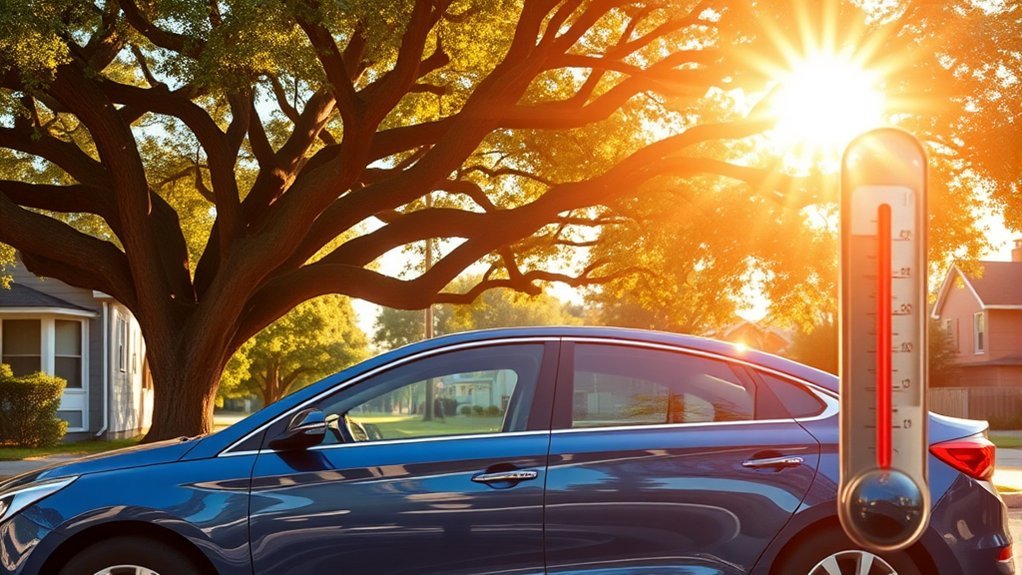
Extreme heat raises your home’s cooling load, but there is no universal outdoor temperature at which every AC begins to fail. Heat enters through the roof, walls, windows, doors, air leaks, ductwork, appliances, lights, and occupants. At the same time, the outdoor coil must release indoor heat into hotter outside air. These conditions can make cooling cycles much longer.
Long runtime during the hottest part of the day can be normal when the system produces cool air and keeps the indoor temperature stable or lowers it slowly. It is more concerning when airflow becomes weak, vent air turns warm, the indoor temperature rises steadily, ice appears, or the equipment repeatedly starts and stops after only a few minutes.
Residential equipment should be selected for the building and local outdoor design conditions. The recognized process is an ACCA Manual J residential load calculation. It accounts for factors such as climate, insulation, windows, orientation, air leakage, occupancy, duct conditions, and internal heat sources.
An oversized air conditioner is not automatically better. Equipment that is too large may cool the air quickly but cycle off before removing enough moisture. Frequent short cycling can reduce comfort, waste energy, increase wear, and leave the home feeling humid. A system that is too small may run continuously and still fail to meet the calculated cooling load.
What Thermostat Setting Reduces AC Load in Extreme Heat?
Set the thermostat as high as you can comfortably and safely tolerate. ENERGY STAR identifies 78°F as a typical efficiency-oriented setting for room air conditioners, but it is not a mandatory number for every home. Humidity, health needs, sleep, pets, equipment type, and building conditions can justify a different setting.
Lowering the thermostat far below the current room temperature does not make a standard single-stage air conditioner cool faster. The system normally operates at its available cooling capacity whenever the thermostat calls for cooling. A much lower setting mainly causes it to run longer while attempting to reach the new target.
A programmable or smart thermostat can raise the setting when the home is unoccupied and return it to a comfortable level before occupants arrive. Avoid an away setting that could create unsafe heat or humidity for people, pets, plants, medications, electronics, or the building.
There is also no universal rule that an AC thermostat must never be set below 72°F. Lower settings normally increase cooling demand, but the correct setting depends on the occupants and conditions. Focus on safe comfort instead of an arbitrary minimum.
Here’s a practical reference table:
| Situation | Suggested Approach | Notes |
|---|---|---|
| Home and awake | Highest comfortable and safe setting | Around 78°F is a common starting point, not a requirement. |
| Away | Raise the setting by a reasonable amount | Account for people, pets, humidity, and heat-sensitive belongings. |
| Sleeping | Use a safe setting that supports comfortable sleep | Fans and lighter bedding may improve comfort. |
| Avoid | Repeatedly lowering the setting to cool faster | It usually extends runtime rather than increasing cooling speed. |
[Products Worth Considering]

This AC Schrader valve tool is designed for leak-free removal and replacement of valve cores in automotive air conditioning systems filled with refrigerant. It helps prevent refrigerant loss, secures the valve core during installation or removal, and simplifies servicing with included guidance. Built from brass and aluminum alloy and stored in a protective EVA case, it offers a practical solution for both high and low pressure valve core work.

Protect your Toyota RAV4 interior from intense sunlight with this custom-fit windshield sun shade designed for model years 2019 through 2025. The mirror cut-out helps ensure a secure, precise fit while blocking harmful UV rays and reducing heat buildup to keep your cabin more comfortable. Made for repeated use, it folds easily for convenient storage when not in use.

This custom-fit windshield sun shade is designed for Toyota RAV4 models to help block sunlight, reduce interior heat, and protect your dash and seats from UV damage. Its double-layer reflective construction improves insulation so your cabin stays cooler and your air conditioning can work more efficiently. Foldable and easy to install, it offers a practical way to make parked and travel time more comfortable.
How to Use Fans and Ventilation Without Increasing AC Load
Fans improve comfort by moving air across people, but they do not lower the room’s actual temperature. Run ceiling or portable fans where people are present, and turn them off when the room is empty. This may allow you to use a slightly higher thermostat setting without feeling less comfortable.
Many ceiling fans should rotate counterclockwise when viewed from below during summer, but designs vary. Check the fan manufacturer’s instructions and choose the direction that creates a downward breeze.
Keep windows and exterior doors closed while the AC is running if outdoor air is hotter or more humid than indoor air. Open windows for cross-ventilation only when outdoor air is cooler and air quality is acceptable. Keep them closed during wildfire smoke, high pollution, blowing dust, or extreme humidity.
Use kitchen and bathroom exhaust fans while cooking or bathing, then turn them off after excess heat or moisture clears. An exhaust fan removes indoor air, which means replacement air must enter elsewhere. Leaving it on longer than needed can pull hot outdoor air through leaks and increase the cooling load.
[Products Worth Considering]

This custom-fit windshield sun shade is designed for Toyota Rav4 models from 2019 to 2026, helping protect the interior from intense sunlight and heat. It reduces cabin temperatures, blocks damaging UV rays, and helps preserve dashboards, seats, and steering wheels from fading and cracking. The foldable design makes it easy to install, remove, and store, while also adding privacy when your vehicle is parked.

JOGOAUTO H10285 is a replacement cabin air filter designed to help keep vehicle interiors fresher and cleaner by filtering airborne particles and reducing odors. Its dual-filtration design uses activated carbon and melt blown fabric for improved cabin air quality, and it is made to fit a wide range of compatible Toyota, Subaru, Lexus, and other supported models. Installation is straightforward, making it a convenient maintenance part for regular filter replacement.

This comprehensive master disconnect tool kit is designed to remove fuel lines, A/C lines, transmission cooler lines, and other quick-connect fittings on a wide range of vehicles. It includes multiple color-coded tools and sizes to help speed up repairs, reduce line damage, and improve workflow for DIY users and professional technicians alike. The set comes organized in a portable case for easy storage, transport, and quick access.
Why You Shouldn’t Skip AC Maintenance
Maintenance cannot make an undersized or failing system exceed its capacity, but it can prevent avoidable airflow and heat-transfer problems. Dirty filters, blocked coils, weak blower components, condensate problems, incorrect refrigerant charge, and electrical faults become especially noticeable during sustained heat.
Inspect the air filter every month during heavy cooling use. Clean or replace it according to the filter and equipment manufacturer’s directions. A fixed one-to-three-month schedule does not suit every home because pets, smoke, construction dust, filter type, and system runtime affect how quickly a filter loads.
Schedule a professional pre-season cooling check before the busiest part of summer. The ENERGY STAR HVAC maintenance checklist includes thermostat checks, electrical measurements, moving-part inspection, condensate drainage, controls, coils, airflow, and refrigerant charge.
Refrigerant circulates in a sealed system and is not normally consumed like fuel. If a system repeatedly needs refrigerant, the underlying cause should be diagnosed instead of treating each addition as routine maintenance.
Common AC Issues to Watch for During Heat Waves
Long runtime alone does not prove that an air conditioner is failing. Pay attention to the temperature and strength of the air at the vents, the indoor temperature trend, ice, moisture, electrical behavior, odors, and new noises.
Unusual Noises and Performance
A brief click when the system starts or stops can be normal. Grinding, metal scraping, loud buzzing, repeated hard clicking, or banging can indicate a fan, motor, relay, capacitor, compressor, or loose-component problem. Turn the system off and seek service if you smell burning, see smoke, hear severe mechanical contact, or experience repeated breaker trips.
A hissing sound does not confirm a refrigerant leak by itself. Possible sources include airflow through a small duct opening, normal refrigerant movement, an expansion device, or a sealed-system fault. Refrigerant diagnosis requires proper instruments and trained handling.
Weak airflow may result from a loaded filter, blocked return grille, closed register, blower problem, dirty indoor coil, damaged duct, or excessive duct leakage. Check only the accessible items that do not require opening electrical or refrigerant components.
Why Is the AC Blowing Warm Air During Extreme Heat?
Warm air from the vents is not automatically caused by outdoor heat. Possible causes include an incorrect thermostat mode, a tripped outdoor-unit circuit, a dirty filter, a failed outdoor fan, a frozen indoor coil, a control problem, low refrigerant caused by a leak, or a compressor fault.
First confirm that the thermostat is set to cooling and that supply registers and return grilles are open and unobstructed. Inspect the filter and look at the outdoor unit from a safe distance. If the outdoor unit does not run, the vents stay warm, ice appears, or the breaker trips again after one reset, arrange professional service.
Do not repeatedly reset a tripping breaker. A breaker may trip because of an electrical or mechanical fault, and repeated resets can create additional risk or damage.
Simple Home Insulation Strategies for Better Cooling
Reducing heat gain can lower the demand placed on the AC before the system has to remove that heat. Start with low-cost measures, then use a home energy assessment to prioritize larger improvements.
- Seal obvious gaps: Use appropriate weatherstripping or caulk around operable windows and exterior doors. Larger attic, plumbing, wiring, and framing penetrations may require a more complete air-sealing plan.
- Inspect ducts in unconditioned spaces: The U.S. Department of Energy reports that typical duct systems can lose about 20% to 30% of moving air through leaks, holes, and poor connections. Ducts in hot attics and crawl spaces also benefit from appropriate insulation.
- Control window heat gain: Close interior shades before direct sun reaches the glass. Exterior awnings, shutters, solar screens, or suitable window products may block more heat because they intercept sunlight before it enters.
- Improve attic air sealing and insulation: Air sealing limits uncontrolled hot-air movement, while insulation slows heat transfer through the ceiling. The appropriate materials and insulation level depend on climate and the existing assembly.
For major work, use the U.S. Department of Energy home-upgrade guidance or a qualified home energy assessment. DOE reports that heat gain and loss through windows account for approximately 25% to 30% of residential heating and cooling energy use, but the benefit of any individual upgrade depends on the house.
Heat-Reducing Techniques for Your Living Space
Preventing indoor heat buildup is usually easier than removing it after the home becomes hot. Close sun-facing window coverings before peak heat, switch off unnecessary lights and electronics, and delay heat-producing activities until cooler hours when practical.
A microwave, pressure cooker, toaster oven, or no-cook meal generally adds less heat to the room than operating a full-size oven for an extended period. Run clothes dryers and dishwashers during cooler hours when household needs and local utility rules allow.
Keep furniture, rugs, curtains, and stored items away from supply registers and return grilles. Closing multiple registers can increase pressure in some duct systems and may reduce overall airflow, so avoid using register closure as a substitute for professional balancing or zoning.
Shade the outdoor condenser only in a way that maintains the manufacturer’s required airflow and service clearance. Do not wrap the operating unit, place a low solid cover directly above it, or surround it with dense vegetation. Remove loose debris without bending coil fins or opening the cabinet.
Troubleshooting Common AC Problems During Heat Waves
Start with controls, accessible airflow checks, and indoor heat reduction. Do not remove electrical panels, bypass safety switches, open refrigerant lines, add refrigerant based on symptoms alone, or keep resetting a breaker that trips repeatedly.
Identifying Common Issues
- Confirm the thermostat: Select cooling mode, use a reasonable setting, and replace thermostat batteries if required.
- Inspect the filter: Look for heavy dust loading, damage, or incorrect installation. Use the correct size and airflow direction.
- Check registers and returns: Open supply registers and move furniture or fabric away from return grilles.
- Observe the outdoor unit: Look for loose debris, a stopped fan, unusual noise, or ice without opening the cabinet.
- Reduce heat gain: Close sun-facing coverings and stop avoidable heat-producing appliances.
- Watch the temperature trend: Note whether the home is stable, cooling slowly, or continuing to heat up.
Warm air, weak airflow, ice, and repeated short cycling are symptoms rather than final diagnoses. A technician may need to measure airflow, static pressure, electrical values, refrigerant performance, coil condition, and duct leakage before identifying the actual cause.
When to Keep Monitoring and When to Call for Service
You can usually continue monitoring the system when it runs steadily, produces cool air, and keeps the indoor temperature stable or moving downward. Recovery may take time after doors have been open, the thermostat has been raised for hours, or the home has accumulated substantial afternoon heat.
Turn the system off and arrange service if you see ice on the indoor coil or refrigerant line, smell burning, hear severe grinding or scraping, find water near electrical components, or experience repeated breaker trips. Seek prompt help if the vents remain warm or the indoor temperature continues rising despite the basic checks.
If the home becomes dangerously hot, move vulnerable occupants to a reliably cooled location instead of waiting for the equipment to recover or for a repair appointment.
Frequently Asked Questions
How Do You Help an AC Unit in Extreme Heat?
Use the highest comfortable and safe thermostat setting, run fans in occupied rooms, close sun-facing window coverings, inspect the filter, keep registers and return grilles clear, remove loose debris around the outdoor unit, and reduce heat from cooking and appliances. Arrange service if cooling output falls, ice forms, a breaker trips, or the system develops severe noises or electrical odors.
What Is the $5,000 Rule for AC?
The HVAC $5,000 rule is an informal repair-versus-replacement screening tool. Multiply the system’s age in years by the quoted repair cost. A result above $5,000 suggests that replacement deserves consideration, while a lower result may favor repair. It is not an official standard or a final decision. Warranty coverage, equipment condition, repair history, efficiency, installation quality, and written replacement estimates also matter.
Does Lowering the Thermostat Make the House Cool Faster?
Usually not. A standard single-stage air conditioner operates at its available cooling capacity whenever it is running. Setting the thermostat much lower normally extends runtime instead of increasing cooling speed. Variable-capacity systems can adjust their output, but an extreme setpoint still cannot correct restricted airflow, excessive heat gain, incorrect sizing, or a mechanical fault.
Is It Normal for AC to Struggle in Extreme Heat?
Longer runtime can be normal during a heat wave, especially during the hottest afternoon hours. It is less normal when airflow is weak, vent air is warm, the indoor temperature rises continuously, ice forms, humidity becomes excessive, or the equipment repeatedly starts and stops after short cycles.
Should You Open Windows While the AC Is Running?
Keep windows closed when outdoor air is hotter, more humid, smoky, dusty, or polluted. Turn the AC off and open windows only when the outdoor air is cooler and local air quality is acceptable. Close the home again before outdoor conditions become hotter than the indoor space.
Can Fans Replace AC During Extreme Heat?
Fans move air and can make people feel cooler, but they do not lower the room temperature. The EPA advises against relying on electric fans in closed rooms when the indoor temperature is in the mid-90s Fahrenheit or higher. Use reliable cooling or move to a cooler location when indoor conditions become unsafe.
Conclusion
To reduce your home AC load in extreme heat, start by blocking sunlight, limiting indoor heat sources, checking the filter, keeping airflow paths clear, using fans in occupied rooms, and choosing a safe thermostat setting. Open windows only when outdoor conditions will actually cool the home.
Long runtime can be normal when the system produces cool air and keeps the indoor temperature stable. Warm vent air, weak airflow, ice, repeated breaker trips, burning odors, severe mechanical noises, or steadily rising indoor temperatures require further diagnosis. Complete the safe checks first, then call a qualified HVAC professional when the symptoms point beyond routine maintenance.