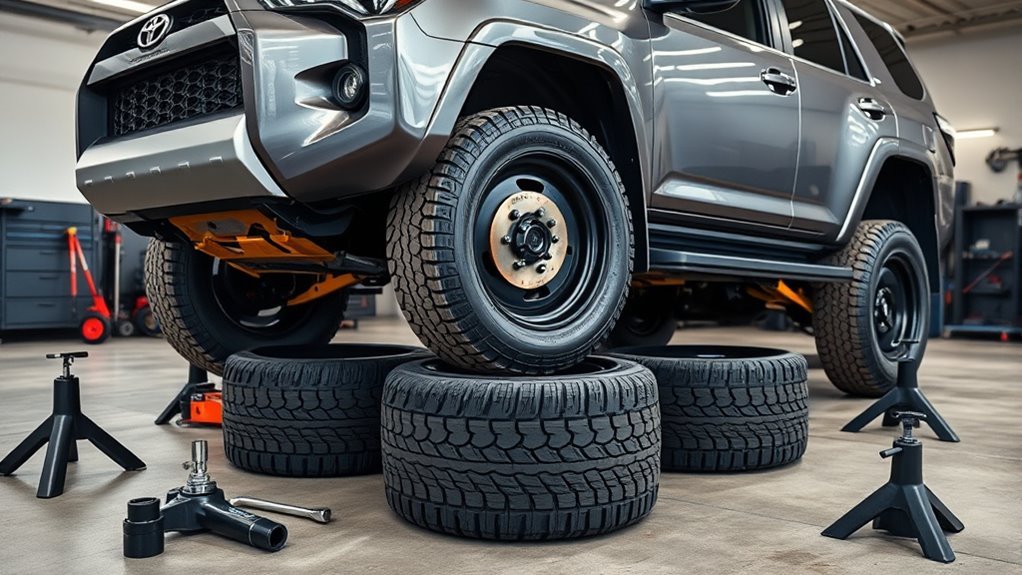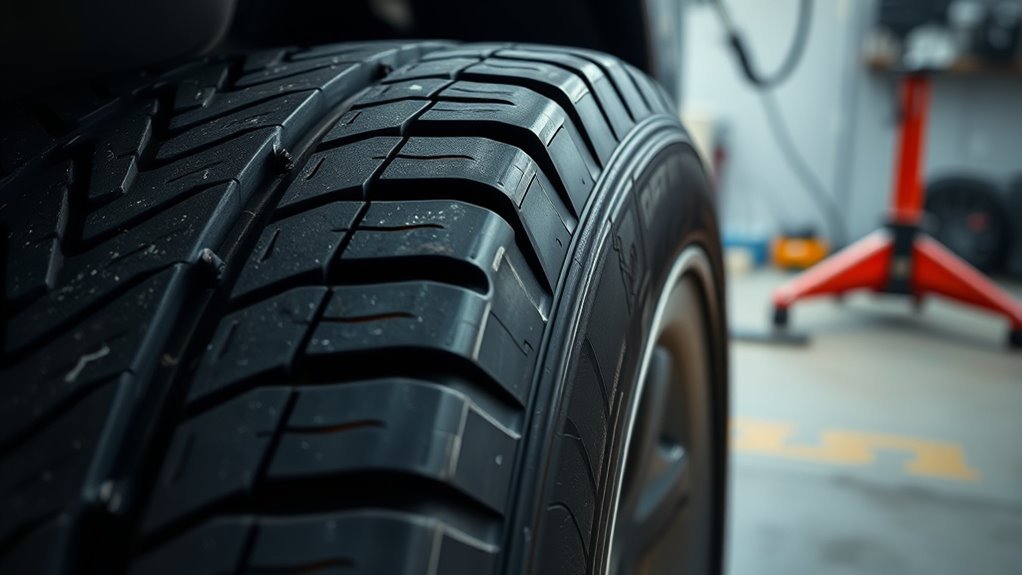
Reading 4Runner tire wear patterns can tell you whether the problem is pressure, alignment, wheel balance, suspension wear, or tire damage. Start with cold tire pressure and tread depth, then compare the center, both shoulders, and individual edges of each tire. If you see a bulge, exposed cords, deep cracking, or rapidly worsening vibration, stop treating it as routine wear and have the tire inspected.
Quick Answer
Center wear usually points to chronic over-inflation, wear on both shoulders to under-inflation, one-sided shoulder wear to alignment or worn parts, feathering to toe error, and cupping to balance or suspension problems. Check pressure cold, measure tread across the full width, and fix the cause before replacing tires.
Last checked: October 5, 2026. Dates and figures were verified against official sources.
Key Takeaways
- Use the driver-door placard or owner’s manual for cold pressure; do not use the tire sidewall’s maximum pressure as your target.
- Measure tread at the inner edge, center, and outer edge because a single reading can hide alignment wear.
- A balance problem often causes speed-related vibration, while alignment problems more often show as pulling, an off-center steering wheel, feathering, or one-sided wear.
- Rotation can even out normal position-related wear, but it will not cure bad alignment, worn suspension parts, or incorrect pressure.
Quick 4Runner Tire Inspection: 5 Steps
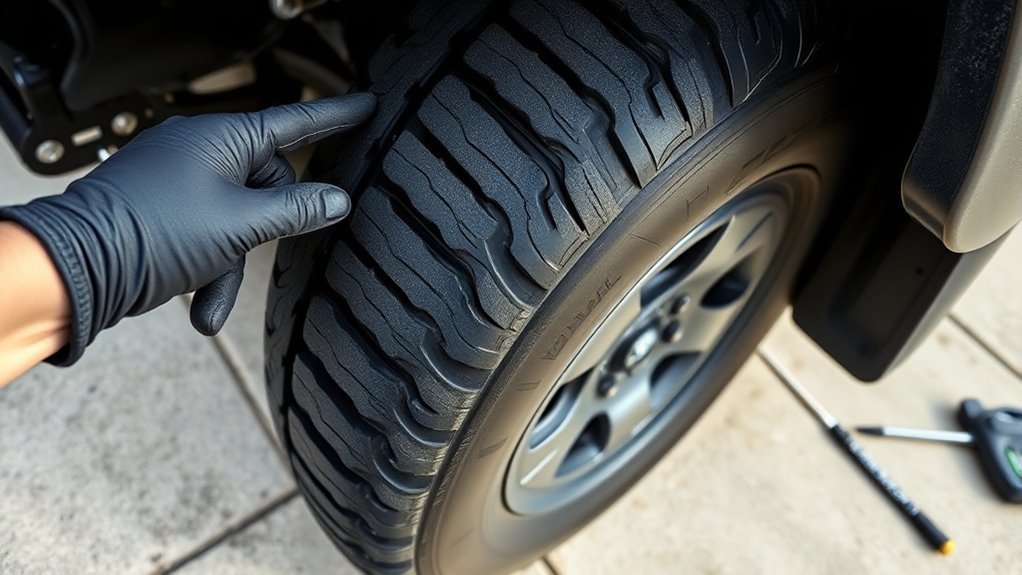
A useful inspection takes only a few basic checks, but the order matters. Begin with cold pressure, then inspect tread depth and wear shape before deciding whether the tire needs rotation, balancing, alignment, suspension work, or replacement.
- Check pressure when the tires are cold. NHTSA defines a cold tire as one that has not been driven for at least three hours. Use the pressure on the driver-door Tire and Loading Information label or in the owner’s manual, not the maximum molded on the tire sidewall. The NHTSA TireWise guidance also recommends checking pressure at least monthly.
- Measure tread in three places across each tire. Check the inner shoulder, center, and outer shoulder. Repeat at several points around the circumference so one local flat spot does not mislead you.
- Feel for feathering or scallops. A sawtooth feel across tread ribs often points to toe misalignment. Alternating high and low spots can indicate cupping from balance or suspension problems.
- Inspect both sidewalls. Look for bulges, cuts, deep cracks, missing chunks, exposed cords, or signs of impact damage.
- Compare all four tires. One tire wearing differently from the rest often points to a local alignment, wheel, bearing, or suspension issue rather than a pressure problem affecting the whole set.
| Wear pattern | Most likely causes | Best next check |
|---|---|---|
| Center worn faster | Chronic over-inflation | Cold pressure versus door placard |
| Both shoulders worn faster | Chronic under-inflation; severe loading can add heat and stress | Cold pressure and vehicle load |
| One shoulder worn | Camber or toe out of specification; worn steering or suspension parts | Alignment and suspension inspection |
| Feathered or sawtooth ribs | Toe misalignment | Alignment measurement |
| Cupped or scalloped patches | Wheel imbalance, worn shocks, or other suspension issues | Balance plus steering/suspension inspection |
These pattern-to-cause relationships are consistent with Michelin’s tire-wear guidance. Treat the pattern as a diagnostic clue, not proof of one failed part.
Measure Tread Depth: Penny, Ruler, and Bars
Tread depth tells you how much usable groove remains, but it also reveals whether a 4Runner is wearing a tire evenly. Measure several grooves across the tire rather than relying on one spot.
NHTSA says tires should be replaced when tread is worn to 2/32 inch, and built-in wear bars are designed to become flush with the tread at that point. The penny test is a quick check: insert a penny with Lincoln’s head upside down; if the top of his head remains visible, the tread is at or below the replacement threshold.
For wet-road driving, 2/32 inch is only the minimum replacement point, not a wet-grip target. Tire Rack wet-braking tests found substantially longer stopping distances as tread wore from new depth to 4/32 and then 2/32 inch. If heavy rain is common, consider replacement before the legal minimum.
A tread-depth gauge is more useful than a coin when wear is uneven. Record the inner, center, and outer readings for each tire and compare them at the next inspection.
Inner or Outer Shoulder Wear: Alignment Signs
Wear concentrated on only the inner or outer shoulder usually points toward alignment or worn steering and suspension parts. Camber changes how the tire leans, while toe changes whether the tires point slightly inward or outward as the vehicle moves.
Do not assume camber is the only cause. Toe can destroy one edge quickly, and loose tie rods, ball joints, bushings, wheel bearings, or impact damage can prevent an alignment from holding.
Check Tire Camber
You can screen for a camber-related problem by comparing tread depth from one shoulder to the other. A smooth, consistent loss on one edge is a reason to have camber and toe measured against Toyota specifications.
Visual lean alone is not a reliable home measurement because normal suspension geometry, road slope, cargo, and tire shape can fool the eye. If one shoulder is wearing faster, ask for an alignment printout rather than guessing from appearance.
Alignment Service Needed
Schedule an alignment check when the vehicle pulls on a level road, the steering wheel sits off-center, one shoulder wears rapidly, or feathering appears. Toyota explains that alignment is based on caster, camber, and toe, and that pothole or curb impacts can knock settings out of specification in its wheel-alignment guidance.
Have loose or damaged steering and suspension parts repaired before the final alignment. Otherwise, the settings may not stay within specification and the replacement tires can develop the same wear.
Center Tread Wear: Often a Sign of Over-Inflation
If the center ribs are consistently shallower than both shoulders, chronic over-inflation is a likely cause. Confirm it with a cold pressure reading before changing anything because tread design, wheel width, and driving use can affect appearance.
Check Recommended PSI
Use the cold pressure on the driver-door placard or the owner’s manual. The maximum PSI molded on the tire sidewall is not the normal inflation target for the vehicle.
- Let the 4Runner sit long enough for a cold reading.
- Check all installed tires with a reliable gauge.
- Adjust each tire to the vehicle specification for that tire position.
- Recheck pressure after major temperature changes and before long trips or heavy towing.
If a tire repeatedly loses pressure, inspect for a puncture, valve leak, wheel damage, or bead-sealing problem instead of simply adding air.
Inspect Center Tread
Compare the middle of the tread with both shoulders at several points around the tire. A true pressure-related pattern should be reasonably consistent, not limited to one isolated patch.
One localized flat or scalloped area is more likely to involve balance, impact damage, wheel runout, or suspension movement. That distinction matters because lowering pressure will not fix an imbalance or damaged component.
Adjust Air Regularly
Check pressure at least monthly and before long highway or off-road trips. Under-inflation increases heat, shoulder wear, and rolling resistance; over-inflation can concentrate wear toward the center and reduce the tire’s ability to absorb impacts.
After airing down for off-road use, return the tires to the proper road pressure before sustained pavement driving. Toyota notes that the available onboard compressor on newer 4Runners is intended to help return tires to proper PSI after off-roading.
Wear on Both Shoulders: Under-Inflation, Load, or Driving Style

When both shoulders wear faster than the center, chronic under-inflation is the classic cause. Low pressure lets the sidewalls flex more and shifts more work toward the edges of the tread.
Heavy loading can add heat and stress, especially if pressure is already low. Use the vehicle’s load limits and the placard pressure as your baseline rather than adding pressure by guesswork.
If only one shoulder is worn, return to the alignment section. If both shoulders are even but wear is rapid, also consider repeated hard cornering, severe off-road use, or a tire that is not well matched to the vehicle and wheel setup.
Cupping Patterns: Check Suspension and Shocks
Cupping looks like alternating high and low spots or shallow scoops around the tread. It often comes with a rhythmic hum, thump, or vibration that changes with road speed.
Common causes include wheel imbalance, weak shocks, worn suspension or steering parts, wheel damage, and sometimes incorrect pressure. Because more than one problem can create the same pattern, inspect the whole wheel-and-suspension system before replacing tires.
[Products Worth Considering]

This wheel alignment tool makes it easy to check and adjust toe-in and toe-out at home for better handling, stability, and more even tire wear. Designed for one-person use, it includes tape-measure slots for simple setup and accurate measurements without extra help. Its stainless steel construction and broad vehicle compatibility make it a practical addition to any DIY garage.

This smart tire tread depth gauge provides quick, accurate readings from 0 to 1 inch in 1/32-inch increments, helping drivers assess tire wear with confidence. Its color-coded display makes it easy to see tread condition at a glance, while the pocket clip adds convenient portability for garages, glove boxes, and on-the-go inspections. Designed for use on trucks, motorcycles, automobiles, and other passenger vehicles, it is a simple tool for safer tire maintenance.

This digital tire tread depth gauge helps you check tire wear quickly and accurately with fractional inch, decimal inch, and millimeter readouts. Its large LCD screen, zero reset function, and automatic shutoff make it easy to use for cars, motorcycles, SUVs, trucks, and pickups. Designed for clear readings and dependable measurement, it is a practical tool for routine tire safety checks.
Identifying Cupping Symptoms
Run your hand lightly over the tread while the vehicle is parked and the tire is safe to touch. You may feel repeated dips or raised patches that are easier to detect by hand than by sight.
- Compare the pattern around the full circumference.
- Note whether the steering wheel, seat, or floor vibrates at a particular speed.
- Check whether only one tire is affected or the pattern appears across an axle.
- Review recent pothole, curb, trail, or wheel-impact events.
A regular high-speed vibration points toward balance or wheel/tire runout, while repeated cupping after balancing raises suspicion of suspension or steering wear.
Diagnosing Suspension Components
Inspect shocks or struts for leakage, damaged mounts, and obvious physical damage. Have a technician check ball joints, tie rods, control-arm bushings, wheel bearings, and wheel runout if the tread continues to cup.
Do not rely on a simple driveway “bounce test” as proof that a shock is good or bad. Modern suspension diagnosis is more reliable when the wear pattern, road-test symptoms, component play, leakage, and balance results are considered together.
Repairing Shocks And Struts
Repair the cause before installing another set of tires. New tires placed on a 4Runner with weak damping, loose steering parts, or a badly imbalanced wheel can develop the same scalloped wear again.
- Confirm the worn or damaged component.
- Replace parts in axle pairs when the component manufacturer or Toyota procedure calls for it.
- Balance the wheel-and-tire assemblies after tire or wheel work.
- Check alignment after suspension repairs that can change wheel geometry.
Diagonal, Patchy, and Feathered Wear: Balance, Toe, and Rotation
Feathering is a sawtooth pattern across tread ribs and usually points to incorrect toe. Patchy or scalloped wear is more often tied to imbalance, wheel runout, suspension movement, or a combination of factors.
Rotation can spread normal position-related wear, but it cannot erase the mechanical cause. Diagnose pressure, balance, alignment, and worn parts first, then use rotation to keep the corrected set wearing evenly.
For 4Runner owners, follow the maintenance schedule for the exact model year. Toyota’s current 2026 4Runner manuals and Warranty & Maintenance Guide page provides the model-specific schedule; U.S. 4Runner maintenance schedules commonly place tire rotation at 5,000-mile or 6-month service points.
Sidewall Bulges, Chunking, and Cracked Rubber
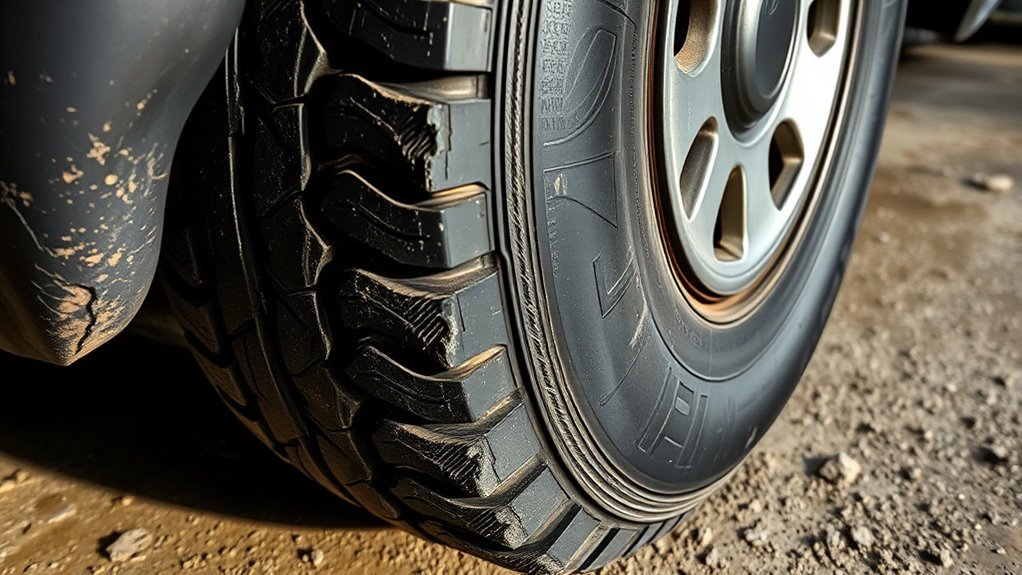
Sidewall damage is different from normal tread wear because it can indicate structural failure. A bulge usually means internal cord damage, while deep cracks, cuts, or exposed fabric can make the tire unsafe even if tread depth is still good.
Warning: Do not continue normal-speed driving on a tire with a sidewall bulge, exposed cords, a deep sidewall cut, or rapid pressure loss. Fit the spare if it is safe to do so, or arrange professional help.
- Bulges: Treat them as internal structural damage, often after an impact.
- Chunking: Missing pieces can come from sharp rocks, spinning tires, or severe off-road use. Inspect how deep the damage goes.
- Cracks: Fine surface weathering and deep structural cracking are not the same. Deep or spreading cracks need professional assessment.
- Repeated air loss: A tire that cannot hold pressure needs inspection even if the sidewall looks normal.
Do not patch a structural sidewall failure. Tire repairs are generally limited to repairable punctures in the tread area, subject to tire-industry repair limits.
Fixes for 4Runners: Inflate, Rotate, Align, Balance, or Replace
The correct fix depends on the wear pattern. Pressure problems need pressure correction, feathering needs an alignment check, vibration often needs balancing, and cupping may require both balance and suspension work.
| Finding | Primary action | Replace tire now? |
|---|---|---|
| Pressure slightly wrong, tread still even and healthy | Set cold pressure correctly and monitor | Usually no |
| Feathering or one-sided shoulder wear | Inspect steering/suspension, then align | Only if tread/damage limits require it |
| Vibration with patchy or cupped wear | Balance and inspect wheel/suspension | Depends on severity |
| 2/32 inch tread, wear bars flush, bulge, exposed cords, or unrepairable damage | Replace the tire | Yes |
When replacement is needed, match the size, load capacity, and other specifications required for the vehicle. The U.S. Tire Manufacturers Association replacement guidance recommends using tires that meet the vehicle or tire manufacturer’s specified size, load index, and speed-rating requirements.
4Runner Maintenance Plan: Pressure, Rotation, Suspension
A repeatable maintenance routine is more useful than waiting for visible damage. Track pressure, tread depth, rotation mileage, and alignment symptoms together so you can catch a developing pattern before it ruins a set of tires.
- Monthly: Check cold pressure and inspect tread and sidewalls.
- At scheduled service: Rotate tires according to your model-year Toyota maintenance guide and record tread depth by position.
- After a hard pothole, curb hit, or off-road impact: Recheck the tire, wheel, steering feel, and alignment symptoms.
- If vibration begins: Check balance, wheel damage, and tire condition before assuming alignment is the only cause.
- If wear returns after service: Inspect steering and suspension parts before another alignment or another set of tires.
Note: Lift kits, non-stock wheel offset, oversized tires, added armor, and frequent off-road use can change loads and alignment behavior. After wheel, tire, or suspension modifications, have fitment and alignment checked rather than assuming stock settings and wear patterns will behave the same.
Tire age matters even when tread looks good. Toyota’s 2026 4Runner owner’s manual says tires over six years old should be checked by a qualified technician. Tire makers can also set their own maximum service-life guidance; for example, Michelin recommends annual professional inspection after five years and replacement by ten years from manufacture.
[Products Worth Considering]

This color coded tire tread depth gauge helps you quickly check tire wear and monitor when replacement is needed. Calibrated in easy-to-read 32nds with clear red, yellow, and green ranges, it offers fast visual results for cars, trucks, motorcycles, and other passenger vehicles. The pocket clip makes it simple to keep on hand for routine maintenance and safety checks.

This LUMITECO tire tread depth gauge set makes it easy to monitor tire wear and maintain safer driving performance. The color-coded scale provides quick, easy-to-read measurements, while the compact pocket-size design and included clip make it convenient to keep in your vehicle or toolbox. Suitable for cars, trucks, motorcycles, and more, it offers a simple reusable way to check tread depth whenever needed.

This DIY toe alignment tool kit helps home mechanics quickly check and adjust front-end toe after suspension, steering, or tire service. Stainless steel toe plates and dual tape measures provide a simple, reliable reference for reducing uneven tire wear and improving straight-line tracking without needing a full alignment machine.
Frequently Asked Questions
How often should I replace 4Runner tires based on age, not tread depth?
There is no single age that makes every tire unsafe, but age must be considered along with tread and condition. Toyota says tires over six years old should be checked by a qualified technician, while some tire manufacturers recommend replacement by ten years from the manufacture date even if tread remains.
Can tire noise change between city and highway driving?
Yes. Cupping, aggressive all-terrain tread, and some balance problems become much easier to hear as road speed rises. A new rhythmic hum or thump that changes with speed deserves a tread, balance, and wheel inspection.
Do aftermarket wheels affect 4Runner tire wear patterns?
They can if wheel width, offset, tire size, or load rating changes the fitment or suspension geometry. Correct fitment does not automatically cause uneven wear, but major wheel or suspension changes are a good reason to recheck clearance and alignment.
Do winter tires use different wear indicators?
The basic safety checks are the same: inspect tread depth, pressure, damage, and uneven wear. Winter-tire tread designs and soft compounds can look different from highway tires, so follow the tire maker’s wear indicators and rotation instructions rather than assuming a different pattern is normal.
Can all-terrain tread look like a tire defect?
Aggressive all-terrain tread can create more noise and a rougher visual pattern than a highway tire, but true cupping, feathering, bulges, or one-sided tread loss should not be dismissed as normal. Compare tread depth around and across the tire and investigate any pattern that keeps worsening.
Conclusion
The fastest way to read 4Runner tire wear is to match the pattern to the likely system: pressure for center or both-shoulder wear, alignment for one-sided wear and feathering, and balance or suspension for cupping. Measure before you guess, repair the cause before replacing tires, and treat sidewall bulges, exposed cords, and minimum tread as replacement issues rather than maintenance items.
Sources
- NHTSA TireWise: cold-pressure checks, tread minimums, wear bars, rotation, balance, and alignment guidance.
- Michelin Wear Problems: common center, shoulder, cupping, and feathering wear patterns.
- Tire Rack Wet-Braking Test: wet braking at different tread depths.
- Toyota Wheel Alignment: caster, camber, toe, alignment symptoms, and impact-related misalignment.
- Toyota 2026 4Runner Manuals and Warranties: model-specific owner and maintenance guide access.
- U.S. Tire Manufacturers Association: replacement tire size, load index, speed rating, and multi-tire replacement guidance.
- Michelin When to Replace Tires: tire-age inspection and maximum service-life guidance.