
If your RAV4 slips or shifts harshly, start by scanning for transmission codes, checking warm ATF level/color, and doing a controlled road test to reproduce symptoms. Look for delayed 2→3 shifts, snatching, unexpected starts in higher gears, or intermittent MIL; these often point to solenoid, speed sensor, TCM/ECU, or fluid problems. DIY drain-and-fill, filter change, and solenoid/valve-body cleaning can help, but persistent faults may need reprogramming or component replacement — continue for detailed diagnostics and repair steps.
Recognize RAV4 Transmission Slipping: 7 Key Symptoms

If your RAV4 starts hesitating between gears or feels like it “snatches” when you accelerate or decelerate, you’re likely experiencing transmission slipping—often first noticed as delayed shifts from 2nd to 3rd, especially on cold morning starts. You’ll see seven clear symptoms: delayed shift timing, harsh or snatching engagement during acceleration/deceleration, unexpected starts in higher gears (occasionally 3rd), intermittent MIL illumination, inconsistent gear engagement feel, rough or erratic shift patterns suggesting TCM involvement, and degradation from overdue ATF service. Treat these as objective clues for transmission diagnostics rather than annoyances to tolerate. You can’t ignore a dashboard lamp or inconsistent engagement without risking further damage. Regular ATF changes at 30k–40k miles reduce wear and blunt slipping onset. Diagnose decisively: document symptom conditions (temperature, load, RPM) and prioritize electronic and fluid checks. That disciplined approach frees you from repeated failures and moves you toward durable repair and confident driving.
Quick Tests: Scan Codes, Fluid Checks & Road‑Test Steps
Begin with a full OBD-II scan; transmission-related codes will direct your next steps and narrow whether the issue is electrical, hydraulic, or mechanical. Use reliable diagnostic tools to read and log codes, then compare freeze-frame data to your observed driving patterns. Don’t guess—let codes steer you.
Start with a full OBD-II scan—let codes and freeze-frame data guide your transmission diagnosis, not guesses.
- Check fluid level with the engine warm and running (if factory allows). Note color, smell, and clarity; dark or burned fluid needs attention.
- Perform a controlled road test: low-speed shifts, highway upshifts, deceleration downshifts, and load changes. Record delayed, hard, or slipping shifts.
- Re-scan after the road test to catch intermittent faults and pending codes triggered by real driving patterns.
- If issues persist despite clean fluid and no persistent codes, plan targeted component tests rather than broad replacements.
You’re reclaiming control: systematic scans, precise fluid checks, and disciplined road tests let you isolate the fault and choose repair actions that liberate you from guesswork.
Common Causes: Solenoids, ECU/TCM, Sensors, and Fluid
When shifting problems show no obvious mechanical damage, focus on the transmission’s control and hydraulic subsystems—solenoids, the TCM/ECU, speed sensors, and the ATF—because faults there produce most RAV4 driveability complaints. Faulty solenoids, especially Solenoid 3, cause slipping or harsh shifts; you’ll often need solenoid cleaning or replacement to restore proper modulation. The ECU/TCM can fail to command correct shift timing; ECU programming or replacement may be required, and that repair can be expensive. Speed sensors that read inaccurately disrupt gear engagement and create delayed or erratic shifts; test sensor signals during road checks. Low, dirty, or incompatible ATF amplifies these issues—stick to Toyota WS or equivalent (Valvoline MaxLife recommended) and observe 30k–40k mile service intervals. Prioritize diagnostics: scan codes, monitor solenoid activation, verify sensor frequencies, and confirm fluid condition. Addressing control and hydraulic causes first frees you from repeat failures and lets you reclaim reliable, responsive shifting.
DIY Fixes: Drain/Fill, Filter, Solenoid, and Valve‑Body Cleaning
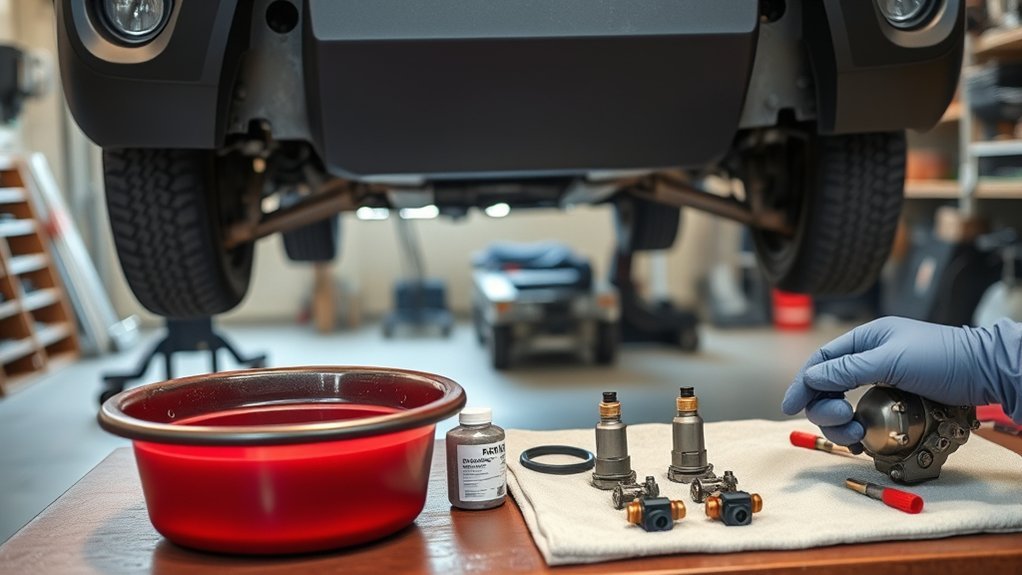
You’ll start by draining and filling the transmission every 30k–40k miles to maintain fluid quality and level, which helps prevent slipping and harsh shifts. While the pan is off, replace the filter and inspect solenoids—clean or replace Solenoid 3 if it’s causing harsh gear changes. If shifting problems persist, access the valve body for low-pressure cleaning to remove deposits without dislodging debris that could worsen performance.
Drain And Fill
Drain and fill the transmission every 30,000–40,000 miles to prevent slipping and harsh shifts, and replace the filter during the service to maintain flow and reduce contamination. You’ll follow a clear maintenance schedule and verify fluid compatibility before topping up; using Toyota WS or Valvoline MaxLife preserves calibrations and prevents damage. Drain, inspect magnet for debris, replace filter, and refill to the correct level. Check for leaks and test drive to confirm shift quality.
- Prepare tools, drain pan, and correct fluid type.
- Remove pan, inspect magnet and gasket; install new filter.
- Refill to spec, monitor level hot and cold per manual.
- Test drive under load; recheck level and leak points.
Clean Solenoids And Valve-Body
Although solenoids and the valve body sit behind the pan, you can access and clean them during a drain-and-fill service to tackle harsh shifts and erratic engagement. You’ll drop the pan, replace the filter, and inspect the valve body for debris and sludge that impede fluid passages. Perform solenoid cleaning with solvent and lint-free cloths; avoid magnetizing or damaging connectors. Valve body maintenance includes clearing check balls, passages, and gasket surfaces, then torquing fasteners to spec. Drain-and-fill every 30k–40k miles, use Toyota WS or equivalent like Valvoline MaxLife, and confirm fluid level at operating temperature. This systematic service often restores engagement without major overhaul, giving you control over shifting and preventing repeated failures.
When to Replace or Rebuild: Solenoids, ECU/TCM, Valve Body & Costs
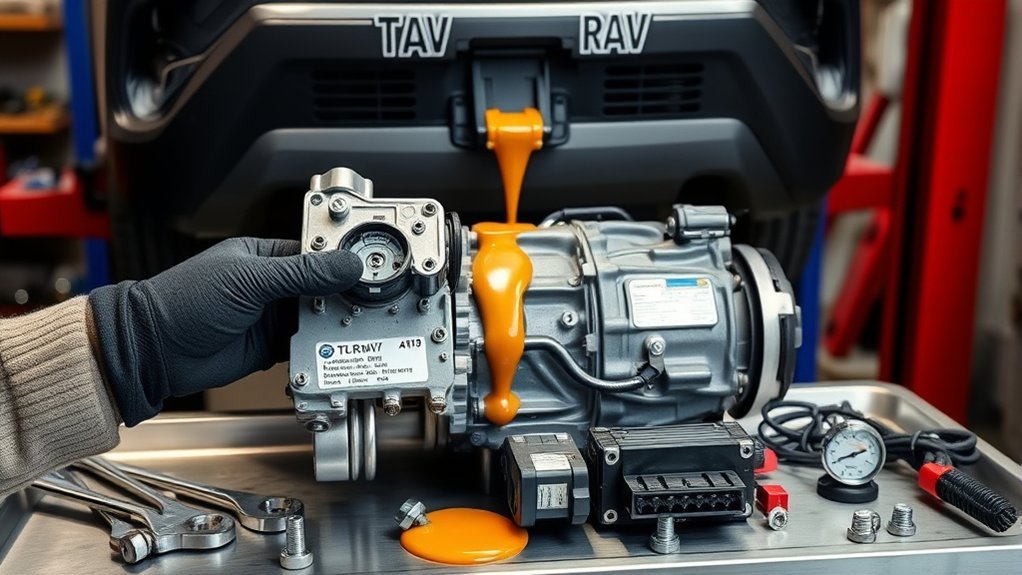
When persistent harsh shifts, flare-ups under load, or diagnostic codes point to solenoid 3 or related valve body circuits, you should weigh targeted solenoid replacement, valve body service, or ECU/TCM intervention based on symptoms, cost, and serviceability. You’ll often start with the cheapest targeted fix: solenoid replacement (~$150 each) when codes or bench tests isolate a failed unit. If multiple circuits or contamination show up, valve body service (2–3 hours) cleans, inspects, and restores hydraulic integrity. For intermittent or electronic faults, ECU replacement and ECU programming become necessary; that’s costlier but required when the controller won’t communicate or adapts incorrectly. Keep transmission maintenance current—ATF changes every 30–40k miles—to free yourself from premature failures.
When solenoid 3 flags, start with targeted replacement; escalate to valve body service or ECU only after diagnosis.
- Prioritize solenoid replacement when single-code failure appears.
- Choose valve body service if contamination or multiple solenoids are affected.
- Consider ECU/TCM replacement only after electrical diagnosis.
- Factor parts, labor, and ECU programming into your cost-benefit decision.
What Dealers Do: Software Updates, Resets, TSBs, and Reprogramming
Dealers will first check for applicable Technical Service Bulletins and then apply software updates or resets to recalibrate the transmission control strategy; these steps often resolve erratic shifts or adaptive-learning faults without mechanical work. You’ll see technicians cross-reference TSBs to confirm known symptoms and prescribed fixes, then deploy software enhancements targeted at shift timing, clutch apply rates, and torque management. They’ll perform a transmission recalibration via a control module reset or ECM reprogramming, clearing learned adaptations so the strategy aligns with updated logic. You should expect test drives and data-logging to verify corrected behavior; if faults persist they’ll document findings for warranty coverage or escalate per dealer protocol. Communicate ongoing symptoms promptly so the dealer records repeat incidents, which strengthens your case for further intervention. This approach prioritizes diagnostic rigor and noninvasive correction before recommending component replacement, keeping you free from premature, costly repairs while restoring predictable shifting.
Preventive Maintenance Plan to Avoid Future Shift Problems
To prevent future shift problems, follow a targeted maintenance regimen that keeps fluid clean, sensors calibrated, and control software current. You’ll avoid costly failures by treating transmission care as a liberation strategy: control the variables, don’t let neglect dictate performance. Base interventions on fluid analysis and a strict maintenance schedule — change ATF every 30,000–40,000 miles with a drain-and-fill to limit debris disturbance. Replace the transmission filter early to sustain clean circulation and reduce internal wear.
- Perform drain-and-fill ATF changes at intervals defined in your maintenance schedule to prevent contamination.
- Replace the transmission filter during initial service stages to maintain hydraulic integrity.
- Monitor warning lights, scan error codes promptly, and inspect shift solenoids and speed sensors routinely.
- Use targeted diagnostics (fluid analysis, sensor checks, software updates) before considering aggressive repairs.
Stay proactive: diagnose early, act on data, and you’ll keep shifting crisp and systems under your control.
Frequently Asked Questions
Can a Transmission Issue Be Covered Under My Vehicle Warranty or Recall?
Yes—you can check warranty coverage and recall eligibility: contact your dealer with VIN, describe symptoms, request diagnostic authorization; if manufacturer defect, repairs or recall remediation should be covered, empowering you to demand proper resolution.
Will Aftermarket Fluids or Additives Harm My RAV4 Transmission?
Aftermarket fluids or additives can harm your transmission if they violate fluid compatibility; you should avoid unapproved formulas. Use manufacturer-specified fluid to guarantee transmission longevity, diagnose compatibility risks, and preserve control over vehicle reliability.
Can Harsh Shifts Occur From Engine-Related Problems, Not Transmission?
Yes — about 30% of harsh-shift complaints trace to engine issues. You’ll see engine misfires alter shifting patterns; diagnose ignition, fuel, and sensors quickly, because freeing yourself from false repairs saves time and expense.
How Long After a Software Update Should I Expect Improvements?
You’ll notice software performance changes within a few drive cycles—typically 24–72 hours—during which you should run transmission diagnostics and monitor behavior; if you don’t see improvement, reflash or escalate to a calibrated technician.
Is It Safe to Drive to the Dealer With Slipping Transmission?
You shouldn’t drive long with slipping symptoms; you’ll risk damage and loss of control. Follow dealer recommendations: get a tow, diagnostic scan, and software or mechanical repair. You’ll reclaim safety and mobility by acting promptly.
Conclusion
You’ve got the symptoms, tests, and fixes—now act. Don’t ignore subtle slips that precede total failure; a quick fluid check or scan can avert a rebuild. Contrast cheap, routine maintenance with expensive, reactive repairs: drain/fill and a solenoid swap often beat valve‑body surgery. Follow the diagnostic steps methodically, log codes, and update ECU/TCM software when needed. Stay proactive with scheduled service to keep shifts smooth and costly downtime rare.