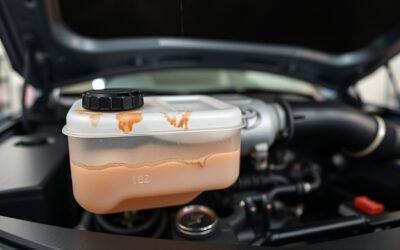
If your RAV4 shakes at highway speed, start with tires and wheels: check pressure, balance, visible damage and missing weights, then swap or rotate tires to isolate issues. Inspect brakes, hubs and rotors for warping or dragging, and check wheel bearings, CV joints, U‑joints, motor mounts and suspension for play or damage. Reproduce the vibration at speed and test in neutral to separate engine vs drivetrain. Keep a record of symptoms and service dates — more detailed fixes and shop questions follow.
Why Your RAV4 Is Shaking at Highway Speeds

When your RAV4 starts vibrating at highway speeds, it’s usually a mechanical imbalance you can trace quickly: check wheel and tire balance first (imbalanced tires often transmit vibration through the steering wheel and seat). Start by verifying tire pressure and look for visible damage or bulges. If pressure’s correct and tires appear sound, have them balanced; this often removes rhythmic shake.
Next, inspect alignment issues — misaligned wheels can create uneven wear and persistent vibration. Schedule a professional alignment if steering pulls or uneven tread shows. Don’t ignore brakes: hanging pads or warped rotors can worsen shake during deceleration, so test braking response and listen for pulsation.
On 4WD models, consider the driveline: a worn U-joint or rear drive shaft imbalance can produce steady vibration near 90 km/h. Finally, watch for tire separation — if shaking is sudden or severe, stop and have tires inspected immediately. Regular balancing, alignment, and brake checks keep you free and safe on the road.
Is the Vibration Coming From the Wheels or the Tires?
After you check balance, alignment, and brakes, narrow the source to wheels or tires by how and when the vibration appears. Drive at the speed where shaking is worst; if vibration intensifies with acceleration or steady speed, suspect tire condition or imbalance. Visually inspect tires for bulges, cuts, or separation — run your hands over the tread to feel irregularities. Lift each wheel and spin it; listen for thumps indicating out-of-round tires or loose wheel weights. If vibration shifts when you change lanes or put weight on one side, wheel alignment or uneven tire wear is likely. Even after recent service, request dynamic balancing to catch issues static balancing missed. Rotate tires if you haven’t within 5,000–7,000 miles to reveal uneven wear patterns. Record when and where the shake occurs, then act: repair or replace damaged tires, rebalance, and correct alignment. That targeted approach frees you from guessing and restores steady highway control.
Could Your Brakes or Hubs Be Causing the Shimmy?
Could a faulty brake or hub be the hidden cause of your RAV4’s highway shimmy? Begin with a focused brake inspection: look for warped rotors that pulse under braking and uneven pad wear that may leave pads hanging and rubbing. If you feel vibration primarily when you brake, prioritize rotor runout and pad retreat checks. Next, perform a hub evaluation: check wheel bearing play by lifting the corner, rocking the wheel, and listening for roughness; worn bearings often manifest as speed‑related shake and steering instability.
Procedure: jack and secure the vehicle, remove the wheel, visually inspect rotor surfaces and pad seating, spin the hub to detect noise, and check axial and radial play. If you find rotor warpage, replace or resurface; if pads stick, clean or replace hardware; if bearings show play or noise, replace the hub assembly. Routine brake inspection and hub evaluation free you from risk and costly follow‑ups.
How to Check Drivetrain & Suspension Parts (CVs, U‑Joints, Mounts)
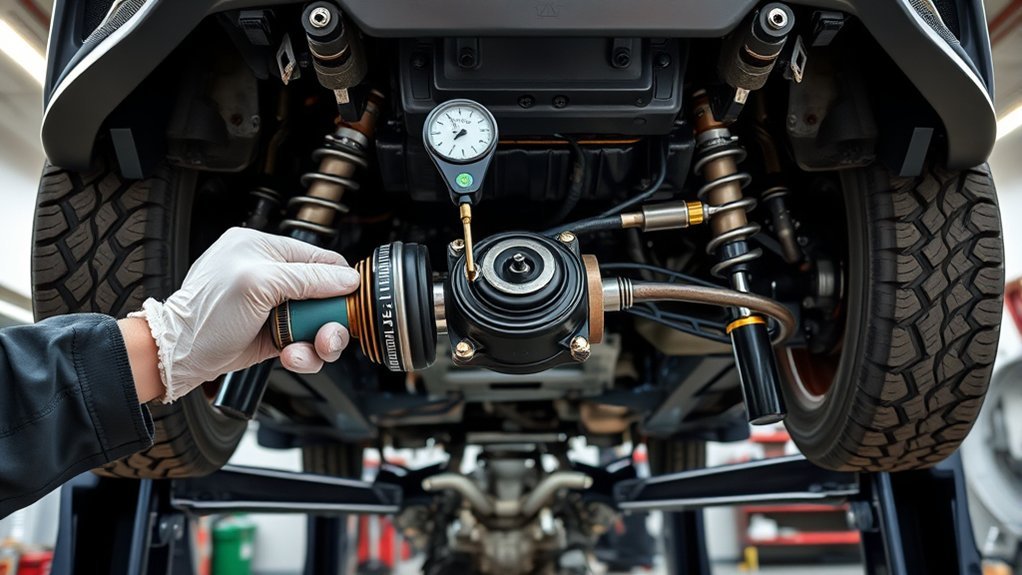
Start by inspecting the most common drivetrain and suspension culprits: CV joints, U‑joints, motor mounts, and linkage ends. For a focused CV Joint Inspection, look for torn boots, grease splatter, and listen for clicking during slow turns—damage or leaks mean degraded joints that vibrate under load. For U Joint Assessment, lift the driven wheels, secure the vehicle, and check for play by manipulating the driveshaft; any looseness or rough rotation indicates worn U‑joints that transmit vibration at speed, especially on 4WD models. In your Motor Mounts Evaluation, visually inspect mounts for cracks, separation, or excessive engine movement by having an assistant rev the engine briefly while you watch. For a Suspension Component Check, verify ball joints, tie rods, and linkage are tight with no undue play or torn boots. Finally, scan the driveshaft and differential for imbalance or wear. Document faults, replace worn parts, and reclaim control of your vehicle’s highway stability.
Easy At‑Home Tests to Reproduce and Isolate the Shake
Start by reproducing the shake at the same highway speed (about 90 km/h) on a flat, straight road and note whether it happens in drive and in neutral to separate drivetrain from wheel issues. After a short drive, carefully touch each wheel hub area (use the back of your hand briefly) to compare temperatures—an unusually hot wheel can point to a brake or stuck caliper. Check tire pressures and inspect tires for uneven wear before moving to more invasive checks.
Speed And Gear Checks
When you hit the highway, test at steady speeds between about 50–90 km/h and note whether the vibration changes or stays constant, since speed-dependent behavior points to tires, balance, or driveline issues. Drive at several steady speeds, logging speed fluctuations and any change in intensity. Shift into neutral while the shake occurs; if it drops, you’ve isolated engine vs drivetrain. Check gear engagement by moving through lower and higher gears—note if shaking is gear-dependent, which suggests transmission or torque-converter trouble. Try gentle acceleration and deceleration to see if CV joints or torque transfer produce the symptom.
- Record speed, gear, and whether vibration changes
- Test neutral vs engaged drivetrain at the same speed
- Compare lower vs higher gears for pattern consistency
Wheel And Brake Touch
If you’ve felt a highway shake, check each wheel and brake by hand as soon as the car cools enough to touch—carefully press the rim and near the caliper to compare temperatures and feel for hotspots that suggest dragging brakes or stuck pads. You’ll perform a quick wheel inspection and simple brake assessment to isolate the vibration source. Spin wheels with the car raised or safely on ramps, listen for noises, and watch for wobble. Confirm balancing weights are present and lug nuts are torqued.
| Test | What to look for |
|---|---|
| Hotspot check | One wheel hotter → dragging caliper/pad |
| Spin test | Wobble → out-of-round tire or bent rim |
| Listen | Grinding/grumble → bearing or CV issue |
| Fastenings | Loose lug nuts or missing weights |
Low‑Cost Fixes to Try Now (Balancing, Tire Swap, De‑Icing)
Because most highway shudders come from tire or wheel issues, try a few low-cost checks before booking a shop: start with basic tire maintenance and simple balancing techniques you can verify yourself. Park safely, inspect wheel rims for ice or packed snow, and look for missing wheel weights. If you spot imbalance signs—uneven wear, missing weights—address them first.
- Swap tires front-to-back or with a known good set to isolate the problem quickly.
- Perform a visual check for missing balancing weights and rotate tires if you’re past 5,000–7,000 miles.
- De-ice wheels by parking in a warm spot or carefully using warm water to melt packed ice inside the rim.
You’ll free yourself from needless expense by following these diagnostic steps. If vibrations persist after swaps, rotations, and de-icing, you’ll have narrowed the fault to something beyond simple tire fixes and be ready to escalate with clear evidence.
When to See a Shop : What to Ask and Likely Repairs
When you bring the RAV4 in, tell the technician exactly when the shaking happens (speed range, steering input, and whether it’s worse under braking or in turns). Ask them to check tire balance/alignment, brakes, suspension, and drivetrain (drive shaft/CV joints), and request a dynamic wheel balance plus a review of your maintenance history. Expect common repairs like balancing/alignment ($50–$200), rotor/pad service ($150–$400), or suspension/drivetrain work which can run higher depending on parts and labor.
What To Tell Technician
Although it might seem minor, tell the technician exactly what you feel and when—state the speeds (e.g., consistent shaking at 90 km/h), where the vibration shows up (steering wheel, seat, whole car), and whether it’s continuous or intermittent. Describe shaking symptoms clearly, note recent maintenance history, and say what checks you’ve done (lug nuts, tire pressure, wheel temps). State any service dates for balancing or brake work.
- Ask for specific diagnostics: dynamic wheel balancing, road-force check, and tire inspection for out-of-round or separation.
- Request inspection of alignment, suspension components, driveshaft, and CV joints.
- Share observations: which wheels feel hotter, whether vibration changes with braking, and if it follows speed or load.
Be direct; liberation comes from clear, actionable information.
Expected Repairs & Costs
If your RAV4 shakes consistently at highway speed, get it to a shop right away and ask for a clear diagnostic plan and written estimate before any work starts. Tell them you want a full tire rotation, tire balance, brake check, and suspension inspection. Ask what caused the vibration, whether parts need replacement, and get timelines.
| Likely Repair | Typical Cost | Urgency |
|---|---|---|
| Tire balancing/alignment | $60–$150 | High |
| Tire rotation/new tires | $20–$400 | High |
| Brake inspection/pads | $50–$250 | High |
| Suspension components | $150–$500+ | Critical |
| Wheel bearing/axle | $100–$500+ | Critical |
Get a written estimate, decline unnecessary upsells, and authorize only agreed repairs. Freedom comes from informed choices.
Frequently Asked Questions
Why Is My RAV4 Shaking While Driving?
Your RAV4’s shaking usually comes from tire imbalance or worn suspension; check tire balance, inspect tires for separation, then assess shocks, bushings and wheel alignment—fix those, and you’ll regain smooth, liberated control on the highway.
Conclusion
You’ve got clear steps to find and fix a RAV4 shake at highway speeds, and you can rule out simple causes before spending much. If you’re worried it’s too technical, start with easy checks: tire pressure, visible damage, wheel balance and a quick tire swap — you’ll often spot or solve the problem. If the shimmy persists, take notes from your tests and ask the shop to diagnose wheels, brakes, hubs and driveline.