Your RAV4’s “Low Key Battery” warning means your key fob’s coin cell is losing voltage and needs replacement to avoid erratic locking, reduced range, or being locked out. You can open the fob with a small screwdriver or nail, swap in a fresh CR2032 or CR2450, ground yourself, and snap it closed—no reprogramming required. If recognition problems persist check contacts, seating, or reprogramming. Keep a spare battery and follow simple maintenance tips to prevent future warnings and related hassles.
Quick Fix: Replace the Key Fob Battery (5 Minutes)
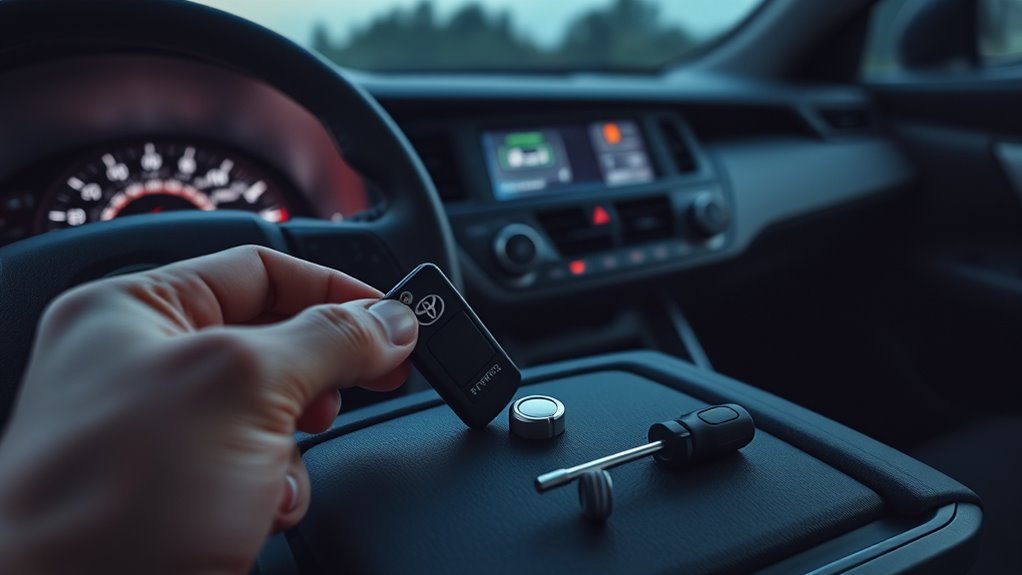
Start by opening the fob—use a small screwdriver or your fingernail to pry the case apart—then swap the old coin cell for a fresh CR2032 or CR2450. You’ll finish in about five minutes with minimal tools. Follow battery replacement tips: ground yourself to avoid static, note battery orientation, and discard the old cell safely. You don’t need reprogramming; the fob restores full function immediately.
Treat this as routine fob maintenance advice: replace the battery every 1.5–4 years based on use and conditions. Don’t ignore low-battery warnings—signal strength fades, and the vehicle may fail to recognize the fob or force you closer to the car. If you still face issues after replacement, inspect contacts for corrosion and clean gently with isopropyl alcohol. These practical steps keep you mobile and self-reliant, minimizing dependency on dealers and preserving your freedom to access and start your RAV4 without delay.
Which Battery to Buy & How to Open the Fob
Battery choice matters: your RAV4 fob uses a CR2450 lithium coin cell, so buy a reputable-brand CR2450 (or a verified OEM-equivalent) to guarantee correct voltage and shelf life. Pick known battery types to avoid early drain; inexpensive no-name cells may underperform. You’ll find single cells at retailers or multi-packs online — four for about $6 is common — but prioritize manufacture date and brand.
To open the fob, use a small flat screwdriver or your fingernail at the seam. Work deliberately, and pry gently along the fob design’s split line to avoid snapping clips. Remove the old CR2450 with minimal force, note polarity, and insert the new cell seated flat. Snap the halves closed until clips engage. No reprogramming’s required; the fob should work immediately.
Replace the battery every 1.5–2 years to maintain autonomy and avoid lockout. This keeps your keyfob reliable and frees you from unnecessary dependence.
Fixes If Your RAV4 Won’t Recognize the Fob
After replacing the CR2450, if your RAV4 still won’t recognize the fob, run a quick checklist: confirm the new cell is seated with correct polarity and the case snapped fully closed, try the fob at varying distances to rule out reduced range, and use the mechanical key to enter and start the car if needed. If problems persist, remember low battery levels cause most signal issues; replace the cell again with a fresh CR2450 sourced from a reputable supplier. Inspect the fob for corrosion or loose contacts that interrupt the antenna path. Consider environmental factors—extreme cold or heat and heavy daily use accelerate drain—so schedule periodic battery checks. If a fresh battery and clean contacts don’t fix it, the fob may have lost sync; reprogramming typically restores pairing and resolves persistent communication failures. Pursue fob troubleshooting methodically: eliminate battery and hardware faults first, then reprogram or consult a dealer for deeper RF diagnostics to reclaim reliable, liberated access to your vehicle.
Temporary Workarounds : Mechanical Key & Push‑Start
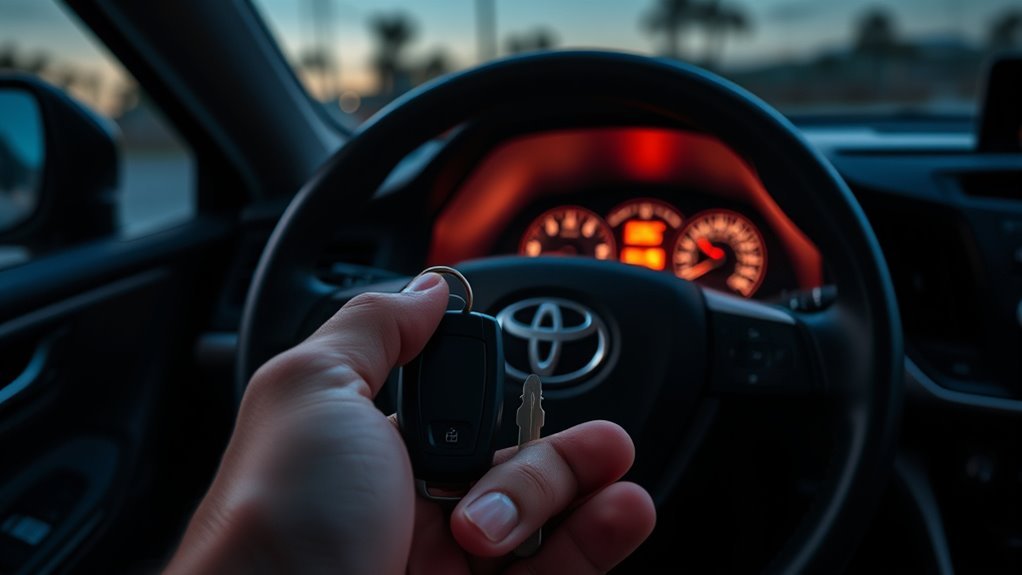
If your fob’s battery is weak, use the mechanical key hidden in the fob to access the RAV4 and gain entry. For models with push-start, place the fob in the designated detection area and press the start button—expect to hold it closer to the console if the signal is weak. Replace the key fob battery as soon as possible to avoid frequent reliance on these temporary workarounds.
Use The Mechanical Key
One quick workaround when your RAV4’s key fob is low is to use the mechanical key hidden inside the fob to open the door and get into the vehicle. You’ll slide the release button, extract the key, and use mechanical key usage for opening doors manually. This restores access without waiting for parts or help, giving you immediate control.
- Slide release, remove mechanical key from fob.
- Insert key into door lock, turn to open doors; access gained.
- Replace fob battery promptly to restore push-start recognition and avoid future lockouts.
- If battery is dead and push-start won’t accept fob, don’t force ignition—replace battery or use dealer assistance.
This pragmatic approach frees you from dependence on electronics until you can replace the battery.
Starting With Push‑Button
You’ve already used the mechanical key to get inside; now focus on getting the engine running. If the RAV4’s fob battery is weak, hold the fob close to the push‑button start—many systems still read the signal at short range. Don’t rely on this indefinitely; push button issues can be intermittent. Place the fob against the start button or the designated reader location, press the brake, and push to start. If it won’t engage, cycle the fob position or try pressing the mechanical key into its slot while actuating the button. These are temporary workarounds—aim to restore proper fob synchronization by replacing the battery soon. Regular checks and proactive replacement free you from roadside limbo and restore reliable push‑start function.
When To Replace Battery
Although a low‑key battery warning may not mean immediate failure, replace the coin cell within a few weeks to avoid being stranded; meanwhile use the mechanical key to open doors and hold the fob against the push‑button start to crank the engine as temporary workarounds. You control the outcome: swap the CR2450 yourself for minimal cost and regain autonomy. Treat key fob lifespan as predictable—replace when warned, not after it dies. Practice simple battery maintenance to keep mobility.
- Inspect the fob when warning appears; buy a CR2450 and tools.
- Replace the coin cell at home to restore full remote function.
- Use the mechanical key for entry if the fob fails.
- Hold the fob to the start button on push‑start models to start with a weak battery.
Why the RAV4 Shows “Low Key Battery” (What It Means)
When your RAV4 displays “Low Key Battery,” it’s warning that the fob’s internal battery is losing voltage and can no longer reliably power the encrypted RF transmitter the vehicle uses to authenticate the key. You should treat this as a clear signal about battery lifespan and warning significance: typical fob cells last about 1.5 years, so the alert gives you time to act before failure. The system monitors transmit strength and encryption integrity; when voltage drops, signals weaken, range shrinks, and authentication can become intermittent. Ignoring the message risks erratic fob behavior, lock/unlock failures, and being stranded when the vehicle stops recognizing the key. For someone seeking freedom from avoidable interruptions, proactive battery maintenance is empowerment: replacing the cell on the alert preserves secure communication and predictable operation. Use the warning as a prompt to swap the battery promptly, keeping your access reliable and your mobility uncompromised.
How the RAV4 Key Fob Works : Why Battery Power Matters
The RAV4 key fob sends RF signals powered by a small coin cell battery, and the transmitted voltage directly affects signal range and reliability. When battery voltage drops you’ll notice reduced range or intermittent operation, sometimes requiring you to be right up against the vehicle. Keep the backup mechanical key handy for entry if the fob fails and replace the cell to restore full RF performance without reprogramming.
RF Signal Transmission
Because your RAV4 key fob is a miniature RF transmitter that sends encrypted, vehicle‑specific signals, battery voltage directly affects the strength and reliability of each transmission; as the cell weakens, the fob’s signal can become intermittent or unreadable by the vehicle’s receiver. You rely on robust encryption security and clean RF delivery to assert control over the car without friction. Low battery warnings give you time to act before access fails, preserving autonomy.
- Transmit power: lower voltage reduces RF amplitude, shrinking effective range.
- Signal interference: weak emissions succumb to ambient noise and urban clutter.
- Unique codes: vehicle-specific pairing prevents cloning; sustained power maintains timing integrity.
- Contingency: replace batteries proactively to avoid forced mechanical access.
Battery Voltage Impact
If your fob’s battery voltage falls, its transmitter can’t sustain the RF amplitude and timing the vehicle expects, so your signals weaken and the car may fail to recognize commands unless you’re very close. You need clarity: the encrypted RF link is voltage-sensitive, so as cells age (1.5–2 years typical) range and reliability drop. Ignore warnings and you’ll face erratic behavior and forced proximity. For release from unexpected lockouts, practice regular key fob maintenance and follow simple battery replacement tips on schedule.
| Symptom | Action |
|---|---|
| Weak range | Replace battery promptly |
| Intermittent releases | Test before leaving |
Maintain voltage to keep the fob’s transmitter within spec; don’t gamble with freedom.
Backup Mechanical Key
Inside the key fob you’ll find a hidden mechanical key that lets you access the RAV4 when the coin cell dies, so you won’t be stranded by a dead battery. You should remove it for emergency access if the intelligent key’s CR2450 battery fails; it’s straightforward and secure. Mechanical key usage gives you door entry even when electronics fail, preserving autonomy.
- Locate the release latch, slide out the mechanical key for emergency access.
- Use the key to open the driver door; it’s keyed to the vehicle cylinder.
- Replace the coin cell (CR2450) promptly to restore fob functions and push-button start.
- Keep a spare battery and practice the procedure to avoid being immobilized by ignored low battery warnings.
Tips to Extend Key Fob Battery Life and Avoid Warnings
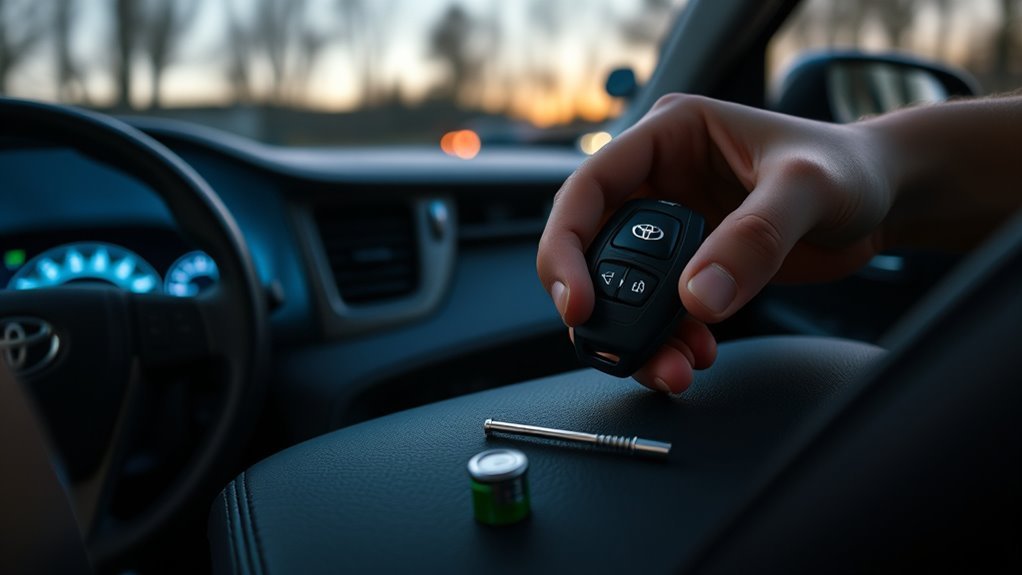
While you won’t get a warning until the battery’s low, you can prevent that by treating the fob like a small, sensitive electronic device: keep it out of extreme heat and cold, clean it periodically to maintain button and contact performance, and avoid unnecessary remote uses that drain charge. For reliable battery maintenance and fob protection, limit exposure to temperature extremes—heat accelerates chemical breakdown, cold reduces output—so store the fob in a temperate pocket or bag. Clean seams and contacts with isopropyl alcohol and a soft brush to preserve signal strength and reduce current draw. Use a protective case to prevent accidental presses and environmental contamination. Reduce nonessential remote starts and access cycles; every transmission uses energy. Finally, replace the coin cell proactively every 1.5–2 years rather than waiting for a warning to avoid unexpected failure. These steps give you control, reduce roadside dependency, and keep your RAV4 accessible on your terms.
Frequently Asked Questions
Can I Still Drive My Car if My Key Battery Is Low?
Yes—you can drive if the key battery is low; battery warning signs alert you before failure. Use mechanical key access or pursue key replacement options quickly, so you stay mobile and avoid getting stranded.
How Long Does a RAV4 Key Battery Last?
How long? You’ll get about 1.5 years typical lifespan, though battery lifespan factors like temp and usage vary; follow key replacement tips, carry a spare CR2450, and you’ll stay liberated from unexpected fob failures.
Conclusion
You’ll fix the “Low Key Battery” notice quickly: replace the coin cell, or use the mechanical key or push‑start backup if the fob isn’t recognized. Buy the CR2032 (or check your manual), pry the fob open, swap cells, and reseat contacts—this is a five‑minute repair. Think of the fob like a tiny power plant: keep its fuel fresh, inspect contacts, and minimize button presses to prevent future warnings and avoid getting stranded.