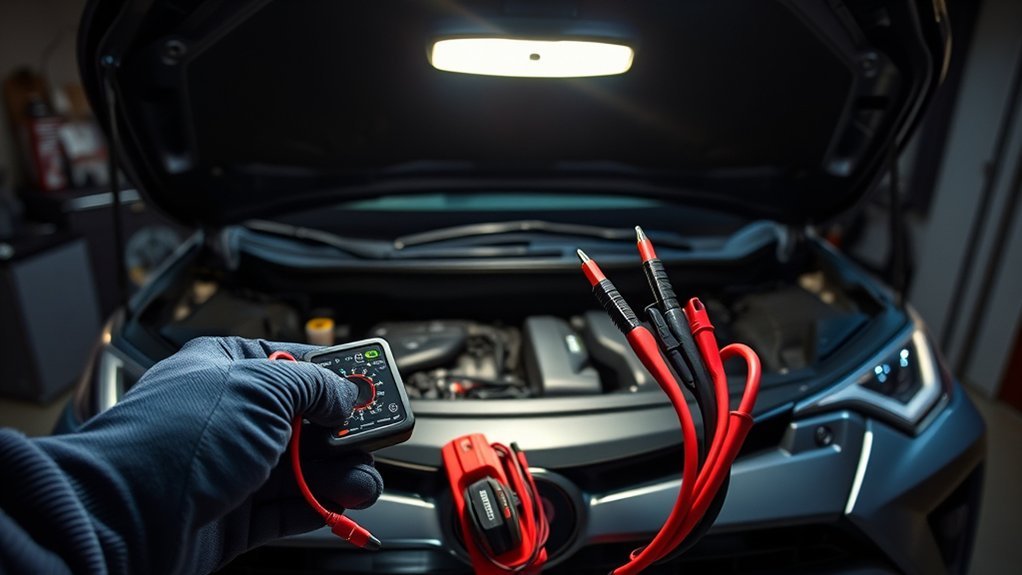
If your RAV4 Hybrid won’t start, first confirm you’re fully depressing the brake, the shifter is in P, and the Smart Key is recognized (hold the fob to the START button if needed). Check the 12‑volt battery voltage and terminals for corrosion or loose grounds; jump‑start or charge if below ~12.5 V. Note any hybrid warnings or OBD codes and measure parasitic draw if the battery discharges. Follow these systematic checks to isolate the fault and learn fixes further down.
Quick Checks: Brake, Gear, Key, Dash (RAV4 Hybrid)

Start with four quick checks that catch most no-start issues: confirm you’re firmly depressing the brake pedal (the hybrid system won’t engage without brake pressure). First, hold steady pressure on the brake pedal and attempt start; inconsistent pressure can prevent engagement. Second, verify gear position is locked in P; the starter interlock won’t allow starting in any other gear. Third, assess key recognition: replace the Smart Key battery or hold the fob against the START button if “Key Not Detected” appears, since weak transmitters disrupt authentication. Fourth, scan dashboard indicators for warning lights or blank displays; no lights or odd messages often point to a weak 12‑volt supply affecting electronics. Work through these steps methodically, documenting results. If all four checks pass, you’ve eliminated common control and recognition faults and can move on to systems requiring tools or protective steps. This sequence frees you from guesswork and puts control back in your hands.
12‑Volt Battery: Symptoms, Test, Temporary Fixes
Watch for battery health signs like dim dash lights, warning messages, or no response at start, and check terminals for corrosion or loose connections. Measure resting voltage with a multimeter—around 12.6 V indicates a full charge, and 12.5–14 V in ready mode confirms proper system operation. For a temporary fix, jump-start the vehicle or use a portable jump starter, then charge and recheck voltage before driving.
Battery Health Signs
When your RAV4 shows dim or unresponsive dash lights, clicking on start, or fails to crank, those are clear signs the 12‑volt battery is weak or its connections are compromised; check battery voltage and inspect for terminal corrosion immediately. Measure resting voltage: ~12.5V is healthy; in ready/charging mode expect up to ~14V. Lower readings indicate aging, parasitic draw, or charging-system fault. Visually examine terminals for white/green buildup and clean with a brush and baking soda solution; tighten clamps to restore contact. If you get clicking, note voltage under load—rapid drop confirms weakness. Keep a portable jump starter for emergencies, but treat that as temporary relief. Track voltage readings over days to decide repair or replacement and reclaim control of your mobility.
Jump And Charge Fix
If your RAV4 Hybrid won’t enter READY or gives only a click, a weak 12‑volt battery is the most likely culprit and you should verify voltage before attempting repairs. Measure with a multimeter: ~12.6 V is healthy, below 12 V means charge or replace. If low, use a portable jump starter or conventional jumper cables to supply power; follow proper polarity and connection order to protect electronics. After jump, run the system and monitor voltage — target 12.5–14 V in READY — to confirm charging. Treat jump-starts as temporary liberation: they restore mobility but don’t fix underlying battery degradation. Implement routine battery maintenance, periodic voltage checks, and replace aged batteries to prevent repeat failures.
Smart Key & START Button Fixes
Start by confirming the brake pedal is fully depressed, since the START button won’t engage without correct brake-pedal detection. If the vehicle still won’t start, swap the Smart Key battery and, if needed, hold the key close to the START button to use the override. Also check the Smart Key deactivation switch below the steering wheel and consult the Owner’s Manual for procedure specifics.
Smart Key Battery Swap
One simple cause of no-starts is a weak Smart Key battery, so check and replace the cell every 2–3 years or sooner based on use and environment. For smart key maintenance, monitor battery lifespan and symptoms: reduced range, intermittent recognition, or no-start. If the vehicle won’t start, hold the key against the START button while pressing to force a low-power read. Inspect the key for a deactivation switch and confirm it’s set properly. Replace the coin cell per the owner’s manual to avoid damaging the fob; use the specified type and observe polarity. After swapping, verify lock/unlock and start functions before relying on the key. These steps restore autonomy and prevent simple electrical lockouts.
Brake Pedal Detection
Because the RAV4 Hybrid requires a confirmed brake-pedal signal to energize the starter, always depress the brake firmly while pressing the START button and verify the dash message for “press brake and push power” if it won’t crank. You’ll want to isolate brake pedal detection failures systematically to regain control.
- Confirm your foot fully depresses the brake pedal; weak input causes starting issues and false error prompts.
- Check the Smart Key deactivation switch under the dash; if engaged it blocks starting regardless of brake input.
- Inspect the key fob: a weak battery can mimic brake-detection faults—hold the fob near the START button to test.
- Test the brake switch sensor circuit; a faulty sensor often prevents the ECU from seeing brake engagement.
START Button Override
If the RAV4 won’t crank despite a firm brake input, focus first on Smart Key and START button overrides that bypass weak fob or deactivation-switch issues; you’ll run a quick, controlled sequence. Verify your foot fully depresses the brake — the system needs that signal to enable the start button. If the Smart Key battery is weak, hold the key against the START button while pressing it to engage the override procedure. Inspect the Smart Key deactivation switch below the steering wheel; reset it if it’s been pressed. Know the Smart Key features so you can isolate faults fast. Consult the Owner’s Manual for battery replacement and official troubleshooting steps. These deliberate actions free you from guesswork and restore decisive control.
Hybrid Alerts: High‑Voltage and Powertrain Warnings
When your RAV4 shows hybrid-related warnings—like “Check Hybrid System” or voltage alerts—treat them as immediate diagnostics flags that can stop the vehicle from entering Ready mode and impair drivability. You’ll need to act decisively: these warning signals demand hybrid diagnostics to restore freedom of movement and prevent further damage. Follow a systematic check sequence.
- Confirm display text and note any codes; persistent “Check Hybrid System” implies high-voltage battery fault or powertrain inhibition.
- Measure 12‑volt system voltage; reading below 12.5 V often causes start failures and signals battery drain or impending failure.
- Record DTCs (e.g., P1014, B2312) shown; they point to communication or subsystem errors tied to the hybrid control modules.
- If vehicle won’t enter Ready, suspect depleted HV battery or compromised connections; schedule immediate service and avoid driving under uncertain powertrain conditions.
Maintain routine monitoring and act on alerts to reclaim control and mobility.
Electrical Causes: Grounds, Corrosion, OBD Codes
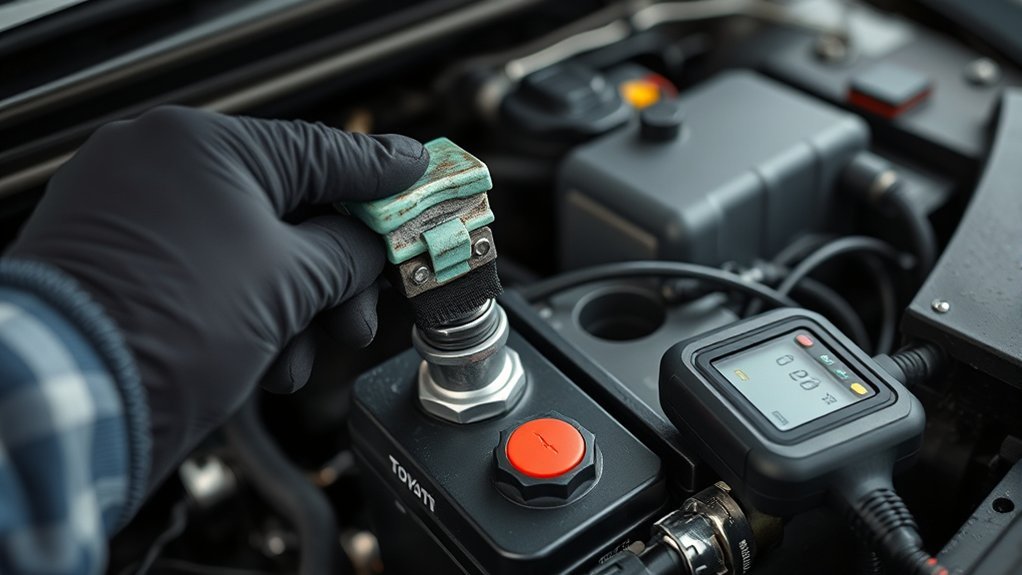
Although hybrid faults often point to the high‑voltage system, you should first check the 12‑volt and ground circuitry because poor grounds, corroded terminals, and low 12.5 V readings commonly produce intermittent start failures and trigger OBD codes (e.g., P1014, B2312, B1312) that mimic more serious powertrain problems. Start with a ground inspection: verify chassis and engine block straps are tight, free of paint, and show continuity to battery negative. Measure resting voltage; under 12.5 V suggests a weak 12‑volt battery and may cause failed ECU wakes.
Next address battery corrosion: remove and clean terminals, cable ends, and clamp faces with appropriate cleaners, then reseal. Run OBD diagnostics to capture stored codes and live data; correlate code context to voltage and ground health before replacing modules. Probe for electrical shorts only after verifying grounds and battery integrity to avoid chasing symptoms. These systematic checks free you from unnecessary parts swaps and restore reliable starts.
If It Repeats: Parasitic Draw & Diagnostics
Because a repeat no‑start after good ground and 12‑volt checks often points to a parasitic draw, you should measure resting current to confirm the battery isn’t being drained overnight. Use a multimeter in series with the battery negative and record the steady current; over 50 mA is abnormal. Be methodical and free yourself from guesswork.
- Isolate: turn everything off, remove keys, close doors; note resting current.
- Locate: pull fuses one at a time while watching the meter to find the circuit causing the parasitic draw.
- Inspect: examine electrical components on the offending circuit—lights, alarms, aftermarket devices—for faults or poor connections.
- Verify: repair or disconnect the faulty component, then confirm resting current returns below threshold and battery voltage holds after several hours.
You’ll reclaim reliability by diagnosing parasitic draw systematically. Regular voltage checks and disabling unused accessories prevent repeat failures and restore operational freedom.
When to Call Toyota: Warranty & What to Say
If your RAV4 Hybrid is still under warranty and won’t start, contact Toyota promptly to determine coverage and next steps. Tell them the vehicle age and mileage so they can confirm warranty coverage (many electrical and hybrid components are covered for up to 3 years/36,000 miles). Provide concise symptom history: failure-to-start events, voltage abnormalities, frequency, and conditions (after inactivity, temperature, etc.). Read and relay any diagnostic codes you retrieved—examples: P1014, B2312, B1312—so technicians can triage more efficiently.
State prior related repairs or maintenance and supply dates/receipts. Ask what diagnostics they’ll run, expected labor time, and if diagnostics are covered under warranty. Request a loaner or courtesy vehicle if repair length is uncertain; many dealerships offer one for warranty repairs. Conclude by getting a reference number and the service advisor’s name, then document promised actions and estimated completion to maintain leverage and clarity.
Frequently Asked Questions
Why Is My RAV4 Hybrid Not Starting?
Your RAV4 hybrid isn’t starting because you’re encountering battery issues or electrical problems; check the 12‑volt charge, terminal connections, diagnostic codes, brake pedal signal, and grounds systematically, then replace or repair components to regain freedom on the road.
Why Is My Toyota Hybrid Not Starting?
Like a drained phone on a road trip, your Toyota won’t start because hybrid battery issues or the 12‑volt electrical system fail; check battery health, fob and brake switch, then run diagnostics to reclaim control and freedom.
Conclusion
You’ve walked through quick checks, battery and smart‑key fixes, hybrid warnings, and electrical diagnostics; now act like a mechanic’s checklist—methodical, not frantic. If starting issues persist, record symptoms, test the 12‑V, scan for codes, and check grounds and parasitic draw before assuming major hybrid failure. Use warranty or dealer support when HV or powertrain alerts appear. Keep clear notes and timelines; they’re your diagnostic roadmap and speed up any professional repairs.