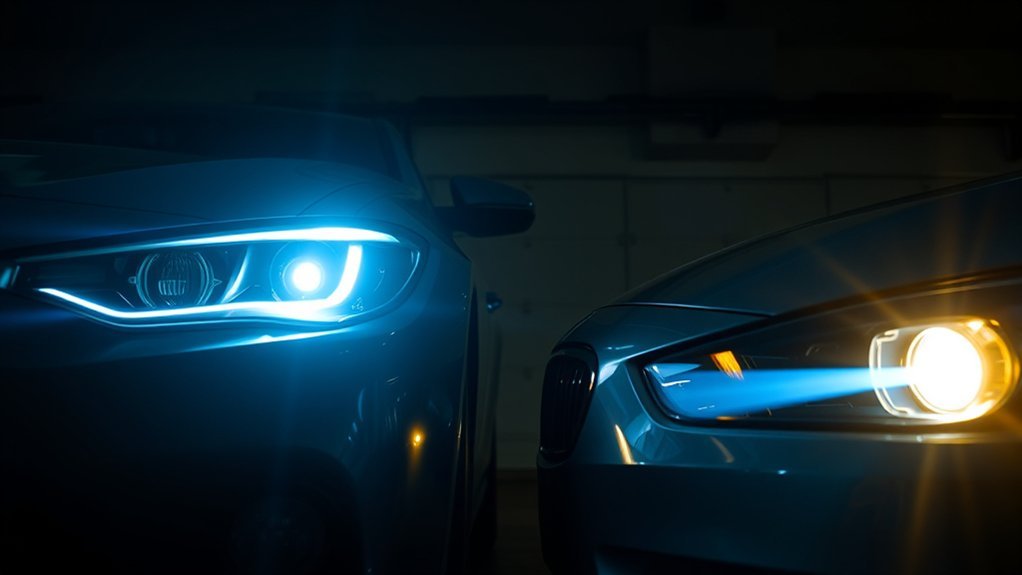
When choosing between LED and halogen headlights, you’ll find that LEDs are more energy-efficient and last up to ten times longer than halogens. They emit bright white light, enhancing visibility but can cause glare for oncoming drivers. Halogen headlights are cheaper upfront and easier to replace but consume more power and have shorter lifespans. Legal restrictions in some regions may also impact your choice. Explore the pros and cons further to make the best decision for your vehicle.
What You Need to Know About Halogen Headlights
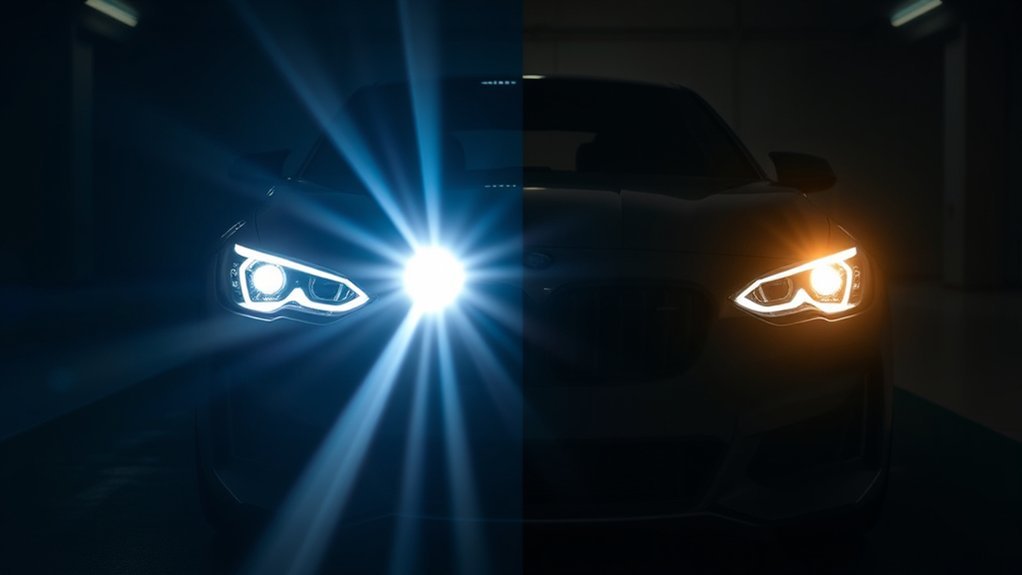
When it comes to headlights, many entry-level cars still rely on halogen technology due to its low cost and straightforward design. Halogen headlights are fundamentally modified incandescent bulbs featuring a tungsten filament encased in glass filled with halogen and noble gases. This enables them to emit a characteristic yellowish light. While you’ll find halogen brightness adequate for basic driving needs, their halogen lifespan typically ranges from 500 to 1,000 hours, which is considerably shorter than LED alternatives.
One major downside is their energy inefficiency; halogens consume about 80% more power than LEDs, converting a large portion of energy into heat rather than usable light. Despite being easier to replace, replacement costs range from £5 to £20, making them an economical choice. Legal regulations in the UK also prohibit converting halogen headlights to LEDs, ensuring their continued prevalence in budget and used vehicles.
Pros and Cons of LED Headlights
Although LED headlights come with a higher upfront cost, their advantages often outweigh the initial investment for many drivers. One of the most significant benefits is their energy savings; LED lights are up to 80% more energy-efficient than halogen headlights, drastically reducing power consumption. Regarding brightness comparison, LED headlights emit a bright white light, enhancing visibility and allowing for advanced control options.
Additionally, they boast a lifespan up to ten times longer than halogen bulbs, making them a durable choice over time. However, it’s crucial to evaluate the potential drawbacks. Their intense brightness can dazzle oncoming traffic, raising safety concerns. Moreover, the initial replacement costs can reach as high as £900, which may deter budget-conscious consumers. Overall, understanding these pros and cons can help you make an informed decision about your vehicle’s lighting needs.
Can You Legally Switch From Halogen to LED?
Switching from halogen to LED headlights may seem like an attractive upgrade for improved visibility and energy efficiency, but legal considerations come into play. In the UK, it’s illegal to replace halogen headlights with LED ones due to strict regulations surrounding vehicle modifications and safety standards. Aftermarket LED conversion kits often lack the necessary certification to be road-legal, making such modifications not only illegal but also risky. The UK MoT testing manual explicitly prohibits halogen to LED conversions, ensuring vehicles meet safety requirements during inspections. While halogen lights continue to dominate the market, especially for budget and used cars, this stems partly from the legal restrictions on LED replacements. Consequently, if you’re considering this switch, be aware that opting for illegal modifications can lead to fines or vehicle failures, undermining your pursuit of better lighting solutions.
Performance Insights: Which Headlight Type Performs Better?

How do LED headlights stack up against halogen when it comes to performance? LED headlights shine with higher lumen output, delivering a brighter, whiter light that enhances visibility. They’re typically up to 80% more energy-efficient, meaning they use less power and last up to ten times longer than halogen bulbs. This longevity and efficiency make them appealing for modern vehicles. However, there’s a caveat: some LED designs can create glare issues for oncoming traffic, making them less ideal in certain situations, especially compared to halogen’s softer yellowish glow. Performance tests reveal variability; while many LED models excel, some halogen headlights have outperformed specific LED counterparts, as noted by IIHS ratings. Ultimately, the quality of headlight assembly and reflector design considerably influences illumination distance and beam pattern, emphasizing that both types can vary widely in real-world performance.
Choosing Between Halogen and LED Headlights: Which Is Right for You?
When considering whether to choose halogen or LED headlights for your vehicle, you’ll want to weigh various factors that impact both performance and cost. Here are some key points to help you decide:
- Cost Considerations: Halogen bulbs are cheaper to replace (£5 to £20), while LEDs can reach up to £900.
- Brightness Comparison: LEDs offer markedly brighter illumination, enhancing visibility.
- Lifespan: LEDs last up to 10 times longer than halogens, reducing the frequency of replacements.
- Power Consumption: Halogens consume about 80% more power, affecting fuel efficiency.
- Driver Impact: Halogens emit a less glaring yellowish light, which can be less disturbing to other drivers.
Ultimately, if you’re budget-conscious and prefer less glare, halogens might suit you. However, if brightness and longevity are your priorities, LEDs could be the better choice, provided your vehicle allows for it.
Frequently Asked Questions
What Are the Disadvantages of LED Headlights?
LED headlights have disadvantages like high initial costs, complex installation processes, and potential heat generation issues affecting light quality. Their brilliance can also dazzle other drivers, raising safety concerns on the road.
Why Do New Cars Still Use Halogen Bulbs?
New cars still use halogen bulbs because their cost factors appeal to budget-conscious buyers. Halogen advantages include low replacement costs and a gentler glow, making them practical choices for entry-level models and used vehicles.
Conclusion
In the battle of headlights, choosing between halogen and LED isn’t just a decision—it’s like picking between a candle and a supernova. While halogen offers affordability and ease of replacement, LEDs shine with efficiency and durability. Consider your driving habits, budget, and desired brightness when making your choice. Ultimately, the right headlights can enhance your visibility and safety on the road, lighting your path like a meteor streaking across the night sky.