Your Sonata’s TPMS uses wheel-mounted sensors to send real-time tire pressure and temp data to the car computer and flags pressure 25% below the placard PSI with a yellow horseshoe icon. A steady light means one or more tires are underinflated; a flashing light signals a system fault; off means normal. You should check cold pressures, inflate to the door-jamb PSI, inspect for damage, and reset the system after service — keep going to get step-by-step checks and fixes.
Quick Answer: Check and Fix Hyundai Sonata TPMS in 5 Steps

Start by parking on level ground, switching off the engine, and locating the recommended PSI on the driver’s door jamb or fuel flap. You’ll remove valve caps and use a digital gauge to measure each tire, comparing readings to the specified PSI to verify accuracy. If any tire’s low, inflate it to the recommended pressure with an air compressor, then recheck with the gauge. After pressures are correct, follow your model-year reset procedure so the TPMS registers the new values. Perform monthly checks and before long trips or seasonal shifts to preserve TPMS accuracy and safety. These TPMS Maintenance Tips recognize Tire Pressure Importance: disciplined, regular action frees you from roadside uncertainty and keeps systems reliable.
What Sonata TPMS Does and How It Works
Think of the Sonata’s TPMS as a direct-monitoring system that uses wheel-mounted sensors to send real-time pressure readings to the vehicle’s computer and warn you when any tire falls about 25% below the manufacturer’s recommended PSI. You’ll get a yellow horseshoe icon with an exclamation when underinflation or a system fault is detected. The system samples each wheel’s pressure, compares values to set thresholds, and logs faults for diagnostics. To stay free and safe, monitor TPMS accuracy factors: temperature, tire aging, and battery life affect readings. Perform routine sensor maintenance tips: verify valve integrity, replace aging sensors, and reset the TPMS after inflation, rotation, or tire service so the system maintains reliable, autonomous oversight.
Read TPMS Warnings: Steady, Flashing, or Off
When the yellow horseshoe TPMS light is steady, you’ve got one or more underinflated tires and should check pressures immediately. If the light is flashing, the TPMS itself has a fault that needs diagnostic attention. No light means the system reports normal tire pressures.
Steady Light Meaning
A steady TPMS light on your Hyundai Sonata — the yellow horseshoe with an exclamation mark — means one or more tires are underinflated (typically about 25% or more below the recommended pressure); check and inflate each tire to the specified PSI, because driving with low pressure raises blowout risk, harms fuel economy, and accelerates tire wear. You should stop safely, verify tire pressure with a calibrated gauge, and restore each tire to the vehicle’s recommended PSI. After correcting pressures, confirm the TPMS resets; if the steady light stays on, the system may be faulty and needs diagnostic inspection. Regular monitoring of tire pressure is a simple, empowering habit that preserves tire life and leverages your vehicle’s safety features for reliable freedom on the road.
Flashing Light Fault
If your Sonata’s TPMS light is flashing, it’s signaling a system fault that needs prompt attention—don’t ignore it. You should stop, visually inspect all tires, and use a gauge to verify pressures; a flashing light often precedes a steady warning if underinflation or malfunction persists. If pressures are correct, you’ll need diagnostics to isolate sensor failures, sensor calibration issues, or electrical faults. Addressing this promptly protects you and frees you from avoidable risk.
- Fear of being stranded motivates decisive action.
- Frustration at uncertainty pushes you to check pressures.
- Relief comes when sensor calibration restores reliable alerts.
- Anger at neglect turns into empowerment after diagnostics.
- Pride follows when routine tire rotation and checks keep you safe.
No Light Normalcy
You’ve just handled a flashing TPMS fault and now need to know what an extinguished light means for everyday driving: an off TPMS lamp indicates all sensors report tire pressures within the acceptable range and the system is operating normally. You can proceed, but don’t get complacent. TPMS triggers when pressure drops about 25% below manufacturer specs, so routine tire maintenance remains essential. Rely on the system as a safety net, not a substitute for manual checks. Inspect tires visually and verify with a gauge on a schedule you control—monthly or before long trips. If the light stays off, you’ve achieved baseline reliability; keep records, adjust pressures to spec, and reclaim freedom from avoidable roadside risks.
Find the Underinflated Wheel (Step-by-Step Check)
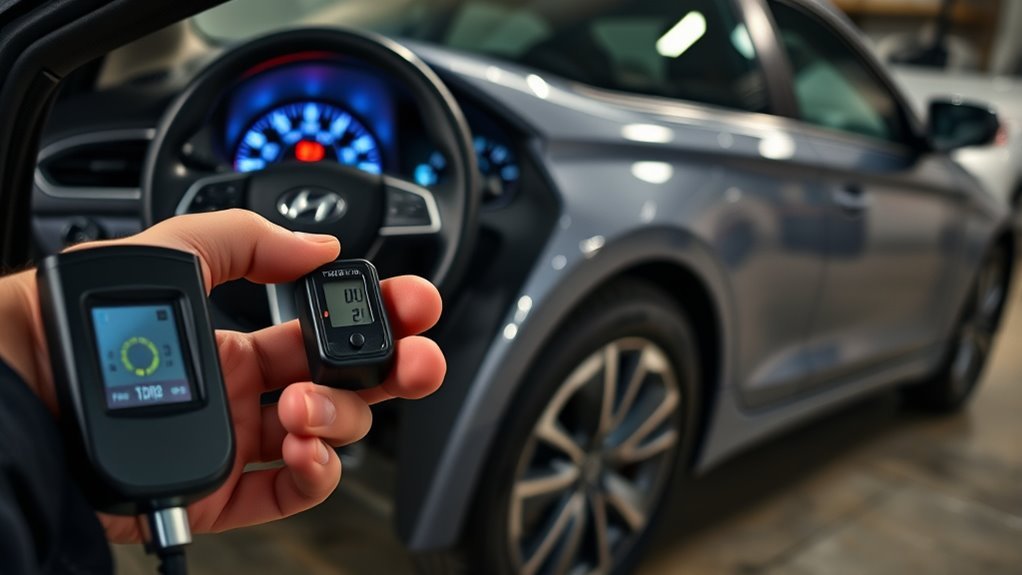
Start by parking the Sonata on level ground, switching off the engine, and gathering a digital tire gauge and air compressor so you can safely check pressures. Verify the recommended tire pressure on the driver’s door jamb or fuel flap. Remove valve caps and measure all four tires, recording readings and emphasizing gauge accuracy. Inflate any low tire with the compressor and remeasure until each matches spec.
- You reclaim control when readings match the label.
- You avoid roadside vulnerability by checking now.
- You feel empowered correcting a slow leak.
- You reduce risk and increase range.
- You enforce mechanical freedom through simple checks.
Keep notes of any repeat lows and inspect for damage; proceed to TPMS reset per model instructions after inflation.
Reset the Sonata TPMS (After Inflate/Rotate/Replace)
After inflating, rotating, or replacing tires and confirming pressures match the driver’s door jamb, park the Sonata, shut off the engine, and locate the TPMS reset button (commonly under the steering wheel or on the dashboard). You’ll press and hold that button until the TPMS warning light blinks three times, then release. The light should blink for about four seconds—this confirms sensor calibration and that tire pressure adjustments registered. If the light stays steady, repeat the procedure. Always consult your owner’s manual for model-year variations.
| Step | Action | Expected Result |
|---|---|---|
| 1 | Verify tire pressure | Pressures match jamb |
| 2 | Park & shut off | Safe to reset |
| 3 | Locate button | Under wheel/dashboard |
| 4 | Hold until 3 blinks | Initiates calibration |
Why the TPMS Light Comes On : and Quick Fixes
If your TPMS light comes on during cold snaps, check tire pressures immediately—air contracts in low temperatures and can drop pressure by enough to trigger the system. A flashing or persistent light after you inflate tires often points to a sensor fault or dead sensor battery, which needs diagnostic scanning or sensor replacement. After fixing pressure or sensors, reset the TPMS so the system registers the correct values and stops false warnings.
Cold Temperature Pressure Drops
Because cold air contracts, your Sonata’s tire pressure can drop about 1 PSI for every 10°F decrease, and that loss often trips the TPMS once pressure falls roughly 25% below the recommended level. You’ll check tire maintenance more often in winter driving to avoid sudden warnings and compromised control. Measure pressures when tires are cold (haven’t been driven for 3 hours or under 1.6 km), and inflate to the PSI on the driver’s door jamb or fuel flap.
- Feel the relief when a simple top-up clears the light.
- Reclaim control by monitoring pressures weekly.
- Reject increased fuel costs from underinflation.
- Embrace safer handling on icy roads.
- Regain confidence before each commute.
Sensor Battery Or Fault
While cold-induced pressure drops often explain TPMS alerts, a dead or failing sensor battery is a common electrical cause and typically shows up after 7–10 years of service; you’ll notice intermittent or permanent warning lights that won’t clear simply by inflating the tires. Check pressures first; if readings are normal but the light stays on, suspect sensor longevity limits and battery symptoms. Use a diagnostic tool or dealer scan to read sensor IDs and signal strength. Intermittent transmissions indicate failing cells or damaged hardware and require sensor replacement—don’t rely on temporary resets. After tire service or rotation, request system recalibration. Taking prompt, informed action frees you from recurring alerts and restores reliable TPMS function.
When It’s Safe to Drive With the TPMS Light (And When to Stop)
When your Sonata’s TPMS light comes on steady, check tire pressures promptly and correct any that fall below the manufacturer’s specification before you continue driving to avoid accelerated wear, poor handling, or a blowout. Steady illumination means underinflation—you’re allowed to drive short distances for safe tire maintenance and driving safety, but fix pressures as soon as possible. A flashing light signals a system fault; stop and assess immediately. If the light is off and tires look properly inflated, you’re free to go but keep routine checks.
- Fear gives way to control when you act.
- Fixing pressure restores freedom.
- A flashing light demands immediate halt.
- Routine checks protect your autonomy.
- Neglect erodes safety and independence.
Replace Sonata TPMS Sensors: Cost, Battery Life, and Pairing Tips

Replacing a Sonata’s TPMS sensors typically runs $50–$150 per sensor and is often required once the sealed battery reaches end-of-life (about 7–10 years), since the batteries aren’t serviceable and the whole sensor must be swapped. You’ll confirm sensor compatibility with your Sonata’s model year before ordering to prevent mismatched signals or ECU errors. For installation tips, deflate the tire, remove the valve core, and follow torque specs when fitting the new sensor to the rim; use a new valve stem if applicable. After installation, pair sensors to the vehicle ECU using the manual’s reset or relearn procedure—some models require a diagnostic tool. Maintain periodic checks to avoid sudden failures and preserve your freedom to drive safely and efficiently.
Monthly TPMS Checklist and Winter Pressure Tips
After swapping sensors, add a monthly TPMS checklist to your routine to catch pressure changes before they trigger a warning light or affect fuel economy. You’ll perform quick, decisive tire maintenance to maintain safety and freedom on the road. Check pressures when tires are cold (haven’t been driven for 3 hours or 1.6 km). Adjust PSI per the vehicle placard and remember cold drops ~1 PSI per 10°F; winter demands vigilance. If the TPMS light glows after a temperature swing, don’t rely on the sensor alone—manually verify and re-run pressure calibration.
- Feel empowered: control your car’s performance.
- Act fast: prevent fuel loss and skids.
- Verify cold-readings: accuracy is freedom.
- Use placard PSI: precise seasonal settings.
- Recalibrate after adjustments: trust restored.
Frequently Asked Questions
Why Is My Tire Pressure Light on When My Tires Are Fine on My Hyundai?
Your tire pressure light’s on because tire pressure causes like temperature drops, sensor malfunction, recent service needing TPMS reset, or ECU interference; check pressures with a gauge, recalibrate or replace faulty sensors to regain control.
Where Is the TPMS Reset Button on a Hyundai Sonata?
The TPMS reset button’s location varies; you’ll find it on the steering wheel, near the instrument cluster, or within vehicle settings. For TPMS functionality, follow the Reset procedure: inflate tires, press/reset via controls, confirm light blinks.
Conclusion
You now know how Sonata TPMS detects and reports tire issues, how to find and fix an underinflated wheel, reset the system, and when to stop driving. If you’re worried this is too technical, picture a dashboard gauge: steady light = check one tire, flashing = sensor fault, off = OK. Follow the monthly checklist, replace sensors at battery end-of-life, and reset after any tire service to keep the system reliable and safe.