To wash a Toyota RAV4 without scratching the paint, remove loose grit before any towel or mitt touches the surface. Clean the wheels with separate tools, pre-rinse the body, use a paint-safe car shampoo with clean wash media, work from top to bottom, and dry with soft microfiber towels or filtered air. The goal is not zero contact; it is controlled contact with clean, well-lubricated tools.
Quick Answer
Wash the wheels first with separate tools, then pre-rinse the RAV4 thoroughly. In the shade, use a paint-safe car shampoo, a clean microfiber mitt, and the two-bucket method. Wash the body from top to bottom, rinse the mitt after each section, rinse away all soap, and dry with clean microfiber towels or a blower.
Key Takeaways
- Pre-rinsing is one of the most important scratch-prevention steps because it removes loose dirt before you touch the paint.
- Use dedicated car wash soap, not dish soap or household cleaners, to protect wax, sealant, and clear coat.
- Keep wheel tools separate from paint tools because brake dust and road grit are abrasive.
- Dry the RAV4 with clean microfiber towels or air, never with bath towels, old T-shirts, or a dirty chamois.
- Wax or seal the paint when water no longer beads on a clean, cool surface.
At a Glance
| Time Required | 35–60 minutes |
| Difficulty | Easy |
| Tools Needed | Two buckets, microfiber wash mitt, car shampoo, wheel tools, hose or pressure washer, microfiber drying towels |
| Supply Cost | Varies based on the hose, buckets, towels, and wash products you already own |
Affiliate disclosure: This article may include product recommendations. AutoReviewNest may earn from qualifying purchases at no extra cost to you.
Choose the Safest Wash Method for the Dirt Level
| Condition | Safest Approach | Avoid |
|---|---|---|
| Light dust or pollen | Use a properly diluted rinseless-wash product with several clean microfiber towels, or do a normal hose wash. | Dry wiping or using one towel over the whole vehicle. |
| Normal road film | Wash the wheels first, pre-rinse, then use a two-bucket contact wash from top to bottom. | Skipping the pre-rinse or using household detergent. |
| Mud, sand, or road salt | Use an extended low-contact rinse on the wheel wells, underside, lower doors, and rocker panels before washing the paint. | Scrubbing dried mud or using a waterless wash on gritty paint. |
Safe wash order: 1) cool the vehicle and prepare separate tools, 2) wash wheels and tires, 3) pre-rinse the body and underside, 4) wash the paint from top to bottom, 5) rinse completely, 6) dry without hard rubbing, and 7) apply protection only if needed.
Why Regular Washing Matters for Your RAV4
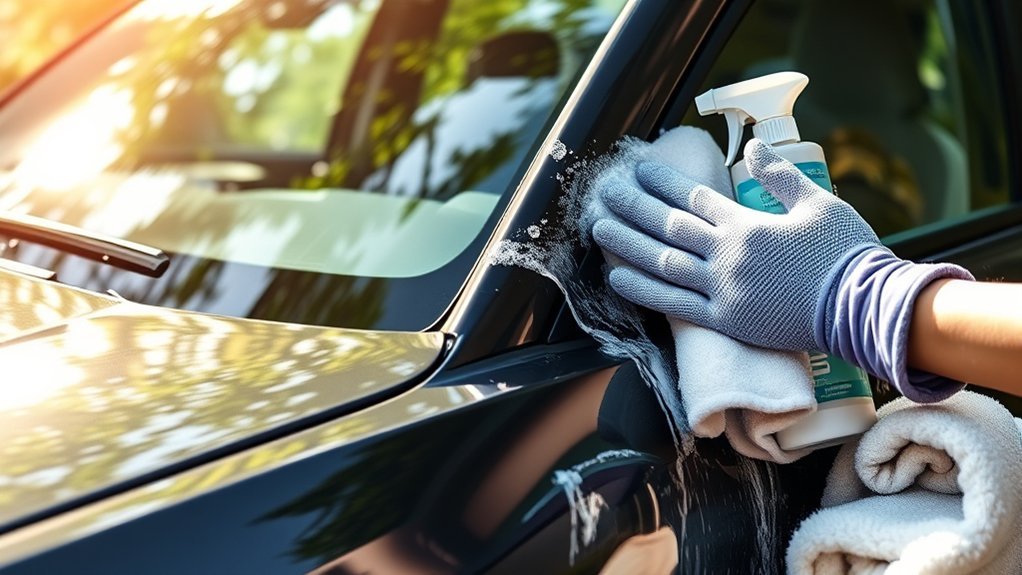
Regular washing is not just about making your RAV4 look clean. Dirt, road salt, bug residue, bird droppings, tree sap, and brake dust can stay on the surface and make later cleaning harder. Toyota’s exterior-care guidance says to work from top to bottom, apply plenty of water to the body, wheel wells, and underside, use a sponge or soft cloth, rinse car wash soap thoroughly, and wipe away water after washing.
There is no single wash interval that fits every RAV4. Many drivers wash every two to four weeks, but the surface condition matters more than the calendar. Wash sooner after road salt, mud, ocean spray, heavy pollen, construction dust, bird droppings, or bug-heavy highway driving. Removing contamination before it dries or hardens reduces the need for scrubbing.
Note: If your RAV4 has matte painted wheels, avoid polishing, dry scrubbing, or aggressive brushes. Use water, diluted neutral detergent when needed, and a soft sponge or cloth.
Essential Supplies for a Scratch-Free Wash
The right supplies make the difference between a clean RAV4 and a clean RAV4 covered in swirl marks. Before you start, gather everything so you are not tempted to grab a dirty towel halfway through the wash.
- Two buckets: One bucket for soapy water and one for rinsing your mitt.
- Grit guards: Optional, but helpful because they keep dirt lower in the bucket.
- pH-neutral car wash shampoo: Use a dedicated automotive soap, not dish soap or household cleaner.
- Microfiber wash mitt: Choose a soft mitt that releases dirt easily when rinsed.
- Separate wheel brush or mitt: Never use the same mitt on paint and wheels.
- Microfiber drying towels: Use plush, clean towels made for automotive paint.
- Hose, pressure washer, or foam cannon: A strong rinse helps remove loose grit before contact washing.
- Wax, sealant, or spray protection: Use after washing if the paint no longer beads water well.
Warning: Do not use bath towels, paper towels, old T-shirts, kitchen sponges, or a brush on your RAV4’s painted panels. They can trap grit or be too rough for clear coat.
[Products Worth Considering]

This three-piece windshield wiper set is designed for compatible Toyota RAV4 and Highlander models to help deliver clear visibility in everyday driving. The natural rubber blades feature a graphite-treated surface for quiet, smooth wiping performance and reliable weather resistance. Installation is quick and tool-free, making it easy to replace worn blades on the front and rear of your vehicle.

This front wiper blade set is designed to deliver clear, quiet visibility for compatible Toyota, Hyundai, and Honda vehicles with J/U hook wiper arms. The included driver and passenger blades provide a straightforward replacement for worn front wipers, with an OE-style connector and natural rubber edge for smooth wiping in rain, snow, and everyday driving. Always confirm your vehicle's fitment and original blade sizes before ordering.

This 3-piece windshield wiper set is designed for Toyota RAV4 models from 2019 to 2024 and also fits select Mazda 5 vehicles. It includes front and rear blades for a complete replacement, with Teflon-coated rubber for smooth, quiet wiping and reliable all-weather performance. The easy-install design helps match the original wiper arm structure for a simple, secure fit.
How Does the Two-Bucket Method Help Prevent Scratches?
The two-bucket method keeps most of the dirt out of your soap bucket. That matters because scratches usually happen when grit gets trapped in your wash mitt and is dragged across the clear coat.
- Fill one bucket with car shampoo and water. Follow the soap label for the correct dilution.
- Fill the second bucket with clean rinse water. This is where you clean your mitt after each panel.
- Dip the mitt into the soap bucket. Wash one small section at a time.
- Rinse the mitt in the rinse bucket. Rub it gently against the grit guard if you use one.
- Reload with fresh soap. Go back to the soap bucket only after the mitt is clean.
Work from the cleanest areas to the dirtiest areas: roof, glass, hood, upper doors, lower doors, rear hatch, bumpers, and rocker panels. Lower panels collect the most grit, so save them for the end and rinse your mitt more often there.
Reset rule: Stop and change your water, mitt, or towel if it feels gritty, the rinse water becomes heavily soiled, a towel touches the ground, or a panel begins drying before you can rinse it. Continuing with contaminated tools creates more risk than pausing to reset.
Why Should You Pre-Rinse a RAV4 Before Washing?

Pre-rinsing is where scratch prevention begins. The goal is to remove loose dust, sand, mud, and road film before your mitt ever touches the surface. Start at the top of the RAV4 and rinse downward so dirt flows off the vehicle instead of being pushed back over clean panels.
Importance of Pre-Rinsing
A thorough pre-rinse helps protect the paint in four ways:
- It removes loose dirt that could become an abrasive under your wash mitt.
- It softens dried grime, bug residue, and mud.
- It flushes grit from badges, trim edges, roof rails, and panel gaps.
- It wets the surface so soap can spread more evenly.
Techniques for Effective Pre-Rinsing
Use a hose with a spray nozzle, a pressure washer, or a foam cannon. With a pressure washer, follow the washer instructions and the owner’s manual for your exact RAV4 model year. Keep the nozzle moving, use a broad fan pattern, and do not direct concentrated pressure at damaged paint, cameras, sensors, seals, decals, or trim edges.
Pay extra attention to the wheel wells, lower doors, rear hatch, front bumper, and rocker panels. These areas usually collect the most road grime. Keep rinsing until the water running off the panels looks mostly clear.
Common Pre-Rinsing Mistakes
A rushed rinse can leave enough grit behind to scratch the paint. Avoid these mistakes:
- Starting at the bottom: This pushes dirty water over areas you still need to clean.
- Holding pressure too close: High pressure can damage weak paint, decals, trim, or seals.
- Skipping crevices: Dirt hides around mirrors, badges, roof rails, license plates, and the rear hatch.
- Letting mud dry: Dried mud should be softened and rinsed patiently, not scrubbed off.
What Car Soap Is Safe for Toyota RAV4 Paint?
Use a dedicated automotive shampoo designed for exterior paint. Toyota’s owner guidance allows car wash soap for hard-to-remove marks and recommends rinsing thoroughly with water afterward. A paint-safe shampoo provides lubrication between the mitt and clear coat, but it cannot make a dirty mitt safe. Clean wash media and frequent rinsing still matter.
[Products Worth Considering]

This front windshield washer nozzles kit is designed to help restore proper spray performance for a wide range of Toyota, Lexus, and Scion vehicles. Made from durable plastic for reliable replacement use, it offers an easy way to refresh worn or damaged washer nozzles and improve windshield cleaning coverage. The kit includes two nozzles and is a practical fitment solution for many popular models and years.

These Click&Fit windshield washer nozzles are designed to replace worn or damaged sprayers on a wide range of Toyota models, helping restore reliable windshield cleaning performance. The dual spray outlets provide broad fluid coverage for improved visibility and more efficient washer fluid use. Built for easy installation, they offer a quick way to refresh your vehicle's washer system and maintain clear driving conditions.

GENTLE CLEANING: pH neutral foaming car wash safe for use on all exterior car surfaces breaking down tough dirt, soils and road grime without stripping car wax, sealants or protective ceramic coatings
Types of Car Soaps
For routine washing, choose a pH-neutral or paint-safe car shampoo. These are made to clean road film without stripping protection as aggressively as household detergents. Avoid dish soap, all-purpose cleaners, degreasers, and glass cleaners on painted panels unless a product specifically says it is safe for automotive paint.
Wash-and-wax soaps can add a little gloss, but they are not a replacement for a real wax or sealant. For the safest scratch-free wash, focus first on lubrication, softness, and rinsing.
Proper Soap Dilution
More soap is not always better. Too much soap can leave residue and make rinsing harder. Too little soap reduces lubrication. Follow the product label, then fill the bucket with a strong stream of water to create suds.
If your rinse bucket turns dark quickly, dump it and refill it. Dirty rinse water defeats the purpose of the two-bucket method.
How to Wash Your RAV4 Without Scratching the Paint
Once the wheels are clean, the RAV4 is pre-rinsed, and your buckets are ready, wash one section at a time. The main controllable risks are trapped grit, too much pressure, and allowing soap or water to dry on the panel.
- Wash in the shade. Cool panels give you more working time and reduce soap spots.
- Start with the roof and glass. Work downward as the vehicle gets dirtier.
- Use light pressure. Let the soap and mitt do the work.
- Rinse your mitt after every section. Rinse even more often on lower panels.
- Keep the vehicle wet. Do not let soap dry on the paint.
- Use separate tools for dirty areas. Wheels, tires, exhaust tips, and lower rocker panels need their own mitts or brushes.
- Final-rinse thoroughly. Remove all soap from badges, mirrors, grille openings, trim, and panel gaps.
The main scratch risk you can control is abrasive dirt moving across the clear coat. Reduce that movement with a thorough rinse, clean tools, plenty of lubrication, and light pressure.
How to Dry Your RAV4 Without Water Spots
Drying is another common place where swirl marks happen. Do not let the RAV4 air-dry in direct sun, and do not wipe it with a rough towel. Minerals in water can leave spots, especially on dark paint and glass.
The safest drying method is to blow water out of mirrors, badges, roof rails, grille openings, and trim gaps first. Then use a clean, plush microfiber drying towel on the painted panels. Lay the towel flat and gently pull it across the surface, or pat the panel dry. Avoid hard rubbing.
If a towel hits the ground, stop using it on paint until it has been washed. One dropped towel can pick up enough grit to scratch a door or hood.
Pro Tip: A light mist of paint-safe drying aid or spray wax can add lubrication while drying. Spray it onto the towel or wet panel, then dry gently with clean microfiber.
[Products Worth Considering]

1 TOWEL DRIES THE WHOLE CAR: Dry your entire car or truck in just one stroke with this super soft twisted loop microfiber drying towel - no wringing out required! We call it Mega because it absorbs more water than other drying towels, which means no streaks, no smears, and no spots! Just a more efficient and effective drying experience and a clean, shiny vehicle.

One-Pass, Spot-Free Drying: AetherAuto's 1300 GSM dual-layer twisted loop microfiber pulls water off paint and glass in under 3 seconds, making this car drying towel the fastest way to finish without streaks or water spots. One smooth pass across the hood, roof, or doors leaves a spotless, mirror-like finish that looks professionally detailed

Extra Large & Professional Size - Upgrade your car care routine with the Amzgo 2-pack professional large microfiber car drying towels, each measuring a generous 31" x 24". The extra large size makes them perfect for cars, SUVs, RVs, trucks, and boats, allowing you to dry an entire vehicle in minutes. Whether you're into auto detailing or just need a quick drying towel, this big microfiber cloth gets the job done fast and effortlessly.
Why Should You Wash RAV4 Wheels and Tires First?

Wheels and tires are usually the dirtiest parts of your RAV4. They collect brake dust, road film, tar, and grit. Washing them first keeps dirty splash from landing on freshly washed paint later.
Prevent Cross-Contamination
Use separate tools for wheels and paint. A wheel brush or mitt should never touch the hood, doors, roof, or hatch. Brake dust and grit can stay trapped in the fibers, even after rinsing.
- Use a separate wheel bucket if possible.
- Rinse wheels before applying cleaner.
- Clean one wheel at a time so chemicals do not dry.
- Rinse thoroughly before moving to the painted body panels.
- Wash your hands or change gloves before touching paint tools.
Effective Brake Dust Removal
For light dirt, car shampoo and a soft wheel mitt may be enough. For heavier brake dust, use a wheel cleaner that is safe for your wheel finish. Always read the label, especially if your RAV4 has black, machined, matte, or aftermarket wheels.
Do not use harsh household degreasers on wheels or tires. If a cleaner smells extremely strong, changes color, or is made for heavy-duty brake dust, keep it away from painted panels and rinse it fully.
Wax Your RAV4 for Extra Protection After Washing
After washing and drying, check whether the paint still beads water. Toyota recommends waxing when the waterproof coating deteriorates and says to apply wax when the vehicle body is cool. If water lies flat on clean paint instead of beading, it is time to add protection.
You can use traditional wax, synthetic sealant, ceramic spray sealant, or a quick spray wax. The best choice depends on how much time you want to spend and how long you want protection to last.
- Carnauba wax: Warm gloss, usually shorter durability.
- Synthetic sealant: Longer protection and strong water beading.
- Ceramic spray sealant: Easy application and good water behavior when used correctly.
- Spray wax: Fast touch-up after routine washes.
Apply protection only to clean, cool paint. Use a soft applicator or microfiber towel, follow the product directions, and buff gently with a clean towel. Do not wax textured black trim unless the product says it is trim-safe.
Top 5 Mistakes to Avoid While Washing Your RAV4
A scratch-free wash is mostly about avoiding bad habits. These are the mistakes most likely to leave swirls, streaks, or water spots.
- Using dish soap or household cleaners: These can strip protection and may dry out exterior surfaces.
- Skipping the pre-rinse: Touching dry dirt is one of the easiest ways to scratch paint.
- Washing in direct sunlight: Hot panels make soap and water dry too fast.
- Using one towel for everything: Paint, wheels, door jambs, and exhaust tips should not share the same towel.
- Rubbing hard to remove stuck-on grime: Soften contamination first with water, car shampoo, or a paint-safe remover.
What About Automatic Car Washes?
A careful hand wash gives you the most control over tool cleanliness and pressure. A touchless automatic wash avoids brush contact but may leave bonded grime behind, while a soft-touch wash adds physical contact from the facility’s equipment. No automatic method can guarantee a scratch-free result.
Before using an automatic wash, check the owner’s manual for your exact RAV4 model year and powertrain. Mirror, automatic-wiper, power-back-door, hands-free liftgate, antenna, and accessory instructions can vary. The 2025 Toyota guidance linked below includes model-specific preparation steps, but it should not be treated as a substitute for a different model year’s manual.
Note: If your RAV4 is extremely muddy, pre-rinse it yourself before using any automatic wash. Heavy mud can be dragged across the paint by brushes, cloth strips, or even your own drying towel.
How to Handle Bugs, Sap, Bird Droppings, and Water Spots
Some contaminants need special care because scrubbing them can scratch the clear coat.
- Bug splatter: Soak it with car shampoo or a paint-safe bug remover, then wipe gently with microfiber.
- Bird droppings: Remove them as soon as possible. Soften first with water or detail spray before wiping.
- Tree sap: Use a paint-safe sap remover. Do not scrape with fingernails, blades, or hard plastic.
- Water spots: Rewash the area first. If spots remain, use a paint-safe water spot remover and follow the label.
- Tar: Use an automotive tar remover, then rinse and reapply wax or sealant to that area.
Eco-Friendly Washing Tips for Your RAV4
When you wash at home, dirty wash water can carry detergent, oils, metals, and road grime into storm drains. The U.S. Environmental Protection Agency notes that outdoor vehicle washing can send detergent-rich water and pollutants into stormwater systems. To reduce runoff, use only the amount of soap needed, direct water to grass or gravel where local rules allow, and keep wash water out of storm drains.
A commercial car wash can be a good option when you need to control runoff because many facilities drain wastewater to sanitary systems or use water-reclaim equipment. If you wash at home, check local rules because some cities restrict driveway washing during droughts or stormwater-control periods.
Frequently Asked Questions
How do I clean the outside of my RAV4 without damaging the paint?
Pre-rinse thoroughly, wash with dedicated car shampoo, use a microfiber mitt, rinse the mitt often, and dry with clean microfiber towels. Avoid household cleaners, rough towels, brushes, and scrubbing dry dirt.
How do I wash my car without scratching the paint?
Use the two-bucket method, plenty of water, a soft microfiber wash mitt, and light pressure. Work from top to bottom and rinse the mitt after every panel so dirt does not get dragged across the clear coat.
What type of car wash does not scratch paint?
No wash method can guarantee zero scratches. A careful hand wash gives you the most control over tool cleanliness and pressure. A touchless automatic wash avoids brush contact but may leave bonded grime behind.
What does Toyota recommend for washing a RAV4?
Toyota recommends applying plenty of water from top to bottom, including the wheel wells and underside, washing with a sponge or soft cloth, using car wash soap for hard-to-remove marks, rinsing thoroughly, wiping away water, and waxing when water no longer beads on clean paint.
Should I wash my RAV4 wheels before or after the paint?
Wash the wheels first if you are doing a full wash. Wheels are usually the dirtiest areas, and cleaning them first prevents brake dust and grime from splashing onto paint you already washed. Always use separate wheel tools.
Can I use dish soap to wash my RAV4?
Do not use dish soap for routine washing. It is not made for automotive paint care and can remove wax or sealant faster than a dedicated car shampoo. Use a pH-neutral car wash soap instead.
Conclusion
To wash your RAV4 without scratching the paint, match the method to the dirt level, wash the wheels with separate tools, pre-rinse thoroughly, use light pressure, and stop whenever a mitt or towel may be contaminated. Dry with clean microfiber or air, then add wax or sealant when the clean, cool paint no longer beads well. For more model-specific ownership help, browse the Toyota RAV4 Guide.
Sources
- Toyota Owners — 2025 RAV4 Cleaning and Protecting the Vehicle Exterior — supports Toyota’s exterior washing, drying, waxing, and automatic car wash guidance.
- Toyota Owners — Manuals and Warranties — official source for model-year owner manuals and maintenance guidance.
- U.S. Environmental Protection Agency — Vehicle Maintenance and Washing BMP — supports stormwater and runoff cautions for outdoor vehicle washing.
- Washington State Department of Ecology — Car Washing and Storm Drains — supports keeping soap, dirt, and oil out of storm drains when washing at home.