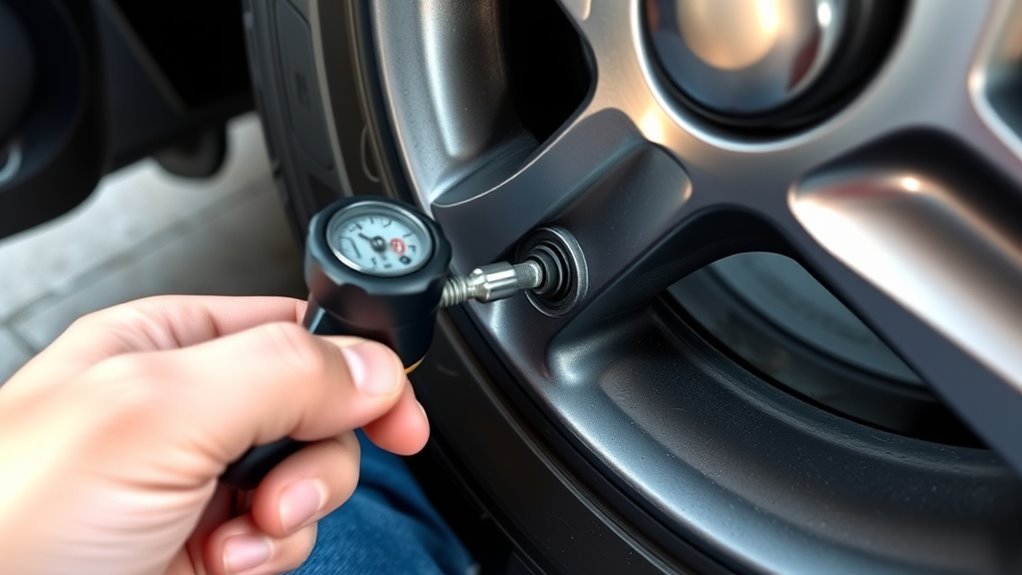
Use a handheld gauge and the PSI on your RAV4’s driver door jamb. Remove the valve cap, press the gauge firmly onto the stem until the reading stabilizes, record the value, then repeat for each tire when cold. Inflate or deflate to the door‑jamb recommendation, account for ~1 PSI drop per 10°F, and recheck. Treat TPMS as a backup, not a substitute. Continue for step‑by‑step inflation, TPMS checks, and troubleshooting tips.
How to Check RAV4 Tire Pressure (Quick Steps)
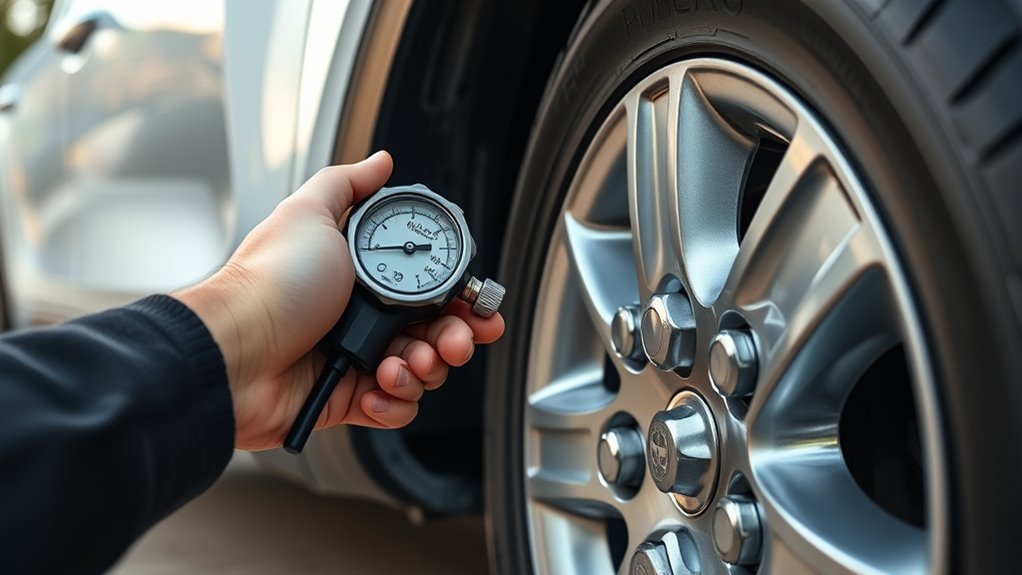
When you’re preparing for a drive or routine maintenance, check each tire’s pressure with a reliable gauge—do this at least monthly or before long trips to maintain safety and performance. You’ll remove the valve cap, press the gauge firmly onto the valve stem, read the value, and record it. Use consistent timing—cold tires give repeatable results—and repeat for all four wheels. Apply tire maintenance tips: inspect tread and sidewalls while you’re there. Note that pressure drops about 1 PSI per 10°F decrease; increase monitoring during seasonal shifts. Don’t wait for the dashboard light; that’s reactive. If pressure’s low, use a portable inflator, home compressor, or station pump to raise it, then recheck with the gauge. Secure valve caps and log readings. These pressure monitoring techniques keep you autonomous on the road, reducing risk and dependence on emergency services while preserving fuel efficiency and tire life.
Confirm the Correct PSI for Your RAV4
Check the sticker on the driver’s door jamb to confirm the factory-recommended pressure for your 2021 RAV4—35 PSI front and rear. Don’t use the number on the tire sidewall, since that’s the maximum tire rating, not the vehicle specification. If ambient temperature has fallen, add roughly 1 PSI for every 10°F (≈5.5°C) decrease to maintain the target pressure.
Check Door Jamb Sticker
Look at the driver’s door jamb sticker to confirm the exact PSI your RAV4 requires; for a 2021 RAV4 that value is 35 PSI front and rear. You’ll use that sticker as the authoritative source for tire maintenance and safety checks, not the tire sidewall. Check it regularly to preserve handling, fuel efficiency, and safety. If the sticker’s unreadable, consult the owner’s manual.
| Item | Value |
|---|---|
| Model Year | 2021 |
| Recommended PSI | 35 front / 35 rear |
| Source | Door jamb sticker |
| Backup | Owner’s manual |
Read the sticker before measuring. Set your gauge to the listed PSI, adjust cold pressures, and log results. This keeps you free from avoidable roadside risks.
Ignore Tire Sidewall
Although the tire sidewall lists a maximum inflation value, you should ignore that number for setting your RAV4’s pressures and instead use the driver’s door jamb sticker (35 PSI front and rear for a 2021 RAV4), since the sidewall reflects tire capacity—not the vehicle’s recommended operating pressure for safety, handling, and fuel efficiency. You rely on manufacturer guidance to confirm correct PSI; it accounts for load, suspension geometry, and intended dynamics. Treat sidewall values as technical limits, not targets. Dispelling tire pressure myths protects you from overinflation that reduces grip and underinflation that increases wear and rolling resistance. As part of routine tire maintenance tips, check pressures cold, compare to the door jamb sticker, and record readings to maintain ideal performance, safety, and liberation on the road.
Adjust For Temperature
Because tire pressure falls about 1 PSI for every 10°F drop, you should confirm your RAV4’s recommended PSI before inflating and adjust seasonally or with major temperature swings. Check the driver’s door jamb for the manufacturer-specified 35 PSI (2021 RAV4) and verify with a calibrated gauge when tires are cold. Temperature effects are predictable: a 30°F drop can lower pressure ~3 PSI, so add air to restore the specified cold PSI. Perform seasonal adjustments as temperatures change—inspect weekly during shifts. Use the gauge to measure, then inflate to the sticker value rather than the sidewall. Accurate PSI preserves handling, economy, and safety, and gives you control over conditions that try to limit your mobility.
When and Where to Check Tire Pressure
Check your tire pressure at least once a month and before long trips, using a gauge rather than relying on the RAV4’s TPMS because it doesn’t show exact readings. Dispel tire pressure myths: visual checks and dashboard alerts aren’t precise. You’ll get reliable numbers only with a gauge and by observing cold tire importance — measure when tires are cold, ideally before driving or after several hours stationary, to avoid heat-induced pressure rise.
Choose stable locations: a shaded driveway, garage, or parking lot where the vehicle has been idle. Avoid measuring immediately after driving; rolling heats air and skews readings. Monitor more often during seasonal temperature swings — expect about 1 PSI drop per 10°F decline. Use the driver’s door jamb sticker for the target PSI (around 35 PSI for many RAV4s) and compare with your gauge. Regular, consistent checks free you from uncertainty, improve safety, fuel economy, and tire life.
Step‑by‑Step: Read a Handheld Gauge
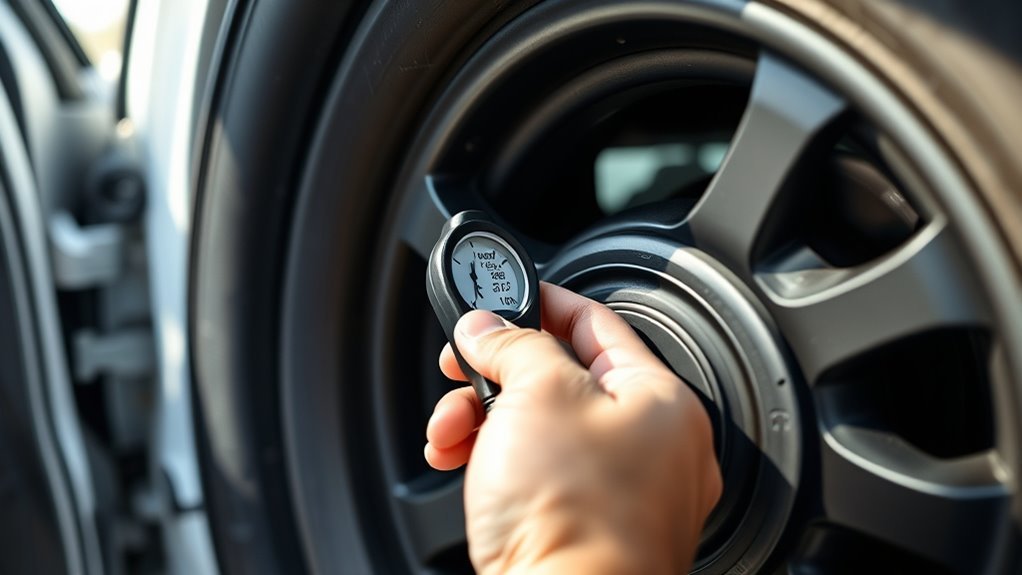
Now that you know when and where to measure, here’s how to read a handheld gauge step by step. Verify the tire is cold — check before driving or after it’s sat for a few hours. Remove the valve cap and press the handheld gauge firmly onto the valve stem; seal and angle matter for gauge accuracy. Read the PSI shown, note the value, and compare it to the recommended pressure on the driver’s door jamb (around 35 PSI for a 2021 RAV4). If below spec, add air and recheck until PSI matches the recommendation. Repeat for all tires, confirming consistency to preserve handling and fuel efficiency. You’ll gain control and freedom by maintaining correct tire pressure.
| Step | Action | Purpose |
|---|---|---|
| 1 | Cold check | Stable baseline |
| 2 | Firm seal | Maximize gauge accuracy |
| 3 | Inflate/recheck | Achieve recommended PSI |
TPMS Alerts vs. Manual Gauge: Which to Trust?
TPMS will warn you when pressure falls below a threshold, but it doesn’t report exact PSI and can lag behind gradual drops. A handheld gauge gives you precise readings (e.g., the 2021 RAV4’s 35 PSI spec) so you can correct pressures proactively. Use TPMS as a backup alert, but rely on a manual gauge for accurate, routine monitoring.
TPMS Warning Limitations
Although your RAV4’s TPMS will warn you of low pressure, it doesn’t show exact readings and can lag until pressure has fallen substantially, so you shouldn’t rely on it as your sole monitoring method. You want independence from surprises: understand TPMS accuracy concerns and follow system maintenance tips, but pair them with manual checks. TPMS is reactive; it may let pressure drop well below safe thresholds before illuminating.
- Use a calibrated manual gauge to verify each tire against the 35 PSI spec.
- Check pressures when tires are cold and after temperature shifts (≈1 PSI per 10°F drop).
- Inspect TPMS sensors during service and reset after rotations or replacements.
Combining TPMS alerts with disciplined manual measurement preserves safety, efficiency, and your freedom on the road.
Benefits Of Manual Gauge
Because the TPMS only signals when pressure is already low and doesn’t give exact numbers, you should use a calibrated manual gauge to verify each tire’s pressure against the 35 PSI spec; a manual gauge gives precise, immediate readings so you can catch small losses (roughly 1 PSI per 10°F drop) and correct them before they affect safety or fuel economy. You’ll rely on a manual gauge for proactive tire maintenance: it quantifies pressure, exposes gradual leaks, and confirms repairs. TPMS is reactive; you need direct measurement to act early. Using a handheld gauge enhances control and delivers clear safety benefits — reduced blowout risk, optimized traction, and better fuel economy — letting you maintain independence over vehicle readiness.
Inflate RAV4 Tires at a Gas Station Pump
Start by parking next to the air pump and grabbing your tire pressure gauge; you’ll find the recommended PSI on the driver’s door jamb (for example, 35 PSI on a 2021 RAV4). Walk to the pump, keep tools visible, and apply tire inflation tips with purposeful intent—you’re reclaiming control of safety and efficiency. Locate the valve, remove the cap, and seat the hose firmly to avoid leaks.
- Attach the air hose securely; listen for leaks and adjust until you have a tight seal.
- Inflate slowly, check pressure frequently with your gauge, and stop at the specified PSI.
- Replace the valve cap, then move to the next tire and repeat until all four match the recommended pressure.
Practice discreet gas station etiquette: minimize time at the pump, keep equipment tidy, and leave the area clean. Accurate inflation optimizes mileage, handling, and freedom from roadside issues.
Use a Portable Inflator or Home Compressor
For quick roadside adjustments, a portable inflator with a built-in gauge and automatic shut-off lets you set pressure precisely without hunting for a station. If you maintain tires regularly at home, a compressor offers faster fill rates and lower cost per use for repeated inflations. Always set the target pressure to the manufacturer’s recommendation on the driver’s door jamb and monitor with your gauge while inflating.
Portable Inflator Benefits
When you need to correct tire pressure quickly, a portable inflator or home compressor gives you on-the-spot control without detours to a gas station. You keep mobility and reduce dependence on external services by carrying a compact inflator that fits your RAV4.
- inflator features: built-in pressure gauge and automatic shut-off let you set PSI precisely and stop at target.
- safety advantages: automatic cut-off prevents over-inflation; accurate monitoring reduces blowout and handling risks.
- portability: lightweight design stores easily for emergencies and routine checks, saving time and preserving tire life.
You’ll gain autonomy and lower operating costs while maintaining correct tire pressure. Use the device to confirm gauge readings and act immediately when pressure deviates.
Home Compressor Tips
Keep a compatible portable inflator or home compressor on hand and verify valve fit before use to prevent leaks and guarantee accurate inflation. Before connecting, check tire pressure with a gauge; you don’t want to over-inflate and compromise grip or safety. Set the target PSI—around 35 PSI for a 2021 RAV4—on models with auto-shutoff so inflation stops precisely at the desired value. Inspect hoses, fittings, and seals as part of routine compressor maintenance; repair or replace components that leak or show wear. Clean intake and vents to preserve performance. Keep your portable inflator accessible in inflator storage within the vehicle for rapid checks and adjustments pre-trip. These practices give you control, reduce dependence, and safeguard mobility.
Adjust Tire Pressure for Temperature and Load
Because temperature and load directly affect tire pressure, you should adjust PSI proactively rather than reactively. Check the door jamb for the manufacturer’s recommended pressure (about 35 PSI on many RAV4s) and use a reliable gauge; TPMS isn’t precise. For temperature changes, apply a simple rule: reduce or add 1 PSI for every 10°F (about 6°C) shift to maintain target pressures and predictable handling.
- tire pressure adjustments: measure cold, then correct per 10°F increments to preserve fuel efficiency and tire life.
- load considerations: increase pressure slightly when carrying extra weight, following owner’s manual guidance to retain stability and braking performance.
- monitoring routine: inspect pressures seasonally and before long trips; document readings for repeatable corrections.
You want control and freedom on the road—maintain pressures precisely, act on measured readings, and align adjustments with manufacturer specs to maximize safety, range, and tire longevity.
Top Tire‑Pressure Mistakes and How to Avoid Them
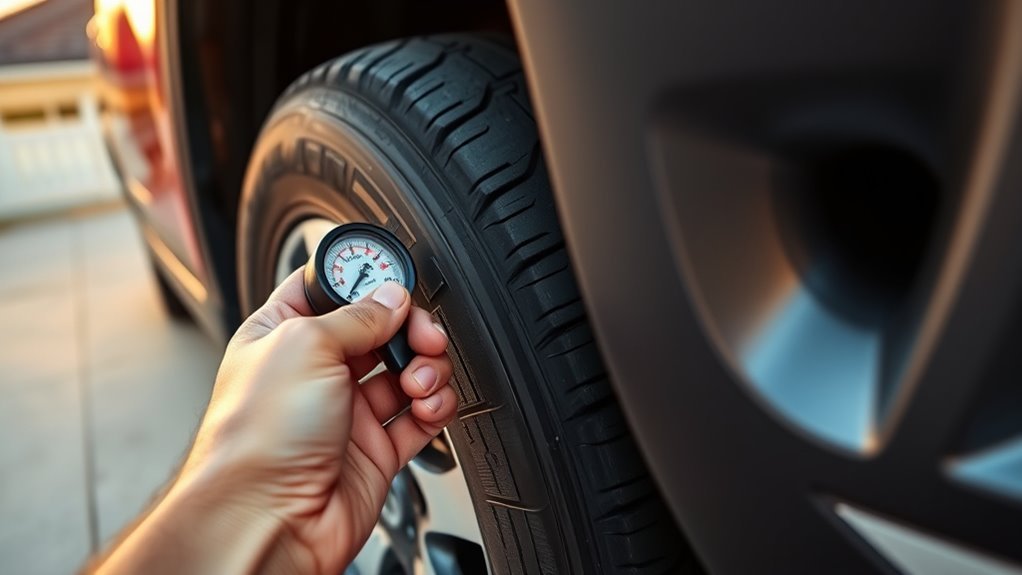
If you rely on the TPMS light, wait until it triggers, or read the sidewall instead of the door-jamb sticker, you’re risking reduced fuel economy, uneven wear, and compromised handling. Stop these common misconceptions: TPMS only warns when pressure is markedly low and doesn’t provide PSI, and the sidewall shows max inflation, not the vehicle’s recommended tire pressure. Check each tire monthly and before long trips with a calibrated gauge. Account for ambient temperature: a 10°F drop lowers pressure about 1 PSI, so adjust seasonally and for heavy loads per the door-jamb sticker. Don’t mistake slow leaks or gradual drops as harmless—regular measurements catch them early. Use consistent measuring conditions (cold tires) and record readings to detect trends. You’re reclaiming control over safety, economy, and performance by relying on measurement, not assumptions. Make precise, routine checks part of your liberation from preventable failures.
TPMS Troubleshooting and When to See a Mechanic
When the TPMS warning light comes on, check each tire’s pressure with a calibrated gauge immediately and note whether the light is steady or flashing—steady usually means low pressure in one or more tires; flashing typically signals a system fault. You’ll act with purpose: correct any low tire pressure to the recommended PSI, then drive briefly to let the system re-evaluate. If the indicator persists, pursue targeted diagnostics.
- Verify pressures and valve integrity; replace leaking components promptly as part of TPMS maintenance tips.
- If the light flashes or returns after correction, run system recalibration or scan for sensor faults when diagnosing TPMS issues.
- If the system fails to warn reliably or shows inconsistent behavior, seek professional diagnostic testing.
You deserve reliable safety. When standard remedies don’t clear faults, consult a mechanic for sensor replacement, module repair, or software updates so you regain control and freedom on the road.
Frequently Asked Questions
How to See the Tire Pressure on RAV4 Display?
You can’t view exact tire pressure on the RAV4 display unless your model and Toyota app support it; check display settings for TPMS alerts, enable app telemetry, and use a gauge for precise tire pressure readings.
Does Toyota RAV4 Tell You Which Tire Is Low?
Yes — and no: your RAV4’s warning system signals low tire pressure but usually won’t identify which tire; you’ll need to check each tire manually unless your model’s Connected Services provides individual tire pressure readings via app.
How Do You Know Which Tire Is Low on a Toyota?
No, it won’t tell you which tire is low; you’ll use a tire pressure gauge to check each wheel. Monitor warning indicators, record PSI, and correct underinflation to regain control, safety, and driving freedom.
Conclusion
You’ve learned the steps to check and adjust your RAV4’s tire pressure; now act. Regularly verify PSI with a handheld gauge—think of it as your vehicle’s pulse—and trust it over intermittent TPMS alerts. Check when tires are cold, correct for load and temperature, and use a portable inflator or compressor to fine‑tune pressure. Avoid common mistakes like overinflation or relying solely on dashboard warnings. If readings stay inconsistent, have a mechanic inspect the system.