You’ll prep tools and parts, jack and support the Tacoma, then remove the wheel, pry off the dust cap and loosen the axle nut. Loosen the tie rod and ball joint to free the knuckle, support it, and pull the old axle from the hub and differential while catching any fluid. Inspect and replace torn seals, seat the new splined axle straight with light lube, and torque fasteners to spec; follow the full steps below for complete guidance.
Before You Start: Tools, Parts, Time, and Safety for a Tacoma CV Axle Job
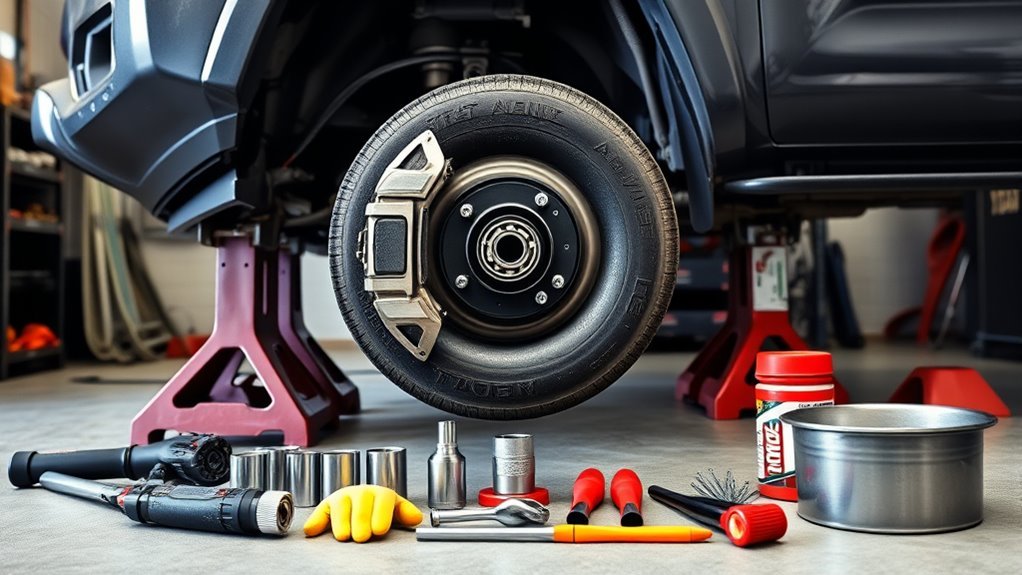
Before you lift the truck, gather the right tools and parts so the job goes smoothly: a 21 mm and 19 mm socket, a large pry bar, ratchet strap, and a soft-faced mallet, plus a new CV axle, any required axle seal, and spline lubricant. Start with a preparation checklist: confirm tools, parts, collection bucket for differential fluid, and adequate lighting. Allocate 2–4 hours; plan extra time for complications. Follow safety precautions: wear gloves and safety glasses, block the vehicle, and use rated jack stands—never rely on a jack alone. Position the ratchet strap to control steering and preload suspension if needed. Keep fasteners organized and label locations. Inspect replacement parts for correct spline count and seal dimensions before installation. Apply spline lubricant sparingly and seat the axle seal per torque specs when replacing. You’ll work efficiently and free yourself from dependency by preparing thoroughly and respecting procedural safety.
Remove Wheel, Dust Cap, and Axle Nut Safely
With the truck safely supported, remove the six lug nuts with a 21 mm socket and take the wheel off, then pry the dust cap away to expose the axle nut; pull the cotter pin with a cotter-pin tool and use a socket wrench to loosen and remove the axle nut, checking that the axle can move freely in the hub—if it’s stuck, tap around the hub with a hammer to break it loose.
Perform wheel removal intentionally: confirm jack stands and parking brake, back off lug nuts before lifting, then fully remove them with the 21 mm socket. Detach the dust cap carefully to achieve full axle exposure without deforming the cap. Extract the cotter pin with the cotter-pin tool; discard bent pins and use new ones on reassembly. Use a correctly sized socket wrench and breaker bar if necessary to overcome torque on the axle nut. After removal, inspect axle seating and rotate the hub; if resistance remains, deliver controlled hammer taps around the hub to free the splines. Maintain safety, precision, and the resolve to reclaim control of your vehicle.
Loosen Tie Rod and Ball Joint and Free the Knuckle
Loosen the outer tie rod nut with a 19 mm socket, leaving a few threads engaged so the tie rod doesn’t fall out. Tap the knuckle with a hammer to release the tie rod, then remove the two 19 mm bolts on the ball joint bracket to free the knuckle from the suspension. Pull the axle through the hub while drawing the knuckle forward and use a ratchet strap to hang and support the knuckle during axle extraction.
Loosen Outer Tie Rod
Use a 19 mm socket to back off the outer tie rod nut, leaving a few threads engaged so the tie rod won’t drop out prematurely. Maintain awareness of tire alignment and steering geometry; backing off too far will disrupt settings you intend to preserve. Strike the knuckle sharply with a hammer to break the taper and release tension on the tie rod stud, so separation requires minimal force. Remove the two bolts securing the ball joint bracket with a 19 mm socket to free the knuckle from the suspension, then pull the axle through the hub while drawing the knuckle forward for better access to the CV axle. Secure the knuckle with a ratchet strap to hang it clear, improving visibility and giving you liberated maneuverability during the replacement.
Separate Ball Joint
Start by backing off the outer tie rod nut with a 19 mm socket, leaving a few threads engaged so the tie rod won’t drop out prematurely, then strike the knuckle near the tie rod stud to break the taper and release tension. Once the tie rod separates, remove the two bolts securing the ball joint bracket with the 19 mm socket, keeping hardware organized for reinstallation. Gently pull the knuckle forward to free the axle while simultaneously guiding the axle through the hub; control prevents damage and preserves knuckle alignment. This step is essential to ball joint maintenance and safe disassembly. If you want freedom from shop constraints, work deliberately: free the knuckle, protect components, and prepare the hub for axle extraction.
Support And Hang Knuckle
Secure the knuckle for work by backing off the outer tie rod nut with a 19 mm socket—leave a few threads engaged so the tie rod won’t drop out—then firmly strike the knuckle near the tie rod stud to break the taper and free the tie rod; next remove the two 19 mm bolts holding the ball joint bracket, pull the knuckle forward enough to clear the axle from the hub, and hang the knuckle with a ratchet strap to support it while you extract the CV axle. You’ll gain control and knuckle support to protect suspension geometry and preserve axle stability during removal.
- Use a 19 mm socket to loosen and remove specified nuts and bolts.
- Tap the knuckle gently to release the tie rod taper without damage.
- Hang the knuckle with a ratchet strap to maintain axle stability and free the hub for axle extraction.
Remove Old Axle : Inspect Seal, Hub, and Differential

Before you pull the axle, verify it moves freely in the hub to ease extraction. Inspect the axle seal for tears and position a bucket under the differential to catch any fluid. As you withdraw the axle, keep it aligned to protect the splines and check the hub and differential for abnormal wear or damage.
Inspect Axle Seal
With the axle removed, closely inspect the axle seal for rips, tears, or surface imperfections that could allow fluid to leak. You’ll perform seal maintenance now: verify the seal lip is smooth, free of nicks, and that wear indicators (edge thinning, hardening) aren’t present. Clean the mating surface and look for embedded debris that would compromise sealing.
- Check the seal’s circumference for cuts, deformities, or hardened spots.
- Confirm the hub’s mating face near the seal is smooth and corrosion-free.
- Examine the differential opening for any fluid traces or scoring that suggest internal wear.
If the seal shows no damage and passes these checks, you can reuse it; otherwise replace it before installing the new axle.
Check Hub And Differential
Start by seating yourself so you can work comfortably, then verify the axle moves freely inside the hub—this prevents damage when you extract it. Place a bucket under the differential to catch fluid when you pop the axle out. Pull the axle through the hub while pulling the knuckle forward to ease extraction. Inspect the axle seal for rips or tears; replace if damaged. Perform a focused hub inspection: check bearing play, corrosion, and mating surfaces. Confirm differential alignment and that splines will engage straight when installing the new axle. Clean sealing surfaces and remove debris. Reassess seals after test-rotating the hub. Proceed confidently—you’re reclaiming control of your vehicle and ensuring reliable drivetrain function.
| Item | Action |
|---|---|
| Hub inspection | Check play, corrosion |
| Seal | Inspect, replace if torn |
| Differential alignment | Verify spline engagement |
| Fluid | Catch, note level |
Install New CV Axle: Seat Splines and Reseat or Replace Seal
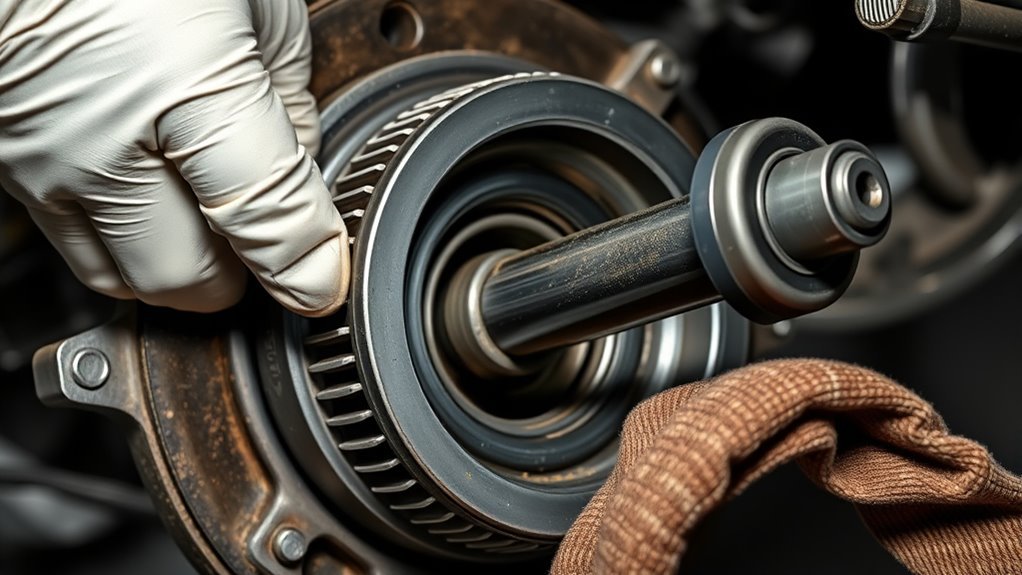
Align the spline teeth on the new CV axle with the differential output and slide the axle in until it seats; a light coat of lubricant on the splines helps it engage smoothly. You’re performing precise spline alignment and axle lubrication to free the drivetrain from past wear. Push straight, avoiding angle stress; you should feel or hear a click when the inner joint fully seats.
- Inspect the axle seal for rips or deformation; decide to reuse only if pristine.
- If replacing the seal, remove the old seal carefully, seat the new seal squarely, and lightly grease the inner lip.
- Use a soft-face mallet to deliver controlled taps to the axle flange until fully engaged.
Confirm the axle aligns with the hub splines before reassembling the knuckle. Proper seating and a good seal prevent contamination and oil loss, restoring a reliable, liberated connection between the differential and wheel hub.
Torque Specs, Troubleshooting Tips, and Final Road Test
Now that the axle is seated and the seal addressed, tighten fasteners to specified values and verify fitment before testing. Torque specifications: torque the axle nut to 173 ft-lbs while using a punch to hold the hub steady. Tighten lower knuckle bolts to 118 ft-lbs to secure suspension geometry. For outer tie rod nuts, torque to 67 ft-lbs then add a 60° turn to lock alignment. Installation tips: inspect the axle seal—if undamaged, reuse to avoid waste; if torn, replace. Use calibrated tools and a torque wrench; work deliberately and reclaim authority over sloppy repairs.
Troubleshooting tips: if you hear clicking, feel vibration, or see grease leakage, recheck nut torque, spline seating, and seal condition. Confirm tie rod angle and knuckle bolt tightness. Final road test: drive varying speeds and turns, listen for noise, and re-torque components after initial miles. If anomalies persist, pull the assembly and reassess to restore safe, liberated control.
Frequently Asked Questions
How to Tell if a CV Axle Is Bad in Tacoma?
You spot a bad CV axle by symptom identification: listen for clicking when turning, feel vibration under acceleration, check for grease on boots, test joint play, and perform axle maintenance inspections to confirm wear and plan replacement.
Conclusion
You’ve finished the job: the new CV axle slides in like a key into a lock, splines meshing cleanly and the seal seating flush like a tight lid. Torque the nut and suspension bolts to spec, bleed any play from joints, then lower the truck. Take it for a cautious drive—listen for clicks, feel for vibrations—and recheck torque and seals. If everything’s quiet and smooth, you’ve restored reliable traction and avoided a bigger teardown.