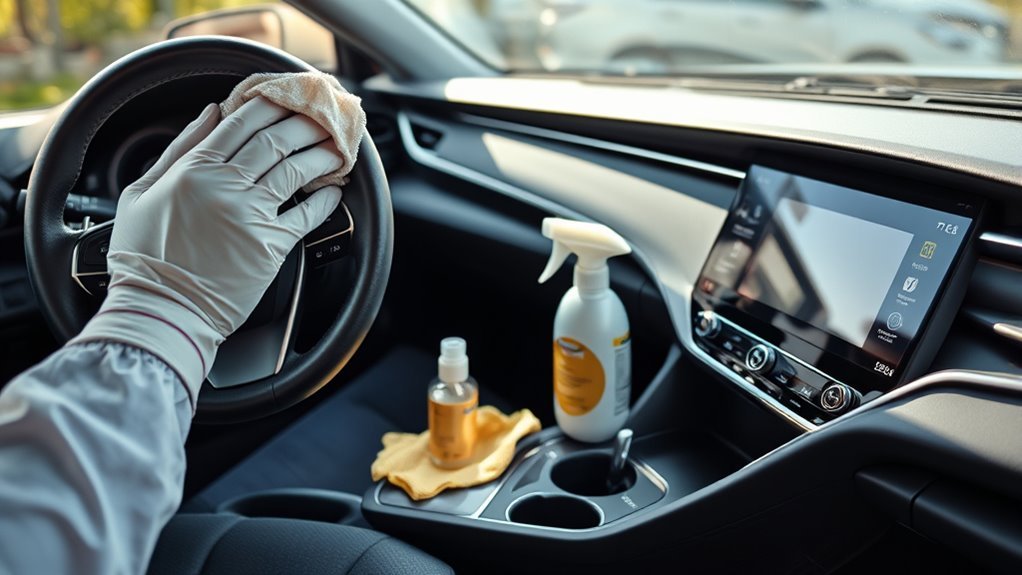
Your Camry’s cabin collects fingerprints, skin oils, food residue, and germs on the surfaces you touch most: the steering wheel, door handles, shifter, seatbelt buckles, cupholders, console, and infotainment controls. The safest way to disinfect these areas is to clean dirt first, use a product that is compatible with automotive interiors, follow the label’s contact time, and avoid harsh chemicals that can damage Toyota interior materials.
Quick Answer
To disinfect high-touch surfaces in a Toyota Camry, remove clutter, ventilate the cabin, clean visible dirt, then wipe hard nonporous touch points with an automotive-safe disinfectant. Keep the surface wet for the label’s contact time, then dry with microfiber. Use only a soft damp cloth on the Toyota touchscreen.
Key Takeaways
- Clean first, then disinfect; dirt and oils can reduce how well disinfectants work.
- Use disinfectants only where the product label allows, and check that they are safe for plastics, vinyl, leather, and other interior materials.
- Avoid bleach, ammonia, solvents, gasoline, benzene, alkaline or acidic cleaners, and alcohol-based cleaners on sensitive Toyota interior surfaces.
- Do not spray liquid directly onto screens, buttons, seams, ports, or switches.
- Disinfect weekly for normal use, and wipe shared high-touch areas after passengers, rideshare use, illness, or messy trips.
At a Glance
| Time Required | 10–20 minutes for a quick disinfecting pass; 30–45 minutes for a deeper interior clean |
| Difficulty | Easy |
| Tools Needed | Microfiber cloths, vacuum, soft brush, automotive-safe cleaner, compatible disinfectant wipes or spray, disposable gloves if desired |
| Cost | About $10–$30, depending on supplies already on hand |
Quick How-To: Disinfect Your Camry’s High-Touch Spots
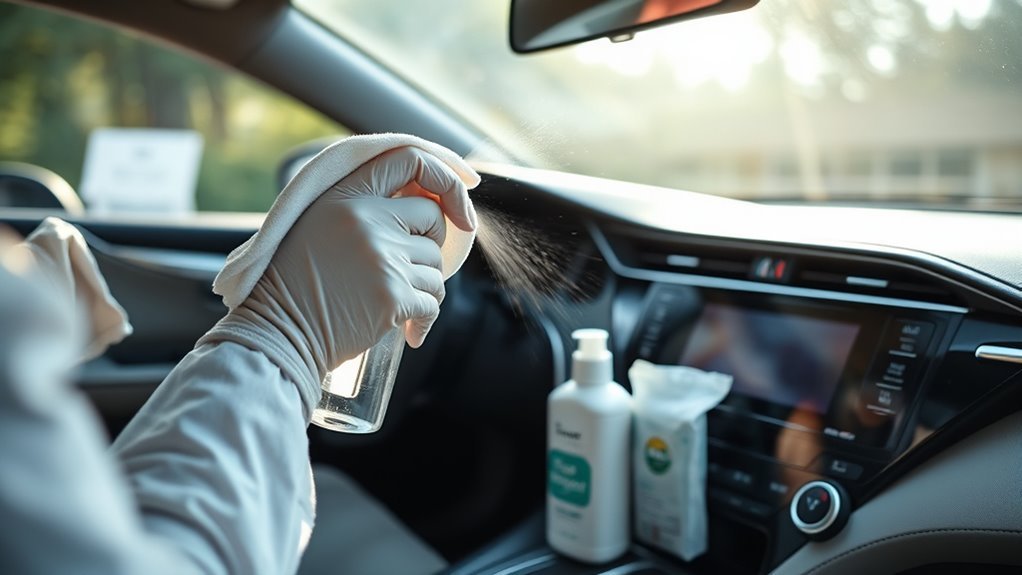
Gather your disinfectant wipes or an automotive-safe spray and several clean microfiber cloths before you start. Choose products labeled for the surface you plan to clean. The CDC recommends cleaning surfaces before disinfecting, because dirt and oils can make disinfectants less effective.
- Ventilate the cabin. Open the doors or windows before using cleaning products.
- Remove loose items. Take out trash, bags, cups, receipts, chargers, and personal items.
- Clean visible dirt first. Vacuum crumbs and wipe sticky areas with a mild interior cleaner before disinfecting.
- Disinfect hard, high-touch surfaces. Focus on the steering wheel, shifter, door handles, seatbelt buckles, cupholders, console, buttons, and frequently touched trim.
- Respect contact time. Keep the surface wet for the time listed on the disinfectant label, then wipe dry if the label or surface care instructions call for it.
- Use separate cloths. Rotate cloths as they get dirty so you do not spread residue from one surface to another.
Warning: Toyota warns against several harsh cleaning agents on interior materials, including bleach, alkaline or acidic solutions, benzene, gasoline, and alcohol-based cleaners on sensitive areas such as the steering wheel and seats. When in doubt, use the gentlest compatible cleaner and test a hidden spot first.
[Products Worth Considering]

Replace worn or broken rear exterior door handles with this OEM-style fit designed for a wide range of Toyota, Pontiac, and Scion vehicles. Built from reinforced plastic with a textured finish for dependable use and weather resistance, it helps restore smooth entry and a clean factory look. This handle is made for rear left or rear right installation without a keyhole and includes support backed by a warranty.

This rechargeable car sun visor vanity mirror adds bright, adjustable lighting for makeup touch-ups and grooming on the go. It features dual touch controls, three lighting modes, and a memory function for a convenient, personalized experience. With USB charging and a built-in battery, it is designed to fit most vehicle sunshades while saving interior space.

This car interior detailing brush is designed to gently remove dust from vents, dashboards, consoles, and other hard-to-reach areas without scratching surfaces. Its soft bristles and comfortable grip make routine interior cleaning easier, while the compact size allows convenient storage in your glove box. It also works well for household cleaning tasks like keyboards, fans, and window tracks.
Safe Disinfectants and Tools for Camry Interiors
For hard nonporous areas, use an EPA-registered disinfectant only as the label allows. The EPA explains that List N products are expected to kill SARS-CoV-2 when used according to label directions, but that does not mean every product is safe for every car surface. Surface compatibility still matters.
For a Camry interior, prioritize gentle tools and controlled moisture:
- Microfiber cloths: Use these for most surfaces because they are soft and reusable.
- Soft detailing brush: Use one for crumbs and dust around seams, vents, cupholders, and console edges.
- Interior-safe cleaner: Use this first for dirt, oils, and sticky spots.
- Compatible disinfectant: Use it on hard nonporous touch points only when the label allows that surface type.
- Clean water and a damp cloth: Use this for the Toyota touchscreen and for wiping away cleaner residue when appropriate.
Note: A disinfectant label controls how the product should be used. Check the surface type, contact time, ventilation directions, safety precautions, and whether rinsing or wiping dry is required.
[Products Worth Considering]

This two-piece horsehair brush set is designed for gentle yet effective cleaning of leather and interior surfaces. The soft bristles help lift dirt from seams, tight spaces, upholstery, carpets, and shoes without scratching, while the two sizes support both broad cleaning and detailed polishing. A comfortable wooden handle improves grip and control for easier daily care.

This center console lid latch lock is a direct replacement designed to restore secure closing and smooth operation of your vehicle’s armrest box. Compatible with a wide range of Toyota and Lexus models, it matches OEM part 58908-33030 for reliable fit and function. Made from durable ABS plastic, it helps prevent the console from popping open and keeps stored items protected during driving.

This driver side sun visor is a direct replacement for compatible Toyota RAV4 models from 2006 to 2013, helping restore shade and visibility control on the front left side. It includes a vanity light and extension for added convenience, along with an easy no-screw installation designed to match the original fit and function. Built for dependable daily use, it offers a practical solution for replacing a worn or damaged visor.
Prep Before You Start: Ventilation, Power Off, Remove Items
Before you touch any surface, open the doors or windows to move fresh air through the cabin. This is especially helpful when using cleaning products in a small enclosed space. Power off the vehicle, infotainment screen, chargers, and accessories so you do not create accidental inputs or push moisture into active electronics.
Clear the cabin methodically. Bag trash, remove cups and wrappers, take out floor clutter, and move personal belongings to a clean area. This gives you access to the steering wheel, door handles, seatbelt buckles, controls, console, cupholders, and storage compartments without working around obstacles.
Clean first, then disinfect. A fast wipe over dirt, crumbs, and sticky residue is not enough; disinfectants work best after the surface is already clean.
Disinfect the Steering Wheel, Column, and Controls
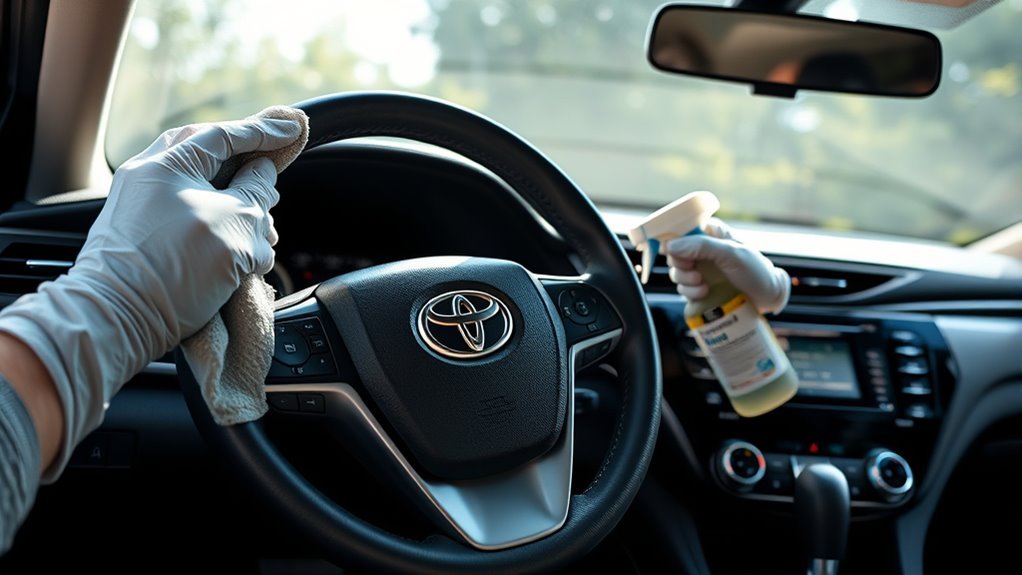
The steering wheel is one of the highest-contact surfaces in your Camry, so treat it carefully. Toyota’s interior cleaning guidance warns against alcohol-containing cleaners on the steering wheel, so avoid harsh disinfectant wipes unless the product is clearly compatible with your steering wheel material.
| Area | Best Tool | Safe Action |
|---|---|---|
| Steering wheel rim and spokes | Damp microfiber cloth and compatible interior cleaner | Wipe gently, clean seams, and dry with a second cloth |
| Column stalks | Microfiber cloth lightly dampened with compatible cleaner | Wipe turn signal and wiper stalks without soaking switches |
| Buttons and controls | Barely damp microfiber cloth or compatible wipe | Use light pressure and avoid pushing liquid into gaps |
Work around the wheel slowly. Clean the front, back, thumb rests, spokes, buttons, and nearby stalks. If you use a disinfectant on compatible hard surfaces near the wheel, follow the label’s contact time, then buff dry with a clean microfiber cloth.
Pro Tip: Fold each microfiber cloth into quarters. When one side gets dirty, flip to a clean side instead of dragging grime across the next surface.
[Products Worth Considering]

This steering wheel cover is designed to fit a wide range of Toyota models and any standard-size wheel for a secure, comfortable upgrade. Made with nappa leather and a carbon fiber texture, it helps improve grip, reduce hand fatigue, and protect your original wheel from everyday wear, sun damage, and sweat. The anti-slip design and easy installation make it a practical interior accessory for daily driving.

Upgrade your Toyota interior with this custom-fit steering wheel cover designed for a wide range of compatible models. Made from soft microfiber leather with an anti-slip lining, it enhances grip, adds comfort, and helps protect your steering wheel from everyday wear, dirt, fading, and scratches. The easy-to-install design makes it a practical way to refresh a worn steering wheel and improve your cabin’s look.

This upgraded car center console cover adds comfort, protection, and extra storage to your vehicle's armrest area. Made with microfiber leather and memory foam, it offers a soft, supportive surface that helps reduce elbow pressure during long drives while guarding the console from scratches and dirt. The dual side pockets provide convenient space for small essentials, and the elastic, anti-slip design makes installation simple and secure across many vehicle types.
Clean Door Handles, Armrests, and Seatbelt Buckles
Door handles, armrests, and seatbelt buckles are frequent contact points for both drivers and passengers. Wipe interior and exterior handles, the grab area of each armrest, window switch surrounds, lock buttons, and the exposed surfaces of each buckle.
Use a separate cloth for these areas, especially after transporting passengers. Lightly dampen the cloth instead of spraying directly. Pay attention to seams and crevices where skin oils and dust collect. Let compatible disinfectant remain wet for the label’s contact time, then dry the area so moisture does not sit around seams, switches, or upholstery edges.
- Driver door: Handle, lock switch, window switches, mirror controls, armrest, and grab pocket.
- Passenger doors: Handles, window switches, armrests, and rear door touch points.
- Seatbelts: Buckle buttons, latch plates, and the belt area handled most often.
Disinfect Touchscreen and Infotainment Controls
The touchscreen needs a different approach than hard plastic trim. Toyota recommends cleaning the touch screen panel with a soft cloth dampened with lukewarm water, and warns not to use solvents, kerosene, alcohol, gasoline, alkaline solutions, or acidic solutions on the screen.
Power Off First
Power off the screen before cleaning. This prevents accidental inputs and makes fingerprints easier to see. Do not spray cleaner directly onto the display. Liquid can run into the edges of the screen, buttons, knobs, or ports.
Use Microfiber Dampened
Lightly dampen a clean microfiber cloth with lukewarm water, wring it out well, and wipe the screen gently. Use a dry microfiber cloth afterward to remove remaining moisture and streaks. For surrounding infotainment buttons and knobs, use a separate barely damp cloth. If a disinfectant is compatible with the surrounding hard plastic, apply it to the cloth first, not directly to the dashboard.
Warning: Do not use glass cleaner, ammonia, bleach, alcohol wipes, solvents, or abrasive pads on the Camry touchscreen. These can stain, discolor, scratch, or damage screen coatings.
Clean Seats, Cupholders, Center Console, and Storage
Seats, cupholders, the center console, and storage areas collect crumbs, spills, sunscreen, lotion, hand oils, and everyday grime. Start by removing loose items. Vacuum fabric seats, seat seams, cupholders, storage pockets, and the area around the console.
For fabric seats, use a mild upholstery-safe cleaner when needed, then blot with a damp cloth. Avoid soaking the seat. For leather or SofTex-style surfaces, use a cleaner labeled for that material and dry the surface afterward. Do not use harsh alkaline or acidic cleaners, bleach, or alcohol-based cleaners on seats.
Clean cupholders by removing inserts if your Camry has them, lifting out debris, and wiping the inside with a damp microfiber cloth. A soft brush helps loosen sticky residue around edges. Sanitize hard nonporous cupholder surfaces with a compatible disinfectant, then let them dry before replacing cups, keys, or small items.
- Center console: Wipe the lid, latch, shifter area, drive mode buttons, and storage tray.
- Cupholders: Remove crumbs first, then clean sticky residue before disinfecting.
- Storage compartments: Empty them, vacuum debris, wipe hard surfaces, and let them dry fully.
- Seats: Clean according to material type and avoid saturating fabric, seams, or perforated surfaces.
Don’t Forget These Often-Missed Touch Points
A quick steering-wheel wipe helps, but a complete high-touch routine should include the small areas you handle without thinking. These spots are easy to miss:
- Start button or key slot area
- Key fob and key ring
- Shift lever and shift boot trim
- Parking brake switch or lever
- Climate control buttons and knobs
- Mirror adjustment controls
- Sun visor, vanity mirror cover, and garage-door buttons
- Rear-seat door handles and buckle buttons
- Trunk release, fuel door release, and interior grab handles
Use the same rule for all of them: do not soak electronics or seams, apply cleaner to the cloth instead of spraying the surface, and dry the area when you are done.
Routine Schedule and Quick Tips to Keep Your Camry Germ-Free
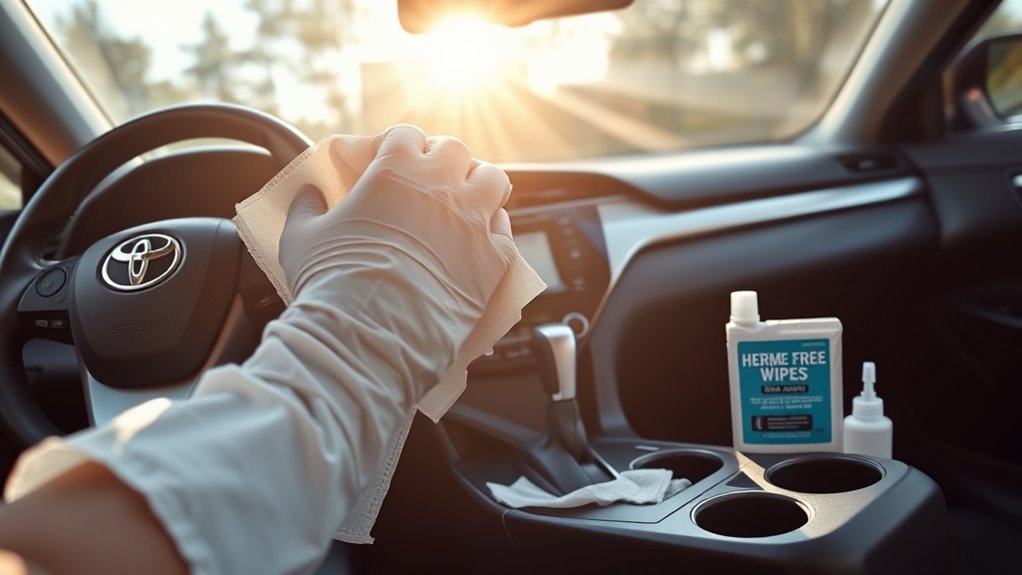
Set a weekly routine for disinfecting high-touch areas in your Camry. Add a quick wipe-down after shared use, illness, food spills, rideshare driving, road trips, or transporting kids and pets. Keep a small cleaning kit in your garage or trunk, but avoid storing aerosol cans, leaky bottles, or products that can overheat or dry out in the cabin.
| Task | Tool | Timing |
|---|---|---|
| Steering wheel and controls | Damp microfiber and compatible cleaner | Weekly; after shared use |
| Door handles and switches | Microfiber cloth or compatible wipe | Weekly; after passengers |
| Seatbelt buckles | Lightly damp microfiber cloth | Weekly; after shared use |
| Cupholders | Vacuum, brush, cloth, compatible disinfectant | Weekly; after spills |
| Console and storage | Vacuum and microfiber cloth | Weekly or biweekly |
| Touchscreen | Soft cloth dampened with lukewarm water | As needed |
Pro Tip: Keep two or three clean microfiber cloths in a sealed bag and a second bag for used cloths. Wash used cloths before returning them to your kit.
Common Mistakes to Avoid
Disinfecting a car interior is simple, but the wrong product or technique can cause fading, streaking, cracking, sticky residue, or electronic problems. Avoid these mistakes:
- Spraying directly onto electronics: Apply liquid to the cloth instead.
- Skipping the cleaning step: Remove dirt and oils before disinfecting.
- Using bleach or harsh household cleaners: These can damage interior trim and upholstery.
- Ignoring contact time: Many disinfectants need to stay wet for a specific time to work properly.
- Using one dirty cloth everywhere: Rotate clean cloths to reduce cross-contamination.
- Over-wetting seats or switches: Too much moisture can leave stains, odors, or electrical issues.
Frequently Asked Questions
How do you sanitize high-touch surfaces in a Toyota Camry?
Clean visible dirt first, then wipe hard nonporous touch points with a compatible disinfectant. Focus on the steering wheel area, shifter, door handles, seatbelt buckles, console, cupholders, and controls. Keep the surface wet for the disinfectant label’s contact time, then dry with microfiber if needed.
What disinfectant can I use inside my car?
Use a disinfectant labeled for the surface you are cleaning, preferably one compatible with automotive hard nonporous surfaces. Check the product label for material compatibility and contact time. Avoid bleach, ammonia, solvents, gasoline, benzene, alkaline or acidic cleaners, and alcohol-based cleaners on sensitive Toyota interior materials.
Can I use alcohol wipes on a Camry steering wheel?
It is safer to avoid alcohol-based cleaners on the steering wheel. Toyota’s interior cleaning guidance warns against cleaners containing alcohol on the steering wheel because they may damage or discolor materials. Use a lightly damp microfiber cloth and a compatible interior cleaner instead.
How should I clean the Toyota Camry touchscreen?
Power the screen off, then wipe it gently with a soft cloth dampened with lukewarm water. Do not spray liquid directly onto the screen. Avoid alcohol, solvents, kerosene, gasoline, alkaline solutions, acidic solutions, ammonia, abrasive pads, and glass cleaner.
How often should I disinfect my Camry interior?
For normal solo driving, a weekly wipe-down of high-touch areas is usually practical. Disinfect more often after passengers, shared driving, illness, food spills, rideshare work, or road trips. Clean the touchscreen only as needed with a soft damp cloth.
Conclusion
Think of your Camry’s cabin as a small shared space that stays healthier when its busiest touch points get regular care. Clean dirt first, use products that match the surface, follow disinfectant contact times, and treat electronics and Toyota interior materials gently. A 10-minute weekly routine can keep the steering wheel, handles, buckles, console, cupholders, and controls cleaner without risking damage to the cabin you use every day.
Sources
- Toyota Owner’s Manual: Cleaning and Protecting the Vehicle Interior — Toyota interior material cleaning precautions and detergents to avoid
- Toyota Support: How Should I Clean the Touch Screen Panel in My Vehicle? — Toyota touchscreen cleaning method and chemicals to avoid
- CDC: When and How to Clean and Disinfect — cleaning before disinfecting and focusing on high-touch surfaces
- EPA: About List N Disinfectants — disinfectant use according to label directions
- CDC: What Is Contact Time? — definition of contact time, also called dwell time