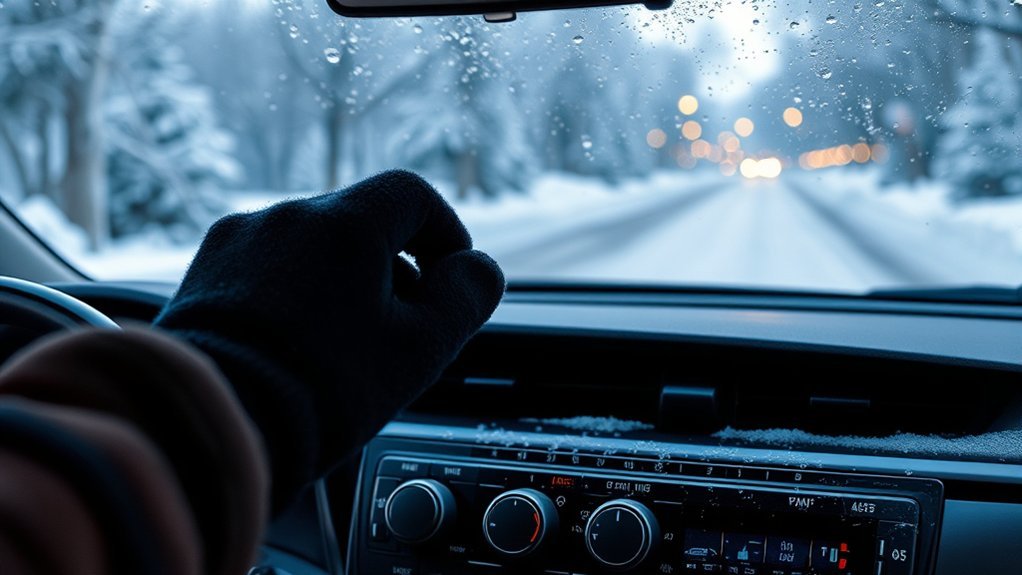
Set your Camry to the defog position, switch off recirculation so outside air replaces humid cabin air, crank the fan high and raise the temperature to warm the windshield quickly. Keep A/C on to dehumidify while you heat, and enable heated mirrors and the rear defogger for full visibility. Use wipers or lower-windshield deicing for ice. Avoid recirculation and low fan speeds. Continue below for specific combos and timed features.
Quick Checklist: Fastest Camry Defog Settings
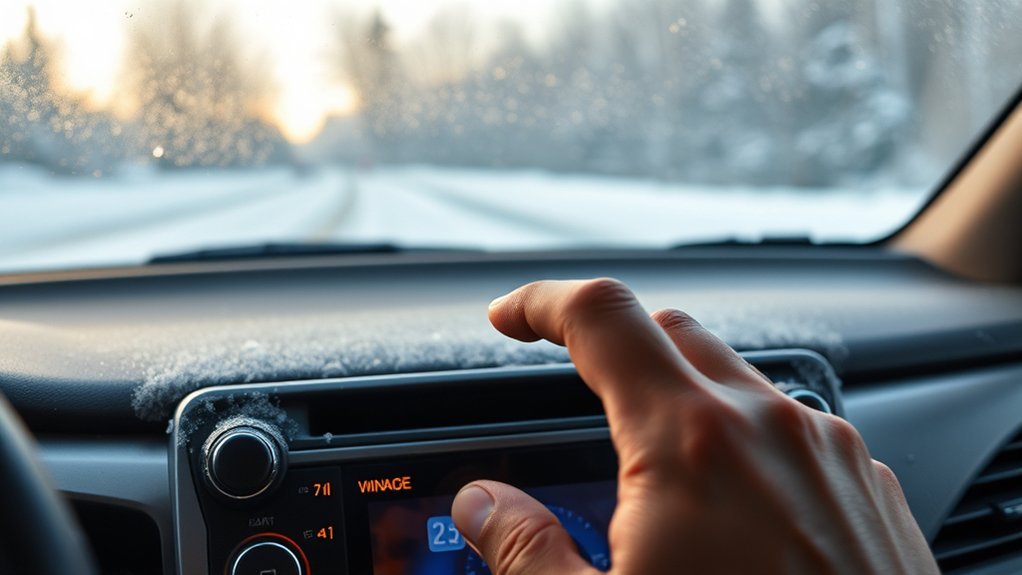
When you need the fastest way to clear fog from your Camry’s windows, set the airflow selector to the defog position, turn off recirculation so fresh air can enter, crank up the fan speed, and raise the temperature to warm the cabin air—also activate the heated mirrors and rear defogger via their dashboard button for full visibility. Use this quick checklist as your operational protocol: 1) Defog mode directs air to the windshield for targeted moisture removal. 2) Disable recirculation to replace humid cabin air with drier outside air, accelerating evaporation. 3) Maximize fan speed to increase volumetric flow and shorten clearing time. 4) Increase temperature to supply sensible heat that reduces relative humidity on glass. 5) Engage heated mirrors and rear defogger for lateral visibility and rearward awareness. These concise defogging techniques fit winter driving demands: they’re mechanical, immediate, and empower you to reclaim control of visibility and mobility when weather threatens your freedom on the road.
Set the Camry Defog Position for Fastest Results
Set the airflow selector to the defog position so most air targets the windshield and side glass. Turn off recirculation and crank the fan to its highest setting to maximize fresh airflow across the glass. Use warm temperature settings until condensation clears, then restore your normal climate controls.
Defog Mode Selection
Want the fastest windshield clearing? Set the airflow selector to the defog position—this directs air precisely onto the glass and is the core of practical defogging techniques for quick results. Turn off recirculation so fresh, drier outside air replaces humid cabin air; that exchange is essential in winter. Crank up fan speed to move volume over the windshield and raise temperature to warm the incoming air; warm, moving air reduces condensation rapidly. These steps are mechanical, deliberate actions you control to reclaim clear sightlines and driving freedom. Once the windshield clears, revert to your preferred temperature and airflow to sustain comfort without sacrificing visibility. Pair this with routine windshield maintenance for consistent, reliable performance.
Maximize Airflow Speed
Now focus on pushing maximum airflow: move the airflow selector to the defog position, crank the fan to its highest setting, and switch off recirculation so fresh, dry outside air replaces humid cabin air. You’ll also raise the temperature to warm the incoming air; warm, moving air carries moisture away from glass faster than cold air. These airflow adjustments prioritize clear sightlines during winter driving by directing volume and heat where you need it. Work quickly: once visibility is restored, dial the fan and temperature back to your comfort settings to conserve energy and maintain cabin balance. This method frees you from stalled visibility—use direct defog flow, maximum fan, non-recirculating intake, and temporary heat to reclaim control on icy roads.
Turn Off Recirculation When Defrosting : Why It Matters
Because trapped humid air makes fogging worse, turn off recirculation when you defrost so drier outside air can enter the cabin and remove moisture quickly. You’ll clear windscreen condensation faster by letting lower-humidity air replace the damp interior volume. This isn’t one of the defrost myths — recirculation helps fuel efficiency sometimes, but it worsens window fog in cold, humid conditions. Prioritize incoming outside air to improve air quality and visibility.
- Outside air dilutes cabin humidity, reducing fogging potential.
- Recirculation traps moisture, increasing condensation on cold glass.
- Direct airflow to the windshield to remove surface moisture efficiently.
- Turning off recirculation shortens defogging time and restores sightlines.
- Better air exchange enhances safety and driver autonomy in winter.
Actively switching modes when conditions demand it liberates you from impaired vision. Use this setting decisively to maintain a clear windshield and safer winter driving.
Best Fan Speed and Temperature Combos for Winter Defogging
Start by setting the airflow selector to the defog position, crank up the fan to a higher speed, and raise the temperature—this combination delivers warm, directed air to the windshield and evacuates moisture quickly. You’ll rely on a short burst of high fan power to strip humidity from glass; make fan adjustments in increments until the fog lifts within seconds. Aim for an ideal temperature that’s comfortably warm but not scalding—this accelerates evaporation without shocking the interior materials. Switch recirculation off so drier outside air replaces humid cabin air; that prevents cycles of re-fogging while you work. Once the windshield clears, scale back fan speed and reduce temperature toward your cruising comfort, keeping airflow directed to the windshield as needed. These deliberate, technical steps free you from stalled visibility and help you maintain control: fast fan, warm air, fresh intake, then taper to sustain clarity and comfort.
Use Heated Mirrors and Rear Defogger : When and How
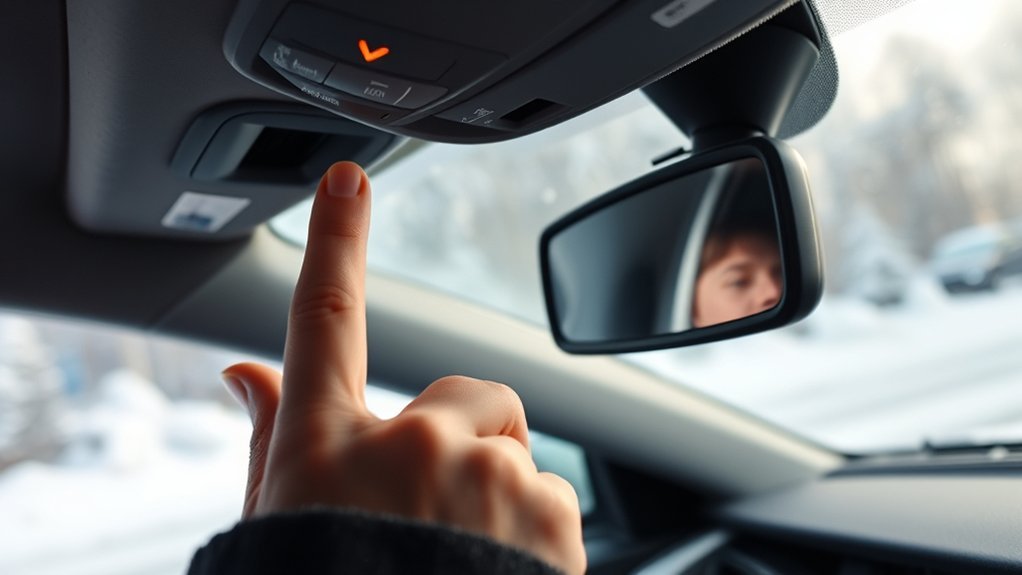
Use the heated mirrors and rear defogger as soon as you notice rain, dew, or frost impairing rearward visibility to restore a clear view quickly. Press the dashboard button to activate them—note the mirrors can heat automatically when the rear defogger engages and both shut off after about 15 minutes to save battery. Don’t touch the mirrors while they’re hot, and monitor run time to avoid unnecessary battery drain.
When To Activate
When you hit rain, dew, or frost, press the dashboard button to engage the rear defogger and heated mirrors so you get clear visibility quickly—these systems typically clear moisture in about 15 minutes and often activate the mirrors automatically when the rear defogger is on. Use them at first sign of glazing or reduced visibility; they restore sightlines fast and free you to move without delay. Check the owner’s manual for ideal conditions and factory settings so you use the system effectively and support mirror maintenance.
- Activate on rain, dew, or frost
- Expect clearing in ~15 minutes
- Heated mirrors may auto-engage with rear defogger
- Don’t touch mirrors while active (risk of burns)
- Consult owner’s manual for settings and features
Safe Usage Tips
Often you’ll engage the rear defogger and heated mirrors with the dashboard button to clear rain, dew, or frost quickly and safely; they typically run for about 15 minutes then shut off to conserve battery. Use them when visibility drops; they often activate together for faster clarity. Follow safety precautions: don’t touch mirrors while active, and check your owner’s manual for feature specifics. For mirror maintenance, wipe lenses when cool and avoid abrasive cleaners.
| Action | Result |
|---|---|
| Press dashboard button | Clears rear glass and mirrors |
| Automatic shutoff (~15 min) | Conserves battery |
Operate deliberately to regain freedom of movement on winter roads. Regular mirror maintenance preserves function and reduces distractions, keeping you liberated and safe.
Use A/C in Your Camry to Lower Cabin Humidity and Prevent Re-Fogging
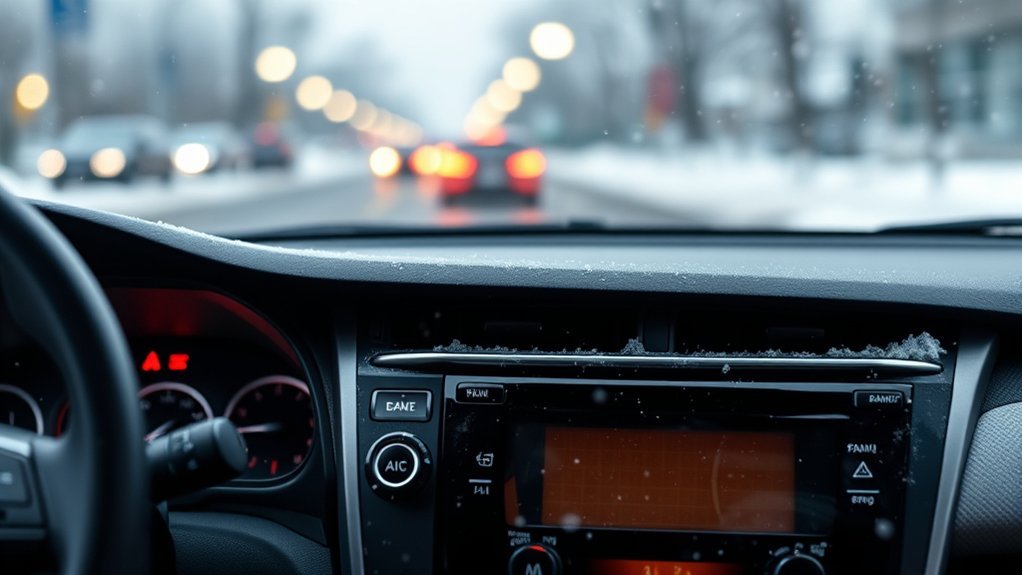
1 simple step can cut window fogging: keep your Camry’s A/C running while you defog. You’ll use the system’s A/C efficiency to remove moisture from the cabin air, giving you reliable humidity control and clearer glass. Don’t mistake cold air for off — the compressor must run to condense and expel moisture.
Deactivate recirculation so fresh, drier outside air replaces humid cabin air. Maintain blower speed that provides steady airflow across the windshield; inconsistent flow lets moisture re-accumulate. You’ll avoid repeated defogging cycles and preserve visibility.
- Keep A/C on during defogging for continuous dehumidification
- Turn off recirculation to bring in dryer outside air
- Set blower to steady, adequate speed for uniform airflow
- Monitor windshield for early signs of re-fogging and adjust
- Prioritize A/C efficiency over cabin heating alone
This approach gives you technical control over cabin humidity, enhances safety, and frees you from distracting, recurring fog.
Camry Wiper and Lower-Windshield Deicing : When to Activate
Enable the wiper and lower-windshield deicing system as soon as outside temperatures approach freezing or you see ice starting to form, so the blades and lower glass stay clear before visibility is compromised. You’ll press the dashboard button to engage the heater element; do this proactively rather than reactively to prevent ice buildup on the blades and lower glass. This is a small act of autonomy—protect sightlines and control conditions.
Before you drive, confirm wiper maintenance: remove existing ice from blades by hand when cold but never force the rubber; replace worn blades per the owner’s manual. Don’t touch the heated lower windshield during operation to avoid damage or interrupting the heating cycle. Use the manual’s recommended settings for your Camry model to maximize deicing efficiency and conserve energy. Activating early reduces stress on the system, supports sustained visibility, and advances practical ice prevention so you can move freely and safely in winter.
Common Mistakes That Slow Defogging and How to Avoid Them
After you’ve set the wiper and lower‑windshield deicer, focus on controlling the cabin air to stop interior fogging fast. Don’t fall for defogging myths or common misconceptions that slow clearing. You’ll get fog out faster by following technical, proven steps: keep recirculation off so fresh, drier air enters; run the A/C to remove humidity even while heating; raise temperature to speed evaporation; crank fan speed for maximum airflow; and monitor the rear defogger because it times out at ~15 minutes.
Turn off recirculation, run A/C with heat, crank fan, raise temp—fresh, dehumidified air clears fog fast.
- Turn off recirculation to admit fresh air
- Use A/C with heat to dehumidify
- Increase cabin temperature to evaporate moisture
- Maximize fan speed for faster clearing
- Watch the rear defogger auto‑shutoff and reapply if needed
These are practical corrections to liberate you from guesswork. Apply them deliberately; they counter myths, eliminate delays, and restore clear sightlines without unnecessary complexity.
Quick Routines for Fog, Frost, and Wet Conditions; When to Consult the Manual
When visibility drops from fog, frost, or heavy moisture, follow a short, repeatable routine: set the airflow selector to defog, raise fan speed, and increase temperature to warm cabin air for rapid defogging. Turn off recirculation and leave A/C on to control humidity and maintain cabin air quality. For frost, enable rear defogger and heated mirrors; note they auto-shutoff after ~15 minutes. Check wiper deicing to prevent blade ice and restore clear sweep.
| Situation | Quick Action |
|---|---|
| Fog inside | Defog mode, high fan, warm temp |
| Fog recurring | A/C on, recirc off (fog prevention tips) |
| Frost/ice | Rear defogger + heated mirrors |
| Wet windshield | Wipers + deicing feature |
| Uncertain model | Consult owner’s manual |
Consult the manual when controls differ, timed features vary, or for feature limits. That knowledge frees you to act decisively and keep visibility controlled.
Frequently Asked Questions
What Car Settings Should I Be on to Defrost Windows in Winter?
Set warm air to the windshield/side windows, turn off recirculation, max fan, high temperature, and enable heated mirrors/rear defogger. These defrosting techniques improve visibility for confident winter driving and free your movement.
How to Turn on Defrost on a Toyota Camry?
Turn the defrost button on, set airflow to defog, deactivate recirculation, boost fan and temperature; you’ll get windshield clarity quickly. Press rear defogger for mirrors; keep A/C on to prevent re-fogging.
How to Know Which Defroster to Use?
Think of defroster types as tools in your liberation toolkit: use front defogger for windshield, rear defroster for back glass and heated mirrors, turn off recirculate, boost fan and AC—practical winter tips to reclaim visibility.
Conclusion
Follow the checklist and use the defrost setting like a pro: point vents up, turn off recirculation, run A/C if humidity’s high, and pick a hot temperature with medium-high fan to act fast. Activate heated mirrors and rear defogger when needed, and use wipers or lower-windshield deice for ice. Avoid common mistakes and check the manual for model specifics. Your windshield should clear quickly, like a curtain drawn smooth by a stagehand’s steady hand.