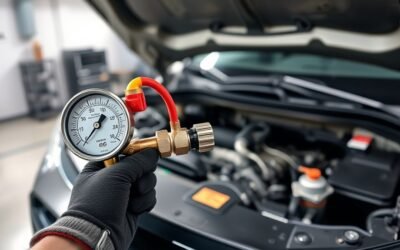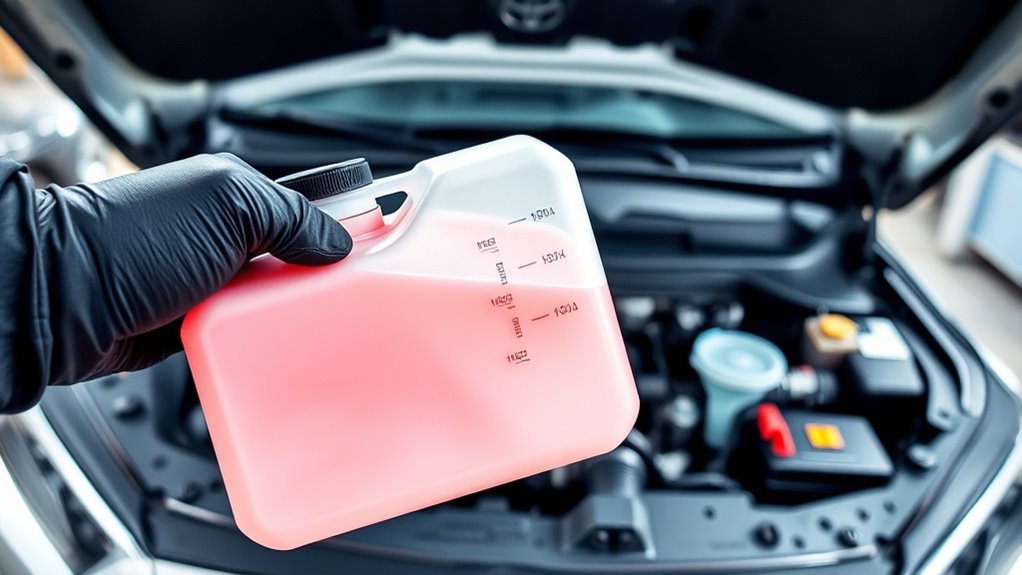
With the engine cold, open the hood and locate the translucent coolant reservoir on the passenger side; compare the fluid level to the LOW and FULL marks. If it’s below LOW, confirm the correct Toyota‑approved coolant in your owner’s manual, then slowly top off to the FULL line using a funnel and avoid overfilling. Check hoses and the reservoir for leaks or cracks, wipe spills, and secure the cap. Continue for step‑by‑step tips on troubleshooting and types.
Quick: How to Check Coolant on a RAV4
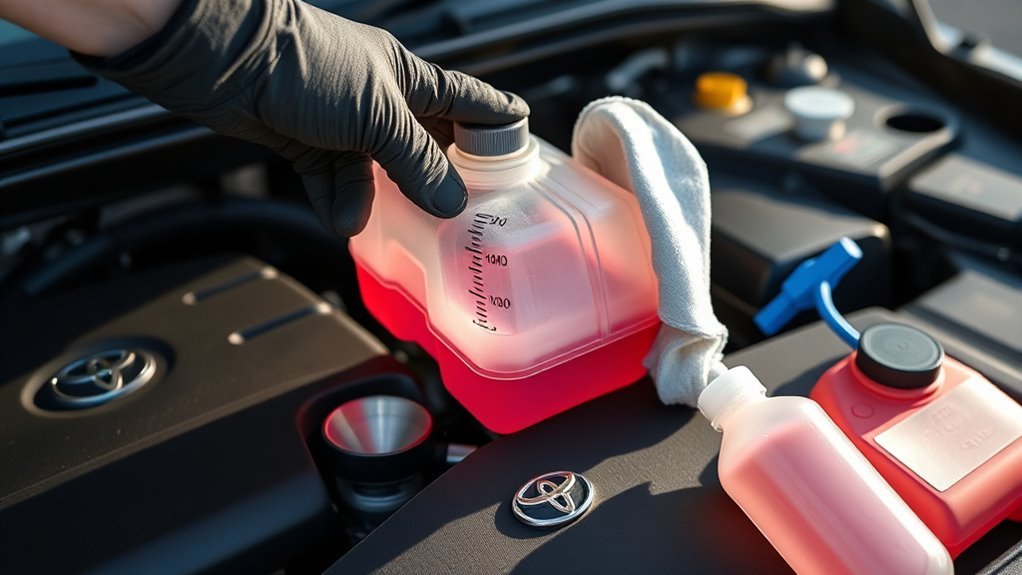
Open the hood and locate the translucent coolant reservoir on the passenger side with the engine cold. You’ll read the marked indicator lines; verify the fluid sits between the low and full marks. If it’s below the low line, loosen the cap slowly—don’t open when hot—and add the coolant type your owner’s manual specifies until the level reaches the full line. Replace the cap securely, engage seals, and inspect the reservoir and surrounding hoses for leaks or cracks. Record the fill date and monitor levels regularly as part of routine coolant maintenance; consistent checks prevent overheating and preserve engine efficiency. Work methodically, reclaiming control over vehicle reliability: you’re not waiting for failure. Use gloves and a funnel to avoid spills, and dispose of any waste coolant per local regulations. If leaks persist or levels drop rapidly, escalate to professional service. This quick procedure keeps your RAV4 operational and extends its service life without surrendering autonomy.
Where the Coolant Reservoir Is (2010–2018 RAV4)
On 2010–2018 RAV4 models you’ll find the translucent coolant reservoir mounted on the passenger side under the hood, positioned for easy access. You’ll see clear indicator lines for LOW and FULL; these markings make identification quick and precise. With the engine cold, you can visually confirm level against those lines without opening the system. The reservoir is also clearly marked so you won’t mistake it for other fluid containers.
For reliable coolant maintenance tips, keep the area unobstructed and consult the owner’s manual for the correct coolant type before topping off. When preparing for service, use simple reservoir cleaning methods: wipe the exterior to remove grime, inspect the cap and hoses for cracks, and if interior residue concerns you, schedule a professional flush. These steps free you from unnecessary dependence on shops while preserving safety and performance. Stay deliberate, follow markings, and use the manual as your specification guide.
How to Check Coolant: Step by Step (Engine Cold)
With the reservoir located on the passenger side and the engine cold, stand clear of hot components and visually inspect the translucent tank against the LOW and FULL marks. You’re minimizing engine temperature effects risk and following coolant maintenance tips for safety and accuracy. If level sits at or above FULL, close the hood and monitor; if at or below LOW, you’ll need to add fluid (see next section).
| Step | Action |
|---|---|
| 1 | Confirm engine is cold; open hood. |
| 2 | Locate translucent reservoir on passenger side. |
| 3 | Visually compare coolant to LOW and FULL lines. |
| 4 | If below LOW, prepare approved coolant and funnel. |
| 5 | After topping, secure cap and inspect for leaks. |
Be deliberate and liberated in ownership of your vehicle. You’ll avoid burns, obtain true readings, and sustain system health. This procedural check keeps you in control; document levels and repeat checks regularly as part of coolant maintenance tips.
How to Top Off Coolant and Choose the Right Type
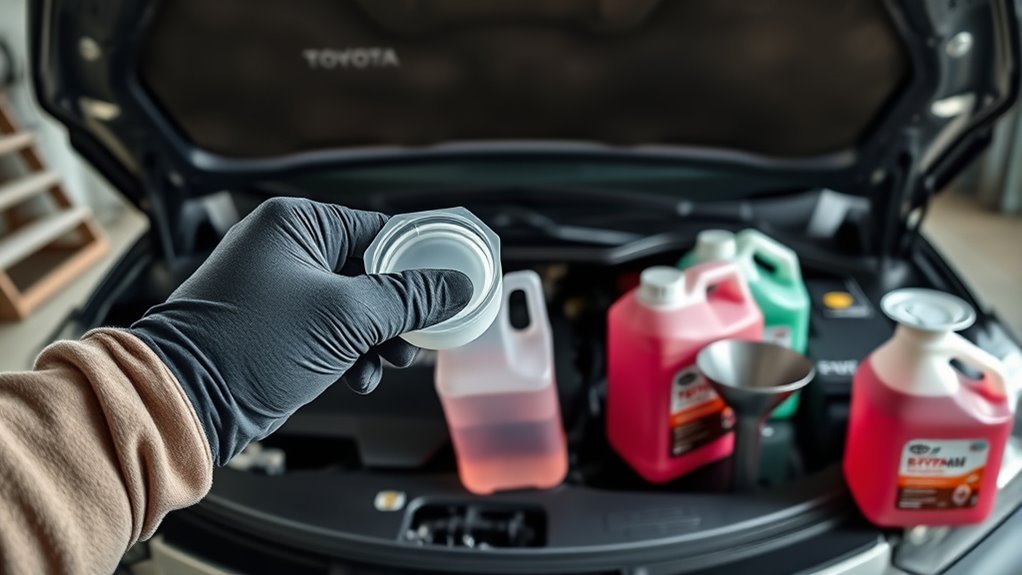
Before you add any fluid, make sure the engine is completely cold and check your owner’s manual for the exact coolant specification for your 2010 RAV4; using the wrong type can cause corrosion or cooling system failure. Use only the manufacturer-recommended coolant types—mixing incompatible formulas undermines system protection. Gather a funnel, gloves, and a clean container of specified coolant.
Locate the translucent reservoir, confirm the level is at or below the low mark, then remove the cap slowly if cold. Insert the funnel and pour coolant until the fluid reaches the full line; avoid overfilling. Wipe any drips immediately to prevent residue and environmental harm. Replace the cap securely, ensuring the seal seats properly.
As liberation-minded maintenance tips: keep a dated record of coolant top-offs and product used, so you control service intervals and fluid compatibility. Finally, inspect the reservoir area for visible leaks after driving; routine, informed action preserves your RAV4’s cooling integrity.
Troubleshooting RAV4 Coolant Problems (Leaks, Color, When to See a Mechanic)
How can you quickly tell if your RAV4’s cooling system is failing? Inspect for puddles under the car and track coolant levels; consistent drops point to leaks. Use coolant maintenance tips: check reservoir and radiator (when cold) for proper level and tight caps. Verify coolant color—bright green, orange, or pink—while murkiness or browning signals contamination or corrosion and likely needs a flush.
Monitor signs overheating issues: rising temperature gauge, steam from the engine bay, or reduced heater performance. A sweet smell inside or outside the vehicle often indicates a leak of ethylene glycol. If you frequently add coolant, locate wet spots, hose connections, water pump, and radiator for active leaks; pressure-test the system if visible sources aren’t found.
See a mechanic immediately if loss persists, temperatures remain elevated, or you experience power loss. These symptoms can indicate failing gaskets, warped heads, or pump failure that demand professional diagnosis and repair.
Frequently Asked Questions
Can I Drive Immediately After Topping off Coolant?
Yes—you can drive soon after topping off coolant, but start the engine, watch coolant temperature and engine performance for stability, let it reach normal operating range, then proceed; pull over if overheating, leaks, or poor performance appear.
How Often Should I Fully Flush the Coolant System?
Want freedom from breakdowns? You should fully flush your coolant every 2–5 years or 30,000–60,000 miles. Follow coolant maintenance tips: schedule flushing frequency by age, mileage, and harsh conditions to guarantee reliable, liberated vehicle operation.
Is Distilled Water Okay to Mix With Coolant?
Yes — you can use distilled water with coolant; match coolant types and manufacturer mixing ratios (commonly 50/50). You’ll maintain corrosion protection and freeze/boil points; follow specs and avoid tap water impurities for ideal liberation.
Can I Use a Universal or Generic Coolant Instead?
Yes — you can use a universal or generic coolant if it matches Toyota’s specs; verify coolant types and coolant colors, follow mixing ratios, purge air, and flush incompatible formulas to protect seals and cooling-system freedom.
Will Topping off Affect My Vehicle Warranty?
Yes — topping off smartly won’t void warranty coverage; you’ve just practiced coolant maintenance correctly. Keep manufacturer fluid type, document service, avoid tampering with sealed systems, and you’ll preserve both performance and your rights.
Conclusion
You’ve checked the reservoir, matched the cold-level marks, and inspected hoses and caps; now you’ll top off with the correct Toyota-approved ethylene glycol mix, tighten the cap, and run the engine to confirm no leaks. You’ll monitor temperature and watch for discoloration or drops in level, you’ll repair or replace faulty components, and you’ll consult a mechanic for persistent loss or contamination—following a clear, methodical routine keeps your RAV4 cooling system reliable.