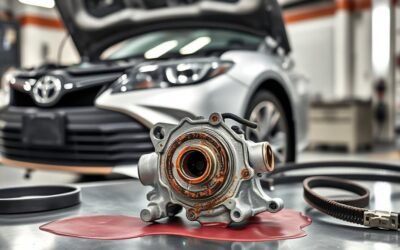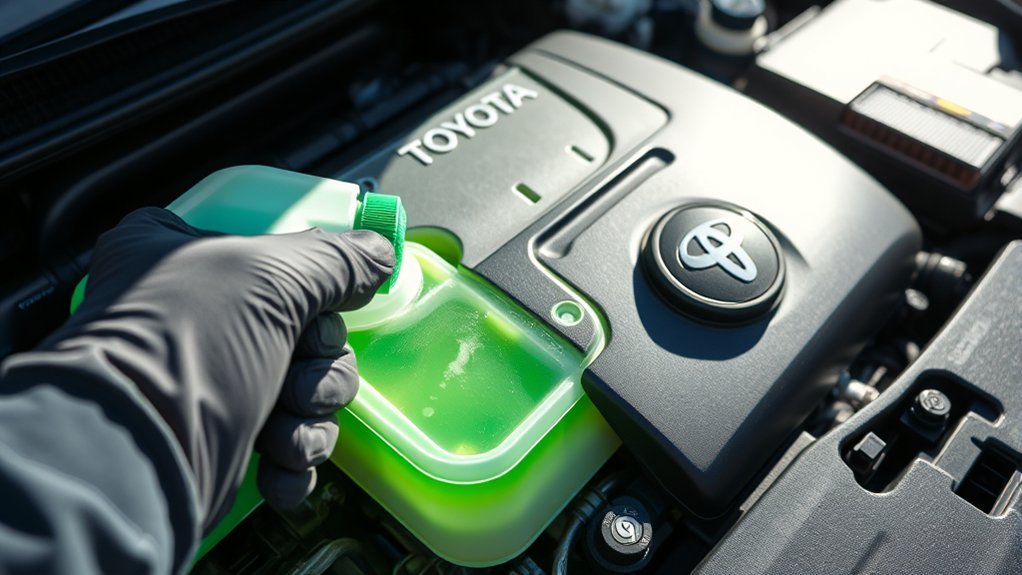
To check and refill coolant in your Toyota Camry, start by ensuring the engine is cool. Locate the overflow reservoir and check the level between low and full. If it’s low, use a funnel to add Toyota’s Super Long Life Coolant until it reaches the full line, avoiding spills. Inspect for leaks under the vehicle and worn hoses. Regularly checking coolant can enhance engine performance, and there’s more to know about maintaining ideal levels.
Understanding Engine Coolant and Its Importance
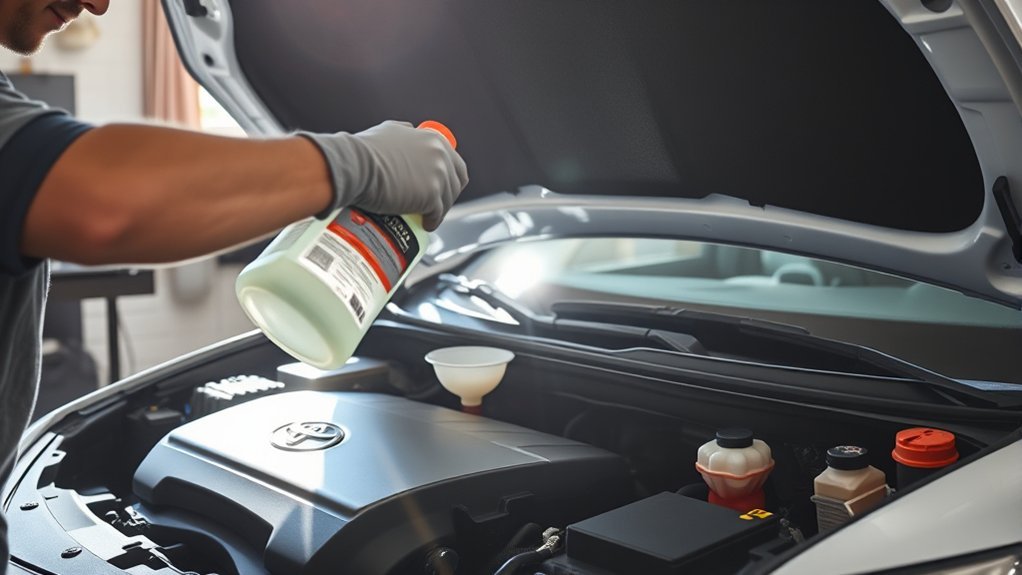
Engine coolant, often referred to as antifreeze, plays an essential role in your Toyota Camry’s performance by regulating engine temperature and preventing overheating. Different coolant types, such as ethylene glycol and propylene glycol, serve to lower the freezing point and raise the boiling point of the fluid, guaranteeing effective temperature management. The radiator, located at the front, relies heavily on coolant to maintain ideal operating temperatures; insufficient coolant can lead to engine overheating and severe damage.
Regularly checking coolant levels is vital, as fluctuations can occur due to heat expansion and contraction. The overflow reservoir aids in managing these changes without losing coolant. Additionally, confirming the radiator cap and hoses are in good condition contributes greatly to your engine’s longevity and performance. Ultimately, maintaining appropriate coolant levels not only prevents overheating but also guarantees your Camry runs smoothly and efficiently, liberating you from potential mechanical woes.
How to Safely Remove the Radiator Cap
Before you remove the radiator cap on your Toyota Camry, verify the engine is cool to prevent burns from steam or hot coolant. To safely remove the radiator cap, follow these steps:
- Push down firmly on the cap before twisting.
- Twist counterclockwise to release any built-up pressure inside.
- Inspect the rubber gasket for wear or damage to avoid leaks.
Once you’ve released the pressure, check the gasket closely; a compromised gasket can lead to coolant leaks, risking engine efficiency. When reinstalling the radiator cap, twist it clockwise without pushing down to guarantee a secure seal that maintains proper coolant pressure. Regularly checking the cap’s functionality is crucial, as a faulty cap can lead to overheating. By following these steps, you can handle your Camry’s cooling system with confidence and care.
Locating the Overflow Reservoir on a Toyota Camry
To locate the overflow reservoir on your Toyota Camry, head to the front-left side of the engine bay near the radiator. You’ll find a translucent plastic container marked with “Low” (L) and “Full” (F) indicators to easily assess the coolant level. Verify the engine is cool before accessing the cap for topping off coolant if needed.
Overflow Reservoir Location
The overflow reservoir on a Toyota Camry is an essential component for maintaining your vehicle’s cooling system. Typically located near the radiator on the passenger side of the engine bay, it’s designed for easy access. You can identify it as a translucent plastic container, allowing you to check coolant levels using the coolant level indicators.
- Look for the marked sight lines showing low (L) and full (F) levels.
- Confirm no coverings obstruct your access to the reservoir.
- Regularly perform overflow reservoir maintenance to prevent engine overheating.
Identifying Reservoir Markings
Recognizing the markings on your Toyota Camry’s overflow reservoir is essential for effective coolant management. The reservoir, typically located near the radiator, features a clear plastic body for easy visibility. You’ll find sight line indicators marked with low (L) and full (F) levels, guiding you in maintaining proper coolant levels. Before performing a reservoir inspection, verify the engine is cool to avoid burns and achieve accurate readings. When checking, take note of the coolant color; it should be a vibrant hue without any contaminants. If you spot cracks or leaks, address them promptly to prevent coolant loss and overheating issues. This vigilant approach safeguards your engine’s health and enhances your driving experience.
Accessing the Engine Bay
Accessing your Toyota Camry’s engine bay is straightforward and essential for checking coolant levels. First, pull the release lever inside the vehicle, typically near the driver’s side footwell. Once the hood pops up, lift it fully and secure it.
Next, locate the overflow reservoir on the driver’s side, near the front of the engine bay, adjacent to the radiator. This translucent plastic container has marked indicators for low (L) and full (F) coolant levels.
Before checking, make sure the engine is cool to prevent burns.
- Use a flashlight for better visibility.
- Familiarize yourself with different coolant types for ideal engine maintenance.
- Regular checks can save you from costly repairs down the road.
Step-by-Step Guide to Adding Coolant
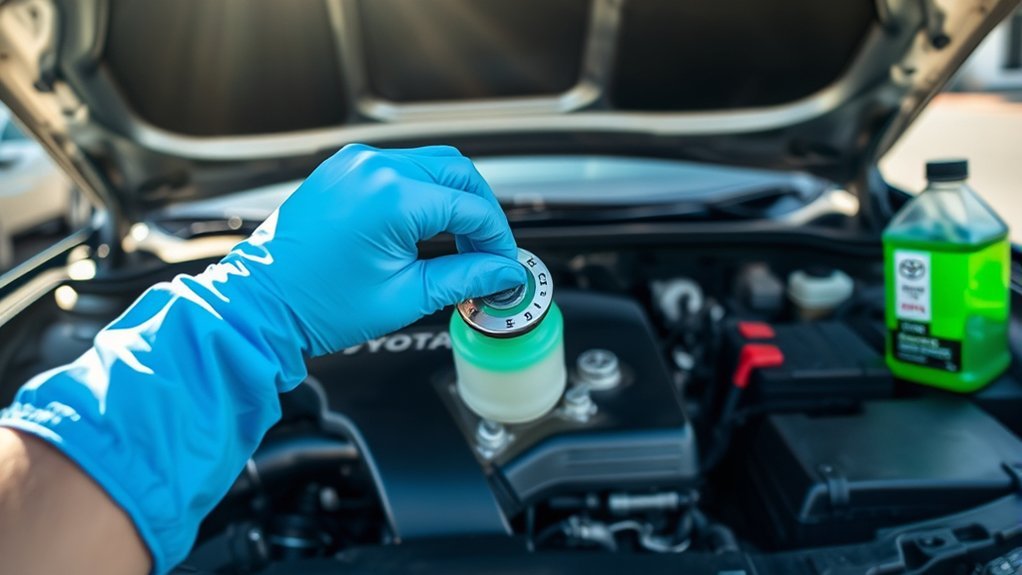
Before you add coolant, guarantee you follow safety precautions, like checking that the engine is cool. Next, locate the overflow reservoir to begin the process. Finally, you’ll carefully add the coolant using the correct steps to maintain ideal engine performance.
Safety Precautions First
When you’re ready to check and refill the coolant in your Toyota Camry, it’s crucial to prioritize safety to prevent any injuries. Here are some key precautions to keep in mind:
- Always wear safety gear, like gloves and goggles, to protect against spills.
- Verify the engine is completely cool before removing the radiator cap to avoid burns from steam.
- Use a funnel when adding coolant to prevent spills and check the overflow reservoir level.
Following these emergency procedures helps maintain a clean work area and prevents accidents. After adding coolant, clean up any spills immediately to guarantee peak engine performance. Regularly inspect caps and hoses for wear to avoid overheating and keep your vehicle running smoothly.
Locate Overflow Reservoir
Locating the overflow reservoir in your Toyota Camry is essential for maintaining ideal coolant levels. Typically, you’ll find it near the radiator, clearly marked with a sight line indicating low (L) and full (F) levels. This makes monitoring coolant easy. Different reservoir types may have varying designs, but most share this straightforward functionality. To check the coolant, glance at the sight line; if the level dips below the low mark, it’s time to act. Note the coolant colors—often green, orange, or pink—each indicating specific formulations. Verify the engine is cool before removing the cap to prevent burns from hot steam. After topping off, wipe up any spills to maintain cleanliness and keep an eye out for potential leaks.
Adding Coolant Steps
To properly add coolant to your Toyota Camry, start by verifying the engine is cool; this prevents burns from hot steam. Use a funnel to pour the appropriate coolant type into the overflow reservoir, filling it to the “full” line. After adding, wipe up any spills around the reservoir to maintain cleanliness and protect your vehicle’s components.
- Regularly check coolant levels to prevent overheating.
- Inspect the rubber gasket on the radiator cap; replace if worn to maintain proper pressure.
- Remember, topping off is essential, especially after radiator maintenance or replacing hoses.
Following these steps guarantees your engine runs smoothly and efficiently, keeping your Camry in peak condition.
When and How Often to Check Your Coolant Levels?
Checking your coolant levels at least once a month is vital for maintaining ideal engine performance and preventing overheating. Start by inspecting the overflow reservoir; verify the coolant is between the low (L) and full (F) marks. Seasonal checks are important—extreme temperatures can affect coolant effectiveness and lead to fluctuations. After long drives or in harsh weather, it’s wise to recheck the levels to catch any potential issues early.
If you notice a drop, inspect for leaks or wear in hoses and caps to maintain system integrity. Additionally, monitor your coolant closely after replacing components like the radiator or water pump to make sure everything functions correctly. Different coolant types may require specific maintenance intervals, so always refer to your owner’s manual. Regular checks empower you to keep your Toyota Camry running smoothly and avoid costly repairs down the road.
Choosing the Right Coolant for Your Toyota Camry
After ensuring your coolant levels are stable, selecting the right coolant for your Toyota Camry is key to maintaining peak engine performance. Always use a coolant that meets Toyota’s specifications, typically a 50/50 mix of ethylene glycol and distilled water. The recommended coolant type is Toyota’s Super Long Life Coolant (SLLC), often pink or red.
Here are some essential tips:
- Check your owner’s manual for specific coolant requirements based on your model year.
- Avoid mixing coolant types to prevent chemical reactions that can damage your engine.
- Ensure the coolant is free from contaminants to maintain its lifespan and effectiveness.
How to Spot Coolant Leaks Easily
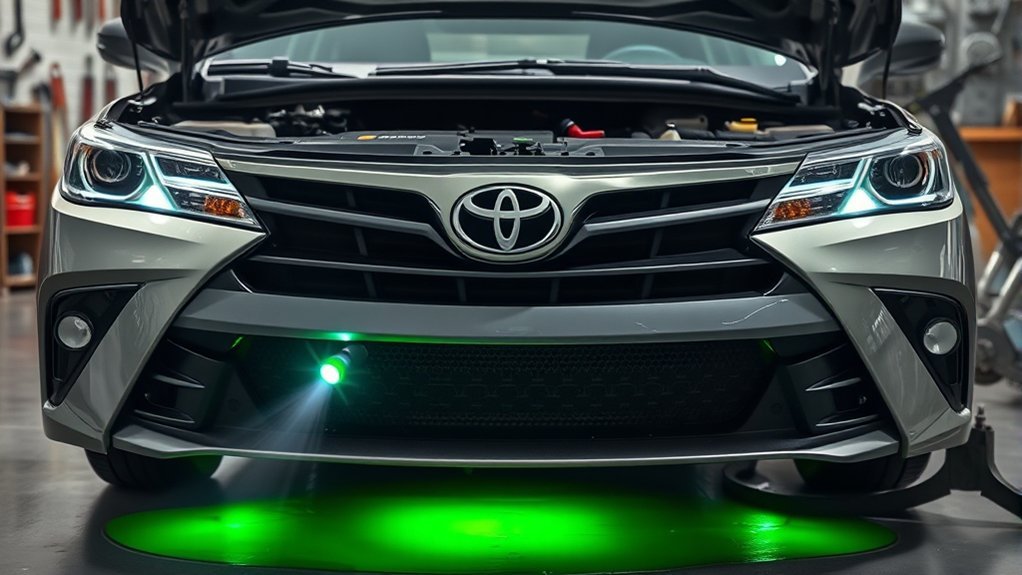
How can you easily spot coolant leaks in your Toyota Camry? Start with puddle detection. Look for bright green or orange puddles under your vehicle, as these colors often indicate coolant. Next, perform a hose inspection. Check all hoses and connections for cracks or wear, common leak sources.
Additionally, examine the radiator and overflow reservoir for any wetness or staining, as these areas are prone to leaks. Here’s a quick reference table to help you identify potential leak sources:
| Leak Source | Signs to Look For |
|---|---|
| Hoses and Connections | Cracks, wear, or visible leaks |
| Radiator/Overflow Reservoir | Wetness, staining, or coolant puddles |
| Ground After Engine Run | Damp spots or a sweet odor |
Regularly monitor your coolant levels; a consistent drop might signal internal issues. By keeping an eye out for these signs, you can address leaks promptly.
Best Tips for Maintaining Your Coolant Levels
Maintaining proper coolant levels is vital for the performance and longevity of your Toyota Camry. Here are some best tips to help you keep your coolant system in prime condition:
- Check the overflow reservoir regularly: Confirm levels are between the low (L) and full (F) indicators, especially before long trips or during seasonal changes.
- Inspect components: Look for wear on the radiator cap and hoses; replace them as needed to prevent leaks and maintain pressure.
- Use coolant additives: When adding coolant, opt for quality additives to enhance performance and lifespan.
Monitoring for drops in coolant levels or leaks is significant; any changes can signal potential issues. Schedule routine maintenance checks to keep your coolant system functioning at its best, contributing to your Camry’s overall durability. Staying proactive will not only enhance your driving experience but also empower you to maintain your vehicle effectively.
Frequently Asked Questions About Coolant Maintenance
Understanding coolant maintenance can help you avoid potential issues down the road. Here are some frequently asked questions to guide you:
| Question | Answer |
|---|---|
| What are the different coolant types? | Coolants come in various colors and formulations; choose one compatible with your Toyota. |
| How often should I check my coolant? | Regular seasonal checks are essential to prevent engine overheating. |
| What should I do if I notice leaks? | Troubleshoot leaks immediately; inspect the radiator cap and perform pressure testing. |
Always monitor the overflow reservoir, ensuring levels remain between the low (L) and full (F) markings. Use a funnel when refilling to prevent spills, and don’t forget reservoir cleaning for peak performance. If you notice coolant color changes or drops after refilling, it indicates a need for further inspection.
Frequently Asked Questions
Can I Use Water Instead of Coolant in My Toyota Camry?
You can use water temporarily, but it isn’t ideal. Coolant types help regulate water temperature and prevent engine damage. Always mix coolant with water for best protection and performance in your Toyota Camry.
What Are the Signs of Low Coolant Levels?
You’ll notice signs of low coolant levels like a dashboard warning light, coolant leaks under your vehicle, and an overheating engine. Address these issues promptly to guarantee your Toyota Camry runs efficiently and safely.
How Do I Know if My Coolant Is Contaminated?
A stitch in time saves nine; check your coolant’s color—orange, green, or pink should be clear. If it’s cloudy or rusty, perform coolant testing. Contaminated coolant can lead to serious engine issues.
Can Coolant Expire or Go Bad Over Time?
Yes, coolant can expire. Its lifespan typically ranges from two to five years, depending on conditions. Over time, coolant degradation occurs, leading to reduced effectiveness, which can harm your engine if not replaced.
Is It Safe to Mix Different Coolant Types?
Mixing different coolant types isn’t recommended due to compatibility issues. You should always check coolant compatibility and follow mixing precautions to prevent damage. Stick to one type to guarantee peak engine performance and longevity.
Conclusion
Keeping your coolant levels topped up is as crucial as maintaining oil in your engine. Regular checks and refills guarantee your Toyota Camry runs smoothly and prevents overheating. By understanding the coolant system and following the steps outlined, you can easily maintain peak performance. Don’t overlook this essential task; it’s your car’s lifeline. Stay proactive, and your engine will thank you, keeping your ride as reliable as the sunrise.