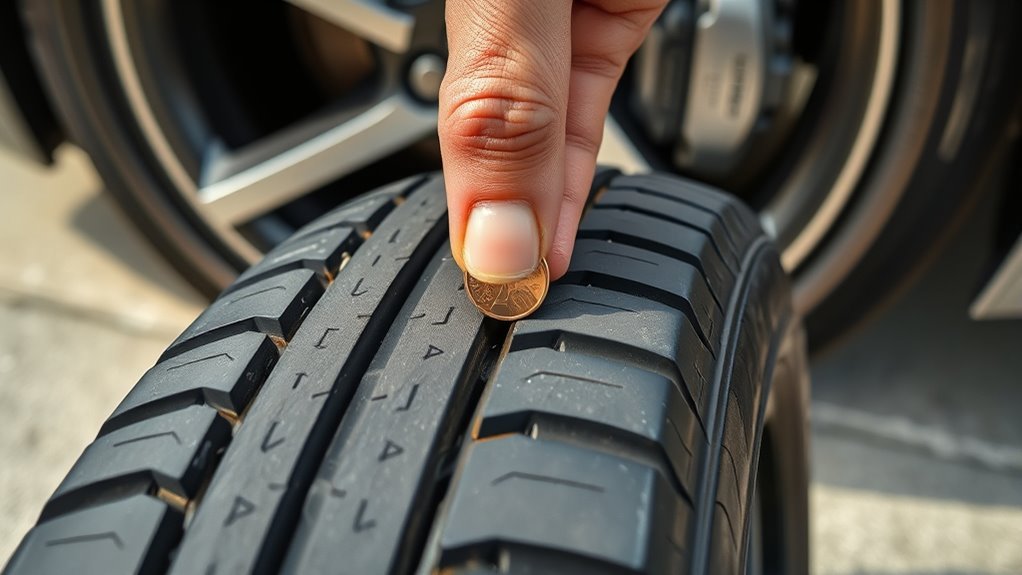
You can quickly check your Camry’s tread with a penny: insert Lincoln’s head, head-first, into several tread grooves around each tire (outer edge, center, inner edge, and a mid-rib). If any part of Lincoln’s head is visible, the tread’s low and you should plan replacement or further inspection. Do this monthly, before long trips, and after heavy weather. If results vary or are borderline, use a tread gauge or quarter for a more precise assessment and next steps.
Quick Answer: Do the Penny Test on Your Camry Now

Do the penny test on your Camry by inserting a penny into the tire tread with Lincoln’s head facing down; if the head is fully covered the tread is likely adequate, and if any part of it shows you should consider replacing the tire. You’ll perform a quick, reliable check for tread depth that supports your autonomy on the road. Insert the penny at several points around each tire and across inner and outer ribs to spot uneven wear. If Lincoln’s head shows, plan replacement—new tires start around 10/32”–11/32” while the legal minimum is 2/32”. For precision, carry a tread depth gauge; it measures in 32nds and removes doubt. Make the penny test part of regular tire maintenance: set a schedule, record findings, and act on visible wear. You’re not waiting for a breakdown or a ticket—you’re choosing safer, freer mobility through simple, consistent checks.
How Tire Tread Depth Affects Camry Safety and Handling
If your Camry’s tread is low, you’ll see longer stopping distances and reduced braking effectiveness in emergencies. Worn tread also raises hydroplaning risk in wet conditions, undermining traction and stability. Finally, uneven or shallow tread can compromise steering response, making the car harder to control.
Reduced Braking Performance
While worn tires may look fine at a glance, reduced tread depth directly increases your Camry’s stopping distances and undermines emergency braking performance. You need clear facts: braking distances lengthen as tread wears, and overall tire performance degrades before legal limits. Check often with a penny and act early.
- Less than 4/32″ — traction drops significantly; cornering and abrupt stops feel unstable.
- Approaching 2/32″ — DOT warns replacement; stopping power degrades sharply.
- Inconsistent tread — uneven grip causes unpredictable handling during evasive maneuvers.
- Regular checks — simple, freeing routine that preserves control and reduces risk.
You’ll regain control and freedom on the road by prioritizing tread depth for safety.
Increased Hydroplaning Risk
Although you might not notice it until the rain starts, worn tread on your Camry cuts its ability to channel water and sharply raises the risk of hydroplaning. You should treat tread maintenance as a safety practice: below 4/32” you enter a caution zone, and at 2/32” the U.S. Department of Transportation says replace immediately. Hydroplaning prevention depends on channeling water through grooves; reduced depth diminishes that function, increasing stopping distance and loss of control in heavy rain. Use the penny test regularly to confirm adequate tread and replace tires proactively rather than waiting for failure. Maintaining proper tread depth liberates you from fear of wet roads, preserves handling, and materially reduces the likelihood of a hydroplaning incident.
Compromised Steering Response
Because tread directly affects the tire’s contact patch, worn tires shorten stopping distances and blunt steering precision on your Camry. You need predictable handling dynamics to stay free on the road; reduced tread undermines that. Below are core impacts and actions:
- Reduced traction — lower tread depth cuts grip, degrading steering response during turns and emergency maneuvers.
- Hydroplaning risk — under 4/32” tread raises water-loss of contact, making steering sluggish and erratic.
- Stability loss — worn tires increase oversteer/understeer tendencies, threatening control and driving safety.
- Maintenance action — use the penny test regularly, replace before 2/32” to restore tread performance and protect handling dynamics.
Prioritize tire maintenance to reclaim confident, liberated control.
When to Check Your Camry’s Tread (Frequency and Conditions)
Regularly check your Camry’s tire tread at least once a month and before long trips or seasonal changes to guarantee safe handling and braking. You’ll monitor tread wear for even patterns and depth loss; uneven wear signals alignment or inflation problems that need prompt correction. Increase inspection frequency after heavy rain or snow to confirm the tires still provide necessary traction in wet conditions. If you’re adapting to winter driving, verify depth and consider replacement sooner — slippage risk rises as grooves shallow. Also evaluate tires if they’re over six years old: rubber degrades with time even when tread seems adequate. Make checks practical: pick consistent intervals, document measurements, and act on trends rather than isolated readings. This disciplined approach frees you from unexpected failures and keeps control in your hands. When you detect concerning wear or age-related deterioration, schedule service immediately to maintain safety and preserve your autonomy on the road.
Do the Penny Test: Step-by-Step for Camry Tires

Position the penny with Lincoln’s head facing down into the tread grooves at several spots around each Camry tire. If the top of Lincoln’s head is covered the tread is still above the minimum, but if it’s visible you should plan replacement—compare readings to a new Camry tire’s ~10/32–11/32” and the legal 2/32” limit. Check multiple locations across all four tires to detect uneven wear and guarantee consistent safety.
Position The Penny Correctly
Grab a penny and hold it by the top so Lincoln’s head faces down, then press the coin straight into several tread grooves across the tire. You’ll control penny orientation and check tread visibility with a firm, perpendicular insertion. Do it deliberately, not at an angle.
- Place the penny into a groove until the rim sits flush with the tread block.
- Observe whether Lincoln’s head is obscured; hidden means adequate depth, exposed means worn.
- Repeat across the tire to confirm consistent readings; note any spots where visibility changes.
- If heads are visible at multiple points, plan replacement—legal minimum is 2/32″ and uneven wear can signal alignment or inflation problems.
Act with intent; free yourself from uncertainty about safety.
Inspect Multiple Tire Spots
Check at least four spots per tire—two near the outer and inner edges and two across the center—by inserting a penny with Lincoln’s head facing down into each groove so you can detect uneven wear; if the head is fully visible in any spot, that tire’s tread is at or below the 2/32″ legal minimum and should be evaluated for replacement or alignment/pressure issues. Inspecting multiple spots reveals asymmetric wear from misalignment, improper tire pressure, or suspension issues. Compare tread patterns side-to-side and front-to-back to identify cupping, feathering, or center-edge differences. If you find inconsistent penny-test results across a tire, correct tire pressure, rotate tires, and schedule alignment or suspension diagnostics. Regular multi-spot checks keep you safe and free from preventable roadside constraints.
Which Grooves to Test on Each Camry Tire (4 Spots to Check)
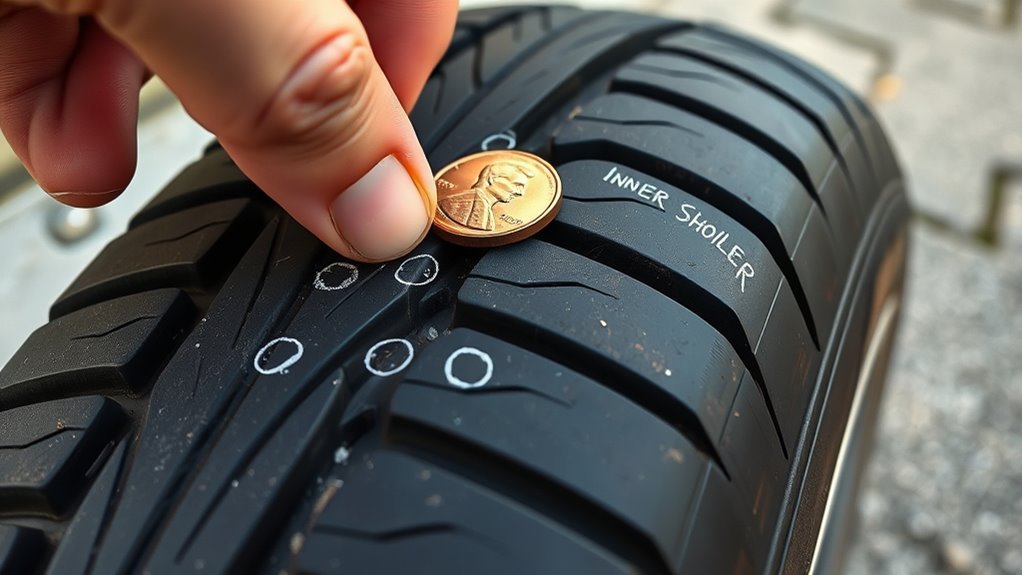
Inspect four specific spots on each Camry tire to get an accurate read of tread health: the outer edge, the center groove, the inner edge, and a representative groove between ribs. You’ll use the penny test at each spot to verify consistent depth and watch for signs that liberation from unsafe tires is needed. Emphasize groove importance and note how tread patterns concentrate wear differently across the width.
Inspect four spots—outer edge, center groove, inner edge, and a mid-rib groove—to penny-test tread depth and detect uneven wear.
- Outer edge — check for accelerated wear that signals underinflation or aggressive cornering.
- Center groove — test where road contact is greatest; it gives the most reliable depth reading.
- Inner edge — inspect for excessive wear that often indicates misalignment.
- Representative groove between ribs — sample a mid-tread groove to detect localized degradation.
Rotate positions around the tire, compare readings, and act on any disparities. This methodical check keeps you safe and independent on the road.
Read the Result: What Lincoln’s Head Covered or Visible Means
After you’ve tested the four spots around each tire, interpret the penny result: insert the coin with Lincoln’s head pointing down into the groove and note whether the head is hidden or visible. If Lincoln’s head is covered by the tread, your Camry’s tread depth is adequate for safe use; that coverage shows the rubber exceeds the minimum 2/32″ legal threshold and reduces risks like longer stopping distance and hydroplaning. If Lincoln’s head is visible above the tread, the tire is worn and likely below the 2/32″ limit, signaling replacement is necessary to restore safe performance.
Make this penny check part of routine tire maintenance. Treat visible heads as clear tread indicators that you need action — schedule replacement promptly to reclaim control and freedom on the road. Regular checks keep you proactive, reduce hazard exposure, and support your independence behind the wheel.
When the Penny Test Isn’t Enough: Use a Tread Gauge or Quarter
Because the penny test only tells you when tread has reached the legal minimum, use a tread depth gauge or the quarter test to get a precise, actionable reading: a gauge or quarter gives you control over tire maintenance decisions and helps you resist unsafe compromises. Use a quarter with Washington’s head down to check for the 4/32″ caution threshold; if the head shows, plan replacement. A digital or mechanical tread depth gauge measures in 32nds or millimeters for exact monitoring and trend tracking.
- Buy a gauge at an auto parts store; it’s cheap, durable, precise.
- Measure multiple points across each tire to quantify tread wear and spot emerging patterns.
- Use the quarter method as a quick field check when you don’t have a gauge handy.
- If readings approach 4/32″ or show irregular decline, escalate to professional inspection for safe, liberated driving.
What Uneven Tread Wear on a Camry Indicates and Next Steps
If you see uneven wear on your Camry, it usually points to incorrect tire inflation or wheel alignment that you should address immediately. Localized cupping, bulges, or sidewall damage can signal suspension issues or manufacturing defects and mean the tire needs a full inspection. Have a licensed mechanic check pressure, alignment, and the tire itself so you can repair or replace as required.
Tire Inflation And Alignment
When you spot uneven tread wear on your Camry, it usually points to improper tire inflation or a wheel alignment problem that needs attention. You should act to reclaim control of safety and performance: check tire pressure against manufacturer specs, correct over- or under-inflation, and monitor wear patterns.
- Measure tire pressure monthly with a calibrated gauge; adjust to the recommended PSI to prevent edge or center wear.
- Inspect for alignment issues when one side wears faster; misalignment shifts load and shortens tire life.
- Rotate tires at recommended intervals to even out wear and delay replacement.
- If uneven wear persists, consult a licensed mechanic to evaluate alignment and suspension components promptly.
Localized Damage Or Defects
Localized damage or uneven tread on your Camry signals a specific problem that needs prompt diagnosis and action: you’re looking for punctures, sidewall cuts, bulges, or isolated tread wear that won’t be fixed by rotation or inflation adjustments. If you find localized tread wear, don’t assume surrounding deeper tread makes the tire safe; any area that fails the penny test warrants inspection or replacement. Uneven wear often points to misalignment, suspension issues, or chronic inflation errors—conditions a licensed mechanic should evaluate. Regular tire maintenance and periodic checks prevent loss of control and longer stopping distances. Act quickly: schedule professional assessment, correct alignment or suspension faults, and replace compromised tires to reclaim safe, liberated mobility and extend overall tire life.
If Tires Fail: Replacement Options, Sizing, and Cost Basics for Camry
Plan for replacements by confirming the correct tire size for your Camry—most models use 15–18‑inch wheels depending on year and trim—and budgeting accordingly, since tires typically cost $100–$250 each plus $15–$30 per tire for professional mounting and balancing. Use tire maintenance tips and seasonal tire considerations to decide between all‑season or winter rubber; winter tires need deeper tread for snow and cold traction. Check warranties for defect or road‑hazard coverage before purchase.
- Verify size: read sidewall numbers and match OEM fitment to preserve handling and clearance.
- Select type: all‑season for year‑round ease, winter for liberated winter mobility and deeper tread.
- Compare costs: factor brand, tread pattern, and expected lifespan into the $100–$250 per‑tire range plus installation.
- Plan installation: include $15–$30 per tire for mounting/balancing and confirm warranty registration to protect your investment.
When to See a Pro: Alignment, Inflation Checks, and Safety Inspections
If you spot uneven tread wear or feel vibration while driving, get a professional inspection to check alignment, inflation, and hidden damage. You want freedom on the road, so address tire maintenance promptly: uneven wear often signals alignment issues or improper inflation that reduce grip and increase risk. A technician will measure tread, verify PSI, and inspect for internal cuts, bulges, or suspension faults you can’t see. Schedule a safety inspection when tread nears 2/32″ or before winter driving; performance drops before the legal limit. Regular professional checks preserve handling, braking, and your autonomy.
| Trigger | Likely Cause | Professional Action |
|---|---|---|
| Uneven wear | Alignment issues | Wheel alignment, suspension check |
| Vibration | Internal damage | Tire removal, inspection |
| Low/high PSI | Improper inflation | Correct inflation, leak repair |
| Tread ≤ 2/32″ | Safety limit | Replace tire, safety test |
Frequently Asked Questions
Does the Penny Trick Really Work?
Yes — the penny method gives a quick pass/fail read on tread maintenance, but it’s crude; you’ll want periodic professional checks and more precise measurements so your tires don’t compromise safety or your freedom on the road.
Conclusion
You’ve learned the penny test and when to dig deeper—do it monthly and after long trips. If tread’s low, uneven, or the penny shows too much head, replace tires and check alignment and inflation. Treat tire checks like a preflight checklist: small steps prevent big problems. Use a gauge or quarter for precision, and see a pro for alignment or suspicious wear to keep your Camry safe and handling predictably.