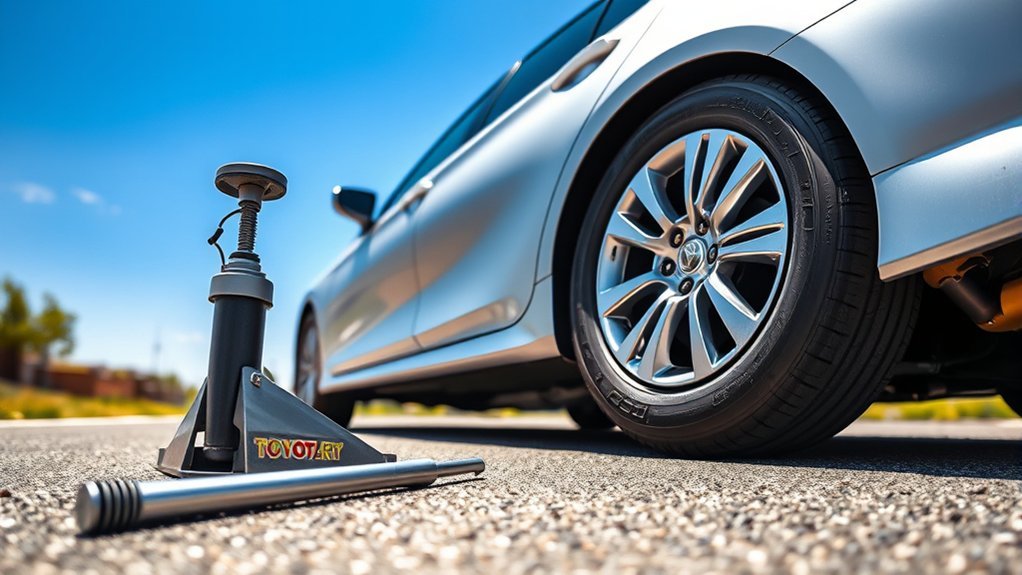
To change a flat tire on your Toyota Camry, first gather your tools: the jack, wheelnut wrench, and spare tire from the trunk. Loosen the flat tire’s nuts, raise the vehicle with the jack, and remove the flat. Install the compact spare, ensuring it’s secure. Check its inflation before lowering the car back down. Always prioritize safety and proper disposal for the flat tire. There’s more to learn about maintenance and emergency tips to keep you prepared.
What Tools You Need to Change a Flat Tire
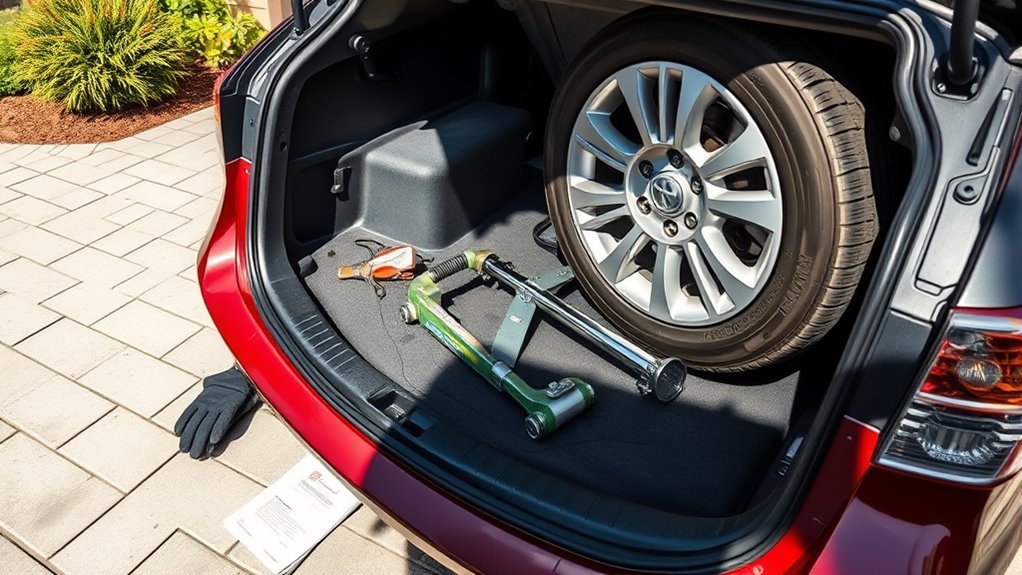
To change a flat tire on your Toyota Camry, you’ll need specific tools that are essential for the task. First, gather a jack, a wheelnut wrench, an adapter socket, and a compact spare tire. These items are typically stored in your trunk. Familiarize yourself with their location and operation by consulting your owner’s manual, which details the procedures for changing tires.
When you’re preparing for roadside emergency preparedness, make sure all tools are easily accessible. Open the trunk, lift the floor cover, and loosen the bolt to remove the spare tire cover if needed. Always check the spare tire for proper inflation before use. After changing the tire, return all tools to their designated spots to maintain organization. Implementing these tire maintenance tips will not only prepare you for emergencies but also enhance your confidence when facing unexpected situations on the road.
How to Access Your Spare Tire and Tools
To access your spare tire and tools in a Toyota Camry, start by opening the trunk and lifting the floor cover. Next, remove the spare tire cover by loosening the bolt and taking out any spacer. Finally, locate the jack handle, wheelnut wrench, and adapter socket stored beneath the floor cover for efficient use.
Locate Tools Efficiently
Open your Toyota Camry’s trunk to access the spare tire and tools efficiently. Start by lifting the floor cover to reveal the storage compartment. Loosen the bolt securing the spare tire cover and remove it, along with any spacer. Underneath, you’ll find the jack handle, wheelnut wrench, and adapter socket—crucial for tire-changing needs.
Ensure the jack, located near the right rear wheel well, is unhooked from the tightening strap before use. Familiarizing yourself with the owner’s manual can enhance your tool organization and storage solutions. Here’s a quick reference table to help you locate everything:
| Tool | Location |
|---|---|
| Spare Tire | Covered by the floor panel |
| Jack Handle | Beneath the floor cover |
| Wheelnut Wrench | Stored with the jack |
| Adapter Socket | In the same compartment as tools |
| Jack | Near the right rear wheel well |
Open Trunk Properly
Accessing your spare tire and tools starts with fully lifting the trunk lid of your Toyota Camry. Confirm trunk safety by checking for any obstructions before proceeding. Once open, follow these steps for effective trunk organization:
- Lift the trunk floor cover to reveal the compartment housing the spare tire and tools.
- Remove any spacer that might be present, allowing easier access to the spare.
- Loosen the bolt securing the spare tire cover to access the spare tire effectively.
Locate the jack handle, wheelnut wrench, and adapter socket stored under the floor cover for convenient access. Familiarize yourself with tool locations and functions by consulting your owner’s manual for detailed instructions.
Remove Spare Tire Cover
Begin by locating the bolt that secures the spare tire cover in your Toyota Camry. Use a wrench to loosen this bolt, allowing you to remove the cover easily. If a spacer is present, take it out to fully expose the spare tire underneath. This area typically houses your jack handle, wheelnut wrench, and adapter socket, so inspect it carefully. Proper spare tire maintenance includes ensuring these tools are easily accessible and in good condition. If the cover shows signs of wear, consider a cover replacement to protect your spare tire from debris. Always refer to your owner’s manual for detailed instructions on handling your spare tire tools effectively.
Step-by-Step Guide to Changing a Flat Tire
To change a flat tire on your Toyota Camry, start by locating the necessary tools in the trunk. Open the trunk and lift the floor cover to access the jack, wheelnut wrench, and spare tire.
Follow these steps:
- Remove Spare Tire Cover: Loosen the bolt and take out the cover, including any spacer if present.
- Unhook the Jack: Remove the jack from its compartment near the right rear wheel well.
- Change the Tire: Use the wheelnut wrench to loosen the nuts on the flat tire, replace it with the compact spare, and make sure it’s securely fitted.
After changing the tire, check the spare for proper inflation. Return all tools to their storage locations. Regular tire maintenance and being prepared for emergencies are essential for your safety on the road. Consult the owner’s manual for any specific procedures.
Using the Jack Safely
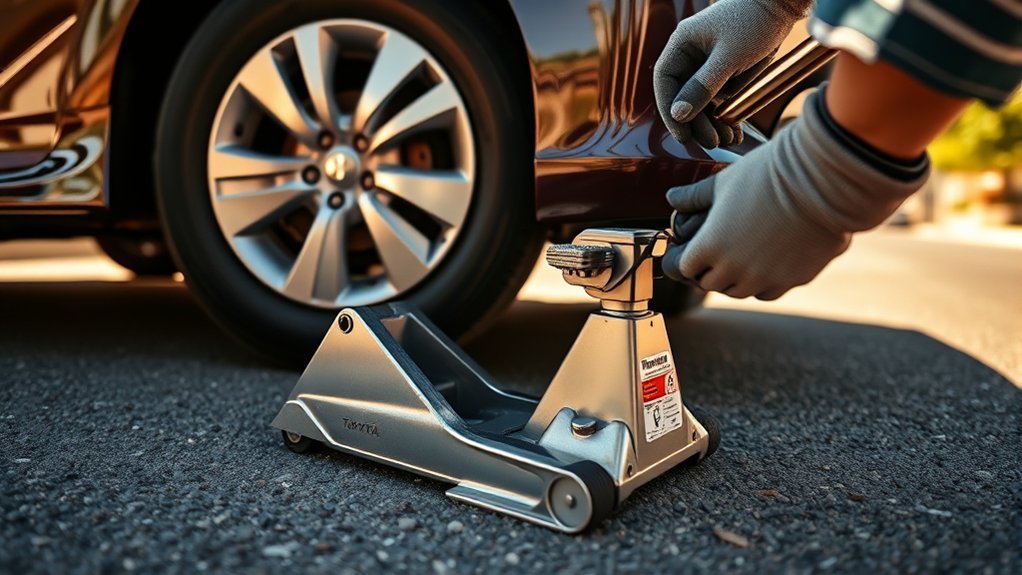
Before using the jack, verify your vehicle is parked on a flat, stable surface and that you’ve engaged the parking brake. This prevents any movement during the tire-changing process. Unhook the tightening strap and carefully remove the jack from its storage compartment near the right rear wheel well.
Position the jack under the vehicle’s designated lifting point, which you’ll find in the owner’s manual; this guarantees safe lifting. Remember, jack maintenance is vital—inspect the jack for any damage or rust before use.
Slowly and steadily crank the jack to lift the vehicle until the flat tire is off the ground, being careful not to overextend it. Once you’ve installed the spare tire, lower the vehicle slowly by cranking the jack in the opposite direction until the tire makes contact with the ground. Following these safety precautions keeps you and your vehicle secure throughout the process.
Installing the Spare Tire: Tips for a Secure Fit
After securely lifting your Toyota Camry with the jack, the focus shifts to installing the spare tire properly. Confirming the spare tire alignment with the wheel hub is vital for a safe drive. Follow these steps for a secure fit:
- Check Inflation: Make certain the spare tire is inflated to the recommended pressure. A flat spare can compromise safety.
- Hand-Tighten Lug Nuts: Using the wheelnut wrench, hand-tighten the lug nuts in a crisscross pattern. This guarantees even pressure across the tire.
- Fully Tighten: Lower the vehicle slightly with the jack, then tighten the lug nuts to the manufacturer’s torque specifications for best security.
Once you’ve secured the spare tire, double-check that all tools are put away and dispose of the flat tire properly. This attention to detail assures a safe and efficient driving experience.
Lowering Your Vehicle and Checking the Spare
Once you’ve confirmed the spare tire is properly installed, it’s time to lower your vehicle carefully. First, verify the jack is securely positioned under the designated jacking point to avoid accidents. As you begin to lower the vehicle, check the spare tire for proper inflation to confirm it’s safe for use. It’s essential to follow safety precautions during this process; a properly inflated spare guarantees your safety on the road. Lower the vehicle until the spare touches the ground, providing stability for the next steps. Once down, make sure the jack is fully retracted and stored properly to maintain safety and organization. Finally, always consult your owner’s manual for specific instructions related to your Toyota Camry model. This attention to detail is critical for effective tire maintenance and your overall driving experience.
Dispose of Your Flat Tire Responsibly
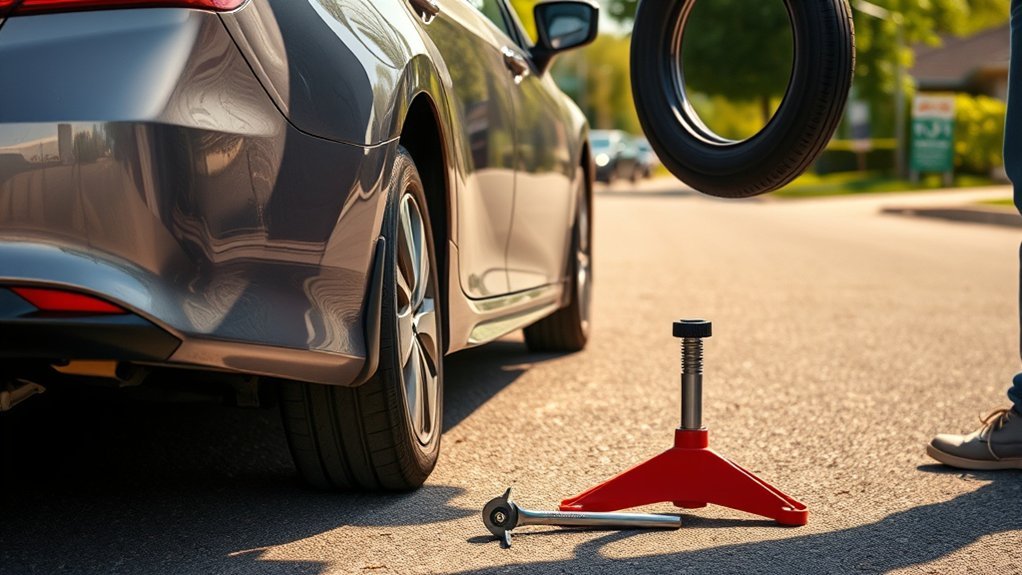
When it’s time to dispose of your flat tire, check local regulations to confirm you follow the proper disposal methods. Many tire retailers offer recycling services, making it easy to return your old tire while buying a new one. Additionally, consider reaching out to local waste management facilities for tire disposal programs available in your community.
Recycling Options Available
While changing a flat tire on your Toyota Camry, it’s essential to reflect on how to dispose of the old tire responsibly. Tire recycling is vital for eco-friendly options and compliance with local regulations. Here are some recycling options available:
- Local Recycling Centers: Many accept used tires, ensuring they’re disposed of in an environmentally friendly manner.
- Tire Retailers: When buying a new tire, check if they offer disposal services, often included in the price.
- Community Organizations: Non-profits may accept old tires for repurposing or art projects, providing a creative alternative.
Make the responsible choice to recycle your tire. It benefits the environment and helps keep your community clean.
Local Disposal Regulations
Understanding local disposal regulations is essential for responsibly getting rid of your flat tire. Check with your local waste management authority for specific guidelines, as these regulations can vary by region. Many tire retailers offer tire recycling services, allowing you to dispose of your flat tire when purchasing a new one. Additionally, some municipalities provide designated drop-off locations for tires, guaranteeing they’re recycled or disposed of in an environmentally friendly manner. Avoid leaving flat tires in regular trash bins; they’re often deemed hazardous waste and can lead to fines. Always verify that your chosen disposal method complies with local environmental laws to promote sustainability and prevent pollution. Your responsible actions contribute to a healthier planet.
How to Keep Your Spare Tire in Top Shape
To keep your spare tire in top shape, regularly check its air pressure to confirm it meets the recommended PSI. Under-inflation can lead to poor performance when you need it most. Here are three essential tips for effective spare tire maintenance:
Regularly check your spare tire’s air pressure to ensure it’s ready for action when you need it most.
- Inspect for Damage: Regularly look for signs of wear, such as cracks or bulges, which can compromise safety.
- Store Properly: Keep your spare tire in a clean, dry area to prevent moisture and contaminants that can cause deterioration.
- Rotate Usage: If applicable, rotate your spare tire into regular use to confirm it remains functional and allows you to monitor its condition over time.
For specific storage and maintenance recommendations for your Toyota Camry’s spare tire, always consult the owner’s manual. Following these steps will help keep your spare ready for action when you need it.
Practicing Your Tire-Changing Skills
Practicing your tire-changing skills guarantees you’re prepared when a flat tire strikes. Start by familiarizing yourself with essential tools: the jack, wheelnut wrench, and adapter socket, all located under the trunk floor cover. Open the trunk, lift the floor cover, and remove any spacers to access these items easily. Conduct regular practice sessions by simulating the tire-changing process. This includes removing the flat tire and securing the spare, ensuring you can perform these steps quickly and efficiently. Regularly review your owner’s manual for detailed procedures, reinforcing your understanding. Additionally, periodically check the spare tire for proper inflation. After each practice session, return all tools to their designated locations to maintain readiness. By honing these skills, you empower yourself, ensuring you’re never caught off guard when a flat tire occurs. Embrace this opportunity for liberation through self-sufficiency in tire changing.
What to Do in Case of Emergency: Roadside Assistance Tips?
In an emergency, knowing when to call for help is essential. Always keep an emergency kit in your vehicle, including items like a flashlight, first-aid supplies, and safety flares. If you’re unsure about changing the tire or lack the necessary tools, don’t hesitate to contact roadside assistance.
When to Call for Help
When should you call for help during a flat tire situation? If you feel unsafe or unable to change the tire yourself, it’s time to contact roadside assistance. Always prioritize safety precautions, especially on busy roads. Here are three situations where you should definitely seek help:
- You’re unsure about changing the tire and have a spare available.
- Your location is hazardous, like a busy highway, and you can’t safely exit your vehicle.
- You can’t find your roadside assistance number or need assistance quickly.
Turn on your hazard lights and stay inside your car while waiting for help. Provide the operator with your exact location to expedite the process. Your safety is paramount.
Essential Emergency Kit Items
Having an emergency kit ready in your Toyota Camry can make a significant difference during roadside emergencies. Start with key emergency kit essentials: a flashlight, first aid supplies, and non-perishable snacks. Always keep your cell phone charged for quick access to roadside assistance or emergency services. Include a reflective warning triangle or roadside flares to alert oncoming traffic if you need to stop. A basic toolkit with a wheelnut wrench, jack, and a compact spare tire is essential for changing a flat tire. Finally, familiarize yourself with your vehicle’s owner’s manual for effective use of your emergency kit. Following these roadside safety tips can empower you to handle unexpected situations with confidence.
Frequently Asked Questions
How Do I Know if My Spare Tire Is Safe to Use?
To guarantee your spare tire’s safe to use, check its air pressure, tread depth, and overall condition. Regular spare tire maintenance and following tire safety tips can prevent unexpected issues when you need it most.
Can I Drive on a Spare Tire Long-Term?
You shouldn’t drive on a spare tire long-term. Spare tire lifespan is limited, and proper spare tire maintenance is essential. Replace it as soon as possible to guarantee your safety and vehicle performance.
What if My Jack Fails While Lifting the Car?
If your jack fails while lifting the car, prioritize jack safety. Use emergency tools like wheel chocks or jack stands to stabilize the vehicle, preventing accidents. Always have backup equipment on hand for such situations.
Are There Different Types of Spare Tires?
Aren’t you curious about spare tires? You’ve got temporary tires, designed for short distances, and full-sized spares, which match your vehicle’s standard tires. Choosing wisely guarantees safety and reliability on the road ahead.
How Can I Prevent Flat Tires in the Future?
To prevent flat tires, follow tire maintenance tips like regularly checking tread depth, ensuring proper inflation, and inspecting for damage. Rotate your tires periodically, and replace them when worn to maintain peak performance and safety.
Conclusion
In wrapping up, you’ve equipped yourself with the know-how to gracefully navigate a flat tire situation. By following these steps, you’re not just changing a tire; you’re ensuring your safety on the road. Remember, a well-maintained spare is your trusty companion, ready to assist when needed. If you ever find yourself in a bind, don’t hesitate to call for help. With these skills, you’re well-prepared to handle tire troubles with confidence and ease.