
You should replace Land Cruiser spark plugs every 60,000–120,000 miles depending on engine, plug material, and driving conditions; iridium plugs typically last 70k–120k miles, platinum about 60k–100k. Inspect plugs during regular service or when you see rough idle, misfires, poor fuel economy, oil fouling, or excessive gap. Always use correct OEM specs, hand-start threads, and torque to about 13 ft‑lb while checking gaps below 1.3 mm — keep going for step‑by‑step guidance.
Recommended Spark Plug Interval for Toyota Land Cruiser (By Model/Engine)
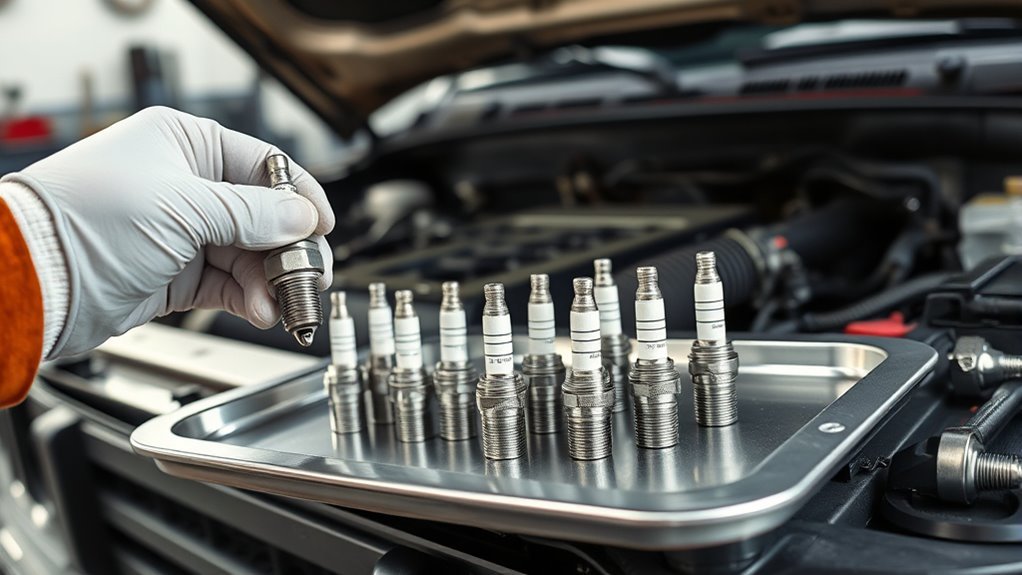
For most Toyota Land Cruiser models, you should plan on replacing spark plugs between 60,000 and 120,000 miles, with exact intervals set by model year and engine type; iridium or platinum plugs commonly used in these vehicles typically last 70,000–120,000 miles under normal conditions. You’ll check the owner’s manual for the precise replacement frequency per engine—older V8s often sit at the lower bound, newer models with modern ignition systems lean toward the upper bound. Use manufacturer-recommended spark plug types (for example, Denso SK20R11) to maintain combustion efficiency and reduce premature wear. Inspect plugs during timed service events and consider changing them when you replace the timing belt to avoid difficult removal later. If you want freedom from roadside failures, follow a disciplined schedule: note mileage, record plug type and gap, swap at the recommended interval or earlier if inspections show excessive gap, fouling, or oil contamination. This keeps your engine reliable and under your control.
[Products Worth Considering]

This ignition coil pack and double iridium spark plug set is designed to restore reliable ignition performance for compatible Toyota, Scion, and Lexus 2.5L and 2.7L L4 gas models. It helps improve starting, fuel efficiency, and smooth engine operation while reducing misfires and emissions. Built for direct plug-and-play installation, this kit is a practical replacement for worn ignition components.

This ignition coil pack and pre-gapped spark plug set is designed for select 3.5L V6 Toyota and Lexus models, helping restore smooth engine performance and reliable starting. Built to meet or exceed OEM specifications, it can help fix common issues like misfires, rough idle, poor fuel economy, and reduced power. The complete 6-piece set offers a convenient replacement solution for compatible vehicles.

This complete ignition kit includes six direct replacement coil packs and six pre-gapped iridium spark plugs designed for select Toyota and Lexus 3.5L V6 vehicles. It can help address misfires, rough idle, hard starting, hesitation, and check engine light issues caused by worn ignition components while supporting smooth, reliable engine performance. Built for easy installation and backed by testing, warranty coverage, and technical support, it is a convenient tune-up solution.
How to Spot Worn or Failing Spark Plugs on a Land Cruiser
Check for a rough idle and intermittent misfires by listening and feeling for irregular vibrations or sputtering at idle and under load. Note any sudden drops in fuel economy—consistent increases in consumption often point to worn plugs causing incomplete combustion. If you observe these symptoms, remove and inspect plugs for carbon buildup, oil fouling, or gaps greater than 1.3 mm.
Rough Idle And Misfires
When your Land Cruiser idles roughly—accompanied by unusual noises, vibrations, or a sputtering feel during acceleration—worn spark plugs are a likely culprit and you should inspect them immediately; check for idle symptoms and misfire causes systematically. First, run the engine at idle and note irregular RPM, clattering, or shaking. Next, perform a controlled throttle test to reproduce sputter and power loss. Remove plugs and measure electrode gap; anything over 1.3mm requires replacement. Inspect for oil or heavy carbon deposits—both signal deeper issues and degraded spark. If the engine struggles to start, don’t assume the battery; test spark quality with a tester. Replace suspect plugs, reset codes, and re-evaluate. Regular inspections free you from avoidable roadside failures.
Poor Fuel Economy
One clear sign your Land Cruiser’s spark plugs are failing is a steady drop in miles per gallon caused by incomplete combustion, so monitor fuel use after routine drives and note any unexplained increase. Check for rough idling, vibrations, and strange engine noise—these correlate with misfires that waste fuel. If the engine cranks slowly or the Check Engine light illuminates, test plugs before blaming the battery. At 30,000 miles inspect plug electrodes for erosion, fouling, or carbon deposits; measure gap against spec and replace if out of tolerance. Record MPG before and after service to confirm improvement. Adopt fuel efficiency tips: keep ignition components current, use prescribed gaps, and schedule spark plug maintenance to reclaim performance and automotive freedom.
Which Spark Plugs to Use: Iridium, Platinum, or OEM for Land Cruisers
When choosing plugs for your Land Cruiser, compare iridium and platinum based on lifespan versus cost: iridium lasts about 70–120k miles, platinum about 60–100k. Decide between OEM (Denso) and aftermarket by prioritizing fit and proven compatibility for your engine. Inspect plugs regularly for wear or contamination and replace regardless of advertised mileage if performance or gaps indicate failure.
Iridium vs Platinum
Choose iridium plugs if you want the longest service intervals and best ignition efficiency for your Land Cruiser: they typically last 70,000–120,000 miles, cut emissions, and can improve fuel economy and performance. You’ll get superior spark plug advantages in durability and ignition stability; select iridium for long-haul reliability, platinum if you prefer lower upfront cost and decent lifespan. Inspect electrodes every 10k–20k miles; replace when gap erosion or misfires appear. Swap plugs using correct torque and gap specs. Embrace this choice to free yourself from frequent maintenance cycles.
| Feature | Comparison |
|---|---|
| Lifespan | Iridium 70–120k / Platinum 60–100k |
| Cost | Iridium higher upfront |
| Efficiency | Iridium better |
| Emissions | Iridium lower |
| Replacement freq | Platinum more often |
OEM Versus Aftermarket
Although iridium and platinum offer clear longevity advantages, OEM spark plugs are engineered to match your Land Cruiser’s combustion characteristics and maintenance schedule, so you’ll usually get the most reliable performance and durability by sticking with them. You should prioritize OEM advantages: precise heat range, electrode geometry, and materials tuned to factory ignition timing and fuel mapping. Aftermarket drawbacks include inconsistent tolerances, mismatched heat ratings, and variable metallurgy that can induce misfires or degraded fuel economy. If you choose aftermarket, verify specifications match OEM and expect stricter inspection intervals. Installation is procedural: hand-tighten, then torque to the factory spec (about 13 ft-lb), or use the prescribed angle-start method if applicable. Follow the maintenance interval and document changes to preserve engine reliability and freedom from avoidable failures.
Longevity And Cost
A set of eight iridium or platinum plugs will typically keep your Land Cruiser firing cleanly for 70,000–120,000 miles, and you’ll usually pay $6–$10 per plug (about $250 total with labor) for a full service. Choose iridium or platinum to maximize spark plug longevity; they resist wear and maintain gap under high heat. For procedural maintenance, inspect plugs every 30,000 miles, check gap, electrode erosion, and deposits. If you see excessive gap or oil fouling, replace immediately and diagnose underlying leaks. OEM Denso SK20R11 matches factory specs and preserves engine timing and emissions—use it if you prioritize compatibility over marginal performance gains. Perform a cost analysis comparing parts lifespan, fuel-efficiency gains, and labor to inform your decision.
Parts, Tools, and Pre-Checks Before You Replace Land Cruiser Plugs
Before you start, gather the correct iridium or platinum replacement plugs (rated for roughly 70,000–120,000 miles), a spark plug socket, extension bar, and a torque wrench set to the Land Cruiser’s spec (about 13 ft-lb), and inspect ignition coils, coil seals, vacuum hoses, and filters for wear so you can address any related issues while the plugs are out. You’ll follow the maintenance schedule and choose spark plug types that match OEM or better specs.
| Item | Purpose | Action |
|---|---|---|
| Iridium/Platinum plugs | Longevity | Verify gap & part number |
| Spark plug socket | Removal/installation | Use correct size & extension |
| Torque wrench | Proper seating | Set to ~13 ft-lb, torque in sequence |
Perform pre-checks: verify coil integrity and seals, clean combustion deposits, and inspect vacuum lines and air filters. Replace worn coils or seals before reinstalling plugs. Keep the vehicle manual close; it’s your authority for clearance, torque sequence, and the maintenance schedule.
Step-by-Step DIY: Replacing Spark Plugs on a Land Cruiser
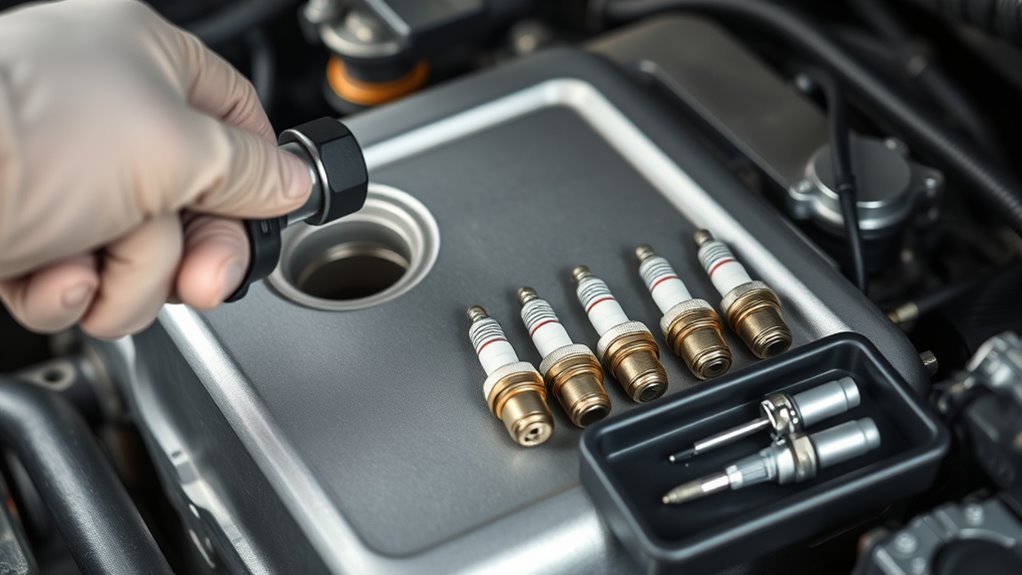
When the engine’s cool, work methodically: disconnect the negative battery terminal, remove each ignition coil or wire without stretching connectors, and use a spark plug socket and ratchet to back out the old plugs—keeping track of cylinder order—so you can hand-start new iridium or platinum plugs, then torque them to the Land Cruiser’s spec (about 13 ft‑lb). Gather a torque wrench, spark plug socket, and ratchet before you begin. Label coils or wires to preserve firing order. Pull coils straight up; avoid prying. Use the socket with an extension to reach recessed plugs. Unscrew slowly to prevent thread damage and inspect removed plugs for wear, oil, or burning. Fit new plugs by hand first to avoid cross-threading; then use the torque wrench to finish. Reinstall coils, reconnect the battery, and perform a brief engine run to verify smooth idle. Keep records: intervals, observations, and mileage. Practiced spark plug maintenance frees you from dealer dependence and preserves engine performance for miles.
[Products Worth Considering]

This ignition coil and spark plug set is designed to restore reliable starting, smooth engine performance, and efficient combustion for compatible Toyota, Lexus, Scion, and Pontiac models. Built with durable materials and engineered to meet or exceed OE design standards, it offers dependable fitment and long-lasting operation. The package includes four ignition coils and four double iridium spark plugs for a complete tune-up solution.

This ignition coil and iridium spark plug kit is designed to restore smooth engine performance, reliable starts, and efficient combustion for compatible Toyota models. Built for a precise fit across select Camry, RAV4, Sienna, Highlander, and Venza applications, it helps improve idle stability, fuel economy, and emissions. The kit includes durable replacement parts backed by a one-year unlimited-mileage guarantee for added confidence on the road.

This ignition coil pack and iridium spark plug set is designed to restore smooth starting, strong acceleration, and dependable engine performance for a wide range of compatible Toyota, Lexus, Scion, and Pontiac vehicles. Built as a direct OEM replacement, it offers plug-and-play installation and helps reduce misfires while improving fuel economy and overall drivability. The premium iridium plugs and matched coils deliver consistent spark output and long-lasting durability for everyday driving.
Torque, Gap, and Installation Tips to Avoid Misfires and Damage
If you hand-start each plug to avoid cross‑threading and then torque them to the Land Cruiser spec (about 13 ft‑lb), you’ll prevent thread damage and guarantee consistent sealing and heat transfer; use a calibrated torque wrench and the correct socket, and avoid over‑tightening iridium or platinum tips which are more brittle than steel. Clean threads and the recess with solvent and a brush, then guide the plug with a short rubber fuel line or magnetic tool to maintain alignment. Check and set the spark plug gap with a feeler gauge — keep it below 1.3 mm to prevent misfires; verify post-gapping that the electrode hasn’t been stressed. Install plugs hand-tight, then apply the final torque in a controlled motion. Use recommended iridium/platinum parts for longevity, but treat them gently. Record torque and gap for each cylinder as part of your spark plug maintenance. These installation techniques minimize damage, reduce misfire risk, and keep the engine reliable for freedom on the road.
Inspect These Related Systems When Changing Plugs: Coils, PCV, Wires, Fuel
Properly torqued and gapped plugs only solve part of the ignition puzzle; inspect the related systems while you have access. Start with a coil inspection: remove and visually check each ignition coil for cracks, carbon tracking, or oil ingress, and test resistance with a meter to confirm within spec; replace any coil showing wear to prevent misfires. Next, verify the PCV system operation—ensure valve movement and clear hoses; a stuck PCV will raise oil consumption and accelerate carbon buildup on electrodes. Inspect plug wires (or boots) for fraying, corrosion, or loss of elasticity; replace degraded leads to restore consistent spark delivery. Perform a fuel assessment: check the fuel filter and inspect for contaminants, and consider injector cleaning if you see deposits or rough idle. Document findings, replace faulty components, and reassemble. Monitoring these systems when changing plugs extends plug life, improves performance, and frees you from repeat interventions.
Cost Comparison and Where to Get Spark Plugs Replaced Near Jackson, MS

For a Toyota Land Cruiser, expect spark plug replacement costs to vary with parts, labor and service level: dealer work typically runs about $250 for eight plugs, while doing it yourself cuts parts costs to roughly $6.33 per plug plus tools and your time. You’ll plan service intervals between 60,000–120,000 miles based on model and driving conditions. Compare spark plug pricing: dealer parts and labor vs. aftermarket plugs bought in bulk. Calculate total cost = (parts + labor) or (parts + tools + your labor hours).
For replacement services near Jackson, MS, Toyota of Jackson provides factory-certified technicians, manufacturer-recommended parts, and a free shuttle to minimize downtime. Use their service for warranty-aligned work; choose DIY or independent shops if you want cost control and autonomy. Inspect ignition coils, PCV, wires and fuel systems during the job. Prioritize clear estimates, part numbers, and torque procedures to guarantee robust performance and liberation from unnecessary recurring costs.
Frequently Asked Questions
How Much Does It Cost to Replace Spark Plugs on a Land Cruiser?
You’ll pay about $250 total for parts and labor, or roughly $6.33 per plug plus ~$120 labor; DIY cuts costs. Choose spark plug types per replacement frequency (60k–120k miles) and follow procedural steps precisely.
Can Spark Plugs Last 200,000 Miles?
Yes — some plugs claim 200,000 miles; you’ll monitor spark plug lifespan and assess performance impact. Inspect gaps, deposits, and resistance every 10–20k miles, replace sooner under harsh conditions to keep freedom on the road.
How Long Do Toyota Oem Spark Plugs Last?
Toyota OEM spark plugs typically last 70,000–120,000 miles. You’ll favor iridium or platinum spark plug types; follow maintenance tips: inspect regularly, swap by schedule, use OEM Denso-quality parts, and torque to spec to avoid damage.
Conclusion
You’ve learned the intervals, symptoms, and parts to inspect, and you’ll follow the torque, gap, and installation steps precisely. Test the theory that iridium plugs actually extend service life on Land Cruiser V8s: favor OEM-specified iridium when the engine’s high-compression, otherwise platinum suffices. Don’t skip coil and PCV checks; a bad coil will mimic plug failure. Replace plugs at the recommended mileage, use a torque wrench, and recheck gaps to prevent misfires and costly damage.
[Products Worth Considering]

This set of four ignition coils is designed to restore smooth engine performance and reliable starting for compatible Toyota, Scion, and Lexus applications. Built to meet or exceed OE specifications, these coil packs help reduce misfires, hesitation, and check engine light issues while supporting stronger ignition output. The direct-fit design makes installation straightforward, and the package includes a warranty for added peace of mind.

NGK Iridium IX spark plugs are designed to deliver a stable spark, reliable ignition, and long-lasting performance for compatible Toyota Camry 2.5L engines. The fine-wire iridium center electrode helps improve durability and efficient combustion, making these plugs a smart replacement choice for maintaining smooth engine operation. Sold in a convenient four-pack, they are built for consistent performance and dependable fitment.

NGK Iridium Spark Plugs are designed to deliver reliable ignition performance across a wider heat range than ordinary plugs. They help resist carbon buildup and pre-ignition while the patented triple gasket sealing process reduces the chance of combustion gas leakage. Sold as a six-pack, they are a strong choice for routine maintenance and improved engine operation.