You can expect your Toyota Tacoma’s battery to last about 3–5 years under normal use; with careful maintenance and mild climates it can reach 5–7 years. High heat, frequent short trips, corroded terminals, and poor-quality replacements shorten life. Watch for slow cranking, dim lights, repeated jump-starts, and a persistent battery warning. Keep voltage above 12.6V, clean terminals, and run highway drives or use a maintainer; keep going below for tips on testing, replacement, and costs.
How Long Does a 2021 Toyota Tacoma Battery Last?
While individual results vary, a 2021 Toyota Tacoma’s battery typically lasts about 3–5 years under normal conditions; climate and driving habits are the main variables. You’ll plan around that range and use straightforward checks to avoid being stranded. Understand that modern lead-acid battery technology delivers predictable capacity decline; many Tacomas need replacement by year five, though ideal storage, short-start frequency, and gentle discharge can extend life. Environmental factors matter: cold, low-use settings can push longevity toward 5–7 years, while hot, high-duty cycles shorten it to roughly 3–4. You’ll perform basic maintenance—clean terminals, inspect for corrosion, and note slow cranking or dim lights—to preserve health. Monitoring voltage and load tests gives objective data so you can choose replacement timing rather than reacting to failure. Take control: use technical checks, account for climate, and replace on measured decline to keep your Tacoma reliable and free from avoidable interruption.
What Makes a Tacoma Battery Wear Out Faster?
Because heat, short trips, corrosion, and poor maintenance all stress a lead‑acid battery, your Tacoma’s battery will wear faster under certain conditions; high ambient temperatures accelerate internal chemical degradation, frequent short drives prevent full recharge cycles, corroded terminals impede current flow, and inconsistent OEM quality or neglected voltage monitoring lets problems go unseen until failure. You should track battery age and environmental factors because they determine risk: hotter climates shorten life (often to 3–4 years), while repeated shallow discharges from stop‑and‑go use add cumulative damage. Corrosion raises internal resistance, reducing usable capacity and increasing stress during starts. Neglecting basic upkeep or accepting a low‑quality OEM unit amplifies these effects, forcing earlier replacement and limiting freedom to use your truck as you want.
Heat, short trips, corrosion, and poor upkeep drastically shorten your Tacoma battery’s life — monitor age and conditions.
- Midday desert heat baking the battery tray
- Daily short hops that never top charge
- White crust at the terminal blocking current
- An OEM cell failing before year three
How to Spot a Failing Tacoma Battery (Key Symptoms)?
After you’ve monitored the conditions that speed battery wear, you’ll want to recognize the signs a Tacoma battery is failing so you can act before a no‑start. You’ll notice a delayed crank or a rapid clicking when you turn the key — classic indicators the battery can’t deliver sufficient current. If you rely on frequent jump‑starts or the battery struggles to hold a charge, it’s degraded and won’t support your independence on the road.
Pay attention to a persistent battery warning light on the dash; it flags either battery or alternator problems that need immediate diagnosis. Dimming headlights under load and intermittent electrical issues — sluggish power windows, erratic dash electronics — show reduced reserve capacity. Inspect the terminals: white or greenish powdered corrosion is a tangible sign of internal failure or poor connections. Spotting these symptoms early lets you reclaim control: replace or service the battery before you’re stranded, rather than reacting under pressure.
Quick Battery Check: 4 Steps You Can Do Now
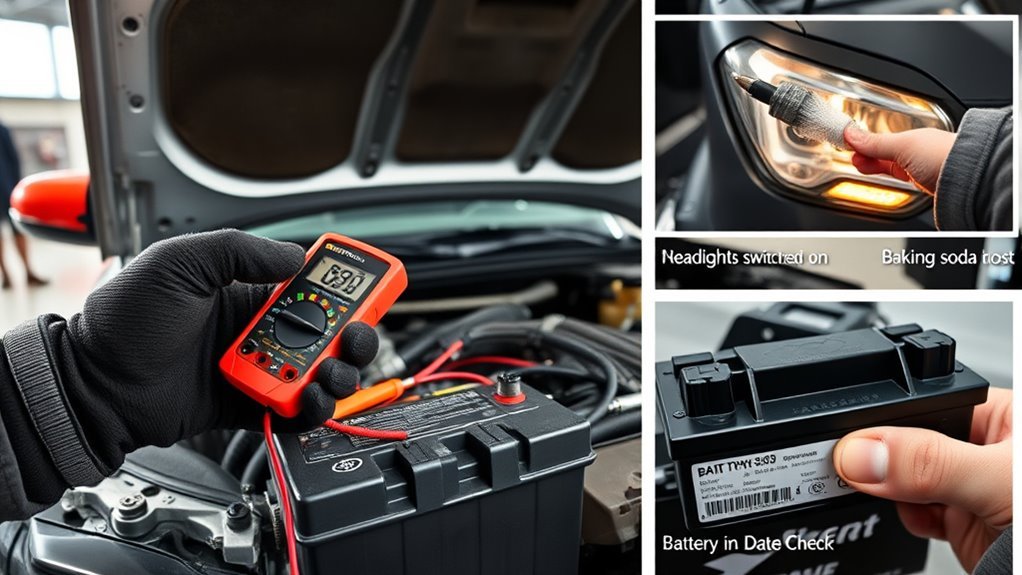
1 quick check you can do in minutes will tell you if your Tacoma’s battery needs attention: inspect the terminals for corrosion, verify the voltage with a meter, clean any buildup with a baking soda solution, and confirm the connections are tight. You’ll regain control of battery health with a short, actionable routine focused on battery care and clear performance tips.
- Visual: green/white crust on posts signaling corrosion that blocks current.
- Measurement: digital meter reads ~12.6V for a fully charged battery; lower indicates discharge.
- Cleaning: baking soda paste neutralizes acid; brush gently, rinse, dry to restore contact.
- Torque: hand-tighten clamp bolts to specified snugness—no wiggle, no resistance drops.
Do the check monthly or after long idles. If you see heavy corrosion, repeated low voltage, or persistent starting trouble, act now—replace the battery or consult a pro. This keeps your Tacoma reliable and frees you from sudden failures.
How Climate and Driving Affect Tacoma Battery Life
Your Tacoma’s battery life depends heavily on climate and driving patterns, with hot climates often cutting life to about 3–4 years and cooler climates extending it toward 5–7 years. Short, frequent trips prevent full charging and increase cycle-related wear, while sustained high temperatures accelerate chemical degradation and loss of capacity. You can mitigate these effects by monitoring voltage, keeping terminals clean, and adjusting driving or charging habits to reduce stress.
Climate Impact On Longevity
Because climate and driving patterns directly affect the chemical and electrical stresses on a Toyota Tacoma battery, you’ll see noticeable differences in lifespan: cold, stable environments can slow degradation and push life toward 5–7 years, while hot, humid conditions accelerate chemical reactions and typically limit life to about 3–4 years. You’ll want to factor in climate effects and temperature extremes when planning maintenance. Cold reduces internal corrosion but can lower cranking power temporarily; heat speeds electrolyte breakdown and increases self-discharge. Monitor voltage and inspect terminals more in harsh climates. Aim for regular runs to keep charge cycling healthy.
- Frosted mornings with slow cranking sound
- Afternoon heat baking under the hood
- Humid condensation around terminals
- Stable, dry garage sheltering the battery
Driving Patterns And Charge
When you drive mostly short trips, the Tacoma’s alternator often can’t fully recharge the battery between starts, and that chronic undercharging shortens service life compared with regular highway use. You should assess driving habits and charging frequency: frequent stop-and-go trips demand more deliberate charging management, while sustained highway miles restore state of charge and prolong the 3–5 year baseline lifespan. Monitor voltage and clean terminals regularly to prevent parasitic losses that amplify degradation. If you drive infrequently or in climates that stress the battery, use a battery maintainer to maintain ideal state of charge and reduce sulfation. Adjust maintenance intervals to match your usage pattern—higher vigilance when charging frequency is low, more routine checks when short trips dominate.
Temperature-Related Battery Stress
Short trips and inconsistent charging set the stage for another major factor: temperature-related stress on your Tacoma’s battery. You’ll see lifespan drop to about 3–4 years in hot climates, while colder regions can stretch it to 5–7 years. Temperature extremes change chemical rates, accelerate corrosion in humid heat, and reduce cold-capacity when you need starting power. You must monitor and act.
- Hot idling after short trips that never fully charge the battery
- Salt-spray and humidity accelerating terminal and case corrosion
- Bitter morning starts where capacity is visibly reduced
- Sudden heat spikes that increase internal resistance
Regular checks, timely charging, and targeted maintenance free you from avoidable failures and protect battery performance.
Maintenance That Extends Tacoma Battery Life
Keep the battery terminals clean and tight—scrape away corrosion and torque the clamps to spec to preserve a low-resistance connection. Monitor voltage regularly and run the truck at highway speeds for 30 minutes weekly or hook up a smart maintainer when it’s parked long-term to prevent deep discharge. These simple charging and terminal-care habits substantially reduce premature failure and extend Tacoma battery life.
Regular Terminal Cleaning
Clean and tight battery terminals are one of the simplest, most effective ways you can extend your Tacoma’s battery life, so inspect the posts every few months for corrosion or looseness. You’ll prevent terminal corrosion by keeping connections clean and snug; that supports reliable starts and longer battery life. Use a baking soda-and-water paste to neutralize acid, scrub with a brush, rinse, dry, then tighten clamps to spec. Follow a cleaning frequency that matches your driving environment — salt, humidity, and short trips speed buildup. After cleaning, spray an anti-corrosion protector to form a lasting barrier.
- gritty white crust at the clamp base
- damp, dark residue on cable ends
- visible green or blue powder on posts
- snug wrench verifying firm clamp torque
Proper Charging Habits
Anyone who wants reliable starts should adopt a few proper charging habits for your Tacoma: drive it at highway speeds at least 30 minutes weekly to top the battery, use a battery maintainer when it’s parked for long stretches, and monitor voltage so the cell stays near 12.6 volts or higher. You’ll keep battery charging effective by inspecting and tightening cables, cleaning terminals, and removing corrosion to preserve low-resistance connections. Check voltage periodically with a multimeter; readings below 12.4 volts signal maintenance or charging. Use a smart maintainer for long-term storage to prevent sulfation and sustain peak performance. These steps cut failures, give you freedom from unexpected dead batteries, and extend service life through disciplined, technical care rather than guesswork.
Battery Types for Tacoma : OEM, AGM, and Aftermarket Pros/Cons
While choosing a replacement battery for your Tacoma, weigh OEM, AGM, and aftermarket options by lifespan, performance, and cost. You want freedom from unexpected failure, so focus on measurable differences: OEM Advantages include predictable Battery Performance and fitment, typically 3–5 years under normal conditions. AGM Disadvantages are limited mostly to higher upfront Cost Considerations and sensitivity to overcharging despite longer service life (often >5 years in ideal conditions). Aftermarket Risks center on inconsistent quality; savings can cost you reliability and lifespan.
- Visualize an OEM drop-in replacement working reliably for years on routine drives.
- Picture an AGM surviving repeated deep cycles and cold starts with stronger cranks.
- Imagine a low-cost aftermarket unit failing prematurely on a cold morning.
- See yourself extending any battery’s life through routine terminal cleaning and inspection.
Choose based on your priorities: reliability, longer life, or lower initial expense.
How to Choose the Right Replacement Battery (Size, CCA, Warranty)
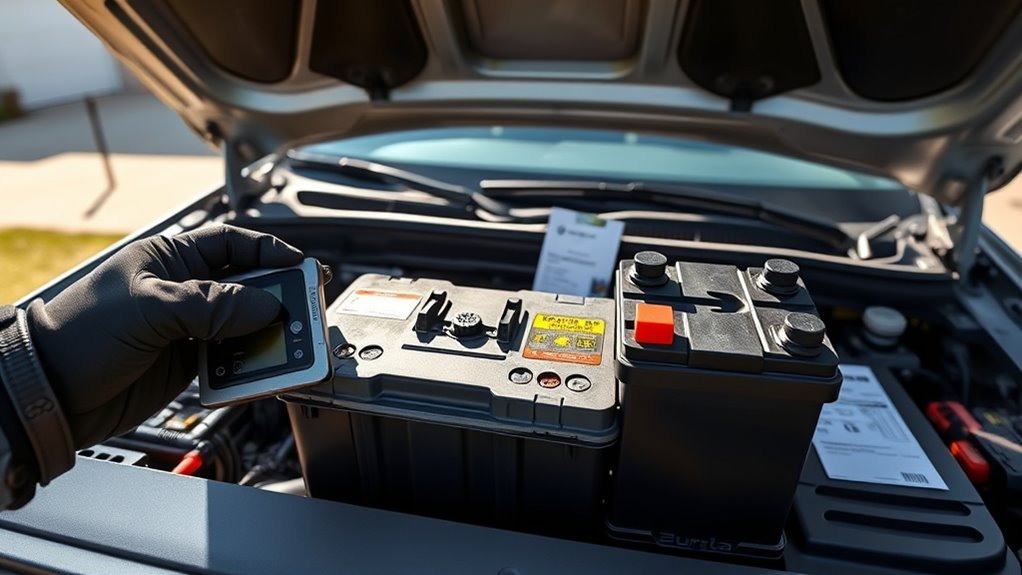
Start by confirming the correct BCI group size from your Tacoma’s owner’s manual to guarantee the replacement fits the tray and hold-downs; then match or exceed the recommended cold cranking amps (CCA) for reliable starts in your climate, pick flooded vs. AGM based on use and exposure. You’ll prioritize battery compatibility first: the case must sit securely and terminals must align. For CCAs, err on the higher side if you face cold winters—more CCA means stronger starts under load. Choose AGM if you want longer life, better vibration resistance, and superior performance in extreme conditions; choose flooded for cost-effectiveness and simpler recycling. Inspect any candidate for cracks or damage since physical defects can void warranty. Evaluate warranty length and terms—OEM Toyota batteries can offer up to 24 months; longer pro-rated coverage reduces long-term cost. Finally, adopt basic maintenance tips—keep terminals clean, secure mounting, and correct electrolyte levels for flooded types—to protect warranty and maximize service life.
Replacement Costs, Installation Options, and When to Replace Proactively
Because a Tacoma battery typically lasts 3–5 years, you should budget for replacement and choose an installation path that balances cost and convenience. You’ll compare OEM warranties (often up to 24 months) against reliable aftermarket options, weigh cost comparisons, and apply replacement tips: inspect terminals for corrosion, note slow starts or dimming lights, and plan proactive swaps every 5 years—so you’re not stranded.
Because Tacoma batteries last 3–5 years, budget replacements, compare warranties, and plan proactive swaps to avoid being stranded.
- You replacing the battery yourself with basic tools, saving $20–$40 in labor, feeling empowered.
- A shop swap gives quick diagnostics, possible extra fees, and warranty validation.
- Carry a lightweight jumper pack and terminal cleaner to maintain freedom on the road.
- Note extreme temperatures accelerate wear; prioritize regions with swings when scheduling proactive replacement.
Decide using hard numbers, warranty length, and local labor rates. You’ll act before failure, balancing upfront cost with long-term reliability to keep your Tacoma mobile and free.
Frequently Asked Questions
How Long Should a Battery Last in a Toyota Tacoma?
You should expect 3–5 years, sometimes 5–7 with ideal conditions. You’ll extend life by following battery maintenance tips, monitoring battery lifespan factors like climate, driving habits, corrosion, and voltage, and replacing it when performance falters.
How Much Does It Cost to Replace a Battery in a Toyota Tacoma?
A Tacoma owner paid $180 for an OEM battery plus $30 install. You’ll typically pay $100–$300, up to $350+ for AGM; use battery maintenance tips, battery types comparison to choose durable, liberating, cost-effective power.
How Do I Know if My Tacoma Battery Is Going Bad?
You’ll know your Tacoma battery’s failing by battery warning signs: slow cranking, frequent jump-starts, dim lights, clicking starts, or dashboard warning light. Follow maintenance tips: clean terminals, test voltage regularly, and replace proactively to stay free.
Conclusion
You can expect your 2021 Toyota Tacoma battery to last about 3–5 years; in fact, 50% of vehicle batteries fail by year four. Watch for slow cranking, dim lights, and warning lights—those are early signs. Do quick checks: voltage, terminals, load, and age. Climate, short trips, and parasitic drains shorten life, while regular inspections, proper charging, and choosing the correct size/CCA extend it. Replace proactively around year three to avoid surprises.