You can expect Tacoma shocks and struts to last about 50,000–100,000 miles: OEM units often near 50K, while premium Bilstein/Fox units can reach 100K–120K depending on load and terrain. Commuting extends life toward the high end; towing and off‑roading cut it toward 60K–80K or sooner. Watch for bouncing, leaks, squeaks, tire cupping and harsh ride. If you want specifics on tests, replacement options, costs and maintenance, keep going.
How Long Tacoma Shocks & Struts Typically Last
While exact longevity varies with use and components, Tacoma shocks and struts generally last 50,000–100,000 miles, with premium units like Bilstein often approaching 100,000 and some setups reaching 120,000 under ideal conditions. You’ll plan around that range, recognizing shock longevity factors like component quality, load, and terrain. OEM units tend toward earlier wear near 50,000 miles; performance shocks extend service life. Off-road use accelerates wear, often moving replacements into a 60,000–80,000-mile window. Ride degradation reported between 66,000 and 145,000 miles signals inspection and likely replacement.
You’ll perform regular assessments—visual checks for leaks, bounce tests, and ride-quality evaluation—because maintenance tips matter: document mileage, inspect mounts and bushings, and swap units in matched pairs to preserve handling. You want control and freedom on the road; treating shocks as mission-critical components keeps your Tacoma responsive, safe, and ready for liberation-focused driving.
Mileage by Use: Commuting, Towing, and Off‑Roading
Because driving conditions dictate load and shock duty, your Tacoma’s shocks typically last longest with commuting — often nearing 100,000 miles — while towing and off‑roading cut service life substantially. In routine commuting conditions you’ll subject shocks to predictable, low-energy cycles; components fatigue slowly and many owners exceed 100k miles if you avoid heavy loads and harsh terrain. Towing impacts are mechanical: added mass increases damping demand and accelerates wear, commonly shifting replacement into the 60k–80k mile range. Off road durability is the weakest link — repeated impacts, high articulation, and contamination can force replacement near 60k miles or sooner. You can’t control every mile, but you can extend service life by adopting maintenance tips: inspect mounts and seals regularly, monitor fluid leaks, torque suspension hardware to spec, and address bent or damaged components immediately. If you liberate yourself from schedule anxiety, these targeted actions keep shocks performing longer under varied duty cycles.
5 Signs Your Tacoma Shocks Are Worn
Knowing how use affects shock life helps you spot when wear has progressed past expected limits. You’ll recognize clear shock symptoms: excessive bouncing over dips and bumps shows reduced damping performance; a harsh ride means the shocks can’t control suspension movement. Listen for squeaking noises during driving — that indicates worn bushings or internal component deterioration. Inspect for fluid leakage; oil on the shock body or mounting points is a direct failure sign and demands replacement. Monitor tire tread for cupping; uneven scalloped wear is a performance indicator of degraded shock function and compromised handling. Note decreased stability on rough roads: if the truck wanders, dives under braking, or rolls more in corners, the shocks aren’t maintaining tire contact or chassis control. These objective, measurable cues let you act decisively. They free you from guessing, focusing maintenance on parts that directly affect safety, traction, and vehicle control.
DIY Shock Tests and Inspection Checklist
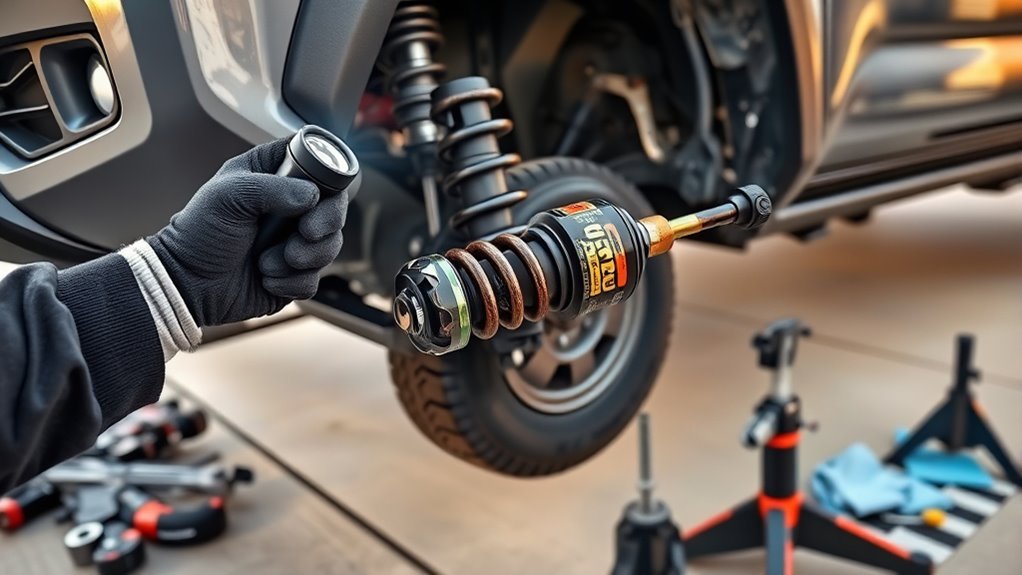
Start with a simple bounce test: push down firmly on each corner of your Tacoma and release — a healthy shock will return the truck to rest within 2–3 oscillations; immediate return with no rebound or prolonged bouncing means the shock’s damping is compromised and needs further inspection or replacement. Then move to a focused visual and auditory check. Use basic inspection tools and perform shock testing to confirm symptoms.
- Scan for fluid leaks on shocks or struts — wet, oily surfaces demand action and won’t be ignored.
- Look for rust, corrosion, or damaged mounts that threaten control and freedom on the road.
- Inspect tires for cupping or uneven wear, a clear sign the shocks aren’t stabilizing you.
- Compress and rebound each shock while listening for squeaks — worn bushings speak loudly.
- Use inspection tools (flashlight, pry bar, torque wrench) to test fasteners and reveal hidden failure.
Follow this checklist methodically; it’s practical, liberating, and keeps you in control of your Tacoma’s safety.
Tacoma Shock Replacement: Options, Cost, and Aftercare
If your Tacoma’s ride gets harsh, starts sagging, or shows leaks, you’ll need to weigh replacement options, costs, and aftercare to restore safe handling and ride quality. You’ll choose between OEM vs. aftermarket parts: OEM offers predictable fit and roughly 50,000-mile life; performance brands like Bilstein or Fox deliver performance benefits and can approach 100,000 miles. Budget $300–$1,000 for parts and labor, depending on brand and whether you swap two or all four shocks.
| Option | Typical life/cost |
|---|---|
| OEM | ~50,000 miles; lower part cost |
| Performance (Bilstein/Fox) | Up to ~100,000 miles; higher cost |
Aftercare: inspect periodically for leaks, test rebound and ride quality, and follow a schedule to detect wear early. Early detection preserves suspension components and maximizes your vehicle’s handling freedom. Choose parts that match your use-case and liberate your driving experience through reliable control.
Frequently Asked Questions
How Much Does It Cost to Replace Shocks and Struts on a Toyota Tacoma?
You’ll pay roughly $600–$1,200 to replace shocks and struts on a Toyota Tacoma. Choose shock absorber types wisely, follow strut maintenance tips, and you’ll preserve handling, safety, and your vehicle’s liberating performance.
Conclusion
By now you know Tacoma shocks and struts usually last 50–100k miles but wear faster with towing or off‑roading. Inspect them periodically for leaks, uneven tire wear, and poor ride control; perform the simple bounce, push, and visual tests described. When replacement’s needed, choose matched assemblies and correct valving for your load profile. So why risk compromised handling or accelerated drivetrain wear when timely inspection and proper replacement keep your Tacoma safe and predictable?