Start by checking the A/C condensate drain under the firewall — pinch the hose and clear blockages with compressed air or a flexible wire; that’s the fastest fix for passenger-floor pooling. If it’s dry, do a quick in-car water test: park level, have someone spray likely seams while you watch for leaks near the A-pillar and floorboard. Also inspect sunroof drains, door/window seals, windshield edges and firewall grommets; follow simple DIY clears and temporary seals, and read on for detailed steps.
First Check the A/C Condensate Drain (Fastest Fix)

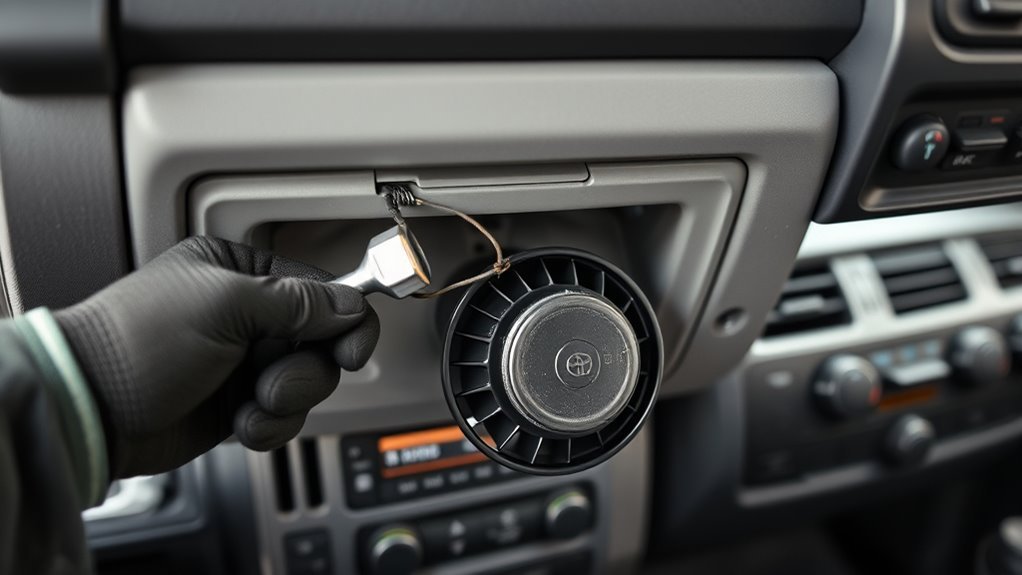
If water’s pooling on your 4Runner floor, start by checking the A/C condensate drain—it’s the quickest fix. You’ll reclaim control by inspecting the drain tube under the vehicle near the firewall; regular A/C maintenance tips include verifying this line isn’t clogged with debris. Use compressed air or a flexible wire to clear blockages, and avoid aggressive force that could damage the hose. If you spot water inside, pinch the drain hose briefly and watch for free flow—if it runs, the drain’s likely clear. Change or clean the cabin filter as part of routine upkeep to reduce mold and residue that cause clogs. Keep records of condensate drain cleaning and simple inspections so you don’t let small problems grow. Do this methodically, and you’ll cut musty odors and stop water pooling without needing elaborate repairs. You’ll feel liberated knowing the fix is straightforward and under your control.
Do a Fast In‑Car Water Test to Pinpoint the Leak Source
Once you’ve checked the A/C drain, run a quick in‑car water test to pinpoint where water’s entering. Park level, close all windows, and have a partner spray moderate hose flow at likely entry points while you sit inside watching for drips. Focus your leak detection on the A‑pillar and passenger floorboard; move your feet and hands around carpet edges to feel for cold spots or wet patches. Use a flashlight to spot bead patterns and follow trails of moisture—this moisture assessment tells you whether water’s tracking from above, the door, or a seal.
Keep the test short and systematic: spray one area for 30–60 seconds, stop, then inspect. Note the exact location and timing of any ingress; photograph or jot notes. Afterward, check nearby seals and drains for blockages or damage revealed by the test. Document findings so you can confidently fix it yourself or brief a mechanic and reclaim control of your vehicle.
Inspect Sunroof Drains, Door/Window Seals, Windshield, and Firewall Grommets
Because water can sneak in through several weak points, start by systematically checking the sunroof drains, door/window seals, windshield edges, and firewall grommets for blockages, tears, misalignment, or poor sealing. You’ll want to confirm sunroof maintenance is current: run water into the sunroof channel and watch each drain exit, clearing debris that causes backups and overflows into the cabin. Inspect door and window seals visually and by feel—compress each seal to check for cracks, detachment, or hardening that compromises seal integrity. Walk the windshield perimeter, looking for gaps, soft spots, or dried-out adhesive that signal a failing seal. Finally, pop the hood and inspect firewall grommets for proper fit and undamaged rubber; displaced or torn grommets let splash water pass into the footwell. Routine checks like these keep you in control, prevent mold and interior damage, and preserve freedom from recurring leaks.
DIY Fixes Today: Clear Drains, Reseat Seals, and Apply Temporary Patches
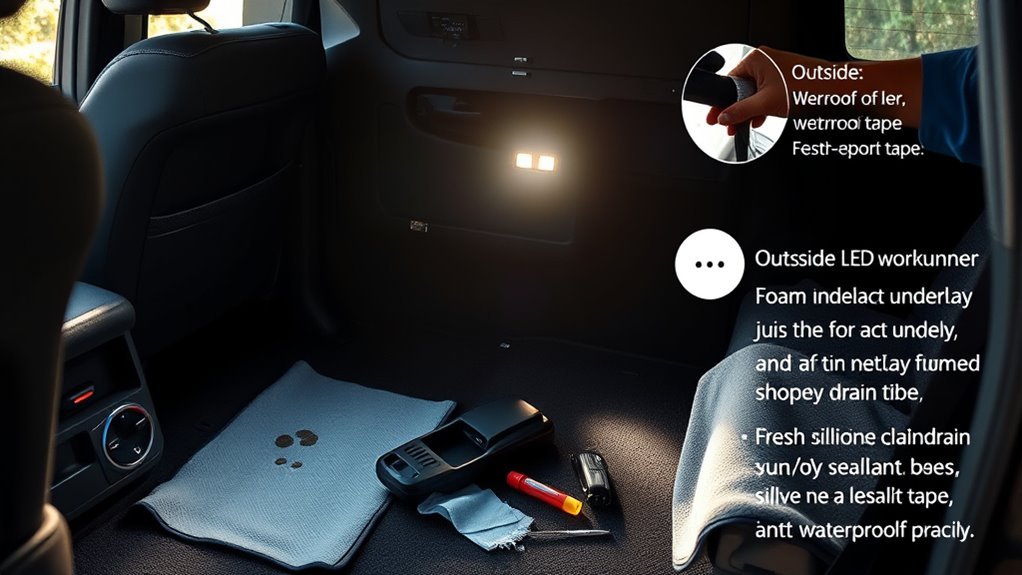
When you find moisture on the 4Runner’s floor, start by clearing the sunroof and AC drains, reseating any loose door or windshield seals, and applying temporary waterproof patches where gaps are visible. You’ll free water pathways by inspecting sunroof and AC drain tubes; use compressed air or a flexible wire to remove clogs and verify flow. Check door and windshield seals for gaps, then press or reposition them to restore contact—this simple reseat often stops leaks until you pursue seal replacement. If you spot seams or pinhole leaks, apply waterproof tape or automotive sealant as an interim measure; keep patches smooth and overlap by at least half an inch. Monitor the AC condensate drain after clearing to guarantee no backup. Schedule regular maintenance to catch failing grommets and seals early. These steps let you reclaim control, keep the cabin dry, and buy time before committing to professional repairs or full seal replacement.
When to See a Shop or Dealer : What Evidence, Photos, and Warranty Tips
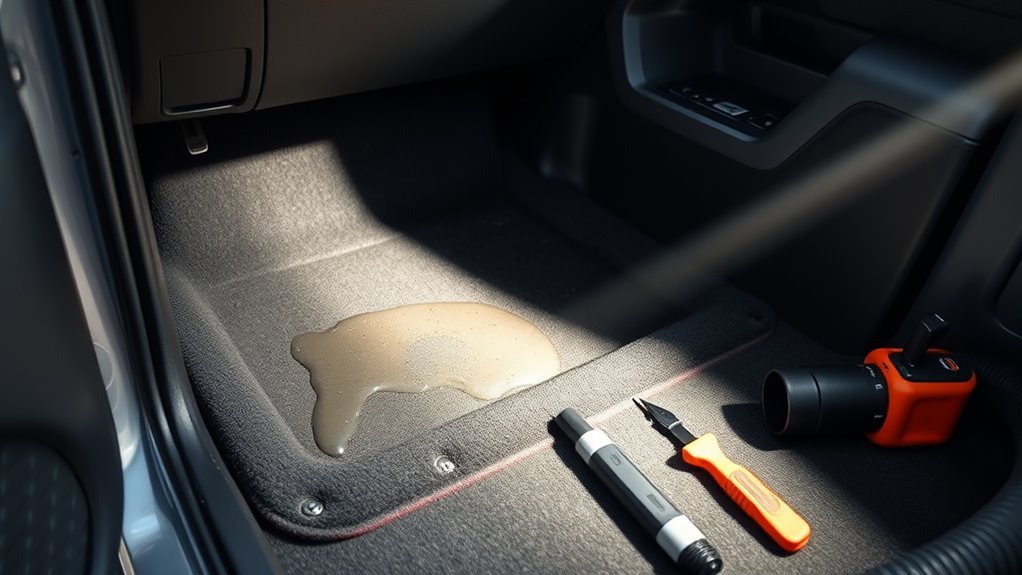
If water keeps pooling on the passenger floorboard despite your DIY checks, document the conditions and bring the evidence to a shop or dealer so they can diagnose the source quickly. Note when it happens (after heavy rain, car wash, driving over deep puddles), where the water pools, and any smells or mold. Take clear photos of wet spots, seam areas, windshield and sunroof edges, door seals, and any visible coolant or drain routing. Label photos with date/time and conditions.
Before the visit, recheck seals for obvious damage and collect maintenance records—dealers often want proof of regular upkeep before honoring warranty work. Call the service department, describe the issue, and ask about their experience with 4Runner leak diagnosis and common repairs. Bring your photo set, labeled notes, and records to the appointment. That evidence speeds diagnosis, supports warranty claims, and keeps you in control of the repair process.
Frequently Asked Questions
Why Is My Car Leaking in the Passenger Floor Well After Rain?
You’re leaking because water intrusion causes often stem from seal failure or clogged drains; inspect sunroof and A-pillar drains, windshield and AC condensate tube, clear blockages, replace degraded seals, and regain control of your dry cabin.
Why Is My Car Floor Wet When It Rains on the Driver’s Side?
You’re getting water intrusion from moisture sources like a blocked AC condensate drain, leaking windshield seal, clogged sunroof drains, or poorly sealed firewall grommets; inspect drains and seals, clear blockages, and reseal to reclaim dry freedom.
Why Is My Car’s Carpet Wet in the Back of My Passenger Side?
Once in a blue moon you’ll find a clogged sunroof drain or AC condensate tube causing water leakage; you’ll inspect seals, fix the leak, then do carpet cleaning promptly to reclaim freedom and prevent mold.
Conclusion
You’ve covered fast, practical checks—start with the A/C drain, run the water test, then inspect sunroof drains, seals, windshield, and firewall grommets. Clear clogged drains, reseat seals, and apply temporary patches to stop the flood instantly; these steps’ll fix most leaks quicker than a pit stop. If water keeps coming in, document drips and damage with photos and take it to a shop or dealer with your evidence and warranty info.