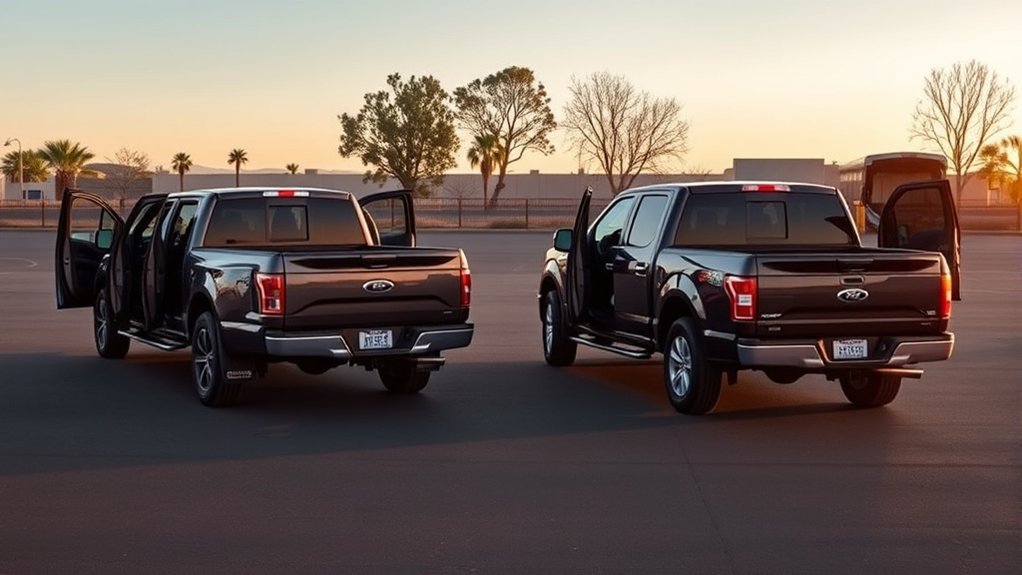
You’ll pick a crew cab when passenger comfort and interior utility matter most: it has four full-size doors, roomy rear seats for adults, more integrated cabin storage, but a shorter bed and slightly higher fuel and purchase costs. Choose an extended cab if you need longer beds, higher payload efficiency and lower upfront expense at the cost of cramped rear access and limited storage. Keep going to compare towing, resale and test‑drive checks.
Quick Decision Guide: Crew Cab or Extended Cab for You
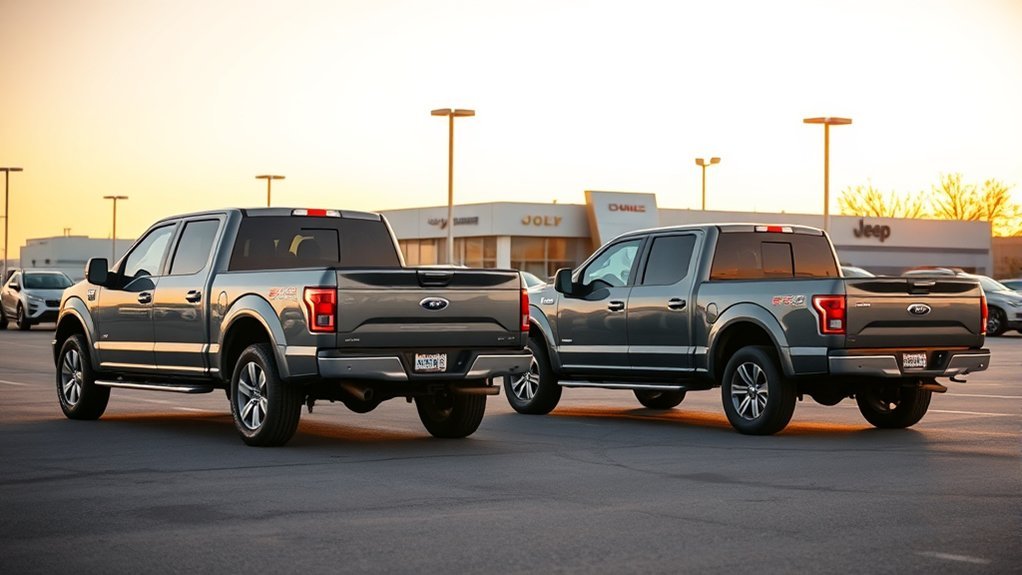
Wondering which cab fits your needs? You prioritize freedom of movement and utility, so weigh crew cab benefits against extended cab drawbacks precisely. Crew cabs deliver four full-size doors, ample legroom and headroom, and seating for up to six adults, making them the logical choice if you carry people and gear regularly. Extended cabs, with smaller rear doors and tighter rear space, work when you need occasional passenger transport and a lower upfront cost. Technically, extended cabs can yield slightly higher towing capacity because of lighter weight, but that tradeoff sacrifices interior versatility and long-trip comfort. If your goal is operational flexibility and passenger-first functionality, the crew cab maximizes usable space and long-term value. If budget and marginal towing edge matter more than daily comfort, an extended cab might suffice. Decide by mission: prioritize liberation through cabin space and comfort, choose crew; prioritize economy and minimal passenger use, choose extended.
Passenger Capacity & Rear-Seat Comfort Compared
Because seating layout drives daily usability, choose a crew cab if you regularly carry adults. You need clear metrics: seating arrangements determine capacity and comfort; legroom comparison favors the crew cab. Crew cabs typically seat up to six adults with generous rear-seat legroom and headroom, so adults ride without compromise. Extended cabs usually fit four to five, with reduced rear legroom better suited to kids or occasional passengers.
Choose a crew cab for daily adult comfort and generous rear legroom; extended cabs suit occasional passengers and cargo needs.
- Crew cab: larger interior, higher adult capacity, superior legroom comparison.
- Extended cab: prioritizes utility and cargo space, reduced rear-seat comfort.
- Long trips: crew cab maintains comfort and reduces fatigue for rear occupants.
- Trade-off: extended cab frees bed/cargo flexibility at the cost of sustained rear comfort.
You’ll choose freedom in movement and sustained comfort with a crew cab; pick an extended cab only if passenger transport is infrequent and cargo utility trumps daily adult occupancy.
Door Design, Access, and Car-Seat Friendliness
While crew cabs give you four full-size doors for straightforward entry and exit, extended cabs usually use smaller rear doors (often rear-hinged) that complicate access in tight spaces. You’ll notice immediate differences in door accessibility: crew cabs offer unhindered ingress/egress for adults and caregivers, while extended cabs force you to work around limited openings and awkward hinge geometry. That impacts seating arrangements directly. In a crew cab you can install and latch child seats without squeezing; belt routing, latch anchors, and rear door swing align with ergonomic movement. In extended cabs, reduced rear legroom and narrower openings make car-seat installation slower and more error-prone, often requiring front-seat maneuvering or seat removal. If you prioritize freedom of movement and consistent passenger access, the crew cab’s full-door architecture is superior. Choose extended only when you accept trade-offs in door accessibility and seating arrangements for a more utilitarian footprint.
Storage, Interior Utility, and Daily Practicality
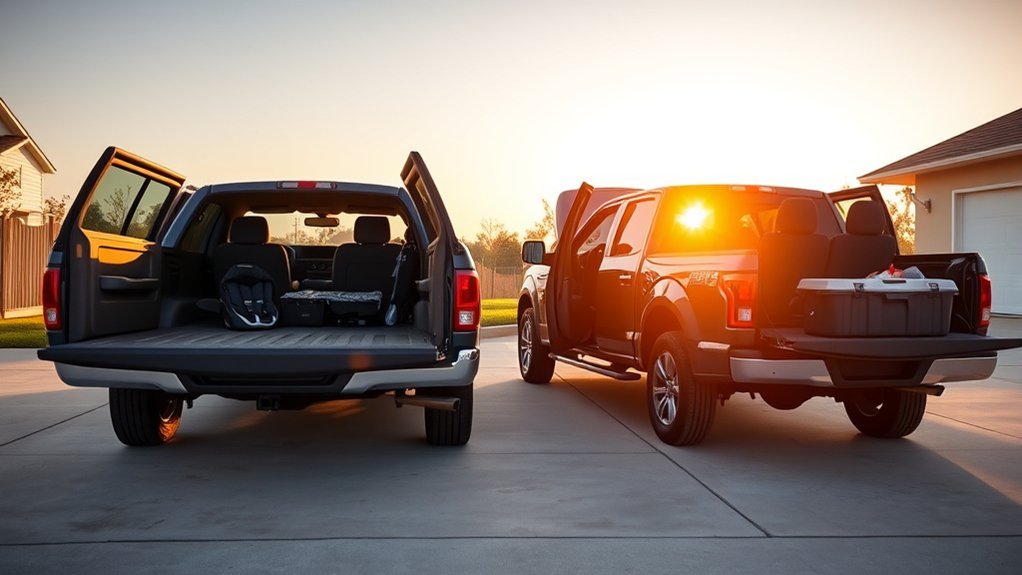
You’ll find the crew cab offers more integrated rear-seat storage—under-seat bins, larger door pockets, and fold-flat seats—that make daily cargo management straightforward when you’re carrying passengers or gear. Extended cabs give you fewer dedicated compartments and tighter legroom, so you’ll rely more on the main cabin and bed for stowing tools and occasional loads. If you need frequent, organized interior storage for adults and equipment, the crew cab is the practical choice; if payload and lighter curb weight matter more, the extended cab can be more efficient.
Rear Seat Storage Options
If you need organized interior storage and true rear-seat usability, crew cabs clearly outperform extended cabs. You’ll weigh rear space considerations and storage solutions: crew cabs give roomy rear seats, under-seat bins, and larger door pockets so adults and gear ride comfortably. Extended cabs offer limited rear legroom and fewer compartments, so you’ll use them occasionally or for short hauls.
- Crew cab: full-size rear bench, under-seat storage, integrated cupholders, door bins
- Extended cab: smaller jump seats, minimal under-seat options, limited door storage, compact pockets
- Practicality: crew cabs balance passenger comfort with tool/gear storage
- Utility: extended cabs prioritize cargo bed hauling over interior versatility
Choose crew for daily freedom; choose extended for focused hauling.
Everyday Cargo Management
1 clear choice in everyday cargo management is whether you prioritize interior utility or bed-focused hauling: crew cabs give you larger back seats, four full-size doors, under-seat bins and bigger door pockets for organized daily use, while extended cabs trade rear legroom and easy access for a simpler, more tool-oriented layout with smaller rear doors and fewer storage compartments. You’ll choose crew cab if you want modular cargo organization inside the cabin, easy passenger ingress/egress, and concealed storage for daily essentials. Choose extended cab if you value direct bed access, simplified tool storage, and maximized gear accessibility for work. The crew cab maximizes versatile interior utility for liberated daily life; the extended cab balances passenger capacity with rugged, mission-focused practicality.
How Cab Size Changes Bed Length, Towing, and Payload
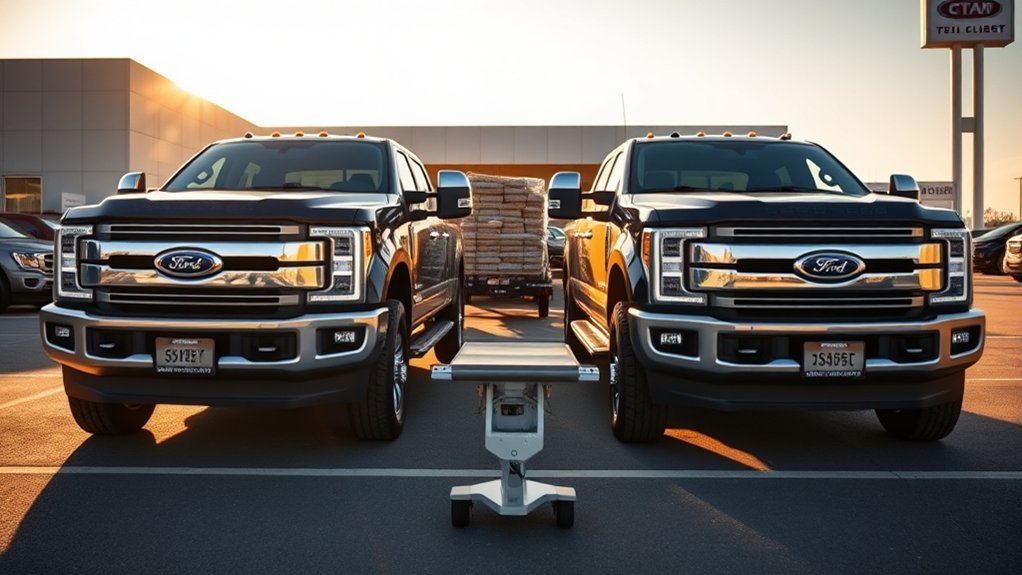
When you choose a crew cab, expect shorter bed lengths (typically 5.5–6.5 ft) that trade cargo capacity for rear-seat space, while extended cabs usually offer longer beds better suited to hauling larger loads. That added passenger volume in crew cabs raises curb weight and can reduce maximum payload compared with lighter extended-cab configurations. Towing ratings also shift accordingly—extended cabs often show slightly higher tow limits and different handling characteristics due to lower weight and altered load distribution.
Bed Length Tradeoffs
Choose your cab based on the tradeoffs between passenger space and cargo capacity: crew cabs prioritize rear-seat room and typically come with shorter beds (about 5.5–6.5 ft), while extended cabs often let you spec longer beds (around 6.5–8 ft) to maximize hauling. You’ll weigh bed length options against usable cargo capacity and overall utility. Crew cabs free occupants but constrain bed volume; extended cabs free the bed but limit rear comfort. Consider intended use and liberation from compromise: do you value passengers or payload?
- Crew cab: shorter bed, more rear-room, reduced cargo volume.
- Extended cab: longer bed, increased cargo capacity, lighter curb weight.
- Payload tends to favor extended cabs.
- Choose by mission profile.
Towing And Payload
Moving from bed-length tradeoffs to towing and payload, you’ll find cab size changes more than just cargo dimensions—it alters towing limits, payload ratings, and the hardware you’ll need. Crew cabs favor passenger freedom at the expense of bed length, so towing capacity can be similar but you may need specialized hitch placements for shorter beds. Extended cabs lean lighter; that often raises maximum towing capacity and improves payload efficiency, making them pragmatic for heavy-duty hauling. Choose based on mission: if you prioritize people-first liberty, accept traded cargo metrics; if you need uncompromised load-hauling, opt for the lighter cab.
| Metric | Crew Cab | Extended Cab |
|---|---|---|
| Towing capacity | Moderate | Higher |
| Payload efficiency | Lower | Higher |
Price, Running Costs, and Resale Value
Although crew cabs usually carry a higher MSRP and heavier curb weight, they offer greater utility that can justify the upfront and operating costs depending on your needs. You’ll assess financing options and insurance costs more closely with a crew cab because the purchase price and replacement value push monthly payments and premiums up. Compare expected fuel burn, maintenance complexity, and resale scenarios objectively.
- Crew cabs: higher MSRP, heavier curb weight, greater fuel use, potentially higher maintenance complexity.
- Extended cabs: lower initial cost, lighter weight, better fuel economy, simpler maintenance.
- Resale: extended cabs can appeal to budget buyers in some markets; crew cabs retain value where versatility is prized.
- Total cost of ownership: crew cab’s long-term utility can offset higher upfront and operating expenses if you need space and flexibility.
Make choices that free you from future compromises—opt for the model whose lifecycle economics match your liberated priorities.
Which Cab Suits Families, Work Crews, or Mixed Use?
Having weighed price, running costs, and resale, you can now match cab geometry to real-world use: crew cabs prioritize passenger comfort and interior cargo flexibility—seating up to six adults with generous rear legroom and storage—while extended cabs trade space for slightly higher payload and tow ratings, lower MSRP, and simpler maintenance.
If your priority is family needs and elevated comfort levels, choose a crew cab. It satisfies seating preferences for adults, offers interior cargo versatility for strollers and gear, and reduces compromise between passenger and load. For dedicated work requirements where utility focus and cost control matter, an extended cab gives marginally higher payload/tow, smaller rear space for occasional occupants or tools, and a lower purchase price. For mixed usage you’ll weigh seating preferences versus payload: pick a crew cab if passengers and interior storage dominate; pick an extended cab if you need occasional rear seats but prefer maximum utility and lower running costs. Make the selection to free your daily operations, not constrain them.
Next Steps: Test Drive, Measurements, and Buy-or-Rent Checklist
Before you buy, test drive both cab types and take precise measurements so you can compare real-world fit, comfort, and utility: you’ll validate seating ergonomics, ingress/egress, and storage in a controlled Test drive experience that reveals true daily usability. Record Garage measurements for door clearance, turn radius and bed access so your choice won’t be constrained by space. Evaluate passenger needs versus cargo requirements in measurable terms: rear-seat legroom, seat count, and bed length.
- Compare seating capacity, adult comfort, and access times for crew cab vs extended cab.
- Measure garage width, depth, and door opening to confirm fit and maneuvering clearance.
- Quantify bed length and cargo volume to match tools, gear, or family luggage needs.
- Use a buy-or-rent checklist to contrast upfront costs, utilization frequency, and maintenance overhead.
Choose the configuration that maximizes freedom: more people or more payload, verified by data, not assumptions.
Frequently Asked Questions
What’s the Point of an Extended Cab?
You get extra utility: extended cab benefits include longer bed options, lighter weight for slightly better tow, and budget savings. Extended cab features smaller rear doors and compact rear seating, so you maximize cargo and freedom.
What Are the Three Different Cab Sizes Called?
Like a toolbox opening, the three cab sizes are Regular Cab, Extended Cab, and Crew Cab. You’ll weigh seating versus cargo: Regular Cab for payload, Extended for balance, Crew for passenger comfort and full-door access.
Conclusion
You’ve weighed capacity, comfort, access, utility, and costs—now pick the cab that fits your routine. If you haul people regularly, prioritize a crew cab for full-size rear seating and easier car-seat installs; if you need bed length and occasional passengers, opt for an extended cab. Test-drive both, measure your garage and gear, and compare tow/payload specs. Don’t let form over function steal the show—choose the practical option that matches daily needs.