If your Camry’s TPMS light stays on after filling the tires, do not reset it right away. First, check all four tires with a reliable gauge when the tires are cold, then inflate them to the cold tire pressure listed on the driver-side door-jamb tire label or in your Toyota owner’s manual. If the pressure is correct and the warning remains, the system may need initialization, a drive cycle, sensor ID registration, or professional TPMS diagnosis.
Last updated: June 17, 2026
Quick Answer
A Camry TPMS light usually stays on after filling the tires because one tire is still below the correct cold PSI, the system has not been initialized, a tire has a slow leak, or a TPMS sensor/transmitter has failed. Use the door-jamb tire label, reset TPWS correctly, then drive as required by your model.
Key Takeaways
- Do not use a universal PSI number. Use the cold tire pressure printed on your Camry’s tire-and-loading label or owner’s manual.
- A solid TPMS light usually means low tire pressure; a light that flashes for about a minute and then stays on points to a TPMS malfunction.
- Older Camrys commonly use a physical tire pressure reset switch, while newer display-equipped Camrys use the TPWS menu and “Set Pressure.”
- If the warning returns after a proper reset, check for a slow leak, damaged valve stem, failed sensor, or unregistered sensor ID.
At a Glance
| Time Required | 5–10 minutes to check and reset; up to 30 minutes of driving on some display-equipped models |
| Difficulty | Easy for pressure check and reset; moderate if sensor diagnosis is needed |
| Tools Needed | Tire pressure gauge, air compressor, owner’s manual or door-jamb label; TPMS scan tool for sensor diagnosis |
| Cost | Usually free for a basic reset; professional diagnosis or sensor replacement varies by shop and model |
Why Your Camry TPMS Light Is On and What to Do About It
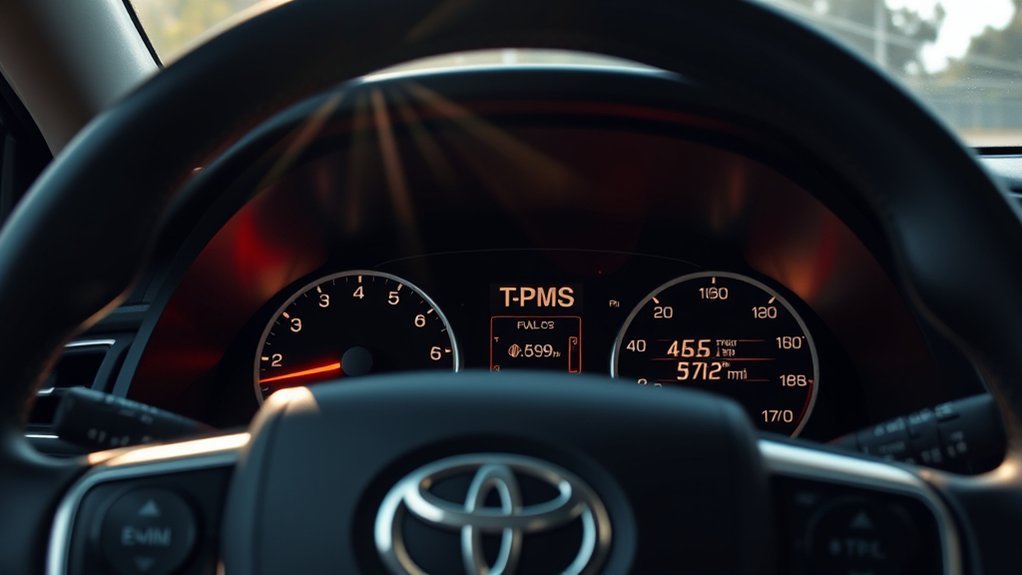
Your Toyota Camry uses a tire pressure warning system to alert you when one or more tires are significantly underinflated. The system is useful, but it is not a replacement for regular tire checks with a gauge. Toyota owner materials also note that tire pressure can change because of temperature changes and natural air leakage, so the warning may appear even when nothing is broken.
The first step is simple: park safely, let the tires cool, and check each tire against the cold PSI listed on the tire-and-loading label on the driver’s door jamb. Do not rely on the PSI molded into the tire sidewall; that number is the tire’s maximum cold inflation pressure, not your Camry’s recommended pressure.
Warning: Do not initialize or reset the TPMS until the tires are inflated to the specified cold pressure. Resetting the system while a tire is low can teach the car the wrong baseline and may delay a warning when pressure is actually unsafe.
Common Reasons Why Your TPMS Light Might Stay On
If the TPMS light remains on after you add air, one of these issues is usually responsible:
- The tires were checked warm: Tire pressure rises after driving. Recheck in the morning or after the car has been parked for several hours.
- One tire is still below the placard pressure: Use the door-jamb label, not a guessed number such as 28 psi.
- Cold weather lowered the pressure: Tire pressure commonly drops about 1 psi for every 10°F temperature drop, so seasonal changes can trigger the light.
- There is a slow leak: A nail, damaged valve stem, bead leak, or cracked wheel can cause the light to return after a short drive.
- The TPMS was not initialized: After pressure changes, tire rotation, tire replacement, or wheel changes, some Camrys need the tire pressure warning system initialized.
- A sensor or transmitter is not communicating: If a TPMS valve/transmitter has failed or its ID code is not registered, the warning light may blink and then stay on.
- Aftermarket wheels, tire chains, heavy ice, or signal interference are affecting readings: These conditions can keep the system from operating normally on some vehicles.
One nuance worth knowing: if you only added air and every tire now matches the placard pressure, the light will often clear on its own after a short drive without any manual reset. Initialization is mainly needed after a tire rotation, a tire or wheel change, or when the specified pressure itself changes. [VERIFY: confirm this applies verbatim to Camry TPWS, not just general Toyota TPMS service documentation]
Pro Tip: Mark down the pressure in each tire before and after adding air. If the same tire loses pressure again within a few days, treat it as a leak until proven otherwise.
Before You Reset: Check the Right Camry Tire Pressure
The correct Camry tire pressure depends on model year, trim, tire size, and load. Toyota directs owners to use the year-specific Toyota owner’s manual and the tire-and-loading information label for the recommended cold inflation pressure.
- Park the car in a safe, level area.
- Let the tires cool if you recently drove more than a short distance.
- Read the recommended cold PSI on the driver-side door-jamb label.
- Check all four road tires with a gauge.
- Add air or release air until each tire matches the label.
- Inspect the tire tread and valve stems for leaks, cuts, screws, nails, bulges, or uneven wear. [VERIFY: add internal link once a Camry-specific tire-tread-depth guide is published]
If the TPMS light turns off after a few minutes of driving, the issue was likely low pressure. If it stays on, continue with the reset procedure for your Camry’s system.
[Products Worth Considering]

This GM TPMS relearn tool helps reset tire sensors, clear warning lights, and match tire positions after rotation quickly at home. Designed for Chevrolet, GMC, Cadillac, and Buick vehicles, it offers one-button operation, fast activation, and broad compatibility with many GM models. It is best suited for OE/OEM sensors and includes paper instructions plus video guidance for easier DIY use.
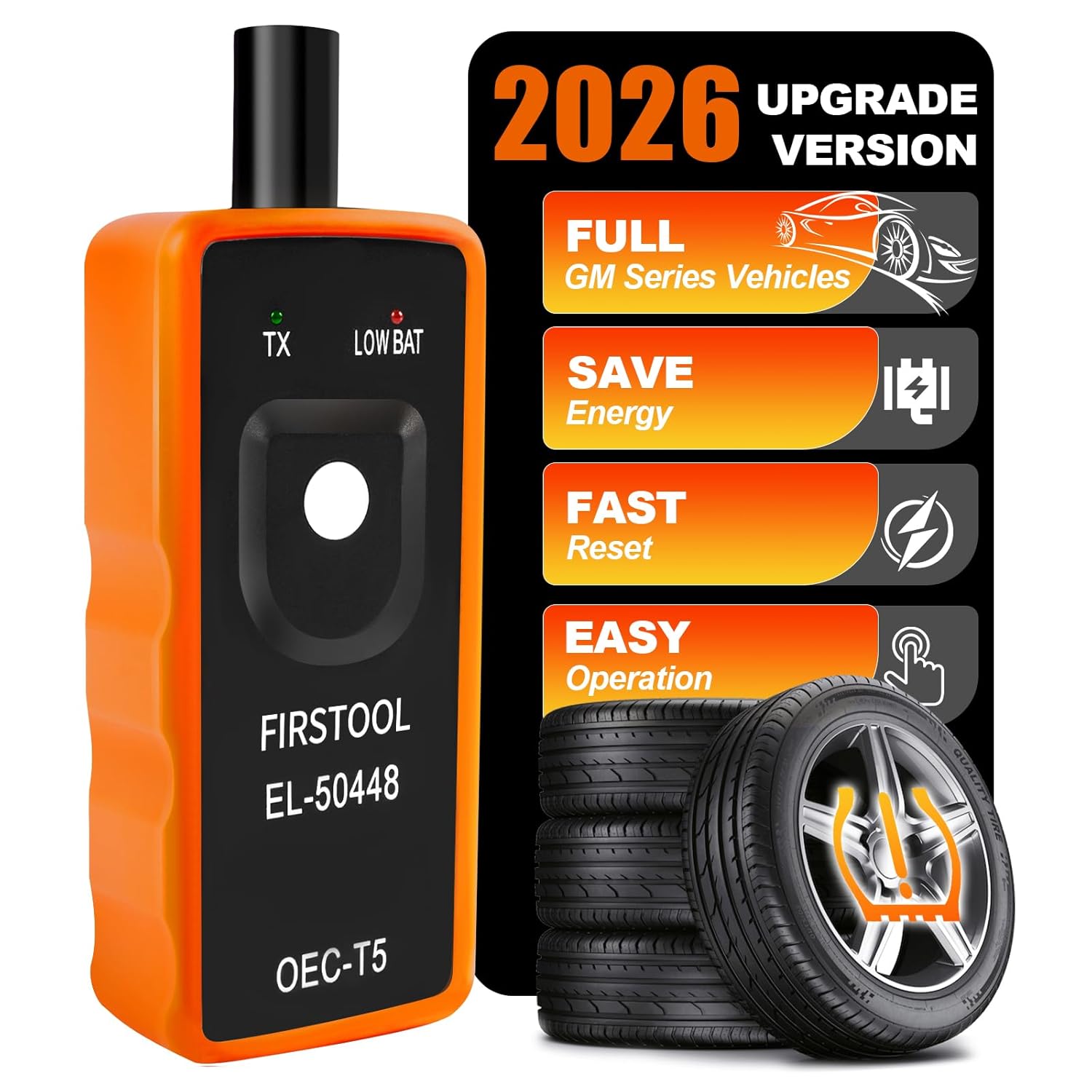
This EL-50448 TPMS relearn tool helps quickly activate and reset tire pressure sensors so your vehicle’s monitoring system stays accurate after tire rotations, sensor replacement, or seasonal tire changes. Designed for many GM-related vehicles and compatible with common 315 and 433 MHz TPMS systems, it offers simple one-button operation and reliable performance for clearing warning lights and relearning sensor positions.

This TPMS sensor training tool is designed for Ford, Lincoln, and Mercury vehicles with compatible tire pressure sensors, helping activate sensors after tire rotations or sensor replacement. It supports relearning and warning light reset workflows with a simple one-button operation, making tire pressure maintenance easier and faster. Built for reliable use and broad vehicle compatibility, it is a practical accessory for TPMS service and sensor activation.
How to Reset Your Camry’s TPMS by Model Year
Toyota uses the term TPWS in many manuals, meaning Tire Pressure Warning System. Drivers often call it TPMS. The reset method depends on your Camry’s generation and display type, so use your owner’s manual if your menu labels differ.
[Products Worth Considering]

This TPMS relearn tool helps GM vehicle owners quickly activate and reset tire pressure monitoring sensors after tire changes, sensor replacements, or warning light issues. Designed for many Chevy, Buick, GMC, Cadillac, and Opel models, it works with common sensor frequencies and can save time compared with dealer visits. Its simple one-button operation makes tire sensor relearning fast and easy for everyday maintenance.

The VXDAS TPA01 is a 2-in-1 TPMS relearn tool and digital tire pressure gauge designed for GM vehicles and other compatible cars. It helps quickly reset tire pressure sensors, check tire pressure accurately, and maintain proper inflation for safer driving. With simple operation, multiple pressure units, and automatic shutoff, it is a practical tool for DIY tire maintenance and sensor activation.
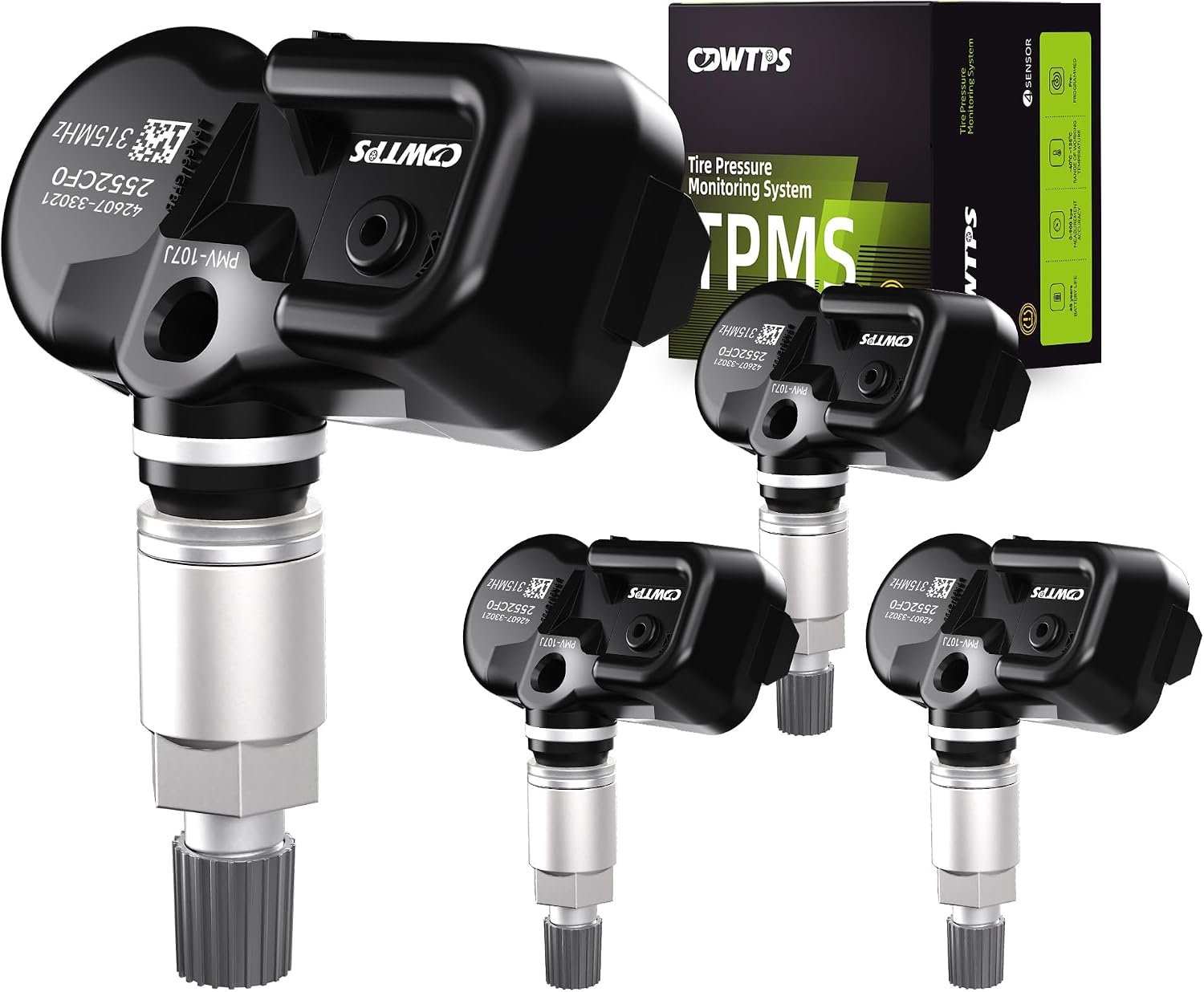
This set of four pre-programmed TPMS sensors is designed as a direct-fit replacement for compatible Toyota, Lexus, and Scion vehicles. It helps restore accurate tire pressure monitoring without sensor programming, and each unit is factory-tested for dependable performance. Built for long service life, these sensors offer a convenient solution for replacing worn or failed tire pressure monitors.
2007–2017 Camry: Physical TPMS Reset Switch
Many 2007–2017 Camry models use a physical tire pressure warning reset switch under the dash or near the lower instrument panel area. Toyota’s 2012 Camry owner’s manual describes the basic initialization method this way:
- Park safely and turn the ignition off.
- Adjust all tires to the specified cold tire pressure.
- Turn the ignition to ON or IGNITION ON mode without driving.
- Press and hold the tire pressure warning reset switch until the TPMS light blinks slowly three times.
- Wait a few minutes with the ignition on, then turn the vehicle off.
If the light does not blink three times, or if the light returns soon after the reset, the system may not have recorded the setting or there may be a tire/sensor fault. A small number of model years in this range initialize automatically through a drive cycle instead of using a physical switch — if you can’t find a switch near the dash or knee bolster, drive at a steady speed for about 10–20 minutes and check again before assuming a fault. [VERIFY: exact model-years without a physical switch]
2018–2024 and Menu-Equipped Camry Models: TPWS “Set Pressure”
Newer Camry models with a multi-information display usually reset through the vehicle settings menu rather than a separate button. Toyota’s quick reference materials show a TPWS “Set Pressure” workflow for display-equipped models.
- Park in a safe place and set all tires to the correct cold pressure.
- Turn the vehicle on.
- Use the steering-wheel meter controls to open the settings menu.
- Select Vehicle Settings if shown.
- Select TPWS.
- Select Set Pressure.
- Press and hold OK until the tire pressure warning light blinks three times.
- If your Camry displays individual tire pressures, drive at about 25 mph or more for roughly 10–30 minutes so the system can finish initialization and show the pressures again.
Note: If your Camry has a 4.2-inch or 7-inch display, the exact menu path may look slightly different. Use the owner’s manual for your model year when the menu wording does not match these steps.
What a Blinking TPMS Light Means
A solid TPMS light usually means one or more tires are low. A light that flashes for about one minute and then stays on usually means the TPMS/TPWS has a malfunction. Common causes include a failed wheel sensor, an unregistered sensor ID, a wheel without a compatible transmitter, or signal interference.
Do not keep resetting the system if the light blinks first and then remains on. That pattern usually needs a TPMS scan tool or Toyota-level diagnostic equipment to confirm which sensor or ID code is causing the fault.
When Should You Consult a Professional for TPMS Problems?

A persistent TPMS light can be more than an annoyance. Have the system inspected by a Toyota dealer or qualified tire shop when:
- The light flashes for about a minute and then stays on.
- The warning remains after all tires are set to the correct cold pressure and the reset procedure is done correctly.
- The same tire repeatedly loses pressure.
- You recently replaced tires, wheels, or TPMS sensors.
- The display shows “–” for tire pressures after a drive cycle.
- The reset light does not blink three times when the procedure says it should.
- You are using aftermarket wheels, winter wheels, or a second wheel set that may need sensor ID registration.
A tire shop can often scan each sensor through the tire sidewall without removing the tire. The scan can show whether the sensor transmits, whether the ID is recognized, and whether the pressure reading matches your gauge.
[Products Worth Considering]

The VXDAS 2-in-1 TPMS relearn tool is designed to activate and reset tire pressure sensors on compatible GM and Ford vehicles with an easy model switch button for quick use. It helps complete TPMS relearning after tire rotation, sensor replacement, or warning light resets, making it a practical tool for drivers and technicians who want a fast, cost-effective solution.

This CARORAV TPMS sensor set provides reliable tire pressure monitoring for a wide range of Toyota and Lexus vehicles with 315MHz compatibility. It is pre-programmed for easier setup, but still requires relearning or reset procedures after installation. Designed for accurate real-time pressure tracking, these sensors help support safer driving and long-lasting performance across many model years.

The AICEL TPMS Relearn Tool helps quickly reset and relearn tire pressure sensors on compatible GM vehicles after tire rotation, sensor replacement, or warning light issues. Designed for easy handheld use, it works with most cars, SUVs, and pickup trucks and can save time by eliminating unnecessary trips to the auto store. Its durable ABS housing and simple activation process make it a practical tool for keeping the tire pressure monitoring system operating properly.
Essential Tips for Keeping Your Tire Pressure and Sensors in Check
Good tire habits prevent most TPMS problems. Check tire pressure at least monthly, before long trips, and whenever temperatures swing sharply. Use a quality tire gauge, check when the tires are cold, and keep the pressure matched to the label inside your Camry’s door opening.
- Do not ignore a low-pressure warning: Underinflated tires can overheat, wear faster, reduce fuel economy, and hurt handling.
- Check the tire, not just the dashboard: TPMS is a backup warning system, not a substitute for manual checks.
- Reset only after correcting pressure: Initialization stores the current pressure as a benchmark on many Toyota systems.
- Recheck after tire service: Rotation, tire replacement, wheel replacement, and sensor replacement may require TPWS initialization or sensor ID registration.
- Watch seasonal pressure changes: A cold snap can lower pressure enough to trigger the light even when the tire has no leak.
A TPMS warning light is a prompt to check tire pressure, not proof that the system is wrong. Always verify the actual cold PSI with a gauge before resetting the system.
Frequently Asked Questions
Can weather affect my Camry TPMS light?
Yes. Tire pressure drops as outside temperature falls, and a cold morning can trigger the TPMS light even if the tire does not have a leak. Recheck all tires when cold and set them to the pressure on the door-jamb label.
What if my TPMS light blinks instead of staying on?
If the light blinks for about one minute and then stays on, Toyota describes that as a likely TPMS malfunction. Check tire pressure first, but if the blinking pattern repeats, have the sensors and ID codes scanned by a qualified shop or Toyota dealer.
How often should I check tire pressure?
Check tire pressure at least once a month, before long trips, and when temperatures change sharply. Always check when the tires are cold, because driving warms the tires and temporarily raises the reading.
Are there DIY tools for diagnosing TPMS problems?
Yes. A basic tire pressure gauge confirms the real PSI, while a TPMS scan tool can read sensor signals, IDs, and pressure data. A simple reset tool will not fix a dead sensor, unregistered sensor ID, or leaking tire.
Can tire rotation impact the TPMS light?
Yes, depending on the Camry’s system and model year. Some Toyota procedures call for TPWS initialization after tire rotation, and wheel-set changes may also require sensor ID registration. If the light appears after rotation, check pressure first, then follow the correct TPWS reset procedure.
Why does the TPMS light come back after I reset it?
The most common reasons are a tire that is still low when cold, a slow leak, a reset performed before pressure was corrected, or a sensor/transmitter problem. If the same tire keeps losing air, repair the leak before resetting again.
Should I reset the TPMS after adding air?
Only reset after every tire is set to the correct cold pressure. If the warning turns off by itself after pressure correction, a manual reset may not be needed. If your Camry requires initialization, use the reset switch or TPWS “Set Pressure” menu for your model.
Conclusion
If your Camry’s TPMS light stays on after filling the tires, start with the basics: check all tires cold, use the pressure on the door-jamb label, and look for leaks. Then reset the system using the correct switch or TPWS menu for your model year. If the light blinks for about a minute before staying on, or if it returns after a correct reset, it is time for a sensor and ID-code diagnosis rather than another reset.
Sources
- Toyota 2012 Camry Owner’s Manual — reset-switch initialization, TPMS malfunction behavior, tire pressure safety warnings, and sensor ID registration.
- Toyota 2023 Camry Quick Reference Guide — TPWS menu reset, “Set Pressure,” blinking-light warning, and door-jamb/owner’s-manual pressure guidance.
- Toyota Owners Manuals and Warranties — official source for year-specific Camry owner’s manuals and tire-pressure procedures.
- 49 CFR § 571.138, Tire Pressure Monitoring Systems — federal TPMS purpose and low-pressure warning requirements.
- AAA: Understanding Tire Pressure and Temperature Change — temperature-related tire pressure changes and cold-pressure checking guidance.