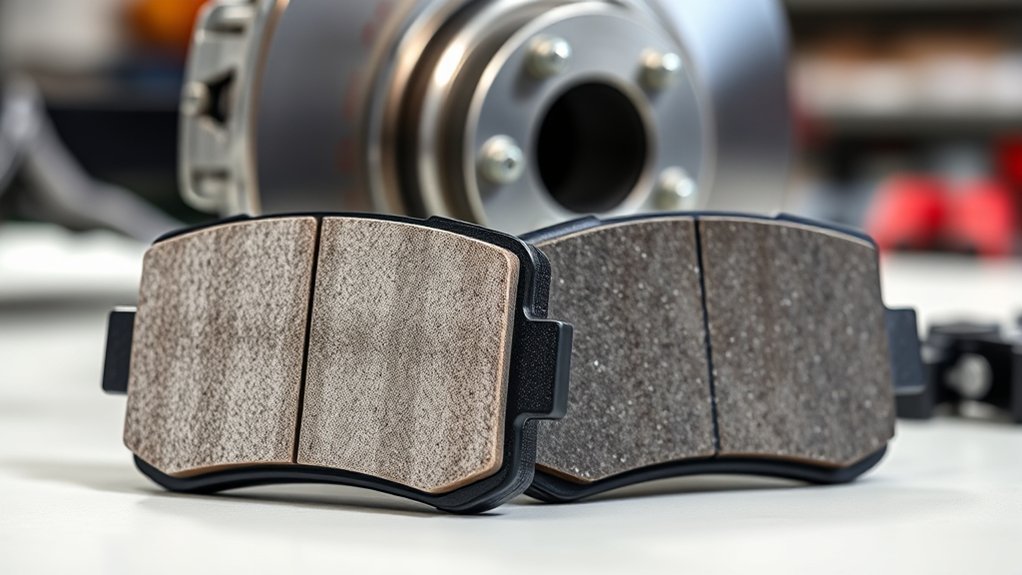
For your Camry, choose ceramic if you want long life, low dust, and quiet, low-maintenance daily driving; they use a dense ceramic matrix with copper fibers to stabilize pedal feel and protect rotors. Pick semi‑metallic if you tow, carry heavy loads, or drive spiritedly—metal-rich formulations deliver stronger initial bite, better heat dissipation, and resistance to fade but generate more noise, grittier dust, and shorter life. Continue below to get specifics on fitment, installation, and cost tradeoffs.
Ceramic or Semi‑Metallic: Which for Camry?
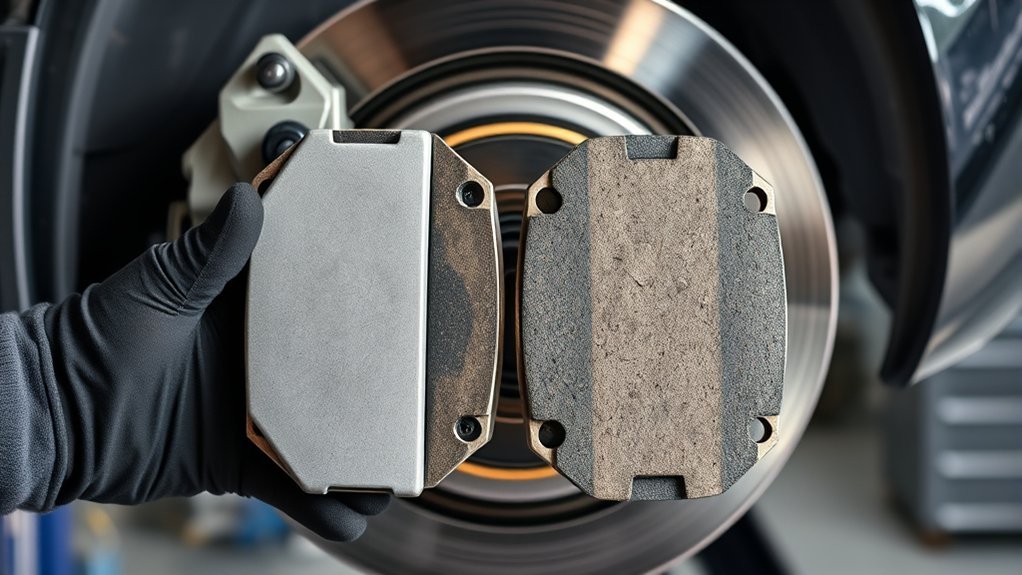
Which pad should you pick for a Camry depends on your driving demands: ceramic pads deliver long life (typically 60,000–90,000 miles), low noise and minimal dust, making them the factory-recommended choice for standard commuting, while semi-metallic pads provide stronger stopping power and superior heat dissipation for aggressive driving, towing, or higher-load situations despite producing more noise and dust. You’ll favor ceramic if you prioritize pad longevity, low maintenance, and consistent brake performance in urban or highway commuting; they minimize dust accumulation and cabin noise, freeing you from frequent cleaning and audible reminders. Choose semi-metallic when you demand peak brake performance under thermal stress, rapid deceleration, or sustained loads; their metallic components conduct heat away, reducing fade and preserving pedal feel. Evaluate your routes, payloads, and desired freedom from upkeep: select ceramics to maximize service intervals and quiet operation, or select semi-metallics to guarantee robust stopping power when you push the vehicle’s limits.
How Ceramic Brake Pads Work on a Camry
When you apply the brakes on a Camry with ceramic pads, the dense ceramic matrix and embedded fine copper fibers manage friction and conduct heat away from the contact surface to limit thermal buildup. That composition also produces minimal brake dust and suppresses noise, keeping wheels cleaner and cabin sound quieter. You’ll note the trade-off: excellent comfort and longevity but reduced extreme-heat performance versus semi‑metallic compounds.
Heat Management And Dissipation
Because ceramic pads combine a dense ceramic matrix with embedded copper fibers, they manage and dissipate heat on a Camry more predictably than many alternatives. You’ll get improved brake performance and temperature stability during common driving: the copper fibers channel heat away, reducing localized hotspots that cause fade. You’ll notice consistent pedal feel across a wide operating range, since the material resists thermal degradation under routine use. Because ceramic pads have lower overall thermal conductivity than semi‑metallics, they generate less heat and impose less thermal stress on rotors, extending component life. However, you shouldn’t expect peak performance under extreme heat—aggressive driving or towing can exceed their ideal range and reduce effectiveness compared with higher‑conductivity semi‑metallic options.
Dust And Noise Reduction
Although ceramic pads use a dense matrix with embedded copper fibers to handle friction, they also cut dust and noise on a Camry by producing finer, lighter-colored particles that don’t stick to wheels and by damping vibration at the pad–rotor interface. You’ll notice reduced dust accumulation because ceramic fragments are low in volume and non-corrosive, so wheel finish endures and cleaning frequency drops. You’ll also benefit from lower noise levels: the material’s internal damping and consistent behavior across a wide temperature range suppress brake squeal and transient tonal spikes. The result is a liberated driving experience—minimal maintenance, predictable stop feel, and discreet acoustic signature—letting you focus on control rather than upkeep or intrusive braking sounds.
Friction Material Composition
If you look at a Camry’s ceramic pad you’ll find a dense ceramic matrix interlaced with fine copper fibers and engineered fillers that deliver controlled friction, rapid heat spread, and stable bite under normal driving loads. You’ll note the copper fibers raise thermal conductivity, smoothing temperature gradients and preserving friction properties across routine stops. Engineered fillers suppress audible resonance, reduce particulate generation, and keep wheel surfaces cleaner. You’ll also appreciate material durability: expected service life ranges 60,000–90,000 miles in everyday use, lowering ownership friction and enabling mobility freedom. Limitations appear under extreme sustained heat, where the compound’s friction coefficient can drop compared with semi-metallic alternatives. You can choose ceramic for quiet, consistent braking and long-term economy.
How Semi‑Metallic Pads Work on a Camry
When you press the Camry’s brake pedal, semi‑metallic pads—made of 30–70% metal—convert kinetic energy to heat through friction against the rotor, delivering high stopping power and rapid heat dissipation suited to heavy braking, towing, and performance use. You feel immediate bite; metal fibers maintain structural integrity under load and channel heat away, so fade resistance improves during repeated stops. In colder climates they’ll heat quickly and stay effective across varied driving conditions, giving predictable modulation that frees you from compromise.
| Property | Effect | Benefit |
|---|---|---|
| Metal content | Increases thermal conductivity | Rapid cooling |
| Friction coefficient | High under load | Strong stopping power |
| Structural stiffness | Resists deformation | Consistent pedal feel |
| Temperature range | Wide operability | Reliable in cold |
You’ll accept tradeoffs: dust and noise rise, service intervals shorten, but the performance benefits for liberty-minded drivers are clear.
Compare: Noise, Dust, Heat, Rotor Wear, Lifespan
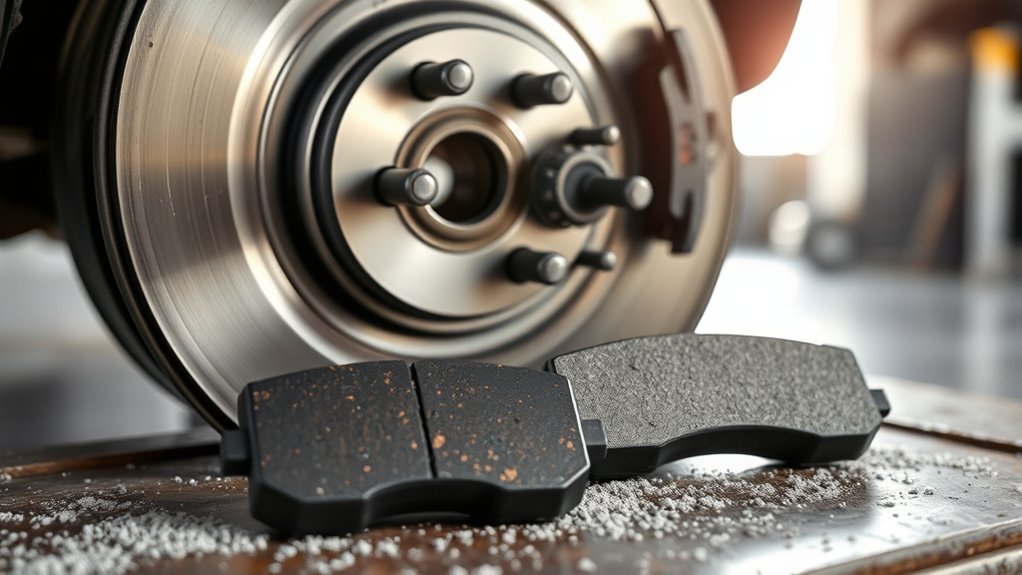
Because your Camry’s pad choice affects audible signature, wheel cleanliness, thermal performance, rotor wear, and service intervals, here’s a direct comparison: Ceramic pads give you quiet operation—sound waves outside human hearing—so your braking is stealthy and controlled; semi-metallic pads are noisier due to higher metal content, producing audible cues. Ceramic dust is minimal and light-colored, preserving wheel finish; semi-metallic dust is darker, grittier, and soils wheels faster.
Thermally, semi-metallic pads outperform ceramics in heat dissipation, maintaining brake performance under sustained heavy loads; ceramic pads can struggle at extreme temperatures. On rotor wear, ceramics are less abrasive, extending rotor life; semi-metallic compounds accelerate rotor wear because of their abrasive particles. Regarding pad durability, ceramic pads typically last 60,000–90,000 miles; semi-metallic pads last roughly 20,000–30,000 miles. Choose based on the balance you want between noise suppression, thermal resilience, rotor longevity, and service interval freedom.
Match Your Driving: Commuting, Towing, Sport
You’ve just weighed noise, dust, heat tolerance, rotor wear, and service intervals—now match those trade-offs to how you use the Camry. If your commuting preferences prioritize quiet cabin, low dust, and maximum pad life, choose ceramic pads: they deliver 60–90K miles, minimal particulate, and a civilized feel that frees you from frequent maintenance.
For towing considerations—heavy loads, prolonged downhill braking, high thermal stress—select semi‑metallic pads. They dissipate heat better, sustain stopping power under load, and resist fade; accept increased noise and rotor wear as the trade-off.
If you pursue sport driving, semi‑metallic compounds give stronger initial bite and repeatable performance during aggressive stops and cold starts; they’re noisier but more predictable under high-energy use.
Always cross‑check vehicle manufacturer recommendations to confirm pad selection aligns with your Camry’s design and your liberation-minded preference for performance or low-maintenance freedom.
Camry Buying & Installation Tips (OEM, Aftermarket, Cost)
1 clear decision you’ll make is whether to stick with OEM pads (Akebono is common on Camrys) or choose aftermarket brands like Wagner ThermoQuiet or Centric to save money. You’ll weigh OEM options for performance reliability against Aftermarket savings, considering pad lifespan (ceramic 60–90k mi, semi-metallic 20–30k mi) and long-term Cost considerations.
You’ll perform Compatibility checks using the VIN to confirm American vs Japanese 2000 Camry specs before purchase. For installation, gather proper Installation tools and follow torque specs; inadequate tools cost you safety and freedom.
- Inspect calipers for leaks, wear, and smooth piston travel; perform Caliper checks during pad replacement.
- Conduct Brake fluid inspection and top or flush as needed to maintain hydraulic performance.
- Compare part pricing (Akebono ≈ $47 on eBay) against aftermarket bundles for immediate savings.
- Prioritize Performance reliability if you demand spirited driving; accept higher replacement frequency for semi-metallics.
Frequently Asked Questions
Are Ceramic Brake Pads Better Than Normal Pads?
Yes — you’ll prefer ceramic pads for lower brake noise, cleaner wheels, longer life and better rotor preservation, though they’re pricier and have reduced heat dissipation under extreme loads, so assess your driving demands carefully.
What Lasts Longer, Metallic or Ceramic Brakes?
Ceramic cores consistently last longer. Bold braking benefits bring better lifespan: ceramic pads offer superior brake performance and heat resistance, reducing rotor wear. You’ll choose ceramic for longevity; pick semi-metallic only for aggressive, high-demand driving.
Conclusion
Choose ceramic pads for quiet, low-dust daily driving and semi‑metallic if you want stronger bite and heat resistance for spirited runs or towing. You’ll get better rotor longevity with ceramics, better stopping under stress with semi‑metallics. If you’re worried ceramics won’t stop hard enough, modern formulations close that gap—pick quality OEM or reputable aftermarket pads and match them to your driving. Install with proper bedding and torque for predictable, safe performance.