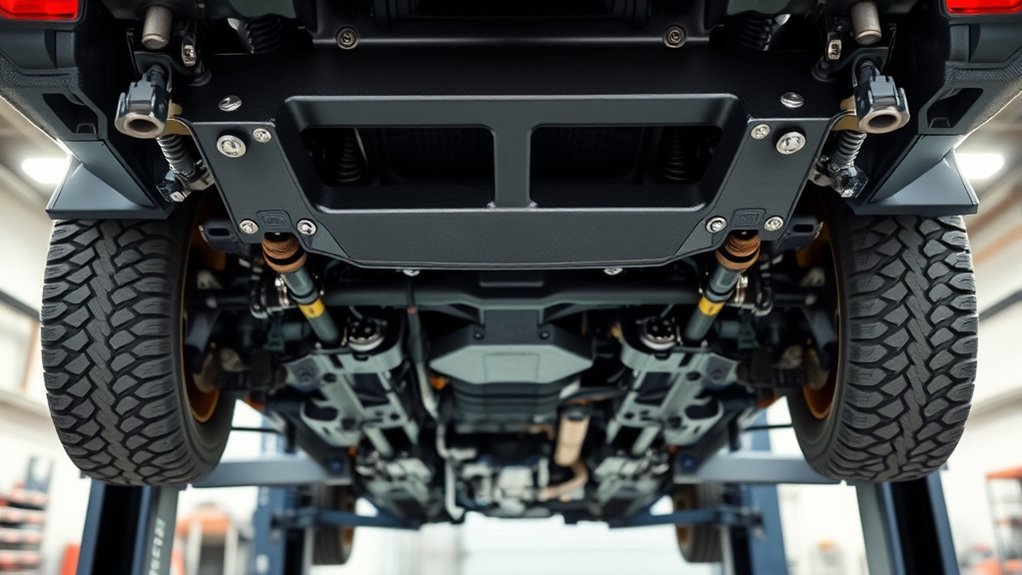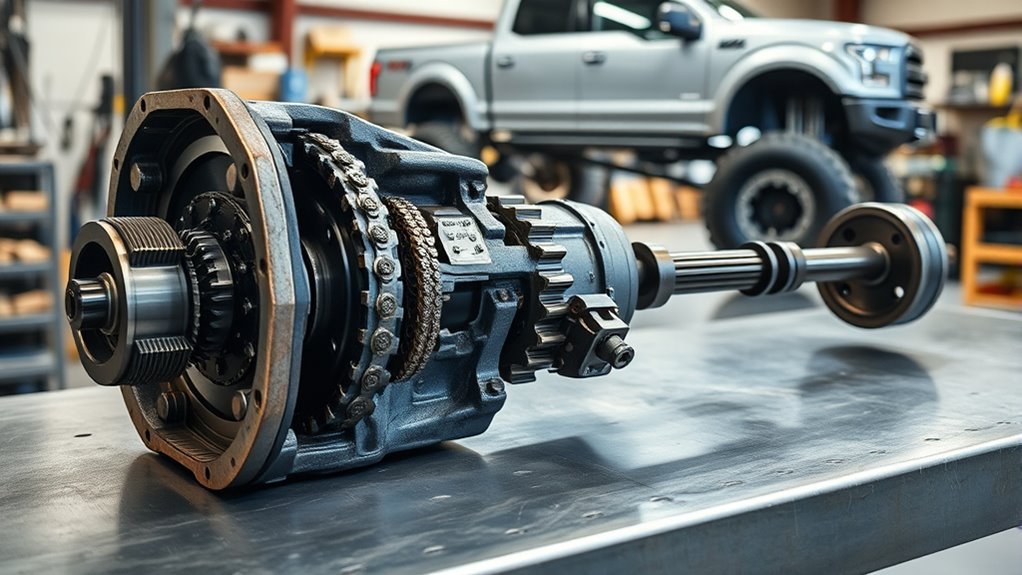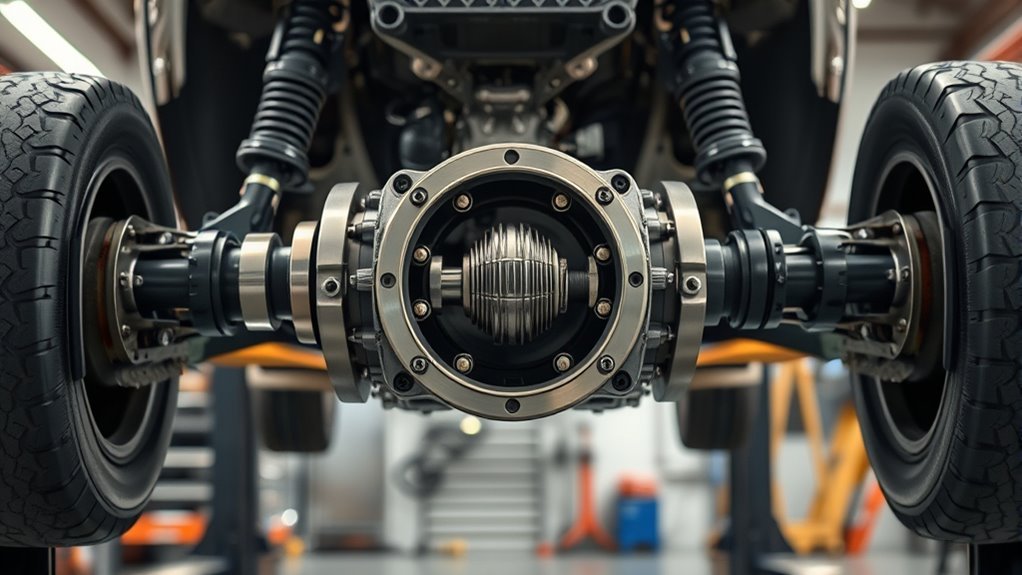
A center differential is the drivetrain component that splits engine torque between the front and rear axles while allowing those axles to rotate at different speeds. That difference matters every time you turn, because the front and rear wheels follow different paths. In full-time 4WD and some AWD systems, the center differential helps the vehicle stay smooth on pavement, gain traction on loose surfaces, and avoid drivetrain wind-up.
Quick Answer
A center differential sends power to the front and rear axles and lets them rotate at different speeds. Lock it only on low-traction surfaces such as mud, snow, sand, gravel, or rough trails. Unlock it on dry pavement, because locking the center diff can cause driveline bind, tire scrub, and extra wear.
Key Takeaways
- A center differential is used between the front and rear axles, not between left and right wheels.
- Open, limited-slip, viscous, Torsen-style, clutch-type, and lockable center differentials all manage torque differently.
- Locking the center differential improves low-speed traction when one axle starts to slip.
- Do not use a locked center differential on dry pavement unless your owner’s manual specifically allows it.
- Matched tires, clean fluid, and correct use are the biggest factors in long-term center-differential health.
At a Glance
| Time Required | 30 seconds to engage or disengage, once you know your vehicle’s controls |
| Difficulty | Easy for the driver; moderate if diagnosing a fault |
| Tools Needed | Owner’s manual, dashboard indicators, and a safe low-traction area for testing |
| Cost | Usually free to operate; repairs vary widely by vehicle and can become expensive if ignored |
Should You Lock a Center Differential?
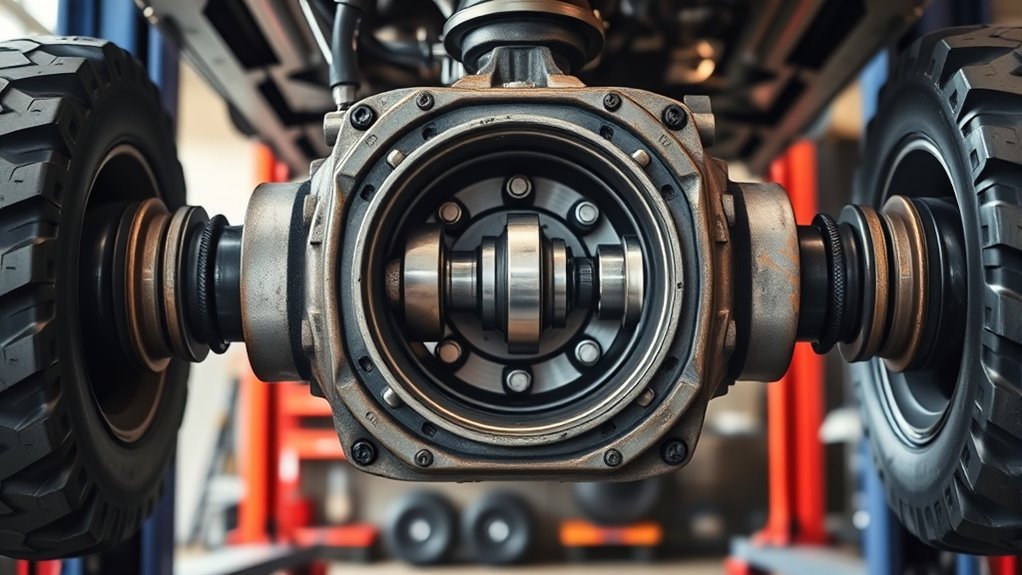
You should lock a center differential only when traction is poor or when you need controlled, low-speed recovery. Good examples include snow, mud, sand, loose gravel, ruts, steep slippery climbs, and situations where one axle is spinning while the other still has grip.
When locked, the front and rear output shafts are tied together so both axles are forced to turn at the same average speed. That helps prevent all usable drive from escaping through the axle with less grip. It is useful off-road, but it is not a normal pavement setting.
Warning: Do not leave a center differential locked on dry pavement, concrete, or other high-grip surfaces. During turns, the front and rear axles need to rotate at different speeds. If the lock prevents that, the drivetrain absorbs the difference as wind-up, vibration, tire scrub, or component stress.
Some vehicles have a true mechanical center-diff lock. Others have an AWD Lock button that controls an electronically managed clutch pack rather than a traditional center differential. Kia’s owner information, for example, says AWD Auto is for normal road use, while AWD Lock is intended for extreme conditions such as unpaved off-road, sandy, and muddy roads, and that some models automatically switch out of AWD Lock above 25 mph (40 km/h). Kia owner’s manual: AWD mode selection
What a Center Differential Does in AWD and 4WD
The center differential sits in the middle of the drivetrain, usually inside the transfer case or transaxle. Its job is different from the front and rear axle differentials. The front and rear differentials allow left and right wheels to rotate at different speeds. The center differential allows the front axle and rear axle to rotate at different speeds.
This matters because a vehicle does not move as one perfectly rigid rectangle. When you corner, the front axle and rear axle trace different arcs. Tires also vary slightly in rolling radius because of load, wear, pressure, and surface changes. The center differential absorbs those differences while still sending drive to both axles.
Torque Distribution Between Axles
A center differential manages torque distribution between the front and rear axles. Some systems use a fixed normal split, such as 50/50 or rear-biased. Others vary torque electronically or mechanically depending on throttle input, wheel speed, steering angle, and traction.
An open center differential allows smooth speed differences but can send usable torque toward the path with the least resistance. A limited-slip or torque-biasing center differential can shift more torque toward the axle with better grip. A lockable center differential removes the speed difference between the front and rear outputs for maximum low-speed traction.
Behavior During Cornering
During a turn, the front and rear axles do not need the exact same rotational speed. With the center differential open or unlocked, the vehicle can turn smoothly with less tire scrub and less strain on the transfer case, driveshafts, gears, and axles.
With the center differential locked, that normal speed difference is blocked. On loose ground, the tires can slip a little and release the tension. On dry pavement, there is not enough slip, so the drivetrain can wind up. That is why locking is useful off-road but risky on high-traction roads.
Role in Low-Traction Conditions
In low-traction conditions, a center differential can be the difference between steady progress and a stuck vehicle. If one axle loses grip, an open center differential may allow too much power to escape through the slipping axle. A locked or limited-slip center unit helps keep torque available to the axle that can still move the vehicle.
Modern AWD and full-time 4WD systems may also use brake-based traction control. These systems slow a spinning wheel so torque can be redirected to wheels with more grip. Toyota’s owner information notes that its ABS, Active TRAC, Trailer Sway Control, and VSC systems depend on correct tire condition and matching tire specifications to function properly. Toyota owner’s manual: driving assist systems
How Center Differentials Work: Torque Split Basics
A center differential receives power from the transmission or transfer case and sends it to the front and rear drivetrains. What happens next depends on the type of differential. The main concepts are speed difference, torque split, and traction bias.
Speed Difference vs. Torque Split
Speed difference and torque split are related, but they are not the same thing. Speed difference describes how fast the front and rear outputs rotate compared with each other. Torque split describes how much twisting force each axle receives.
An unlocked center differential allows speed difference. A locked center differential does not. A limited-slip or torque-biasing unit still allows some speed difference, but it resists uncontrolled slip and sends more torque toward the axle with better traction.
Dynamic Load Transfer
Acceleration, braking, climbing, descending, and cornering all shift weight across the vehicle. That weight shift changes how much grip each tire has. Because tire grip changes constantly, the ideal torque split can change constantly too. Research on AWD and 4WD torque-split modeling identifies dynamic weight transfer, driveline compliance, and tire-radius changes as important factors in front/rear torque behavior. SAE: AWD/4WD torque-split modeling
This is why advanced AWD systems use sensors and electronic controls. A basic mechanical system may be very strong and predictable, while an active system may react faster to mixed surfaces. Neither design is automatically “better”; the right one depends on how the vehicle is used.
Types of Center Differentials: Open, LSD, Viscous, Clutch, and Locking
Center differentials come in several designs. Each one balances smoothness, traction, durability, cost, and driver control in a different way.
Open Center Differential
An open center differential allows the front and rear axles to rotate at different speeds with very little resistance. It is smooth on-road and simple mechanically. Its weakness is traction: if one axle loses grip badly, the open diff may allow too much power to follow the slipping path.
Limited-Slip Center Differential
A limited-slip center differential reduces the speed difference between the front and rear axles when slip occurs. Some use clutch packs, some use gears, and some use viscous fluid. The goal is the same: keep the vehicle moving without fully locking the drivetrain all the time.
Viscous Center Differential
A viscous coupling uses plates inside thick silicone fluid. When the front and rear outputs rotate at different speeds, the fluid shears and heats, increasing resistance and helping transfer torque. Viscous systems are smooth, but they react after a speed difference develops and can wear out or overheat if abused.
Torsen or Torque-Biasing Center Differential
A Torsen-style or torque-biasing center differential uses helical gears to send more torque toward the axle that can use it. Torsen explains that its differentials bias torque mechanically through friction created by helical gearing, while still allowing smooth differentiation at low torque. Torsen: how torque-biasing differentials work
Torque-biasing systems are excellent for wet roads, snow, gravel, and performance driving. However, many need some resistance at both outputs to work best. If one axle is completely unloaded, brake-based traction control can help create the resistance needed for torque transfer.
Clutch-Type Active Center Differential
A clutch-type active center differential or AWD coupling uses a multi-plate clutch controlled by hydraulic pressure, electronics, or both. The system can vary how strongly the front and rear axles are coupled. Many modern crossovers use this style because it is compact and efficient.
These systems may have drive modes such as Auto, Snow, Sand, Mud, or Lock. The “Lock” mode often does not mean a permanent mechanical lock. It may mean the clutch pack is commanded to hold a stronger front/rear coupling at low speeds.
Lockable Center Differential
A lockable center differential can operate normally when unlocked and then mechanically tie the front and rear outputs together when locked. This is common in serious full-time 4WD vehicles. Toyota’s Land Cruiser owner information, for example, lists H4 for normal driving and L4 for maximum power and traction, such as steep hills, off-road driving, and pulling through sand or mud. Toyota owner’s manual: four-wheel drive system
Center Differential vs. Transfer Case vs. Axle Differentials
These terms are often mixed together, but they are not the same thing.
- Center differential: Splits torque between the front and rear axles and allows front/rear speed difference.
- Transfer case: The gearbox that sends power to the front and rear driveshafts in many 4WD vehicles. It may contain a center differential, low-range gears, a lock mechanism, or a part-time 4WD coupling.
- Front and rear differentials: Split torque between left and right wheels on each axle.
- Axle lockers: Lock the left and right wheels together on one axle. These are different from a center differential lock.
A vehicle can have a center diff lock without axle lockers. It can also have rear and front lockers without a center differential if it uses part-time 4WD. Always check your vehicle’s manual before assuming what a button or lever actually controls.
When to Lock a Center Differential and When Not To
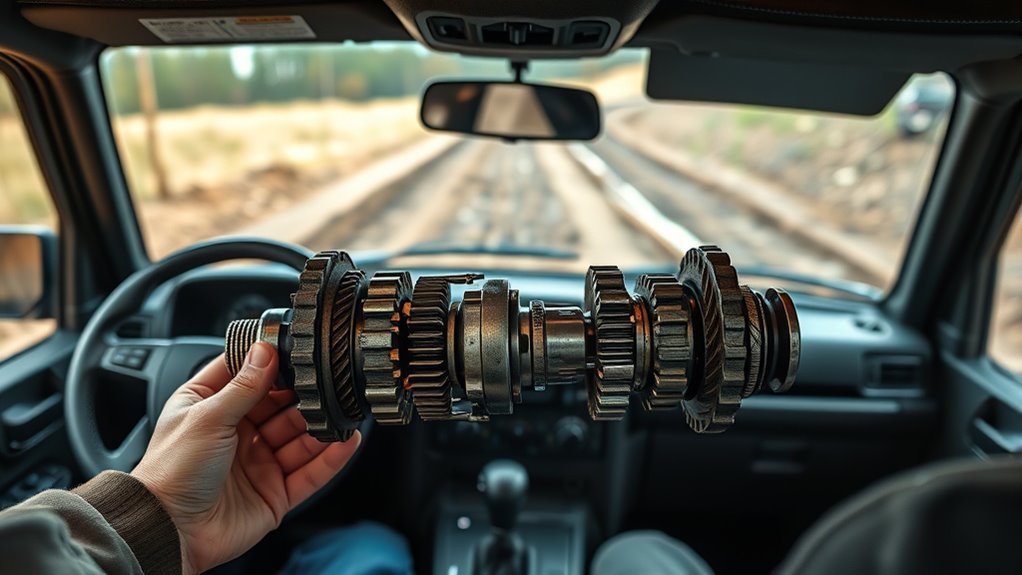
Lock the center differential when you need consistent front-to-rear drive on a loose or slippery surface. Do not lock it just because the road is wet. Normal rain on pavement usually has enough grip that an unlocked center diff or automatic AWD mode is the safer choice.
Good Times to Lock the Center Differential
- Mud: Helps keep both axles pulling when one end of the vehicle sinks or spins.
- Snow: Useful for deep, loose snow or slow climbs where momentum is hard to maintain.
- Sand: Helps maintain steady drive, especially at low speed. Tire pressure and momentum still matter.
- Loose gravel: Adds stability on climbs, descents, and uneven tracks.
- Ruts and cross-axle terrain: Helps when one axle is light or slipping.
- Recovery: Useful before gentle rocking, controlled throttle, or winch-assisted recovery.
Bad Times to Lock the Center Differential
- Dry pavement: The tires cannot slip enough to release driveline tension.
- Parking lots: Tight turns create large front/rear speed differences.
- High-speed driving: Many systems are not designed to stay locked at speed.
- Unknown surfaces: If the surface changes from dirt to pavement, unlock before continuing.
- Vehicle-specific restrictions: Some systems require stopping, shifting to neutral, or staying below a speed limit.
Pro Tip: Engage the center diff lock before you are deeply stuck, not after the tires have dug holes. Early, gentle use usually works better than heavy throttle after the vehicle is already buried.
How to Engage a Center-Diff Lock: Buttons, Transfer Case, and Auto Systems
The exact process depends on the vehicle, but most systems use one of three controls: a dashboard button, a rotary terrain selector, or a transfer-case lever. Always follow the owner’s manual for your model, because some systems can shift while moving and others require the vehicle to be stopped.
Basic Safe Engagement Process
- Slow down and straighten the wheels. A straight, low-speed approach reduces stress during engagement.
- Select the correct range or mode. Some vehicles allow center-lock use in high range; others require low range for certain functions.
- Press the lock button or move the transfer-case control. Wait for the indicator light to confirm engagement.
- Use smooth throttle. The goal is steady traction, not wheelspin.
- Unlock after the obstacle. Once you return to firm ground or pavement, disengage the lock.
- Confirm the light goes out. If the indicator flashes, roll slowly forward or backward in a straight line as the manual allows.
Note: A flashing center-diff-lock light usually means the system is trying to engage or disengage. It does not always mean failure. Light steering, low speed, and a straight path can help the gears or clutch mechanism release.
Automatic vs. Manual Engagement
Automatic AWD systems handle torque distribution in the background. They are best for daily driving, wet roads, and changing conditions where you do not want to manage drivetrain modes manually.
Manual center-diff locks give you direct control. They are best for deliberate off-road use, technical trails, and recovery. The tradeoff is responsibility: you must unlock the system when the terrain no longer needs it.
How Locking a Center Differential Affects On-Road Handling
On slippery roads, locking a center differential can make the vehicle feel more predictable at low speeds because both axles keep pulling together. On high-grip roads, it can make the vehicle feel tight, reluctant to turn, noisy, or jerky.
A locked center differential is a traction tool, not a handling upgrade. Use it when the ground can slip; unlock it when the tires have solid grip.
Common signs that the center lock should not be engaged include hopping tires, a heavy steering feel, drivetrain vibration, clunks during tight turns, or the vehicle feeling as if it is pushing straight ahead. If that happens on a firm surface, stop safely and unlock the center differential.
Using Center-Diff Locks Off-Road: Tips and Recovery Scenarios
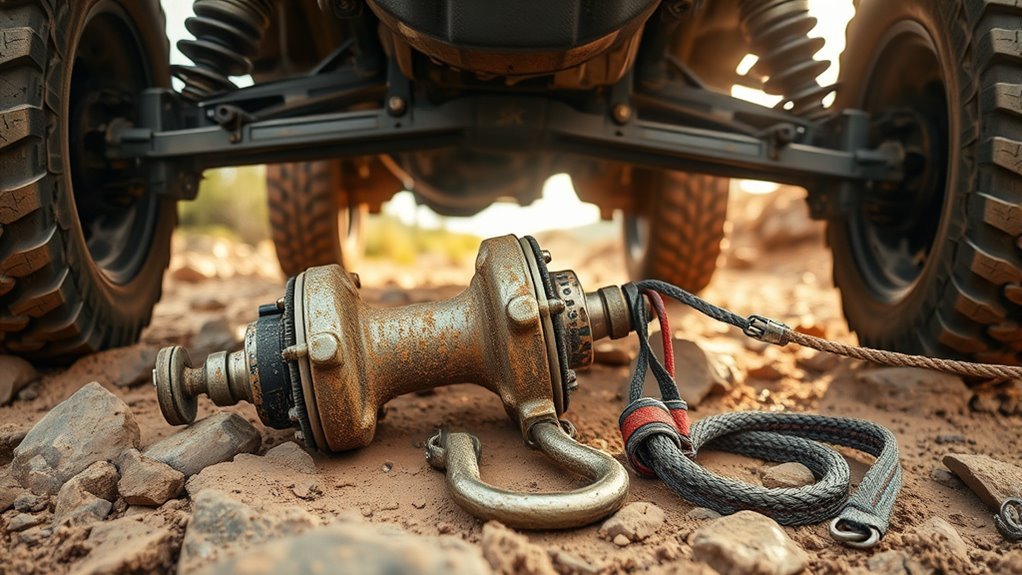
Off-road, the center diff lock works best with smooth inputs. Locking the center differential does not create unlimited traction. It simply makes the front and rear axles work together more consistently.
Mud Recovery
In mud, engage the center diff lock before applying heavy throttle. Use gentle momentum and avoid spinning the tires. If the vehicle stops moving, ease off, clear mud from the tires if possible, and try a controlled rocking motion only if the manual allows it.
Snow and Ice
In deep snow, locking the center differential can help maintain momentum. On glare ice or plowed pavement, however, a locked center may reduce steering control. Use the least aggressive mode that keeps the vehicle moving.
Sand Driving
In sand, a center diff lock can help keep both axles pushing. Tire pressure, speed, and avoiding sudden steering inputs are just as important. If the vehicle starts to bog, reduce throttle instead of digging deeper.
Rocky or Rutted Trails
On uneven trails, locking the center diff helps when one axle becomes light or loses grip. Use low range if available, keep throttle steady, and avoid bouncing. If one wheel is in the air, traction control or axle lockers may still be needed because the center lock only works front to rear.
Center Differential, Axle Locks, and Traction Control: How They Work Together
A center differential, axle lockers, and traction control all fight wheel slip, but they work at different points in the drivetrain.
- Center diff lock: Manages torque and speed difference between the front and rear axles.
- Rear locker: Forces both rear wheels to rotate together.
- Front locker: Forces both front wheels to rotate together, but can make steering harder.
- Traction control: Uses the brakes and engine control to reduce wheelspin and move torque toward tires with grip.
For many drivers, the best order is simple: use normal AWD or 4WD first, then center lock, then rear locker, then front locker only when needed. The more parts you lock, the less the vehicle wants to turn naturally.
Common Problems, Maintenance, and Choosing the Right Center-Differential Type
Center differentials are durable when used correctly, but they do not tolerate neglect forever. Heat, contaminated fluid, mismatched tires, leaks, and repeated driveline wind-up can shorten their life.
Symptoms of a Bad Center Differential
- Binding in turns: The vehicle feels tight or jerky during low-speed turns.
- Grinding or whining: Gear or bearing noise may increase with speed or load.
- Clunking: Worn mounts, gears, chains, or couplings can clunk during throttle changes.
- Overheating smell: Burnt fluid or clutch material can smell hot after hard use.
- Warning lights: AWD, 4WD, traction control, or stability-control lights may appear.
- Leaks: Low transfer-case or transaxle fluid can damage gears and bearings.
Maintenance Tips
- Use the correct fluid. Center differentials and transfer cases may require specific gear oil or automatic transmission fluid.
- Follow the severe-service schedule. Towing, water crossings, deep mud, sand, and frequent off-roading usually require shorter service intervals.
- Keep tires matched. Mixing tire sizes, tread depths, or inflation pressures can make AWD components work constantly.
- Fix leaks early. A small seal leak can become an expensive gear or bearing failure.
- Exercise the lock. If your manual allows it, engage and disengage the center lock occasionally on a loose surface so the actuator does not seize from lack of use.
Which Type Is Best?
The best center differential depends on how you drive:
- Daily road use: Open, viscous, or active clutch systems are smooth and easy to live with.
- Snow and mixed weather: Limited-slip, torque-biasing, or active AWD systems offer a strong balance of control and comfort.
- Performance driving: Torque-biasing or active systems can improve stability and corner exit traction.
- Serious off-road use: A lockable center differential with low range gives the most predictable mechanical control.
- Overlanding: Simpler mechanical systems are often preferred for durability and trail repairability.
Frequently Asked Questions
How much does it cost to replace a center differential?
The cost depends on the vehicle, whether the center differential is separate or built into the transfer case or transaxle, and whether the problem is fluid, bearings, an actuator, a clutch pack, or a complete assembly. Diagnosis may be relatively modest, but full replacement can become a four-figure repair on many AWD and 4WD vehicles. Get a proper diagnosis before approving a complete replacement.
How do I know if my center differential is bad?
Common signs include binding in tight turns, grinding or whining noises, clunks during throttle changes, AWD or 4WD warning lights, fluid leaks, burnt-smelling fluid, or poor traction from an AWD system that used to work normally. A technician should check fault codes, tire sizes, fluid condition, driveline mounts, transfer-case operation, and actuator function before replacing parts.
Is it bad to drive with the center diff lock on?
It is bad to drive with the center diff lock on when traction is high, especially on dry pavement. The front and rear axles need to rotate at different speeds in turns. If they cannot, the drivetrain can bind. Use the lock for loose or slippery surfaces and unlock it when normal traction returns.
Is a center differential the same as a transfer case?
No. A transfer case is the gearbox that sends power to the front and rear drivetrains in many 4WD vehicles. A center differential is a differential mechanism that may be inside the transfer case or transaxle. Some transfer cases have a center differential, and some part-time 4WD transfer cases do not.
Can I lock the center differential in the rain?
Usually, no. Normal rain on pavement still provides enough traction that a locked center differential can cause bind during turns. Use normal AWD, full-time 4WD, or the manufacturer’s recommended road mode. Consider the center lock only when the surface is loose, slippery, or uneven enough to allow tire slip.
Do all AWD vehicles have a center differential?
No. Some AWD vehicles use a true center differential. Others use an electronically controlled clutch coupling that connects the rear axle only when needed. That is why one vehicle’s “AWD Lock” button may not work the same way as another vehicle’s mechanical center-diff lock.
Conclusion
The center differential is the part that lets an AWD or full-time 4WD vehicle send power to both axles without fighting itself in every turn. Leave it open or in automatic mode for normal driving. Lock it when loose terrain, mud, snow, sand, or recovery work demands steady front-to-rear drive. Then unlock it as soon as firm traction returns. Used that way, a center differential gives you both smooth road manners and real off-road capability without unnecessary drivetrain stress.
Sources
- Toyota Owners — 2025 Land Cruiser four-wheel drive system — backs H4/L4 use, center-differential controls, and off-road traction guidance.
- Kia Owners Manual — AWD mode selection — backs AWD Auto, Snow, AWD Lock use, normal-road cautions, and speed-based AWD Lock behavior.
- Torsen — How torque-biasing differentials work — backs torque-biasing, helical gearing, and Torque Bias Ratio explanations.
- SAE — Longitudinal vehicle dynamics modeling for AWD/4WD systems — backs the role of dynamic weight transfer, driveline compliance, and tire-radius effects in torque split behavior.
- Toyota Owners — Driving assist systems — backs traction-control system cautions and the importance of correct tires for drivetrain and stability systems.